Most stem plants with thread-fine leaves are delicate disasters in a home tank. Rotala mexicana is the exception — it grows fast, bushes hard, and flashes red under the right light — but only if you stop treating it like an easy beginner stem. Get rotala mexicana care right and you get a midground bush with the finest texture in the hobby; get it wrong and you get stunted, pale stems that melt before they root.
The short answer: Rotala mexicana (syn. Rotala pusilla, Lythraceae) is an intermediate-to-high-tech stem from South and Central America. It needs medium-to-high light, pressurized CO2, and nutrient-rich substrate to thrive, turning from green to pink-orange-red under strong light. It tolerates pH 4.5–7.0 and 72–82°F, grows 4–12+ inches fast, and is best planted as individual stems midground-to-background. Without CO2 it stunts — not a beginner plant.
What Rotala Mexicana Actually Looks Like
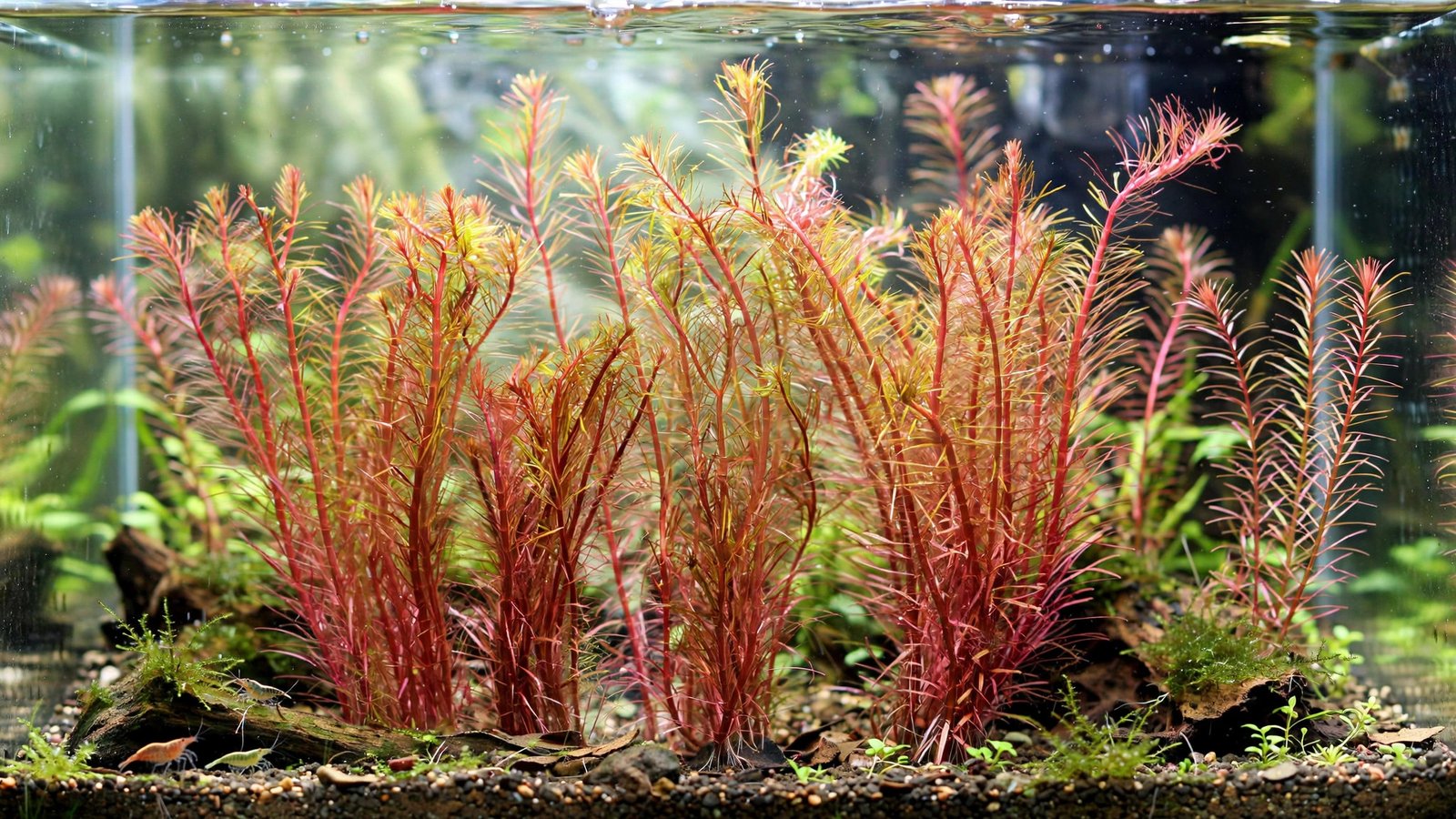
If you've grown Rotala Rotundifolia Care, picture a leaner cousin. Rotala mexicana carries needle-fine leaves in tight whorls — the softest, feathery texture of any common Rotala. Under medium light it stays a clean green; under strong light the tips blush pink, then orange, then a true red.
Both are Rotala mexicana — sometimes labeled Rotala pusilla — a Lythraceae stem from South and Central America (some databases also list Africa and Australia). Settled plants grow fast to 4–12+ inches, and dense foliage outcompetes algae for nitrogen and phosphate.
The Honest Truth About Difficulty
Here's the angle marketing blurbs skip: this is not a beginner plant. Rotala mexicana needs medium-to-high light, and pressurized CO2 is, in Buce Plant's words, effectively essential to prevent stunting. In low-tech tanks it turns pale and leggy — stretched internodes, dull color, growth that stalls.
With CO2 and decent light, mexicana is one of the easier reds — faster and more forgiving than the fussy Rotala Macrandra Care Guide plant. Think of it as a bridge plant: vivid color for modest effort. No CO2 yet? Master an easier stem first.
Rotala Mexicana Care: The Full Requirements
Light
Medium-to-high light is non-negotiable — 50+ PAR at the substrate for solid growth, 80+ for the red blush. Medium light keeps it green; the pink-to-red shift needs strong light and won't appear under a dim stock LED. If your fixture falls short, a light upgrade beats any fertilizer.
CO2 and nutrients
Pressurized CO2 — roughly 20–30 ppm, green drop-checker territory — is strongly recommended; without it the fine leaves never fill in. With CO2, feed complete macros plus micros and adequate iron for red coloration. Whatever your dosing method, start low, observe livestock, raising doses over two to three weeks and backing off at the first sign of stress.
Substrate and water parameters
| Parameter | Target | Notes |
|---|---|---|
| pH | 4.5–7.0 | Wide tolerance; slightly acidic ideal |
| Temperature | 72–82°F (22–28°C) | Standard tropical range |
| GH/KH | Soft to moderately hard | Avoid extremes |
| Substrate | Nutrient-rich aquasoil preferred | Preferred; feeds hungry roots |
Nutrient-rich substrate makes life easier — this plant roots hungrily, and aquasoil puts iron and macros where they're needed. Plain gravel with water-column dosing works but grows slower and less red.
Planting Rotala Mexicana the Right Way
The single biggest mistake is bunching stems. Fine whorled leaves shade each other fast, and the inner stems of a clump rot. Plant each stem individually, about half an inch apart, with fine-tip tweezers: grip near the base, push 1–2 inches into the substrate, and open the tweezers as you withdraw so the stem stays buried.
Strip the bottom inch of leaves first — buried leaves rot, and bare nodes root anyway. Tissue-culture or emersed stock will melt: existing leaves dissolve over one to two weeks as the plant converts to submerged form. Don't rip it out; roots are fine and fresh growth follows within two to three weeks. The same individual-stem logic applies to Rotala Wallichii Care.
Trimming, Replanting, and Bush Building
Expect topping out at the surface within a month. Cut stems back to two-thirds of tank height — never remove more than a third of a stem at once. The cut stem branches from the node below, pushing two new tips that thicken the bush.
Every cutting is a free plant: strip its lower inch and plant it back into the group. One purchase becomes a full midground bush in six to eight weeks. The Rotala HRA Care Guide covers the same top-and-replant routine for another fast red stem.
Placement and Aquascaping Ideas
Rotala mexicana belongs in the midground-to-background transition: a soft mass from a distance, intricate detail up close. It shines in Dutch layouts as a red punctuation mark between coarser green groups, and in nature-style scapes as a single broad group softening rock or driftwood edges.
Red pops hardest against mid-green neighbors or dark substrate. See our Freshwater Aquarium Plants: The Complete Guide and Aquarium Plants for Fish Tanks for composing groups like this into a coherent scape.
Common Problems and Fixes
| Symptom | Likely cause | Fix |
|---|---|---|
| Melt after planting | Emersed/tissue-culture conversion | Leave roots in place; new growth in 2–3 weeks |
| Leggy stems, long internodes | Low light or no CO2 | Add light; add pressurized CO2 |
| Stays green, won't redden | Insufficient light or iron | Raise PAR; increase iron |
| Inner stems rotting | Bunched planting, no thinning | Plant individually; thin every 4–6 weeks |
| Stunted, curled tips | CO2 deficiency or nutrient gap | Stabilize CO2; fix dosing |
For sourcing, established sellers carry healthy stock — the Rotala mexicana page at Buce Plant lists current care notes and availability, and the tissue culture at Aquarium Plants Factory is a good pest-free option if you want to skip emersed-conversion melt.
Frequently Asked Questions
Is Rotala mexicana a beginner plant?
No — it's an intermediate plant. It needs medium-to-high light and pressurized CO2 to grow densely and color up; without them it stunts, stays pale, and rarely fills in. Master an easy stem first (Rotala rotundifolia is the classic choice) and add mexicana once CO2 and strong lighting are already running.
Why is my Rotala mexicana melting after planting?
Melt is normal when the plant converts from emersed or tissue-culture form to submerged growth. Existing leaves dissolve over one to two weeks while roots and nodes stay alive. Keep everything planted, hold CO2 and light stable, and fresh leaves appear within two to three weeks. Replant only if stems go soft and mushy base to tip.
How do I make Rotala mexicana turn red?
Red comes from strong light — 80+ PAR at the substrate — plus adequate iron and complete fertilization. Stable CO2 matters too, since stunted plants color poorly. The blush starts at the growing tips and works down; expect it two to four weeks after raising light. In medium light the plant stays healthy but green.
Can Rotala mexicana grow without CO2?
It survives without CO2 but won't thrive — growth turns slow, leggy, and pale, and stems often stall entirely. Buce Plant describes CO2 as essentially required to prevent stunting. For a low-tech tank, choose a different plant; reserve mexicana for a tank with pressurized CO2 running.
How fast does Rotala mexicana grow?
Fast, once settled — several inches per week under high light and CO2, easily reaching 4–12+ inches and needing monthly trimming. That speed is a feature: it outcompetes algae for nutrients in new high-tech setups. Replant trimmed tops to thicken the bush, and thin the interior every four to six weeks.
Rotala mexicana rewards honesty: give it real light, real CO2, and room to breathe as individual stems, and it pays you back with the finest-textured red bush in the hobby.