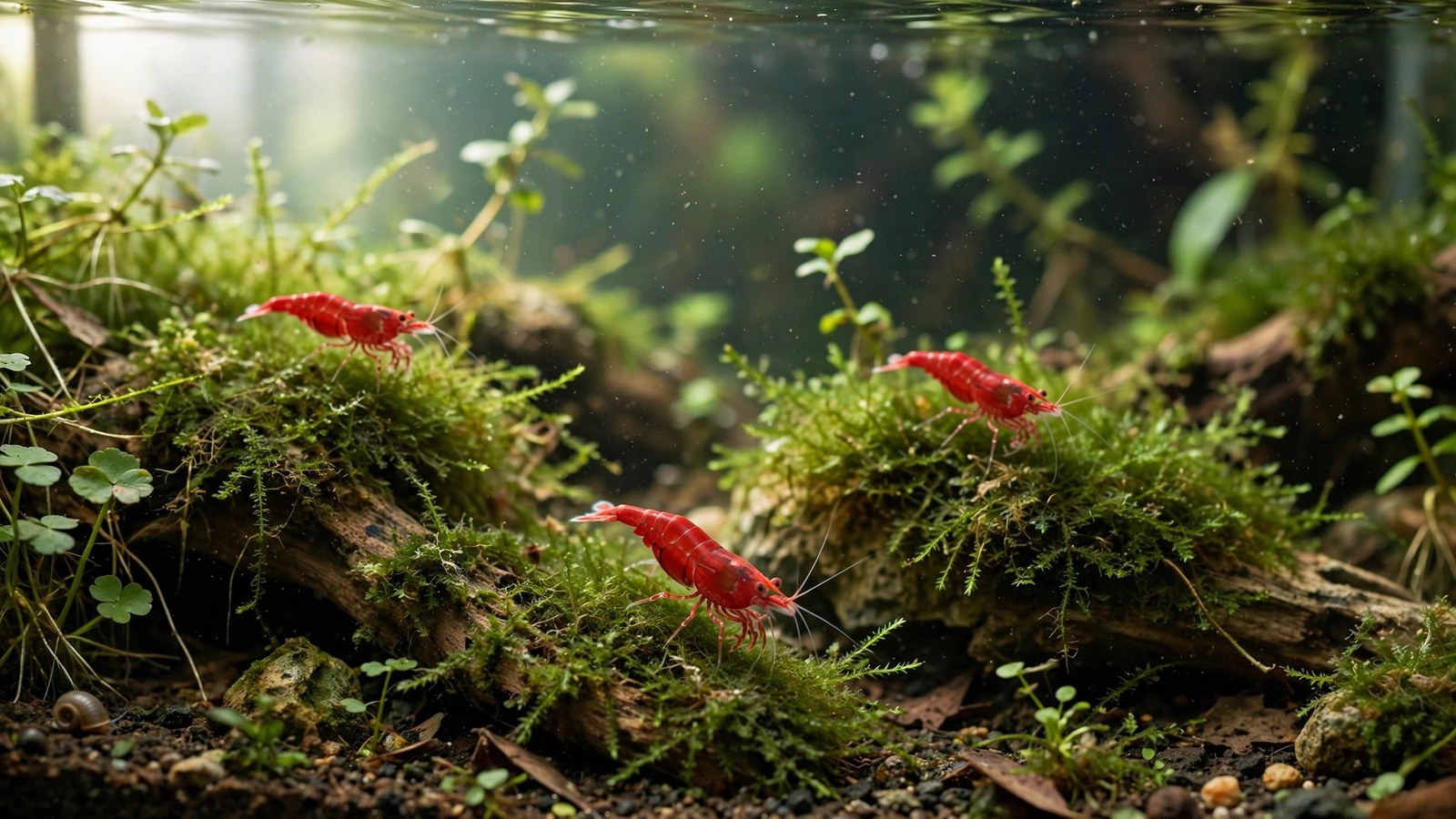
Finding shrimp dead in your planted tank — one today, two tomorrow — is one of the most frustrating experiences in the hobby, especially when the water "looks fine" and the plants are thriving. If shrimp dying in planted tank describes your situation, the cause is almost always something specific and fixable: a parameter swing, a trace of copper from medication or fertilizer, too much CO2 overnight, a filter intake trapping grazers, or a failed molt. This guide walks you through an immediate triage you can do right now, the most common causes in detail, and the exact husbandry adjustments that keep dwarf shrimp alive long-term — no veterinary drugs, just careful, standard hobby practices.
Do This First: The 5-Minute Triage
When shrimp die, act calmly and methodically. Work through these five steps before you touch anything else:
- Stop dosing. Pause all liquid fertilizers, liquid CO2 boosters, and any medication. Many shrimp deaths trace back to something added to the water in the last few days.
- Test the essentials. Measure ammonia, nitrite, nitrate, pH, GH, KH, and temperature — and TDS if you have a meter. For reliable readings, use water test kits for planted tanks rather than guessing from behavior.
- Check the equipment. Feel the filter intake for trapped shrimp, confirm the CO2 is running on its normal schedule (and only during lights-on), and look for a heater that may have overheated or drifted.
- Do a gentle water change. If any reading is off, do a small 15–20% water change with dechlorinated water matched to tank temperature. A water change gone wrong can itself kill shrimp, so match parameters rather than chasing them.
- Observe, don't overhaul. Watch the survivors for a day. Grazing shrimp that are eating and active are a good sign; still, lethargic, or pink-fleshed shrimp are warning flags.
Detoxify ammonia and nitrite immediately while you diagnose: Seachem Prime water conditioner.
Shrimp Dying in Planted Tank: Why It Keeps Happening
Shrimp are far more sensitive to water chemistry than most fish. A change your fish shrug off can be lethal to Neocaridina or Caridina shrimp, and planted tanks introduce extra variables — CO2 injection, fertilizers, fast-growing plants that shift oxygen levels — that plain shrimp-only setups never see. If shrimp dying in planted tank setups is your pattern, start with the most common cause.
New-Tank Syndrome and Cycling Problems
Adding shrimp to a tank that isn't fully cycled is the single most common cause of mass deaths. Even trace ammonia or nitrite — invisible, odorless, and often untested — burns gills and weakens immune systems within hours. Planted tanks can be deceptive here: plants consume some ammonia, and the tank may "look ready" long before the filter's bacteria handle a full bioload. Always confirm the cycle by dosing an ammonia source, watching it convert fully to nitrate within 24 hours, and then doing a large water change before the first shrimp arrive. If you already added shrimp to a young tank, run daily small water changes, add fast-growing stem plants and floating plants to soak up ammonia, and feed sparingly until the cycle stabilizes.
Acclimation Mistakes
Floating the bag for 15 minutes and dumping shrimp in works for hardy fish, but it's a gamble with shrimp. Dwarf shrimp die from osmotic shock when water chemistry changes too fast, even when both waters are "fine" in isolation. Drip acclimation — adding your tank water to the bag water a little at a time over one to two hours — is the hobby-standard method that avoids this. Match temperature first, then drip until the bag water is mostly tank water, and net the shrimp in without pouring the bag water into the tank.
Parameter Swings: TDS, GH, KH, and pH
Shrimp care more about stability than about hitting an exact number. That said, there are well-established hobby ranges to aim for. Neocaridina (cherry shrimp) thrive in harder, more alkaline water; Caridina (crystal reds, Taiwan bees) need soft, acidic water. The practical difference-maker most beginners miss is TDS — total dissolved solids — which creeps upward as evaporation removes water but leaves minerals behind, as you top off with tap water, and as you add remineralizers. Topping off with tap water week after week quietly raises TDS into the danger zone. Use distilled or RO water for top-offs, and remineralize only during water changes to a consistent target.
GH (calcium and magnesium) matters because shrimp need it to build their shells; KH (carbonate hardness) buffers pH. Watch the pattern of deaths for clues: deaths clustered around molting (you find empty shells with the "white ring of death" — a band of white across the back just behind the head) point at GH problems, while sudden deaths after big water changes or storms of top-offs point at TDS or pH swings. Swing any of these gradually: adjust over days, never in one go.
CO2 Overdose and Low Nighttime Oxygen
During the day, photosynthesis produces oxygen that masks the CO2 you're adding — but at night, plants consume oxygen and release CO2 too. If injection is too high or runs overnight, CO2 climbs while oxygen falls, and shrimp suffocate silently. The classic symptom is shrimp gathered near the surface or on filter outflows in the early morning, looking gasping or limp, sometimes with several deaths overnight.
Standard safe practice: run CO2 only while lights are on, keep a drop checker showing a calm green (never yellow) in the morning, and run an airstone or surface skimmer at night to break up surface film and boost gas exchange. If your shrimp suffer overnight, dial CO2 down. For comparison with what under-gassed plants look like, see the guide to CO2 deficiency signs in plants.
Fertilizer Overdose and Copper Exposure
Copper is the quiet killer of shrimp. Trace amounts are present in many complete fertilizers, and while the labeled dose is generally considered safe for shrimp, overdosing — especially in small tanks or while also running medications — can push levels into toxicity. Overdosed iron can also harm shrimp. Learn the signs of over-fertilizing in a planted tank (algae surges, leaf tip burn, stressed livestock) and dose by measured need, not by habit.
Copper also enters through treated tap water, some algaecides, and many medications — most ich treatments, anti-parasite meds, and antibiotics contain copper. Always read labels before medicating a tank with shrimp, and check the guide to aquarium medications and plant safety for which treatments threaten both shrimp and plants.
Filter Intake Trapping
Baby shrimp — and sometimes adults — get pinned to powerful filter intakes and perish. It's one of the most fixable causes: a simple pre-filter sponge over the intake stops it completely. Sponge filters are the gold standard for shrimp tanks because they combine gentle flow with a grazing surface shrimp actually eat off. Canister and hang-on-back filters work fine with shrimp once the intake is covered.
Molting Failures
Deaths that coincide with molting — the telltale white ring of death, shrimp stuck half-out of their shells, or dead shrimp inside fresh molt husks — usually come down to three things: wrong GH (too low means they can't harden the new shell; too high means the old one won't release), old age (shrimp past their first year molt poorly), or stress from recent parameter swings. Keep GH steady in the species' range, feed a source of dietary calcium such as a blanched spinach leaf or a quality shrimp food, and leave molts in the tank; shrimp eat them to recover minerals.
Predation and Stress
Even "peaceful" fish hunt baby shrimp, and some — bettas, gouramis, large tetras, loaches — hunt adults too. Stress alone kills shrimp slowly: harassment from tankmates, bright lighting with no cover, vibrations near the tank, or a bare hardscape with nowhere to hide raises mortality even when nothing is actively being eaten. A shrimp-safe planted tank is densely planted with fine-leaved species, mosses, and botanicals like leaf litter that create grazing surfaces and hiding spots. For breeding colonies, use a species-only tank or truly shrimp-safe tankmates.
Other Fast Killers to Rule Out
A few rapid-onset causes are worth a mental sweep: temperature spikes from a failed heater (shrimp tolerate cool water better than hot — anything sustained above the mid-70s°F/25°C shortens lives), soap or cleaning-chemical residue from washed decor or new equipment, aerosols sprayed near the tank, and ammonia released when an old filter media base layer or an exhausted nutrient-rich substrate is disturbed. If deaths started right after a rescape, deep vacuuming, or new decor, think chemistry, not disease.
Cause → Symptom → Fix: The Triage Table
| Cause | Typical symptoms | Fix |
|---|---|---|
| Uncycled tank | Deaths within days of setup; ammonia or nitrite reads above zero | Daily 15–20% water changes, heavy planting, light feeding, confirm cycle before restocking |
| Acclimation shock | Deaths within 24–72 hours of adding shrimp; no other changes | Drip-acclimate future shrimp for 1–2 hours; don't pour bag water into the tank |
| TDS/pH swing | Deaths after water changes or top-offs; TDS drifting upward | Top off with RO/distilled water; remineralize consistently; change water in small matched portions |
| CO2 overdose / low night O2 | Shrimp gasping at surface early morning; drop checker yellow | CO2 only during lights-on; nighttime aeration; reduce bubble rate |
| Copper / fertilizer overdose | Sudden deaths after dosing or medicating; algae or leaf burn alongside | Stop dosing, activated carbon + water changes; read all medication labels |
| Filter intake trapping | Dead shrimp stuck to intake; missing babies | Pre-filter sponge on every intake; consider a sponge filter |
| Molting failure (GH issues) | White ring of death; dead in molt shells | Steady GH in species range; calcium-rich foods; leave molts in tank |
| Predation / stress | Missing babies, hiding shrimp, deaths with no water issues | Dense planting and cover; shrimp-safe tankmates; species-only breeding tank |
How to Test and Fix Parameters Safely
The habit that separates successful shrimp keepers from the rest is testing before acting. A good test kit setup for planted tanks pays for itself many times over, because when you find shrimp dying in planted tank setups, every fix below depends on a number you can trust.
The Weekly Shrimp-Safety Routine
- Test weekly: ammonia, nitrite, nitrate, pH, GH, KH, TDS, and temperature. Log the numbers — trends matter more than any single reading.
- Top off daily-ish: evaporation raises TDS. Use RO or distilled water for top-offs, never tap water.
- Water changes: 10–20% weekly with dechlorinated water matched in temperature, and roughly matched in TDS and pH. Small and regular beats big and occasional.
- Dose conservatively: start fertilizer at half the label rate in a shrimp tank and raise only if plants show deficiency. Under-dosing hurts no shrimp; overdosing does.
- Feed sparingly: overfeeding fouls water fast. Feed an amount gone in 1–2 hours, once a day at most, and skip a day weekly.
When Readings Are Off: Adjust Gradually
If pH is too high for Caridina, investigate the source (limestone decor, certain substrates) and change the environment, not just the number; pH buffers wear off and swing back. If nitrate is high, check that you're not over-fertilizing nitrogen — nitrogen deficiency in aquarium plants is rare in shrimp tanks because livestock waste usually supplies plenty. And if a reading contradicts what your eyes see (thriving plants, active shrimp, but scary numbers), re-test with a second kit or method before acting — a misread test has killed more shrimp than bad water.
Test before you dose anything: API Freshwater Master Test Kit.
Frequently Asked Questions
Why do my shrimp keep dying but my fish are fine?
Shrimp are far more sensitive than fish to copper, TDS swings, CO2 levels, and osmotic shock. Fish can tolerate a parameter shift that kills shrimp outright, so "fish are fine" rules out only catastrophic water failure, not the shrimp-specific hazards like fertilizer overdose, nighttime CO2 buildup, or molting-related GH problems. Test with shrimp thresholds in mind, not fish ones.
What is the white ring of death on shrimp?
The white ring of death is a pale band around the shrimp's back, right behind the head, where the old shell should split during molting. It signals a molting failure — usually GH that is too low (the new shell can't harden), too high (the old shell won't release), or a recent stress event. Deaths with this marking point at water-hardness management, so test GH and adjust it gradually across water changes.
Can CO2 injection kill shrimp?
Yes. CO2 injection is safe for shrimp when it runs only during lights-on and stays at a level where a drop checker reads green. It turns deadly when injection is excessive, runs overnight, or when heavy surface film blocks gas exchange. Shrimp suffocating at dawn — gathered near the surface or filter outflow — is the classic sign. Reduce the rate, timer it to the lights, and aerate at night.
Are aquarium plant fertilizers safe for shrimp?
Most complete fertilizers at label dose are considered shrimp-safe, though they contain trace copper. Problems arise from overdosing — especially in small tanks — or from combining fertilizers with copper-based medications. Dose conservatively, start at half strength, and never add medications without checking the label for copper when shrimp are present.
How do I acclimate shrimp to a planted tank?
Drip acclimation is the standard method: float the bag to match temperature, then slowly drip tank water into the bag over one to two hours until the bag is mostly tank water. Net the shrimp into the tank without adding the bag water. This slow mixing prevents osmotic shock, the leading cause of deaths within the first few days. Dim the lights during and after introduction to reduce stress.
When can I add shrimp to a new planted tank?
Wait until the tank is fully cycled: ammonia and nitrite consistently at zero, nitrate present, and parameters stable for at least a week or two. In a heavily planted tank that can mean several weeks, because plants mask incomplete cycling. A mature, algae-growing tank with biofilm on surfaces gives shrimp the grazing they need from day one, which is why patience here pays off so visibly.
Building a Shrimp-Safe Planted Tank Long-Term
The tanks with the longest-lived, best-breeding shrimp share a philosophy: stability over intensity. Moderate light, CO2 at conservative levels with nighttime aeration, conservative fertilization, a sponge-covered intake, weekly small water changes with matched water, and enough plant density that shrimp can vanish into cover. Keep the tests and the log, change one thing at a time, and treat every unexplained death as a question answered by photographing and documenting what you see rather than by reaching for the nearest product.