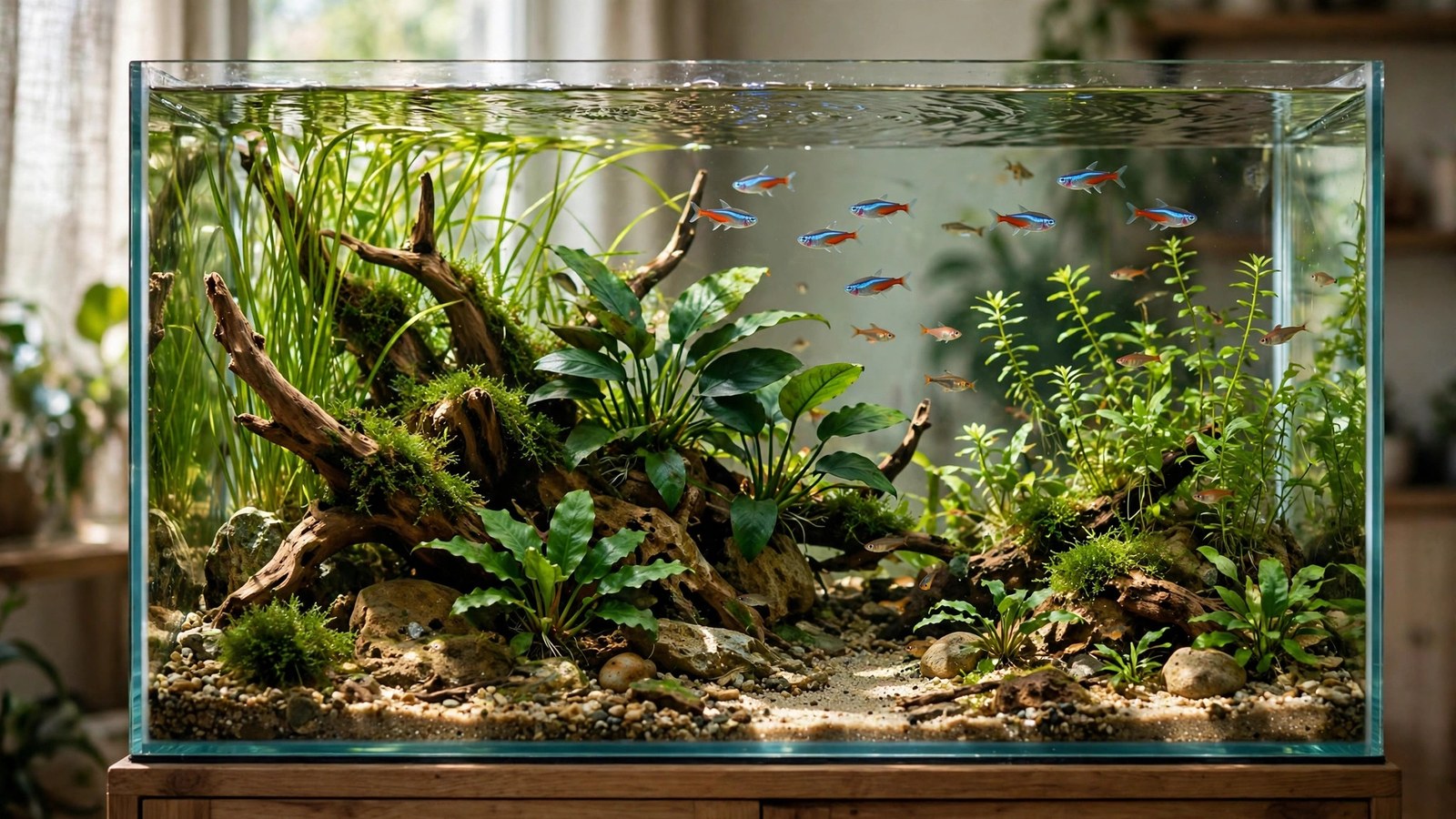
Your tetras have white spots, the bottle of ich treatment is already in your hand, and somewhere in the back of your mind a small voice is asking what that medicine will do to the sword plant you've been growing for a year. The question of aquarium medications safe for plants comes up in almost every fish-disease emergency, and the honest answer is uncomfortable: many common fish medicines are rough on aquatic plants, some are genuinely dangerous to them, and a few popular "plant-safe" claims deserve scrutiny. This guide sorts fish treatments into what harms plants, what is genuinely gentle, and the one strategy that protects both: the hospital tank.
Why Treating Fish in a Planted Tank Is Risky for Plants
Aquarium plants are not passive decoration; they are living tissue that absorbs everything dissolved in the water column. Leaves take in dissolved minerals through their surfaces and roots pull from the substrate, which means a medication circulating in the tank does not stop at the fish — it moves into plant tissue too. Delicate species such as vallisneria, cryptocorynes, and mosses are often the first to show damage, melting within days of a harsh treatment while tougher anubias barely flinch.
Medications damage plants through several mechanisms. Copper-based treatments are toxic to plant cells at treatment concentrations. Strong oxidizers such as potassium permanganate burn leaf tissue outright. Dyes like methylene blue and malachite green stain leaves and silicone, and at high doses they disrupt photosynthesis. Some treatments also force you to remove chemical filtration, destabilizing the water chemistry plants depend on. The practical upshot: dosing the display tank is always a calculated risk, and the plants pay when the calculation is wrong. This article is plant-compatibility guidance only — it is not veterinary advice, so consult an aquatic veterinarian for fish diagnosis and treatment decisions.
Medications That Commonly Harm Aquarium Plants
Not every fish medicine threatens plants equally. Antibiotics such as erythromycin and minocycline are generally mild on plants, while the old-school parasite killers are the real plant wreckers. Below is the short list of treatments to be cautious about.
Copper-based medications
Copper is one of the most effective treatments for external parasites — and one of the harshest things you can add to a planted tank. At therapeutic doses it damages roots and new growth, and it is lethal to shrimp and snails at a fraction of those doses. Copper also binds to substrate and hardscape, leaching back slowly long after treatment ends. Never dose copper in a planted display tank.
Malachite green and formalin combinations
The classic blue-green ich medications — combinations of malachite green and formalin — are effective but notoriously harsh. Sensitive plants, especially fine-leaved stems and mosses, can melt badly during a full course. Formalin depletes oxygen, which stresses both fish and plants, and malachite green stains everything it touches. If the label names malachite green, treat outside the display tank whenever possible.
Methylene blue
Methylene blue is a staple for fungal infections and egg fungus, and it is comparatively mild — but it is far from harmless. It permanently stains silicone seals, light-colored substrate, and plant leaves a deep blue, and at high concentrations it can damage delicate foliage. It can also harm nitrifying bacteria at treatment doses, risking an ammonia spike that hurts plants through water chemistry rather than direct contact. In a display tank, the staining alone makes it a poor choice.
Potassium permanganate
Potassium permanganate is a powerful oxidizer used as a dip or whole-tank treatment for parasites and bacterial issues. It burns organic matter indiscriminately — parasites, bacteria, and plant tissue alike. Even slightly overdosed, it turns leaves brown and mushy within hours. It demands precise dosing, protective gloves, and exact timing, and it should never be dosed casually into a planted tank. The MSD Veterinary Manual's aquarium fish treatment considerations are worth reading before using strong oxidizers on ornamental fish.
Aquarium salt at treatment doses
Salt is one of the oldest fish remedies, and at low tonic doses most hardy plants tolerate it. But therapeutic doses used for ich or nitrite poisoning will melt sensitive plants fast — vallisneria, cryptocorynes, and most mosses are particularly salt-sensitive. If your treatment plan involves serious salt, the fish belong in a hospital tank. Salt also accumulates, so repeated dosing in a display tank poisons the water for plants over time.
| Treatment | Plant risk | Verdict for planted displays |
|---|---|---|
| Copper-based meds | High — toxic to plant tissue, persists in substrate | Never dose in the display tank |
| Malachite green + formalin | High — melts sensitive plants, depletes oxygen | Use in a hospital tank |
| Potassium permanganate | Very high — burns leaves, tiny margin of error | Hospital tank only, dosed precisely |
| Methylene blue | Moderate — stains, can damage delicate foliage | Hospital tank preferred |
| Aquarium salt (treatment dose) | Moderate to high — melts vals, crypts, mosses | Hospital tank for real therapeutic doses |
| Antibiotics (erythromycin etc.) | Low — generally plant-tolerated at label doses | Usually acceptable in the display |
| Heat treatment for ich | Low — plants tolerate 86°F / 30°C for two weeks | Often the most plant-friendly option |
Aquarium Medications Safe for Plants: What Actually Works
The good news: you have real options that cure fish without sacrificing plants. The single most plant-friendly ich treatment is heat. Raising the tank gradually to 86°F (30°C) and holding it for two weeks speeds up the ich lifecycle so the free-swimming stage dies without a host. Most tropical plants tolerate two weeks at this temperature without complaint — it is far gentler on a planted tank than any chemical ich cure, and there is nothing to stain, absorb, or overdose.
For bacterial and fungal issues, antibiotics are typically the mildest chemical route for plants. Erythromycin and similar products at label doses rarely cause plant damage. Some modern aldehyde-based parasite treatments are also marketed as gentler alternatives to formalin; check manufacturer guidance rather than hobbyist anecdotes — for example, Seachem's own planted-tank guidance for ParaGuard notes it is generally considered safe for planted aquaria, while cautioning that no manufacturer can test every plant species under every water parameter. That caveat applies to every "plant-safe" claim: observe your most sensitive plants closely and be ready to intervene.
Whatever you dose, follow the label exactly. "A little extra for good measure" is how plants get burned and how treatment overdoses happen. And if you do medicate the display tank, increase surface agitation — many medications reduce dissolved oxygen, and oxygen-starved plants combined with chemical stress is what turns a mild treatment into a melting event.
The Hospital Tank Approach: Best Practice, Step by Step
A hospital tank is a bare, simple second tank used only for treatment. It lets you give sick fish the full-strength treatment they need while your plants, invertebrates, and biofilter never meet the medication. It is the single best answer to the whole medications-vs-plants conflict, and it is cheap to set up.
- Assemble the basics. A 5–10 gallon tank, a spare heater, an air-driven sponge filter (seeded from your main tank if possible), and a lid. No substrate, no plants, no carbon — bare glass is easiest to clean and dose accurately.
- Match the water. Fill with dechlorinated water matched to the main tank's temperature and pH. Moving a sick fish into wildly different water is a second shock it does not need.
- Move the sick fish, not the medication. Net the affected fish into the hospital tank. Treating only sick individuals also protects healthy tankmates from unnecessary chemical exposure.
- Dose the hospital tank per the label. With no plants or invertebrates at risk, you can use the full-strength treatment — copper, salt, malachite green, whatever the diagnosis calls for — exactly as directed.
- Observe daily and water-change as directed. Hospital tanks are small and unstable; test ammonia and change water per the medication's instructions, re-dosing only as the label allows.
- Quarantine after recovery. Keep the fish in the hospital tank a few days past visible recovery before returning it, so you do not reintroduce the pathogen to the display. A hospital tank doubles as a quarantine tank for new arrivals — two weeks there before joining the display prevents most disease emergencies entirely.
If You Must Dose the Display Tank
Sometimes there is no spare tank and every fish is symptomatic. If you must medicate the planted display, minimize the damage:
- Move your most sensitive plants out. Vallisneria, cryptocorynes, mosses, and fine-leaved stems can live in a bucket of dechlorinated tank water with a light for the treatment duration. This single step saves more plants than anything else.
- Remove chemical filtration. Activated carbon and similar media strip medications from the water, making treatment ineffective. Remove them for the treatment course, but keep biological and mechanical filtration running.
- Follow the label precisely. Calculate the dose from the actual water volume — substrate and hardscape displace water, so most tanks hold less than their rated volume. Overdosing is the most common cause of plant damage during treatment.
- Watch the canaries. Your most delicate remaining plants are early-warning indicators. If leaves start going transparent or melting mid-treatment, stop, water-change, and reconsider the plan.
- Never combine treatments. Stacking medications multiplies plant stress unpredictably. One treatment at a time, at label dose, with observation between courses.
Treatments that merely look like fertilizer problems can fool you later: if leaves yellow after medication, check whether it is genuine deficiency or chemical damage before dumping in extra fertilizer — over-fertilizing a stressed plant only adds a second problem.
Detoxifies ammonia during treatment when the biofilter is stressed: Seachem Prime.
Monitor ammonia/nitrite daily while medicating the display tank: API Freshwater Master Test Kit.
Recovering Your Plants After a Harsh Treatment
Once the fish are cured and the medication course is done, the plants need aftercare. Start with a large water change — 50 percent or more — and run fresh activated carbon for 48–72 hours to pull residual medication from the water. Carbon will not fix everything (copper bound in substrate needs more aggressive removal), but it clears most dissolved residues. Follow with your normal weekly water change schedule, since stability matters more than heroics at this stage; erratic chemistry after a crisis is its own kind of post–water change shock.
Trim away leaves that are clearly dead — mushy, fully transparent, or brown and disintegrating — because rotting foliage fuels bacteria and algae while the plant tries to recover. But leave partially damaged leaves alone; a half-melted leaf still photosynthesizes and feeds recovery. Expect some root dieback too, so check for rotting roots a week or two after treatment and trim any that have turned to mush.
Resume fertilization only once new growth appears — dosing a tank full of damaged, non-growing plants just feeds algae. Most established plants bounce back within two to four weeks once clean water and light return. Species that melted to the crown, like cryptocorynes, often regrow from the roots if you leave them undisturbed and resist the urge to "check" by uprooting them.
Rebuilds root-zone nutrition after harsh treatments strip the tank: Seachem Flourish Tabs.
Frequently Asked Questions
Can I use ich medication in a planted tank?
It depends on the product. Classic malachite green and formalin ich treatments are harsh on sensitive plants, and copper-based options should never go in a planted display. The most plant-friendly ich cure is heat: hold the tank at 86°F (30°C) for two weeks. If you must use chemicals, a hospital tank lets you treat the fish properly while the plants stay untouched.
Will aquarium salt kill my plants?
Low tonic doses are tolerated by most hardy plants, but true therapeutic salt doses will melt salt-sensitive species like vallisneria, cryptocorynes, and mosses. Salt also accumulates with repeated dosing. If your treatment plan calls for serious salt levels, move the fish to a hospital tank rather than salting the planted display.
Is Melafix or Pimafix safe for planted tanks?
These tea-tree and bay-oil based products are generally considered plant-safe at label doses, and many planted-tank keepers use them without plant damage. Their effectiveness against real infections is debated among aquarists and veterinarians, so treat them as mild first-aid rather than a cure for serious disease — and never exceed the label dose chasing better results.
My plants melted during treatment. Will they come back?
Often, yes. Many aquarium plants — cryptocorynes, swords, stem plants — can regrow from healthy roots or crowns after a melt if water conditions stabilize. Trim fully dead foliage, keep up water changes, run carbon to remove residues, and wait two to four weeks before judging. Do not uproot plants to inspect them; disturbance resets the recovery clock.
Do I need to remove my filter media when medicating?
Remove chemical media (activated carbon, Purigen, resins) because they absorb medications and make treatment ineffective. Keep biological and mechanical filtration running — crashing your cycle during treatment creates an ammonia spike that harms fish and plants alike. Replace the carbon after treatment to clear residues.
When in Doubt, Treat the Fish — Not the Tank
The pattern behind nearly every medication-vs-plants disaster is the same: a sick fish, a panicked evening, and a full-strength chemical cocktail poured into a thriving planted ecosystem. A simple hospital tank breaks that pattern — the fish get the aggressive treatment they deserve, and the plants never know anything happened. Keep one cycled and ready, learn which treatments your plants cannot tolerate before you need them, and you will never have to choose between curing your fish and keeping your garden alive.