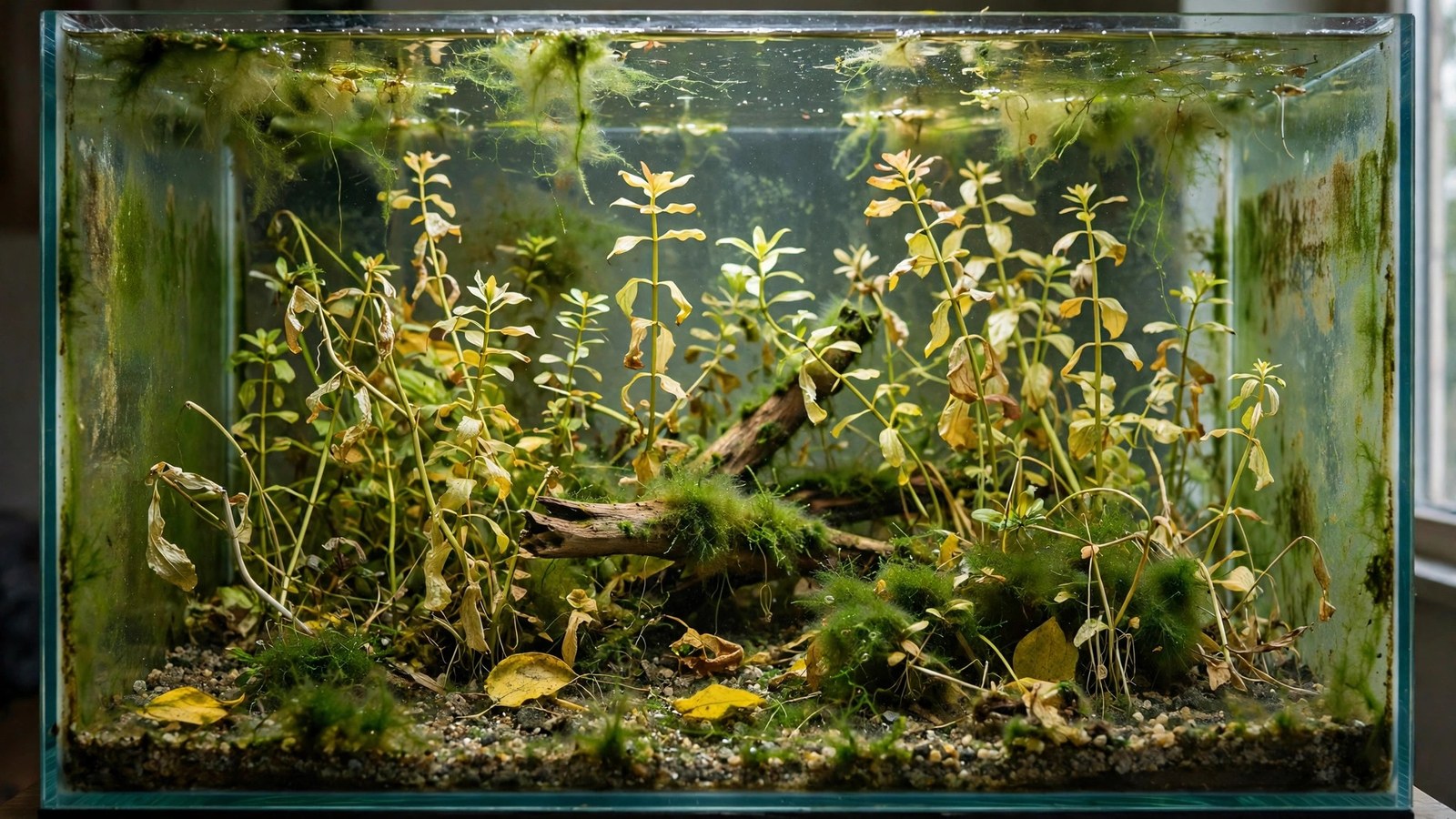
Your plants are stalling, algae is blooming, and your fertilizer bottle says "dose daily" — so you dose more. It's the most intuitive mistake in the hobby: when plants struggle, add more food. But over-fertilizing aquarium plants is real, it has recognizable symptoms, and the fix is gloriously simple — less. This guide covers how to tell over-fertilization from deficiency (they mimic each other cruelly), how to recover a overdosed tank, and how to dose with confidence afterward.
Can You Actually Over-Fertilize? Yes — Here's How
The old mantra "algae can't be caused by excess nutrients" is mostly true for nitrates and phosphates in balanced tanks — but fertilizers aren't just NPK. Overdosing causes problems through several real mechanisms:
- Micronutrient toxicity — iron, copper, manganese, and boron are toxic to plants (and shrimp) above certain thresholds. Copper especially: shrimp die at copper levels that barely bother plants.
- Osmotic stress — very high total dissolved solids from heavy dosing stresses plant roots and livestock osmoregulation.
- Nutrient antagonism — excess of one nutrient blocks uptake of another. Classic example: excess potassium can induce magnesium deficiency symptoms; excess phosphate can lock out iron.
- Ammonia from urea-based fertilizers — some nitrogen fertilizers use urea or ammonium, which spike ammonia if overdosed — instantly triggering algae.
- Algae opportunism during plant stall — when toxicity or antagonism stalls plant growth, algae colonizes the surplus. The algae isn't caused by "excess nutrients" per se, but by the plant shutdown the excess caused.
Symptoms of Over-Fertilizing: The Diagnostic List
Plant symptoms
- Burnt leaf tips and margins — brown, crispy edges on new growth, resembling fertilizer burn in houseplants. The most classic overdose sign.
- Stunted, twisted new growth — new leaves emerge deformed, curled, or abnormally small despite adequate light and CO2.
- Algae bloom coinciding with increased dosing — you upped the fertilizer, plants stalled, algae exploded. Timeline is diagnostic.
- Dark, almost black-green leaves — excessive nitrogen can produce unnaturally dark, soft growth that's algae-prone.
- Root damage — in severe cases, root tips brown and stop extending (check during replanting).
Livestock symptoms
- Shrimp deaths after dosing — the canary in the coal mine. Shrimp are exquisitely sensitive to copper and sudden TDS swings. Deaths within hours of fertilizing point at the bottle.
- Fish gasping or lethargy — severe overdoses (especially urea/ammonium-based nitrogen) spike ammonia.
- Snails retreating into shells after water-column dosing.
Water symptoms
- Persistently high nitrates (>40 ppm) despite water changes — you're adding faster than anything consumes.
- Phosphate off the charts with green water or spot algae following.
- TDS climbing week over week — track with an inexpensive TDS meter; a steadily rising baseline means accumulation.
Confirms which nutrients are actually elevated before you act: API Freshwater Master Test Kit.
Over-Fertilizing vs. Deficiency: Telling Them Apart
This is the cruel mimicry — both cause stunted growth, algae, and poor color. Key differentiators:
| Clue | Points to over-fertilizing | Points to deficiency |
|---|---|---|
| Timeline | Problems started after increasing dose | Problems started during lean dosing or after stopping |
| Leaf tips | Burnt, brown, crispy margins | Pale, yellow, or pinholes (see potassium deficiency) |
| Test readings | Nitrates very high, TDS climbing | Nitrates zero, phosphate zero |
| Shrimp behavior | Deaths/stress after dosing | Unaffected |
| New growth | Twisted, deformed, burnt | Pale, small, or melting (see iron deficiency) |
When in doubt, test before you guess. A $20 nitrate/phosphate test kit resolves the question in minutes. Our nutrient deficiency guide covers the deficiency side in full.
The Recovery Protocol
Step 1: Stop dosing immediately (1–2 weeks)
Cease all fertilization. This isn't starvation — your substrate and water column hold weeks of reserves. You're letting levels fall back to sane ranges.
Step 2: Large water changes
Do 50% water changes twice in the first week. This is the fastest way to dilute accumulated nutrients and reset TDS. Use dechlorinated water matched in temperature.
Step 3: Remove the damage
Trim burnt, twisted, and algae-smothered leaves — they won't recover, and decaying tissue feeds algae. Clean up any algae bloom with the appropriate protocol (see our hair algae guide or green water guide).
Step 4: Watch and wait
Within 1–2 weeks, new growth should emerge normal-shaped and healthy-colored. That's your signal the toxicity has cleared. If new growth is still deformed, do another large water change and extend the pause.
Step 5: Resume at half dose
Restart fertilization at 50% of your previous dose. Increase gradually only if deficiency symptoms appear. Most tanks need far less fertilizer than the bottle suggests — manufacturers dose for maximum sales, not your specific tank.
Detoxifies excess nitrogen compounds while big water changes flush the overdose: Seachem Prime.
Dosing Right: The Anti-Overdose Framework
- Dose to the tank, not the bottle: start at half the label dose. Increase only when plants show they want more (pale growth, stalling).
- Match dosing to plant mass and light: a sparsely planted low-light tank needs a fraction of what a dense high-light CO2 tank consumes. More light + more plants = more fertilizer justified.
- Account for your substrate: aquasoils release nutrients for months — dosing full strength over fresh aquasoil is double-feeding. Inert sand/gravel needs full water-column dosing from day one.
- Watch livestock: in shrimp tanks, prefer shrimp-safe fertilizers (low/no copper) and dose conservatively. Shrimp health is your early-warning system.
- Track TDS weekly: a stable TDS means dosing matches consumption. A climbing TDS means you're overdosing — cut back before symptoms appear.
- Separate macros from micros if troubleshooting: all-in-ones are convenient, but when diagnosing, dosing NPK and traces separately lets you adjust each independently.
Special Case: Root Tabs
Over-fertilizing isn't only water-column. Too many root tabs, placed too shallow, leach concentrated nutrients into the water — causing localized algae blooms and burning nearby roots. Rules: one tab per 15 cm diameter, pushed at least 5 cm deep, replaced per schedule (not "extra for good measure"). If tabs keep surfacing, cap with gravel. Excess tabs under a carpet cause the patchy melt people blame on everything else.
Over-Fertilizing and Water Change Discipline
Here's the uncomfortable truth about chronic over-fertilizing: it's usually a water-change problem wearing a fertilizer costume. The Estimative Index (EI) dosing method — one of the hobby's most popular regimens — deliberately overdoses nutrients, and it works because it mandates 50% weekly water changes that reset accumulation. Problems arise when keepers adopt EI-level dosing with casual 20%-monthly water changes. The nutrients pile up week after week, TDS climbs, antagonisms develop, and the tank slides into toxicity.
The rule is simple: your dosing boldness must match your water-change discipline. Heavy dosing + heavy water changes = thriving tank. Heavy dosing + neglected water changes = over-fertilizing symptoms within two months. Light dosing + light water changes = also fine. Mismatches cause the problems. If you're not willing to do 40–50% weekly changes, dose lean — the tank will tell you if it wants more, and "wants more" looks like deficiency, not the burnt tips and shrimp deaths of excess.
The siphon for the large corrective water changes this section demands: Aqueon siphon vacuum.
Frequently Asked Questions
How much fertilizer is too much?
There's no universal number — it depends on plant mass, light, CO2, substrate, and livestock. The practical definition: too much is when nitrates climb above ~40 ppm, TDS rises week over week, shrimp stress after dosing, or leaf tips burn. Start at half the label dose and let plant response guide you upward. The label is a ceiling, not a target.
Can over-fertilizing kill fish?
Directly, rarely — but indirectly, yes. Urea/ammonium-based nitrogen overdoses spike ammonia; massive TDS swings stress osmoregulation; and the algae blooms that follow plant shutdowns crash oxygen at night. Shrimp die first and fastest (copper sensitivity). If livestock suffers after dosing, stop fertilizing and do an immediate large water change.
Should I stop fertilizing if I have algae?
Usually no — stopping fertilizer starves plants and hands algae the win. The exception is confirmed over-fertilizing: high test readings, burnt tips, shrimp deaths, timeline matching a dosing increase. In that case, pause 1–2 weeks with big water changes, then resume at half dose. For algae with low nutrient readings, keep dosing — the algae is feeding on imbalance or ammonia, not your fertilizer. See the deficiency guide for that scenario.
Are "shrimp-safe" fertilizers really safer?
Meaningfully, yes — they minimize copper and heavy metals that standard micros include at levels shrimp dislike. They're not magic: you can still overdose a shrimp-safe fertilizer into TDS problems. But for shrimp tanks, they're the right baseline, dosed conservatively. Invertebrate losses after switching to a standard trace mix are a classic over-fertilizing story.
How long does it take to recover from over-fertilizing?
Water chemistry resets within days of big water changes; plant recovery takes 2–4 weeks as new, healthy growth replaces burnt foliage. Shrimp colonies rebound once water stabilizes, though lost individuals don't return. The full "looks great again" timeline is typically a month — faster than recovering from most deficiencies, because you're removing a toxin rather than rebuilding a deficiency.
Less Is More (Until It Isn't)
Over-fertilizing is the mirror image of deficiency — same stunted plants, same algae, opposite cause. The fix is refreshingly decisive: stop, water-change, halve the dose, and watch. And the lasting lesson: fertilizer is a response to plant demand, not a scheduled ritual. Dose what the tank uses, verify with tests and shrimp behavior, and you'll spend your hobby watching plants grow instead of troubleshooting bottles.