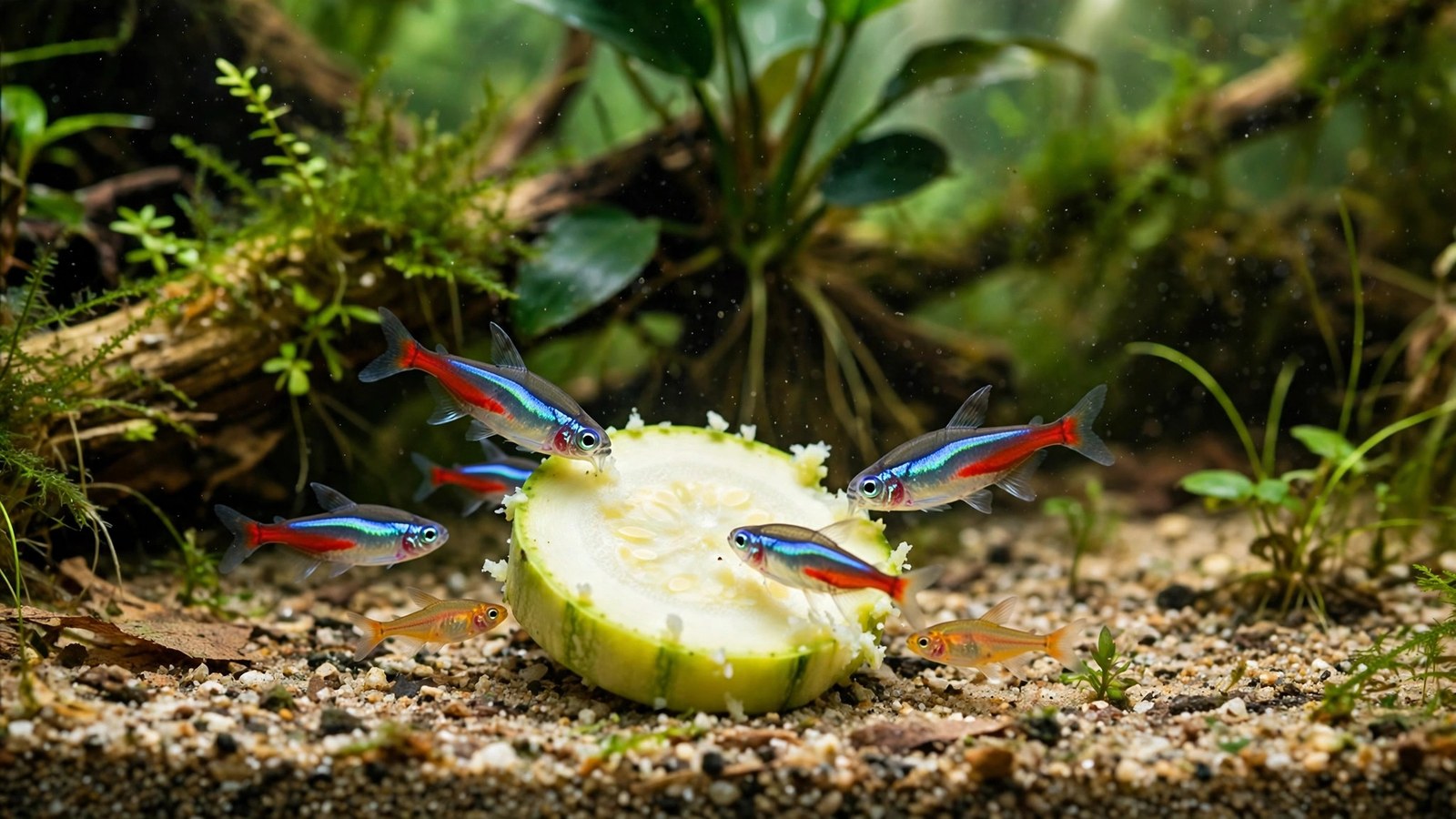
Your pleco has been ignoring those expensive algae wafers, but the moment a slice of zucchini lands on the tank floor, it's a frenzy. That's the secret many herbivorous and omnivorous fishkeepers stumble onto: properly prepared blanched vegetables for fish are one of the cheapest, most nutritious supplemental foods you can offer. The catch? Raw vegetables are too hard for most fish to bite, and vegetables left to rot in the tank spike ammonia fast.
Blanched vegetables are vegetables briefly boiled (1–3 minutes), then plunged into ice water to stop cooking. This breaks down cell walls so fish can rasp and tear pieces, while keeping the vegetable firm enough to stay intact on the tank floor for 6–8 hours. Always remove uneaten portions within 6–8 hours — one rotting zucchini slice in a 20-gallon tank can push ammonia measurably upward overnight.
Blanched Vegetables for Fish: The Step-by-Step Method
The method is the same for every vegetable, so master it once. A stable, well-balanced tank helps too — water stays cleaner during feeding in a setup like the one in our aquarium plants for fish tank guide.
- Prep. Wash the vegetable and slice off any waxy skin. Cut into pieces no wider than about 5 cm (2 inches).
- Boil. Bring a small pot of plain water to a rolling boil — no salt, oil, or seasoning, ever.
- Blanch. Submerge for the time in the table below, then plunge into ice water to stop cooking.
- Cool. Pat dry. Never add warm vegetables to the tank.
- Sink it. Attach a suction-cup veggie clip low on the inside glass, or pin heavier pieces with a clean stainless-steel fork in the substrate.
- Remove on time. Anything uneaten after 6–8 hours comes out.
Which Vegetables Are Safe for Aquarium Fish
Not every vegetable belongs in a tank. The reliable standbys all share three traits: soft flesh after a short blanch, no harmful defensive compounds, and skin or seeds you can easily deal with. Beginner community tanks do especially well with these, since typical residents — plecos, mollies, otos — are enthusiastic grazers.
| Vegetable | Blanch time | Notes |
|---|---|---|
| Zucchini / courgette | 2–3 min | The gold standard. Slice into rounds; skin on is fine. Plecos especially love it. |
| Cucumber | 1–2 min (or raw slices) | Softer than zucchini; scoop out the seeds first. Great for otos and shrimp. |
| Spinach | 30–60 sec | Very quick blanch — overcooking makes it disintegrate. Clip whole leaves. |
| Peas (shelled) | 1–2 min | Deshell after blanching; pop each pea between your fingers. Goldfish favorites, mild laxative effect. |
| Green beans | 2–3 min | Blanch whole, then cut into short lengths. Holds up well in the tank. |
| Kale / romaine lettuce | 1–2 min | Clip the leaf with a veggie clip; remove the tough central rib of kale. |
Skip potatoes, beans with hard skins, and anything from the onion or garlic family — those contain compounds fish don't handle well. Fruit is a separate category with its own risks and shouldn't be lumped in with this routine.
Getting the Vegetables to Sink (and Stay Put)
A floating cucumber slice is a cucumber slice nobody eats. Most bottom-feeders want food anchored on the substrate or pressed against the glass where they can rasp at it.
The simplest option is a suction-cup veggie clip: press it to the inside glass just above the substrate and clip in a leaf or slice. For denser pieces like zucchini rounds, a clean stainless-steel fork pushed into the substrate pins the food down. Avoid brass or copper utensils — copper is toxic to invertebrates. Deshelled peas go well in a small glass feeding dish for easy cleanup, alongside dedicated shrimp foods when feeding a mixed cleanup crew.
The 6–8 Hour Rule: When to Remove Leftovers
This is the single most important discipline in the whole routine. Vegetables don't rot visibly for hours — they just soften, shed tiny particles, and quietly feed the bacteria that produce ammonia. In a warm tropical tank, a forgotten zucchini round can foul water quality within 24 hours.
Set a timer when the food goes in. When it rings, lift out the clip or fork, siphon loose bits with a turkey baster, and check that no pea hulls are wedged behind decorations. If you're often away at feeding time, run your automatic feeder on sinking pellets on those days and save fresh-food days for when you're home.
How Blanched Veg Fits Into the Diet
Think of blanched vegetables as a vitamin-rich supplement, not the main course. One or two vegetable days a week, alternating with algae wafers and quality sinking pellets, gives herbivorous and omnivorous fish the plant fiber their digestion evolved to process. Many keepers report less bloat in goldfish after adding regular pea days — deshelled peas have a mild laxative effect.
Carnivores like bettas and most tetras will mostly ignore vegetables; don't force it. Frozen foods are a separate prep routine — our frozen food guide covers thawing and rinsing those properly.
Frequently Asked Questions
Can I feed raw vegetables instead of blanching?
Some, not all. Raw cucumber and soft lettuce work, but most raw vegetables are too firm for fish to bite and rot before being eaten. Blanching breaks down cell walls so fish can rasp pieces off — zucchini, peas, and green beans should always be blanched first.
Do I need to remove seeds and skins before blanching?
Usually, yes. Scoop cucumber seeds out before the tank — loose seeds scatter and rot in the substrate. Deshell peas after blanching by popping each one between your fingers. Zucchini skin can stay on; it softens in the blanch and plecos enjoy rasping it.
Which fish eat blanched vegetables?
Herbivores and omnivores: bristlenose and common plecos, otocinclus, goldfish, mollies, platies, shrimp, and snails are the most enthusiastic. Carnivores like bettas will ignore vegetables entirely. If your fish are new to fresh food, try blanched zucchini first — it has the highest acceptance rate.
How do I keep the vegetables from clouding the water?
Don't over-blanch — mushy vegetables shed particles that cloud water fast. Firm-blanched pieces stay intact. Anchor the food so it isn't knocked around, remove everything after 6–8 hours, and siphon loose bits with a turkey baster. Properly blanched, firm vegetables should not cloud a healthy tank.
Can I use canned vegetables instead?
No. Canned vegetables are packed in salted or sweetened brine and cooked to mush — the salt alone makes them unsafe for freshwater fish. Salt-free frozen vegetables are acceptable, but fresh vegetables blanched at home give you full control over firmness with no additives at all.
Start Simple, Then Rotate
Your first vegetable feeding should be one blanched zucchini round, pinned down with a fork or clip, and removed after a few hours. Once you see how your grazers respond, rotate through cucumber, spinach, and peas week to week — variety broadens the micronutrient profile. Blanched vegetables for fish cost almost nothing, take ten minutes to prepare, and they're the closest thing to a natural diet many herbivorous species will get. For the science behind the method, the blanching process is well documented — and your fish will demonstrate the rest.