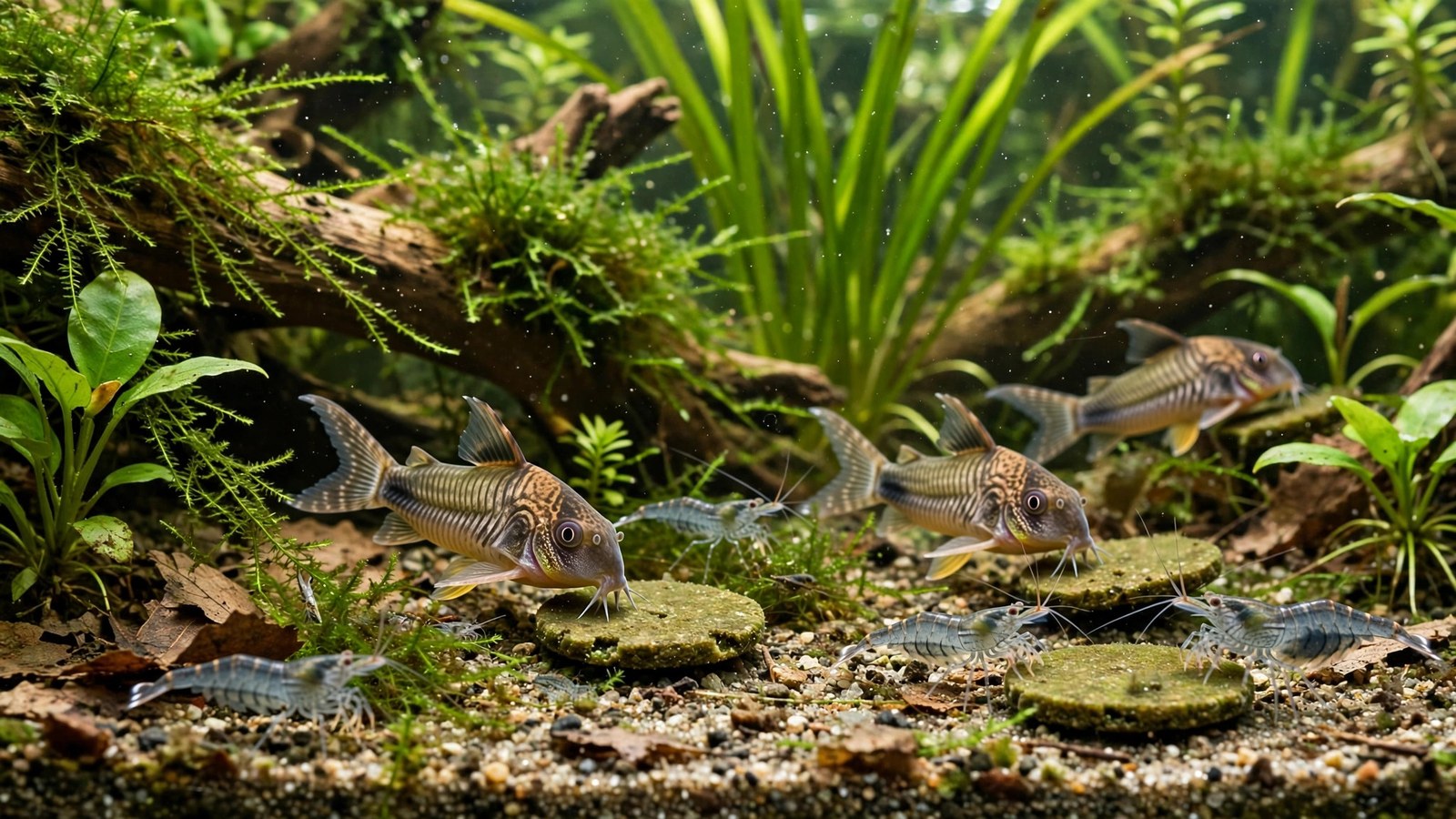
Your pleco is not eating the algae in your tank — at least not nearly enough of it. Tank algae is a thin, mostly indigestible film, while a bottom feeder built for rasping driftwood and riverbed biofilm needs dense, plant-based nutrition. That gap is why choosing the best algae wafers matters: the right wafer keeps your bottom crew fed and healthy instead of slowly starving on an empty pane of glass.
Bottom feeders like plecos and otocinclus need dedicated food — the algae in your tank is not enough on its own. The best algae wafers are fast-sinking discs with spirulina, chlorella, or vegetable meal near the top of the ingredients list. Feed only what your crew finishes in about two hours, two to three times per week. Nocturnal plecos do best fed after lights-out, and any wafer still sitting there by morning must come out before it decays and feeds an algae bloom.
Wafer vs pellet: know the difference
Pellets and wafers look like cousins, but they serve opposite ends of the tank. Pellets are small and soft, designed for mouths that pick food up — they soften within minutes, scatter through the water column, and mid-water fish intercept them before they reach the bottom. Wafers are the reverse: dense, flat discs that punch through the water, land on the substrate, and stay intact for hours while a pleco rasps at its own pace.
In a planted tank, that decides where waste ends up. Pellets roll into carpet plants and dissolve between leaves, feeding algae in spots you cannot reach. A wafer sits on open substrate where your bottom crew works — visible and easy to remove if untouched. The rule: if the fish eats from the bottom, feed it from the bottom. (For the crew above, see our guide to the best sinking pellets for community tanks.) Before stocking grazers, check our fish-first plant selection guide.
The best algae wafers for planted tanks
Every pick below is a long-established product with a real manufacturer behind it — no invented ratings, no mystery brands. Choose by the size of the mouths you are feeding and the ingredients that lead the label.
| Wafer | Form | Ingredient focus | Best for |
|---|---|---|---|
| Hikari Algae Wafers | Standard disc | Spirulina and chlorella with vegetable matter | Plecos, bristlenose, and algae eaters of all sizes |
| Hikari Mini Algae Wafers | Small disc | Same veggie-rich formula, bite-sized | Otocinclus, shrimp, and small bottom feeders |
| Omega One Veggie Rounds | Round disc | Fresh kelp and spirulina on a whole-seafood base | Bottom feeders and shrimp where low waste matters |
| API Algae Eater Wafers | Standard disc | Spirulina-forward and widely available | A dependable pleco staple at any budget |
| Fluval Pleco Sticks | Stick | Insect-protein base with vegetable content | Larger plecos that need protein alongside greens |
What to look for on the label
The ingredients list is ordered by weight, so the first five entries tell the truth the front of the bag hides. You want spirulina, chlorella, kelp, or vegetable meal early — not wheat flour, soybean meal, and corn gluten leading. Those are filler calories, not grazer nutrition. Most plecos are largely herbivorous but opportunistic, so some fish or seafood meal is fine; a meat-heavy formula sold as an algae wafer is not.
Check disc integrity: a quality wafer softens slowly over hours without clouding the water — one that disintegrates on landing is expensive gravel. Follow the maker's own rule: Hikari's official algae wafer product page says feed no more than what your fish consume within two hours, and remove the rest. Buy sealed bags in sizes you will finish; opened wafers go stale within months.
How much to feed — and how often
One standard wafer, two to three times per week, feeds a small crew of one pleco or three to six otocinclus. For otos, scale down: half a mini wafer, or crumbs from a standard one — a full disc is a pollution risk for tiny mouths. Drop it after lights-out so your nocturnal grazers eat first.
Shrimp swarm wafers too, so coordinate rather than double up — see our best shrimp foods guide. Traveling? Drum-style auto-feeders handle flakes and pellets better than discs; check the best automatic fish feeders and how to vacation-proof your planted tank.
Overfeeding is an algae fertilizer program
Here is the cruel irony: the food sold to fight algae is one of the easiest ways to grow it. A wafer finished in two hours leaves almost nothing behind. One left overnight decays into ammonia, then nitrate — the exact fuel green water and hair algae want. The bloom is never the wafer's fault; it is the portion size or the leftovers schedule.
That nitrate fertilizes plants, but badly — in uncontrolled bursts, not measured doses. Remember that fish food is not plant food — do aquarium plants really need fertilizer explains how real plant nutrition works. Watch your pleco's shape as you dial in portions: a rounded belly means fed; a flattening underside means the "plenty of algae" assumption is starving it.
Frequently Asked Questions
Do my plecos still need algae wafers if the tank already has algae?
Yes. Tank algae is mostly a thin, low-nutrition film that cannot sustain a pleco, which evolved rasping nutrient-dense riverbed biofilm and driftwood. A bristlenose needs supplemental wafers two to three times per week even in a green tank, or it slowly starves while looking busy. Check the belly: rounded means fed, sunken means not.
How often should I feed algae wafers to otocinclus?
Feed a quarter to half of a mini wafer two to three times per week — a full disc is a pollution risk for an oto crew. Break wafers into crumbs for small groups. Established tanks with mature biofilm need less; new tanks need more until the biofilm develops.
Can algae wafers cause algae blooms?
Only when overfed. A wafer finished within two hours leaves almost nothing behind; one left overnight decays into ammonia, then nitrate — exactly what green water and hair algae want. The bloom is never the wafer's fault, it is the portion size.
Are algae wafers or sinking pellets better for loaches?
It depends on the loach. Herbivorous grazers like hillstream loaches do well rasping wafers; omnivores such as kuhlis and yoyos prefer protein-rich sinking pellets they can grab quickly. For a mixed bottom crew, alternate both — wafers one day, pellets the next — so every mouth gets food shaped for how it actually eats.
How do I stop mid-water fish from stealing the wafers?
Feed after lights-out: tetras and barbs wind down at night while plecos clock in. Or feed the mid-water crew flakes first, then slip the wafer in while they are distracted, or tuck it behind hardscape. A wafer that reaches the substrate usually survives to the pleco.
Start with one wafer and watch
Buy one well-made wafer — Hikari's discs are the reference point most of the hobby knows — and feed a single disc twice a week. Watch whether it vanishes in two hours or lingers until morning. That one observation tells you more than any review ever will, and keeps your planted tank exactly what it should be: clean, calm, and growing.