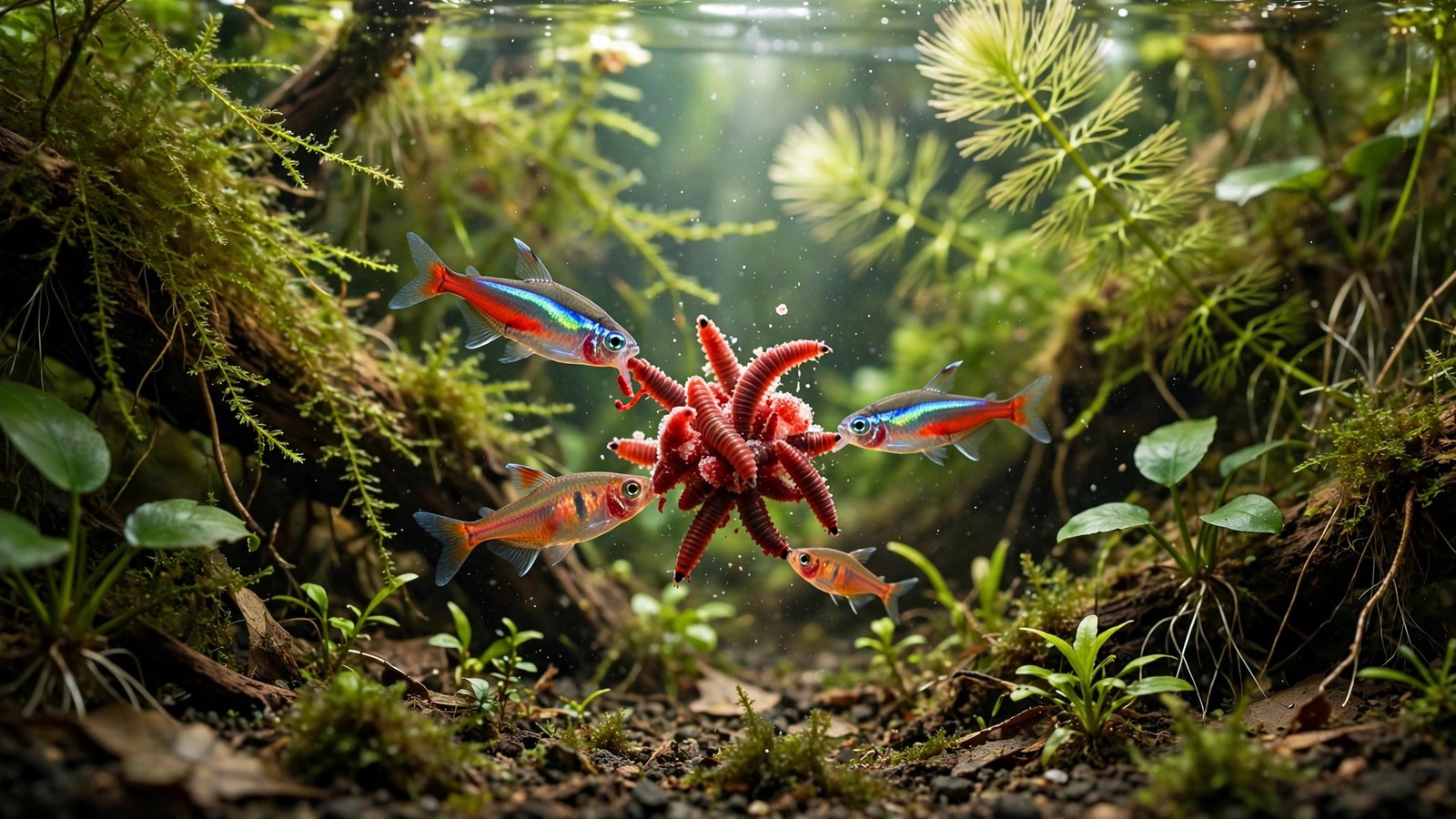
The single most damaging feeding mistake in the hobby takes three seconds: dropping a frozen cube of bloodworms straight into the tank. It thaws slowly, sheds a cloud of protein-rich runoff, sinks uneaten — and by morning your ammonia has spiked. Frozen food for aquarium fish is one of the healthiest diets you can offer, but only when it is thawed, rinsed, and portioned properly first.
The right method takes under ten minutes, and your fish will respond within days: brighter color, livelier feeding behavior, and in many species, visible breeding conditioning. This guide covers every food type, the clean-water thawing method, and portioning rules that prevent ammonia crashes. Pairing nutrition with a thriving planted setup? Our complete guide to aquarium plants for a fish tank shows how diet and plant health work together.
Thaw frozen fish food in a small cup of tank water for 5–10 minutes, pour it through a fine mesh net to drain the meltwater, and feed only what your fish finish in 2–3 minutes, 2–3 times per week as part of a varied diet. Frozen brine shrimp and bloodworms are roughly 85–90% water by weight, so a whole cube is far less food than it looks — half a cube feeds a typical 20-gallon community tank.
Frozen food for aquarium fish: the main types and what each does
Walk into any good fish store freezer and you will see the same lineup of blister packs. Each fills a different nutritional niche, and choosing the right one is half the battle.
| Type | Best for | Thaw notes |
|---|---|---|
| Bloodworms | Bettas, gouramis, tetras, most community fish | Breaks apart easily; drain the rich meltwater |
| Brine shrimp | Fry, small tetras, shrimp, livebearers | Rinse well; drain the packaging liquid fully |
| Mysis shrimp | Larger tetras, cichlids, marine and predatory fish | Portion carefully — uneaten pieces sink fast |
| Daphnia | Guppies, tetras, fish prone to constipation | Mild natural laxative; good weekly "reset" food |
| Tubifex | Bottom feeders, loaches, catfish | Use sparingly; easy to overfeed |
| Krill / plankton | Color enhancement in cichlids and goldfish | Carotenoid-rich; boosts reds and oranges |
Stick with reputable brands that freeze at harvest and package in sealed blister flats — Hikari's Bio-Pure line and San Francisco Bay Brand are the two names most hobbyists trust, and Hikari's feeding resources document thawing and portioning standards for their frozen lines. Avoid mystery packs with no ingredient or origin labeling — their fillers cloud water and go uneaten.
How to thaw frozen fish food safely
Two reliable methods, one of them almost effortless.
The tank-water cup method (recommended)
Break off the piece of cube you need, drop it in a small cup of tank water, and wait 5–10 minutes. Swirl, pour through a fine-mesh net to catch the food, discard the cloudy meltwater, then feed the net's contents to the tank.
The running-water rinse method
Hold the frozen piece in a fine net under cool tap water for 30–60 seconds until no ice remains. This rinses as it thaws — ideal for brine shrimp and daphnia, whose packaging liquid carries algae-feeding phosphates. Never microwave frozen fish food: uneven cooking destroys nutrients.
Portioning by fish type: how much and how often
Frozen food should be a supplement, not the whole diet — 2–3 feedings per week alongside your quality sinking pellets or flake staple. The universal portion rule: feed only what disappears in 2–3 minutes.
For a typical 20-gallon community of tetras, rasboras, and corydoras, half a cube per frozen feeding is usually plenty. A betta or nano tank needs only a pea-sized piece — the rest rots in the substrate. Bottom dwellers like loaches and corys do best when you push the thawed food down near their zone, or pair it with shrimp-safe bottom food for the clean-up crew.
Fry are the exception: newly hatched fry do best on daily small feedings of baby brine shrimp, which triggers the feeding response dry foods often fail to start. As they grow, taper back to the 2–3 times per week rhythm.
Storage and food-safety rules
Keep blister flats at 0°F (−18°C) or colder, pressed flat so cubes stay sealed, and use them within about six months — beyond a year, freezer burn sets in and most hobbyists replace old stock rather than risk it.
Two rules are non-negotiable: never refreeze thawed food, and never leave thawed food at room temperature more than a couple of hours. The bacteria that love thawed protein do not care whose dinner it is.
Traveling or feeding on a schedule? Pair your frozen-food days with an automatic fish feeder for the dry-food days in between, so your routine stays consistent even when you are not home. And if your tank is heavily planted — where nutrient balance matters for both fish and foliage — our guide to the easiest aquarium plants for a beginner community tank pairs low-maintenance plants with a clean feeding routine like this one — and since overfed fish waste and dosed fertilizers both feed algae, check our guide on whether aquarium plants really need fertilizer.
Frequently Asked Questions
Can I feed frozen fish food every day?
You can, but most hobbyists get better results feeding frozen food 2–3 times per week as part of a varied diet. Daily frozen-only feeding risks unbalanced nutrition and more protein runoff in the water. A pellet or flake staple for daily meals plus frozen treats a few times a week gives fish the variety they evolved to eat.
Should I rinse frozen fish food before feeding?
Yes — especially brine shrimp and daphnia. Thaw in a cup of tank water, pour through a fine mesh net, and discard the cloudy meltwater before feeding. That packaging liquid is high in phosphates that fuel algae blooms. Rinsing takes 30 seconds and is one of the simplest things you can do for water clarity.
How long does frozen fish food last in the freezer?
About 6 months at 0°F (−18°C) or colder with no meaningful nutrient loss. After roughly a year, freezer burn sets in and quality drops — most hobbyists replace old stock rather than risk it. Never refreeze thawed food, and refrigerate any unused thawed portion for no more than 24 hours.
Is frozen food better than freeze-dried for aquarium fish?
Frozen food is generally closer to its natural state and more palatable to picky eaters, especially fry. Freeze-dried is convenient and shelf-stable, but drying removes moisture and some volatile nutrients. Many aquarists use both: frozen for conditioning and variety, freeze-dried as a backup.
Why did my water turn cloudy after feeding frozen food?
Cloudy water after frozen feeding almost always means too much food or unrinsed meltwater went in. Thaw and drain properly, feed less, and do a 25–30% water change if the cloudiness persists beyond a few hours — your filter will handle the rest.
Make frozen food your tank's superfood, not its pollutant
Done right, frozen food for aquarium fish is the closest thing to a natural diet most home aquariums can offer: varied proteins, natural feeding behavior, and visible results in color and vitality. The whole method fits on an index card — break off a piece, thaw it in tank water, drain the meltwater, feed what vanishes in two minutes. For the rest of the planted-tank picture — lighting, substrate, and plant selection — see our definitive guide to aquarium plants for fish tanks.