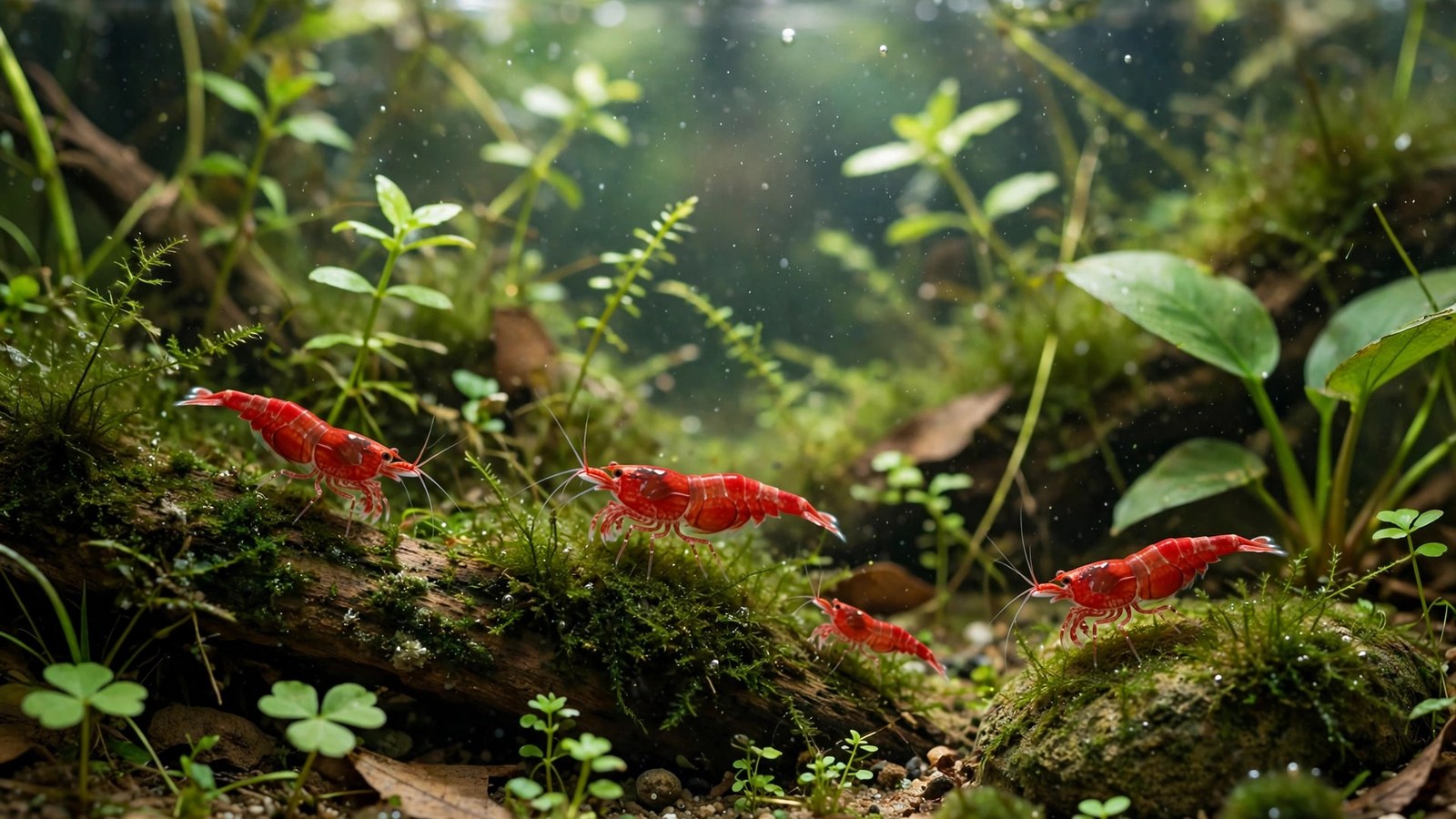
Most shrimp colonies are not starved to death — they are fed to death. A shrimp can survive for weeks grazing microscopic film off your plant leaves, yet one careless overfeeding can spike ammonia and wipe out a colony overnight. The best shrimp food is less about the priciest powder and more about matching food to what shrimp actually eat, how often they need it, and what to keep out entirely.
What Shrimp Actually Eat: Grazers, Not Hunters
Wild shrimp do not chase prey. They crawl slowly over leaves, stones, and driftwood, scraping up the living layer of algae, bacteria, fungi, and detritus we call biofilm. In a mature planted tank, every leaf surface is a grazing field, so the biofilm you grow for your shrimp is quite literally their bread and butter — and the reason established tanks need far less supplemental food than bare ones.
When you drop in a pellet and the adults swarm it, that excited scramble does not mean they were starving. You have handed grazers a calorie bomb — which is why portion discipline matters more than brand loyalty.
Best Shrimp Food: What to Buy for Your Planted Tank
Group your purchases by job, not by brand. These five categories cover everything a colony needs:
| Type | Best for | Typical protein | Strength | Trade-off |
|---|---|---|---|---|
| Staple pellets / sticks | Daily feeding, adult colonies | 30–40% | Complete nutrition; water-stable, won't cloud the tank | Easy to overfeed — one stick feeds ~50 shrimp |
| Shrimplet powders | Baby shrimp too small for pellets | 45–55% | Particles spread everywhere; raises baby survival rates | Clouds water if overdosed; only needed during hatches |
| Mineral sticks | Molting support, 2–3× weekly | ~20% | Calcium + trace minerals for clean molts | A supplement, never the staple |
| Blanched vegetables | Weekly variety: spinach, nettle, zucchini | ~5–15% | Free natural fiber; shrimp graze for hours | Remove after a few hours; rinse pesticide-free |
| Live biofilm | Always-on background food | n/a | Most natural food; zero overfeeding risk | Takes weeks to establish |
Start with one complete staple rather than five half-used jars. A genuinely complete stick formula such as Dennerle's Shrimp King Complete — 100% natural ingredients, no fish meal — recommends about 5 mm of stick per 20 shrimp every one to two days. That dosing is honest about how little shrimp actually need.
Protein and Calcium: The Molting Equation
Shrimp shed their shells to grow, and every molt is a nutritional cliff-edge. Protein builds the new body; calcium and trace minerals harden the new shell. Colonies fed on low-protein scraps grow pale and slow; colonies starved of calcium die mid-molt in the classic white ring of death — a band where the old shell split but the new one never hardened.
Because shrimp, unlike crayfish, cannot store minerals, they need a steady dietary intake. Mineral sticks with 7% calcium and 10% montmorillonite fed two to three times a week are the cheapest insurance for a breeding colony — especially in soft water, where low calcium is the most common recipe for chronic molt deaths.
Feeding Schedules for a Planted Tank
Feeding frequency should track tank maturity, not the bottle label:
| Tank stage | Colony size | Supplemental feeding |
|---|---|---|
| New (under 8 weeks) | Any | Daily tiny pinches — biofilm hasn't developed yet |
| Maturing (2–6 months) | Under 30 shrimp | 3–4× per week, one small portion |
| Established (6+ months) | Under 50 shrimp | 2–3× per week; leaf biofilm covers the rest |
| Established, breeding | 50+ shrimp | 4–5× per week, plus powder while babies hatch |
Feeding and fertilizing are one shrimp-safe system. Plants on a balanced fertilization routine grow more leaf surface, and more leaf surface means more biofilm — your plants literally grow shrimp food. Pair that with shrimp-safe fertilizers and you serve both sides of the equation without copper-based ferts poisoning the colony.
The Overfeeding Trap and Why Feeding Dishes Matter
Here is the cruel math: one day of overfeeding decomposes into more ammonia than a hungry colony would notice in a week without food. Shrimp barely react to hunger — they just graze harder — but ammonia kills within hours, often with no visible symptoms. If you are losing shrimp in a planted tank and feeding generously, review your weekly dosing routine for shrimp tanks — overfeeding is usually at the top of the suspect list.
The one-hour rule solves most of it: put food in a small glass feeding dish and remove anything still there after an hour. The dish keeps pellets off the substrate where they'd rot unseen — it prevents the number-one colony killer.
What to Skip
Not everything labeled "shrimp food" deserves your money. Skip high-starch fish flakes — they dissolve into the water column instead of sinking where shrimp feed. Skip any food listing copper sulfate; copper is lethally toxic to invertebrates at trace levels. And skip unbranded mystery pellets with no ingredient list — unknown nutrition in a sealed ecosystem is a gamble your colony pays for.
Frequently Asked Questions
How often should I feed cherry shrimp in a planted tank?
For an established planted tank with 20–50 shrimp, two to three small feedings per week is plenty, since the colony grazes biofilm between meals. New tanks under two months old need daily tiny portions because biofilm hasn't developed yet. Always remove uneaten food within an hour.
Can shrimp live on algae and biofilm alone?
A small colony in a mature, well-lit planted tank can survive mostly on biofilm, but it will breed poorly and grow slowly without supplemental protein and minerals. Think of biofilm as their daily bread and staple foods as their vitamins — shrimp can live on bread alone, but they thrive on the full diet.
What foods help shrimp molt safely?
Foods rich in calcium and trace minerals — mineral sticks containing calcium carbonate and montmorillonite, fed two to three times weekly — support clean molts and strong new shells. Blanched spinach and nettle also supply natural minerals. Consistent mineral intake matters most, because shrimp cannot store minerals the way crayfish do.
Is it dangerous to overfeed shrimp?
Yes — overfeeding is the most common cause of sudden colony deaths. Rotting food releases ammonia and nitrite, which kill shrimp within hours, while shrimp tolerate days without food easily by grazing biofilm. Follow the one-hour rule: whatever is uneaten after sixty minutes comes out of the tank.
Should I use a feeding dish for shrimp?
A glass or ceramic feeding dish is strongly recommended. It concentrates food where shrimp gather, keeps pellets from sinking into the substrate and rotting unseen, and makes leftover checks instant. Shrimp learn the dish location within days, which also lets you count the colony during feeding time.
Build your plan around the colony's actual biology — grazers with modest appetites and demanding mineral needs — and the best shrimp food question answers itself: one complete staple, a mineral supplement for molting, weekly vegetable treats, biofilm doing the background work, and a feeding dish to keep portions honest. That whole system runs a colony for years.