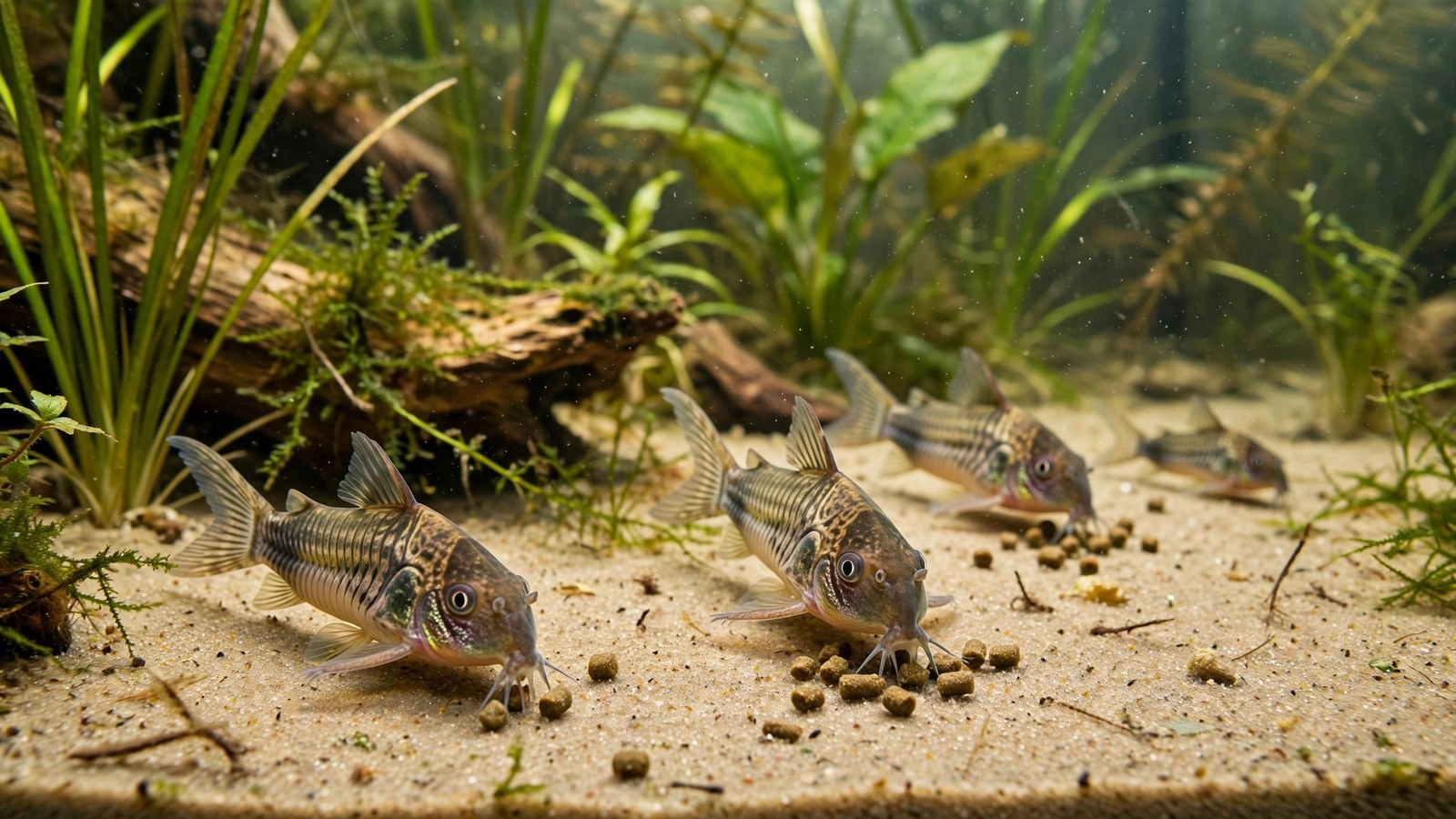
Your corys are starving while your tetras feast. Flakes get hoovered up at the surface, and the crumbs that drift down arrive waterlogged and nearly tasteless. Finding the best sinking pellets aquarium shops actually stock isn't about brand loyalty — it's about matching the pellet to the fish living on the bottom.
Why Bottom Feeders Can't Live on Flakes Alone
Flakes are engineered to float, and floating is the problem. Corydoras, loaches, and plecos have downward-facing mouths built to vacuum, rasp, and gulp along the substrate. Flakes arrive broken, waterlogged, and stripped of the nutrients that made them attractive.
When stocking a fish-first planted tank with bottom dwellers, the floor has to be fed deliberately. A sinking pellet punches through the water column in seconds and holds together while a school of corys vacuums it up. That density makes portion control harder — which is why this guide treats overfeeding as a water-quality topic, not just a feeding one.
The Best Sinking Pellets Aquarium Keepers Actually Rely On
There is no single best pellet. There is a small set of honest product lines, each designed for a specific mouth and gut: identify your bottom feeders first, then pick the formula built for them.
| Feeder type | Pellet type | What to look for | Real product lines |
|---|---|---|---|
| Omnivores (corys, kuhlis, loaches) | Small protein-rich pellets, soft wafers | 35–40% crude protein, 1–2 mm size, softens quickly | Hikari Sinking Wafers ★4.8, New Life Spectrum small-fish pellets, Aqueon Bottom Feeder Tablets |
| Herbivores (bristlenose, otos, rubberlips) | Spirulina-based algae formulas | Vegetable-first ingredients, larger soft wafers | Hikari Algae Wafers, Omega One Veggie Rounds, Aqueon Algae Rounds |
| Large carnivores (bichirs, big catfish) | High-protein carnivore pellets | 45%+ crude protein, large pellet, won't cloud water | Hikari Sinking Carnivore Pellets |
| Shrimp colonies | Fine protein pellets, mineral-enriched | Shrimp-specific formulation, small crumb size | Shrimp-specific formulas |
Omnivore protein pellets: corys, kuhlis, and community loaches
The segment most keepers need. Corydoras are omnivores with a strong animal-protein bent — they forage worms, insect larvae, and small crustaceans in the wild. The reference product is Hikari Sinking Wafers, developed specifically for corydoras catfish and loaches and shaped as a soft disc for small downward-facing mouths that gulp their food. Its guaranteed analysis lists 36% crude protein minimum from fish meal, silkworm pupae, and krill.
New Life Spectrum small-fish sinking pellets are the premium alternative: dense, slow-sinking pellets built around whole krill and fish meal. Aqueon Bottom Feeder Tablets cover the budget end with a 35% protein minimum, and Aqueon's own Bottom Feeder Tablets product page sets the rule: pellets gone in under two minutes, tablets and rounds within one to two hours.
Herbivore spirulina pellets: plecos, otos, and algae grazers
Plecos are not corys, and feeding them cory pellets is one of the quietest mistakes in the hobby. A bristlenose needs vegetable-first food: spirulina, kelp, alfalfa — the ingredients listed first on Hikari Algae Wafers and Aqueon Algae Rounds. Omega One Veggie Rounds take a different route with cold-water kelp and whole seafood, softening slowly for nocturnal rasping.
Herbivore wafers are bigger — 8–15 mm discs — because a pleco holds and rasps rather than gulping. One whole wafer overnight for an adult bristlenose is a sane starting point. Dwarf shrimp do eat sinking pellets, but their molting and biofilm-grazing needs are distinct — see our dedicated shrimp food buying guide for shrimp-specific formulas.
Pellet vs Wafer: What's Actually Different
The terms get blurred in marketing. A pellet is small, dense, and fast-sinking — it lands quickly, breaks into gulpable pieces, and suits corys and loaches that eat in bursts. A wafer (or tablet/disc) is wide, thin, and slow-softening — it sits on the substrate and gives raspers and nocturnal grazers hours of access. Hikari's own official Sinking Wafers page says the discs are designed not to dissolve, so nocturnal feeders can graze — the entire design philosophy of the wafer form.
Then there is the algae wafer — neither interchangeable nor a "healthier pellet." Algae wafers are a separate herbivore category with lower animal protein and vegetable-first ingredients. Feeding them to corys starves the fish of protein; feeding protein pellets as the sole diet to a bristlenose invites bloat and constipation. Buy the category that matches your fish.
The Honest Part: Uneaten Pellets Wreck Your Water
Sinking food has a short grace period. Abandoned pellets leach protein and phosphate almost immediately, and a few ignored wafers in a warm tank can push nitrates up within a day. Pellets should vanish in under two minutes, wafers within an hour or two — anything still on the sand at lights-on comes out with a turkey baster or a quick gravel-vac.
Rotate in frozen bloodworms, daphnia, or brine shrimp two or three times weekly — variety fills gaps no single formula covers. Excess decomposing food is exactly what do aquarium plants really need fertilizer coverage teaches you to manage — if food waste is already fertilizing the tank, comparing liquid fertilizer and root tabs for the rest of your dosing keeps you from double-loading nutrients.
Frequently Asked Questions
How many sinking pellets should I feed my corys per day?
Start with 2–3 small pellets per cory, once or twice daily — about 12–18 pellets total for a school of six. Bellies should look gently rounded after feeding and flat by the next session. Juveniles need two smaller meals; adults thrive on one. Adjust over a week of observation rather than trusting the pack's suggestions, which tend to overfeed.
Can I feed algae wafers to my corydoras instead of protein pellets?
No — not as a staple. Corydoras are omnivores with a protein bent, and algae wafers are herbivore formulations with vegetable-first ingredients and lower animal protein. Fed long-term, corys on algae wafers lose condition and breeding vigor. Use a protein-rich sinking pellet as the base diet and reserve algae wafers for plecos, otos, and other grazers.
Do sinking pellets cloud aquarium water?
Not when fed as directed — quality sinking foods are engineered to soften without disintegrating, and both Hikari and Aqueon state their formulas won't cloud water when portioned correctly. Clouding comes from overfeeding, not the pellets. Remove anything untouched after the feeding window: under 2 minutes for pellets, 1–2 hours for wafers.
When should I feed bottom feeders — morning or night?
Evening, shortly after lights out, is the best default. Most corys, loaches, and plecos are crepuscular or nocturnal, so they feed most actively as the tank dims — and midwater fish are asleep, so they can't steal the sinking food on its way down. Prefer daytime? Scatter portions in two or three spots so every fish gets a share.
What's the difference between sinking pellets and sinking wafers?
Pellets are small and dense — they sink fast, break into gulpable pieces, and suit corys and loaches that eat in quick bursts. Wafers (or tablets/discs) are wide, thin, and slow-softening, designed to sit on the substrate for hours so nocturnal grazers and raspers like plecos can feed at their own pace. Algae wafers are a separate herbivore category entirely.
The best sinking pellet is the one your bottom feeders are built to eat. Protein-rich pellets for corys and loaches, spirulina wafers for plecos overnight, portions tight enough that nothing survives to morning.