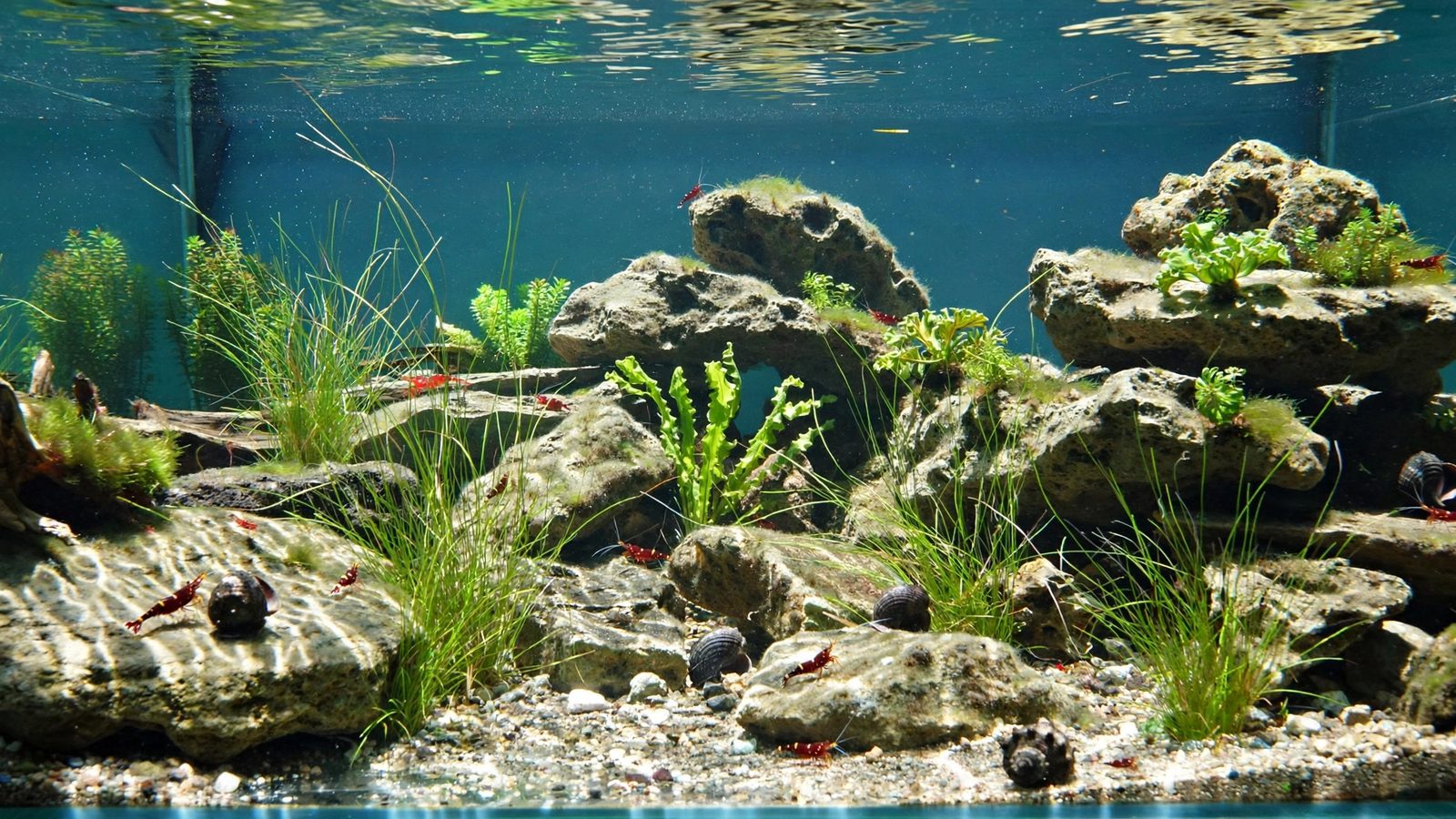
Building a Sulawesi biotope aquarium means recreating one of the strangest freshwater environments on Earth: ancient tropical lakes where the water runs warm and alkaline, yet stays remarkably soft. Get it right and cardinal shrimp and rabbit snails — found nowhere else on Earth — graze your rocks as they do in the wild; get it wrong and they die within days. This guide covers the chemistry paradox, the Lake Matano vs Lake Poso choice, and a step-by-step build. New to biotope tanks? Read our biotope aquascaping guide first, then come back for the Sulawesi specifics.
The chemistry paradox: high pH, soft water
Most aquarium rules tie pH to hardness: alkaline water is hard, acidic water is soft. The ancient Sulawesi lakes break that rule. The shallows of Lake Matano measure around pH 7.4–8.5 with a conductivity of only about 224 µS/cm — warm, mineralized just enough to push pH up, but genuinely soft and nearly free of dissolved organics.
That is why "just buffer your tap water" fails here. Tap plus a carbonate buffer gives alkaline and hard water — not the lake. The reliable method: RO or distilled water remineralized with a Sulawesi-specific mineral salt (the 7.5 and 8.5 variants are the two common targets), mixed to TDS 80–120 ppm, then verified with a liquid test kit: pH 7.5–8.5, GH 4–7, KH 2–5. Log the numbers — in this biotope you keep a recipe, not adjust on the fly.
Draft requires RO water remineralized with mineral salts to hit pH 7.5-8.5 with low GH/TDS - the exact job of this shrimp-safe GH+ remineralizer: Salty Shrimp Bee Shrimp Mineral GH+ ★4.8.
Lake Matano vs Lake Poso: pick your lake
"Sulawesi" is not one biotope. The two famous ancient lakes sit in different systems with different endemics:
| Lake Matano | Lake Poso | |
|---|---|---|
| System | Malili Lakes, South Sulawesi | Central Sulawesi, separate basin |
| Size | 590 metres deep, deepest lake in Indonesia | ~450 m deep, drains north to the Gulf of Tomini |
| Age | 1–2 million years | Ancient, tectonic origin |
| Signature livestock | Cardinal shrimp, rabbit snails | Its own endemics; no cardinal shrimp |
| Target | Alkaline shallows, rocky cliffs | Similar chemistry, different inhabitants |
Choose Lake Matano first: it is better documented and both flagship endemics are obtainable. Everything below describes the Matano shallows — 27–29°C, ultra-oligotrophic, rocky substrate, near-constant year-round.
Building your Sulawesi biotope aquarium: step by step
Step 1 — Tank and equipment
A 40–80 litre tank is the sweet spot: chemically and thermally stable, yet small enough that RO water changes stay practical. Filter gently — a sponge filter or baffled internal — because shrimplets are tiny and endemics evolved in low-nutrient, low-flow water. A reliable adjustable heater is mandatory to hold 27–29°C through winter; two small heaters beat one large one for redundancy.
Step 2 — Substrate and hardscape
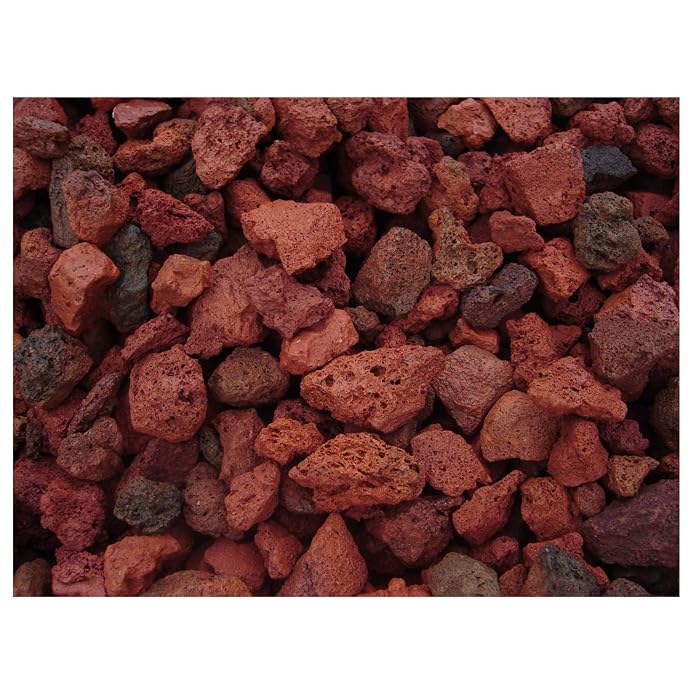
The Matano shallows are rock, not planted meadows. Lay thin inert sand or fine gravel (no buffering substrate — it fights your chemistry), then build the rockscape first: dark lava rock and smooth river stone stacked into cliffs and crevices. Building hardscape-first gives a far more natural result than planting first, and sloping the substrate front-to-back adds depth to the rocky slope these animals inhabit.
Let the rocks go green: cardinal shrimp graze biofilm and soft algae off hard surfaces all day, so a mature, algae-filmed rockscape is their pantry. Seed with established filter media or rocks from a healthy tank to kick-start biofilm.
Step 3 — Water and maturation
Fill with RO water remineralized to pH 7.5–8.5, GH 4–7, KH 2–5, TDS 80–120 ppm. Cycle fully, then mature six to eight weeks before stocking — cardinal shrimp belong only in established aquariums. Test weekly and log the numbers; your target is a flat line.
Step 4 — Plants: garnish, not the main event
Vegetation is naturally sparse in ultra-oligotrophic water. A small stand of hardy Vallisneria behind the rocks is authentic and forgiving; for more options see our complete freshwater aquarium plants guide. Keep planting light — the rocks and animals are the show.
 ★4.3
LANDEN Natural Red Lava Rocks
Check Price on Amazon ★4.3Livestock: cardinal shrimp, rabbit snails, and companions
Stocking a biotope is a research exercise, and the rule is endemics only:
- Cardinal shrimp (Caridina dennerli) — the scarlet, white-spotted jewel of Matano's shallows, grazing rocks from the surface down to about 10 metres in the wild. Start with 10–15 in a mature tank and read our cardinal shrimp care guide before buying — they are among the least forgiving dwarf shrimp in the hobby, and are listed as Critically Endangered, so buy tank-bred stock.
- Rabbit snails (Tylomelania spp.) — the lake's gentle bulldozers, thriving in the same warm, alkaline water.
The endemic sailfin silversides (Telmatherina spp.) are the lake's native fish, but they are rarely available in trade and need larger tanks — a shrimp-and-snail tank is the honest, achievable version. For stocking principles see the aquarium plants for fish tank guide, but keep it species-only in spirit: no Neocaridina, no soft-water Caridina, no shrimplet-eating fish. Cardinals are shy, so faint, low lighting helps them settle. This cardinal shrimp water parameter guide documents the measured lake data behind the hobby targets.
Maintenance: the stability rule
Ancient lakes change on geological timescales; your tank must change on none:
- Water changes: 10–15% weekly with pre-aged, parameter-matched RO-mineral water; large single changes kill shrimp.
- Temperature: hold 27–29°C constantly. Past ~31°C in summer is a genuine emergency.
- Feeding: cardinals mostly ignore pellets. Feed powdered biofilm foods sparingly and let the algae-filmed rocks do the rest.
- Chemicals: no copper-based medications, ever — copper is lethal to shrimp.
- Logging: test pH, GH, KH, TDS weekly; when numbers drift, trace the cause before it compounds.
Done right, the payoff is a warm, crystalline tank where animals that evolved in isolation over millions of years go about their lives on your rocks.
Frequently Asked Questions
Can I use tap water for a Sulawesi biotope?
Almost certainly not. Most tap water that reads alkaline is also hard, while the Sulawesi lakes are alkaline yet soft. Start from RO or distilled water and remineralize with Sulawesi-specific mineral salts to pH 7.5–8.5, GH 4–7, KH 2–5. Only use tap if it naturally falls in those ranges, which is rare.
How warm does the tank really need to be?
Hold 27–29°C year-round with a reliable adjustable heater. These ancient lakes have almost no seasonal temperature change, so the animals have zero tolerance for cool periods. Sustained temperatures below about 25°C stress cardinal shrimp; heat above ~31°C needs active cooling.
Can cardinal shrimp live with cherry shrimp or crystal reds?
No. Cardinal shrimp need warm, alkaline water (pH 7.5–8.5, 27–29°C) while cherries prefer cooler, more neutral water and crystal reds want soft acidic water. Mixing them means compromising someone's requirements, so always keep Sulawesi endemics in a dedicated, species-only tank.
Do I need live plants in a Sulawesi biotope?
No — the biotope is more authentic without many. The ancient lakes are ultra-oligotrophic, so the natural look is rock, algae films, and biofilm, not planted meadows. Cardinal shrimp feed by grazing those films. A small stand of hardy Vallisneria is the most you need.
Why are my new cardinal shrimp dying in the first week?
The usual cause is an immature tank or unstable parameters, not disease. Cardinals need a fully cycled, biofilm-mature aquarium — budget six to eight weeks — plus steady pH, temperature, and TDS. Acclimate by drip over several hours, and test ammonia and nitrite: even trace readings are lethal.
Master the alkaline-yet-soft paradox once, and no water parameter will ever intimidate you again.