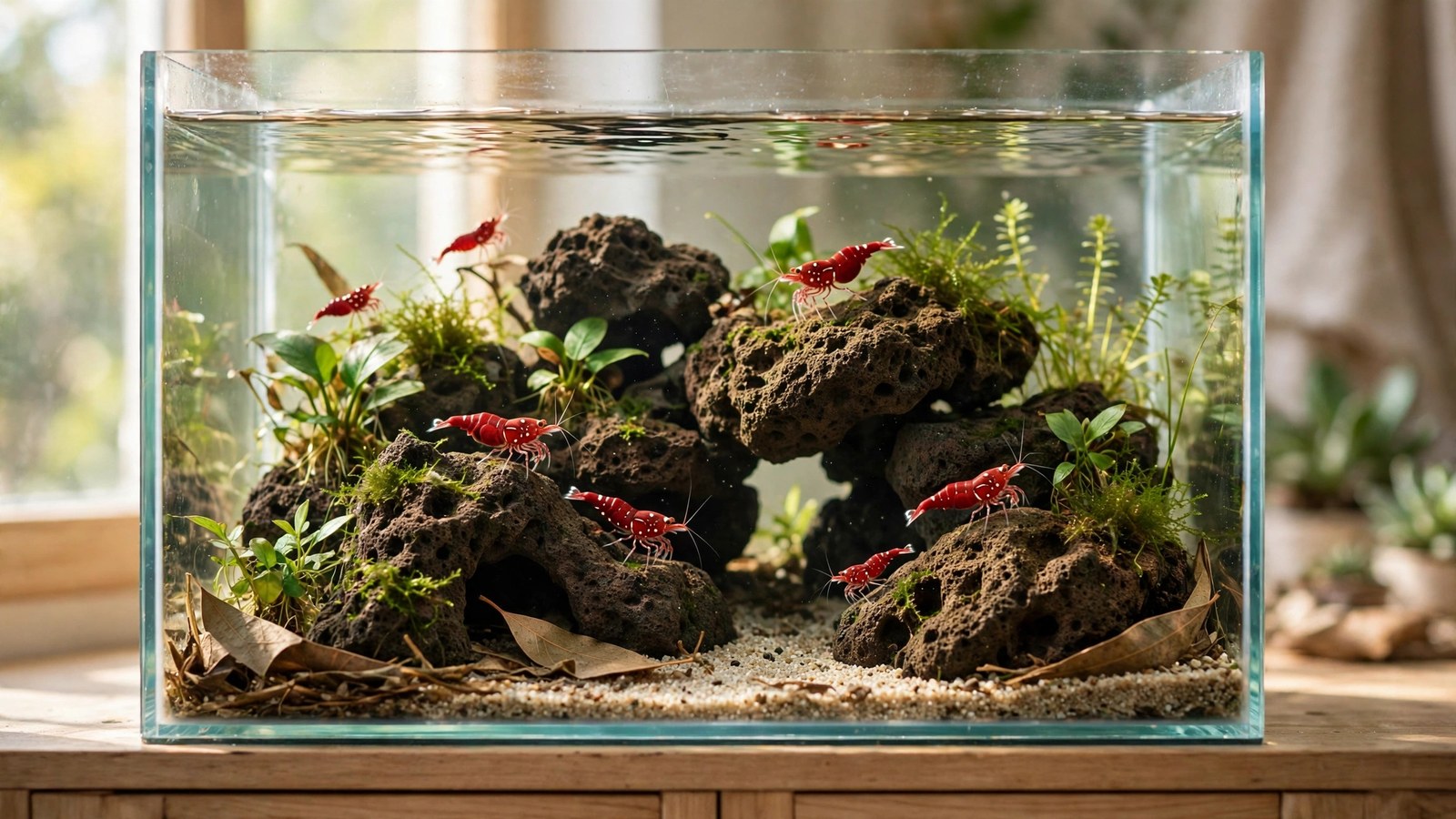
Everything you know about keeping shrimp will try to kill a Sulawesi shrimp. The cherry shrimp that thrives at room temperature and pH 6.8? That setup is a death sentence for Caridina dennerli, the cardinal shrimp of Sulawesi's ancient lakes. These shrimp want water your tap rarely provides: 78–86°F, pH 7.5–8.5, and a tank so mature and stable that nothing moves for months. This guide to sulawesi shrimp care is the opposite of every soft-water shrimp guide you've read. If you've only kept shrimp the easy way, start with a planted shrimp tank setup primer, then come back ready to unlearn.
Why Cardinal Shrimp Break Every Shrimp Rule
Most dwarf shrimp come from soft, cool streams. Cardinal shrimp come from ancient rift lakes — Matano, Poso, Towuti — warm and mineral-rich for hundreds of thousands of years. Caridina dennerli evolved in one of the most stable aquatic environments on earth, so it never developed tolerance for change.
The spine of this story is contrast. A cherry shrimp colony dies at 82°F. A crystal red shrimp's molts fail at pH 8.0. Cardinal shrimp fail the other way: soft, cool water kills them in weeks. There is no middle ground. Choose your colony, then build the water around it.
Sulawesi Shrimp Care: The Parameters That Matter
| Parameter | Target range | Notes |
|---|---|---|
| Temperature | 78–86°F (26–30°C) | Hold 80–84°F; a reliable heater is non-negotiable |
| pH | 7.5–8.5 | Aim ~8.0; daily swings above 0.2 stress cardinals |
| GH | 4–8 dGH | Calcium for molts, harder than crystal shrimp water |
| KH | 3–6 dKH | Buffers pH high; consistency matters more than the number |
| TDS | 120–220 ppm | Most hobbyists report best results around 180 |
| Ammonia / nitrite | 0 ppm | Anything above zero is an emergency |
| Nitrate | Under 10 ppm | Your water-change schedule exists to hold this line |
Start from RO or dechlorinated water remineralized with a Sulawesi-specific product (Salty Shrimp Sulawesi 8.5 is the standard reference), which sets pH, GH, and KH together the way the lakes do. Municipal tap water shifts seasonally — a spring pH drift can become a dead colony.
Cycle for Months, Not Weeks
A standard fishless cycle takes 4–6 weeks. For cardinals, that is barely the beginning. After the nitrogen cycle completes, the tank needs another 6–8 weeks to grow the biofilm and microbial grazing layer the shrimp actually eat. Eight to twelve weeks of maturity before the first shrimp is the honest number.
Keep the lights on strong during seasoning: light feeds the biofilm. The nitrogen-cycle mechanics are standard — a cycle a planted tank guide covers those — but for Sulawesi, double every timeline you read there.
Substrate and Plants for Warm Alkaline Water
The most expensive mistake in this hobby: an active buffering substrate. Aquasoils made for crystal shrimp pull pH toward 6.5 — exactly what kills cardinals. Use only inert substrates: crushed coral, limestone, aragonite sand, lava rock, or inert sand with limestone rubble. They push pH up and hold it there, mimicking the lakes' mineral bed.
Plant choices are narrower, but the reliable ones are bulletproof: anubias (attach to rock, never bury), java fern, bucephalandra, susswassertang, and marimo moss balls — all tolerate 82°F and pH 8.0. The easiest aquarium plants for beginners list overlaps heavily with this palette. Rock-forward hardscape — stacked lava rock and limestone — gives grazing surfaces and caves in one. See the first planted tank shopping list, swapping aquasoil for inert rock and sand.
Feeding: Less Than You Think
Cardinals are detritus grazers, not bold foragers. Biofilm — the microbial layer on rock and glass — is the main diet, and the tank feeds them continuously while you feed them sparingly. Overfeeding is the fastest way to crash a Sulawesi tank: uneaten food spikes nitrates in 82°F water within hours.
Offer powdered foods 2–3 times a week in amounts that vanish within two hours: spirulina powder or fine biofilm-based shrimp foods. A pinch, not a scoop. A mature tank's biofilm in a shrimp tank does the heavy lifting between feedings. And since this is a low-tech setup with slow growers, you can usually skip fertilizers entirely — the safest answer for copper-sensitive shrimp. Read the case for whether aquarium plants really need fertilizer before dosing anything.
Breeding: Few Eggs, Fragile Babies
Getting cardinals to the berried-female stage is achievable — females carry a small clutch for three to four weeks, then release miniature shrimplets. The difficulty starts after hatching: clutches are small, babies stay vulnerable for a long time, and they are the first casualties of any parameter wobble.
Most hobbyists report colonies stall at a handful of shrimplets that never recruit into the adult population — tanks under six months old rarely produce surviving generations, while year-old systems quietly multiply. A breeding tank plants setup guide covers plant architecture; the Sulawesi rules override the standard ones: warm, alkaline, old.
Tank Mates: Almost Nothing
The honest recommendation is a species-only tank. Fish that tolerate 82°F will stress cardinals or eat shrimplets. The one widely accepted companion is a Sulawesi rabbit snail (Tylomelania) — it shares the same lake chemistry and works as a tank-health indicator: if the snail slows down, check parameters before the shrimp show symptoms.
New shrimp die from shipping stress and parameter shock more than disease, so drip-acclimate arrivals for four hours minimum. Follow a proper drip acclimation method for shrimp, matching temperature within a degree before the drip starts.
Frequently Asked Questions
Can I keep Sulawesi shrimp with cherry shrimp or crystal shrimp?
No — their requirements are mutually exclusive. Cherries want 65–75°F and soft water; crystals want pH 5.8–6.8; cardinals want 78–86°F and pH 7.5–8.5. No compromise point keeps both healthy. For multiple shrimp species, build separate dedicated tanks, which is how experienced keepers do it.
How long must a tank mature before adding cardinal shrimp?
Aim for 8–12 weeks of maturity after the nitrogen cycle completes. The extra weeks grow the biofilm and grazing layer cardinals feed on, and let pH and hardness settle into a rock-stable band. Adding cardinals to a freshly cycled four-week tank is the most common cause of colony failure.
Why did my Sulawesi shrimp die within days of arrival?
Usually parameter shock or an unstable tank: pH swings between source and destination water, ammonia or nitrite above zero, temperature below 78°F, or an immature tank without grazing biofilm. Drip-acclimate for at least four hours, and verify the receiving tank has been stable for months before ordering shrimp.
Do Sulawesi shrimp need a heater?
In almost every home, yes. Cardinals need a constant 78–86°F — no typical room stays that warm year-round, and even a 5°F night drop stresses them. Use a reliable adjustable heater with a separate thermometer, and consider a controller for valuable colonies.
Is RO water required for Sulawesi shrimp?
Not strictly, but it's the safest route. Tap water chemistry shifts seasonally, and a spring pH or hardness drift can stress a colony that tolerates zero instability. Most successful keepers start from RO water remineralized with a Sulawesi-specific product, locking pH, GH, and KH into the lake profile.
The Payoff for Getting It Right
Cardinal shrimp are not a beginner species, and this guide hasn't pretended otherwise. But once the tank is seasoned, the water stable, and the biofilm thick — colonies can run for years with almost no intervention. That is the reward sulawesi shrimp care offers: a tank that demands perfection once, then repays patience forever. Compare the parameters here against The Shrimp Farm's cardinal shrimp care guide or ShrimpKeepers' cardinal shrimp species profile and you'll find the same story: warm, alkaline, stable, mature. Build that, and you're done.