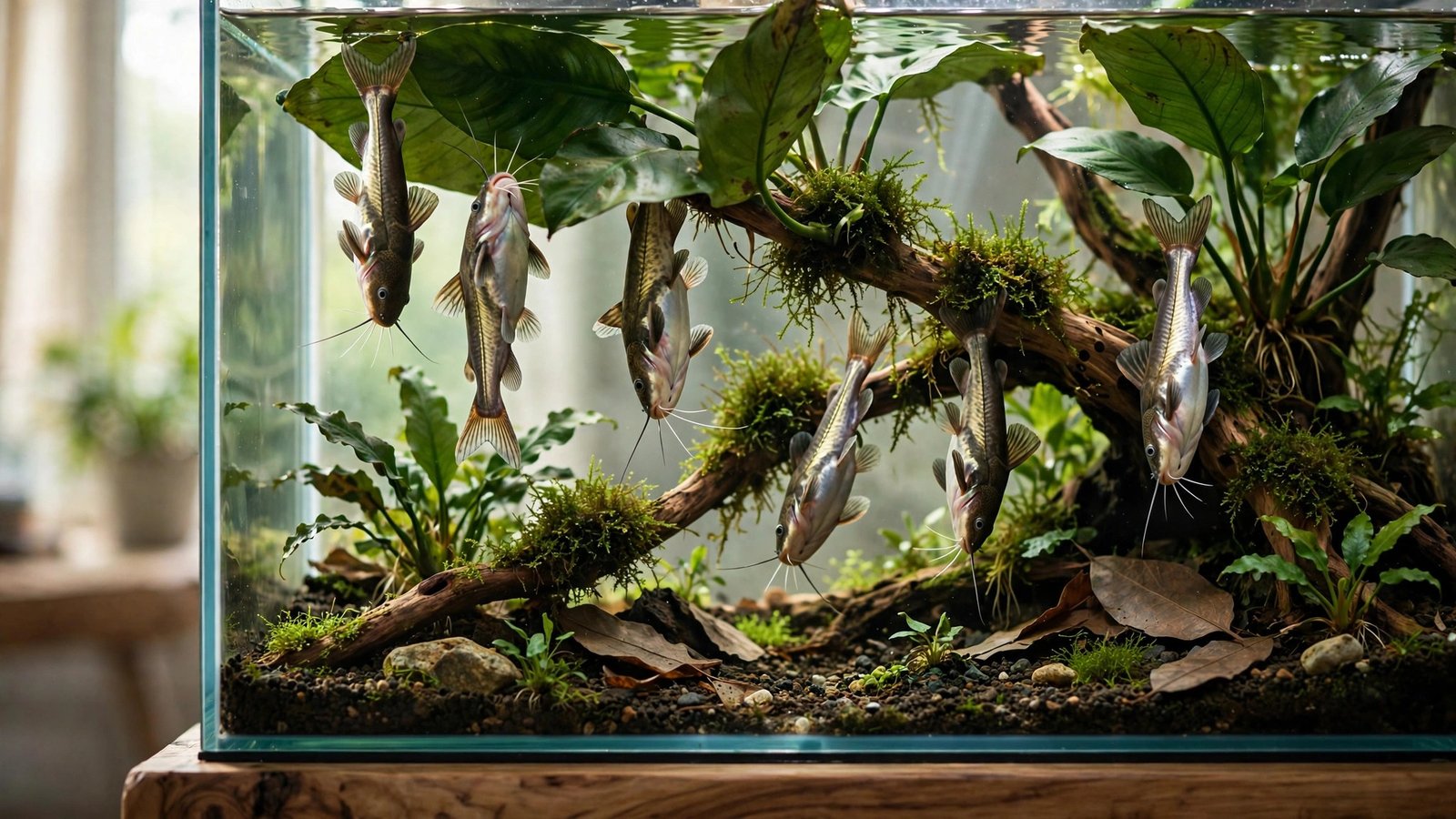
Walk up to your tank at midnight with a flashlight and you might think someone flipped your aquarium's gravity. A small, dark-bellied catfish glides belly-up along the undersides of your Amazon swords, plucking insect larvae from the leaves. That is the whole promise of an upside down catfish planted tank: a fish whose most famous behavior only exists when real plants give it something to browse.
Do upside-down catfish work in a planted tank? Yes — they are one of the best-behaved catfish for one. Synodontis nigriventris spends up to 90% of its time inverted, feeding from the water surface and the undersides of broad leaves, a habit documented in multiple postural-control studies (Seriously Fish). A group of 3–4 needs only a 70-litre (30" × 12" × 12") tank, soft-to-moderate water at 24–28 °C, and a densely planted setup with floating cover.
Why an Upside Down Catfish Planted Tank Works So Well
Most bottom-feeder catfish spend their lives on the substrate. Synodontis nigriventris, the upside-down catfish, is the odd one out — a member of the Mochokidae family from the densely vegetated riverbanks of the Congo Basin (Zaire/Congo, Kasai and Oubangui rivers) that treats the undersides of leaves the way other catfish treat the tank floor. When you plan an fish-first guide to aquarium plants around this species, the plant choices do double duty: decoration for you, hunting ground for them.
Browse behavior is the whole show. In a bare tank the fish simply hangs at the surface. In a planted tank it roams upside-down under broad leaves, rasping biofilm and tiny organisms with the teeth in its lower jaw. Amazon swords (Echinodorus) or Anubias work best — big, flat, easy to cling to.
Tank Size and Water Parameters
These are small fish, but the group requirement sets the footprint. Seriously Fish recommends a 30" × 12" × 12" (70-litre) base for a proper group — about 20 gallons as the honest minimum, 30 gallons if you want six individuals plus tank mates. Height matters less than floor space; the action happens at mid-water and the surface.
| Parameter | Target |
|---|---|
| Tank size | 20 gal minimum; 30 gal for a full group |
| Temperature | 75–82 °F (24–28 °C) |
| pH | 6.0–7.5 |
| Hardness | 5–20 °dGH |
| Nitrates | Below 20 ppm — clean water is non-negotiable |
| Flow | Moderate; gentle current, not a torrent |
| Lid | Tight-fitting — they surface-feed and can startle |
Nitrate sensitivity is the parameter people underestimate. These fish tolerate a wide pH range, but chronic nitrates above 20 ppm stress them and shorten that 15-year lifespan. Weekly 30% water changes and an AquaClear-class hang-on-back filter keep their water clean.
Plants, Driftwood and Sand: Building the Habitat
Think of the layout in three layers: canopy, structure and floor. The canopy is floating plants — water lettuce or frogbit — which dim the lighting to the low levels these nocturnal fish prefer and give them shaded surface water to feed in. Our beginner's guide to floating aquarium plants walks through the species and care; the dimming effect it describes is exactly what calms upside-down catfish.
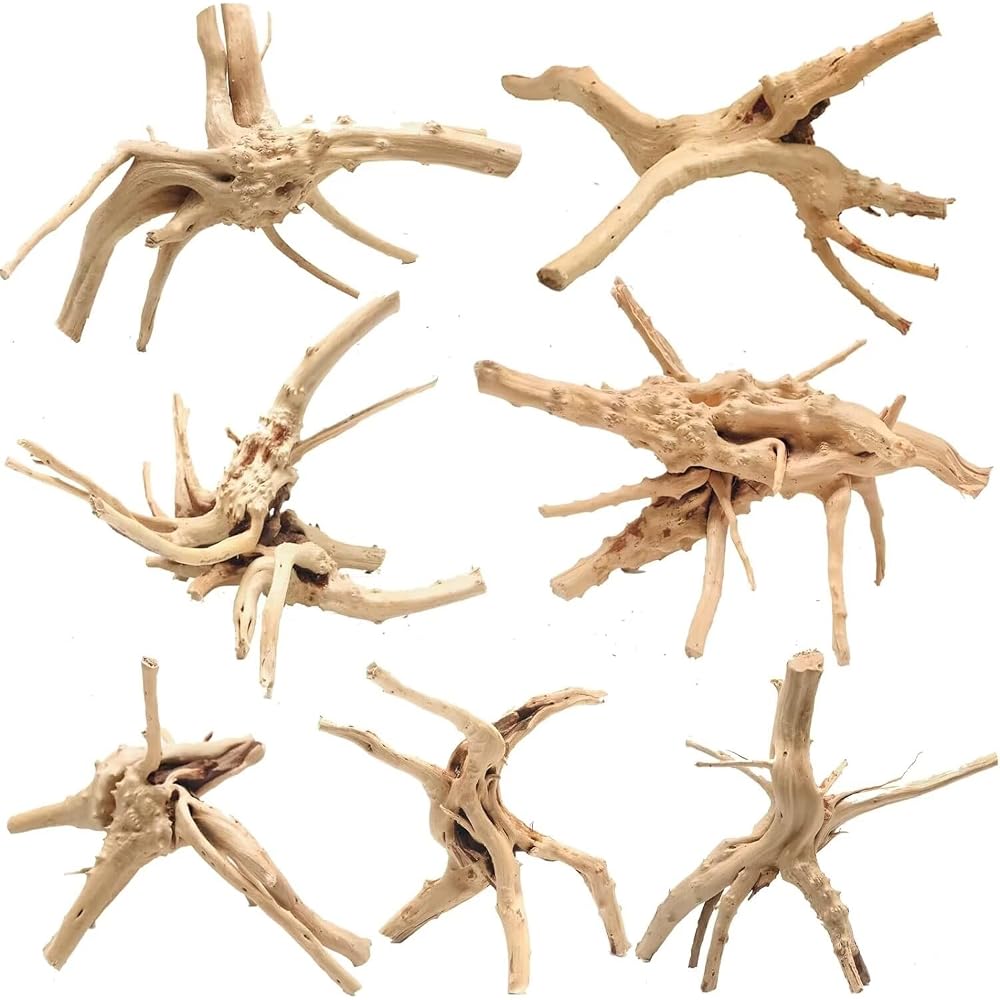
Structure is driftwood and caves. Twisted root pieces arranged into hiding places mimic the vegetated riverbanks of the Congo, and small stone or ceramic caves give each fish a daytime roost. The mid-layer planting is broad-leaved plants — Amazon swords and Anubias tied to the wood — whose leaf undersides become the nightly buffet. Keep planting dense at the back and sides, with a clear lane at the front for viewing.
The floor should be sand, not gravel. Like all catfish, these fish have delicate barbels that erode on sharp substrate, and sand lets them sift naturally. A fine pool-filter sand or soft aquarium sand 3–5 cm deep is enough.
 ★4.2
Hamiledyi Natural Spider Wood Driftwood
Check Price on Amazon ★4.2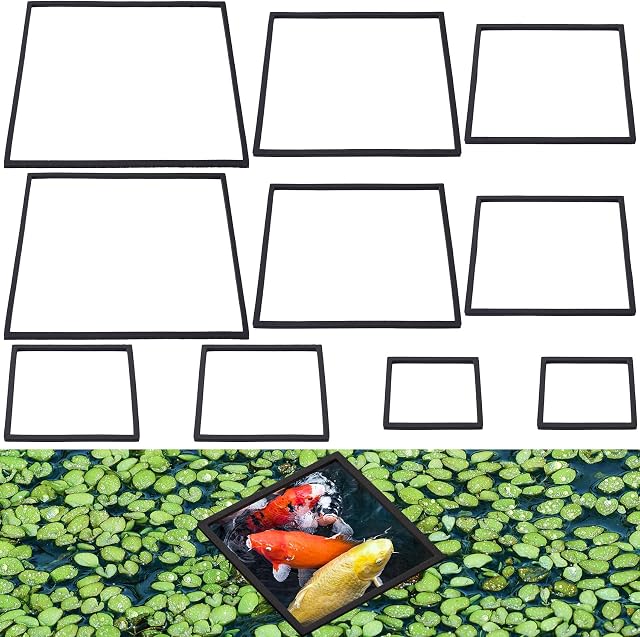 ★3.9
PAGOW Floating Plant Corral Rings
Check Price on Amazon ★3.9Feeding at Night
Upside-down catfish are nocturnal — feed them like day fish and the food is gone before they wake up. Feed 30–60 minutes after lights-out: a sinking wafer or small sinking pellets as the staple, rotated with frozen bloodworms, brine shrimp and daphnia, plus occasional blanched courgette or shelled peas. Offer some as floating pellets: they pluck them belly-up at the surface, the single most entertaining feeding behavior in the hobby.
Portions stay small: what the group finishes in 3–4 minutes, once nightly. Uneaten food decays into the nitrates these fish hate.
Tank Mates and Group Size
Never buy one. A solitary upside-down catfish is a stressed, invisible catfish. Groups of 3–6 give them the confidence to feed in the open, and watching them interact belly-up is half the point. They are one of the gentlest members of the Synodontis genus — safe with tetras, rasboras, dwarf cichlids like Pelvicachromis, and peaceful community fish. Small, calm mid-water schoolers make good dithers; something like a purple emperor kerri tetra school adds movement without stealing the night shift's food.
For other bottom dwellers, match temperament: peaceful raphael catfish and tiny asian stone catfish share the lower tank without competing for the leaf-underside niche. Skip aggressive cichlids. Buy carefully — shops sometimes sell the larger S. contractus under the same name; true nigriventris stays 8–10 cm with a smaller head and eye.
Frequently Asked Questions
Can upside-down catfish live alone?
They can survive alone, but they should not live alone. Solitary individuals hide constantly, eat poorly and stress easily. Keep at least three — six is ideal — and you get confident fish that browse leaf undersides in the open. The 20-gallon minimum assumes a group, not one fish.
Will they eat my aquarium plants?
No. They browse the undersides of leaves for biofilm, algae and tiny organisms, but they do not chew or uproot plants. Broad-leaved species like Amazon swords and Anubias actually host their feeding behavior. They are one of the safest catfish you can put in a planted tank.
Why is my upside-down catfish always hiding?
Three usual causes: bright lighting with no floating-plant shade, a solitary fish, or nitrates creeping above 20 ppm. Dim the tank with water lettuce or frogbit, make sure there are at least three of them, and test the water. They are nocturnal, so expect most activity after lights-out regardless.
How long do upside-down catfish live?
Up to 15 years in a well-kept planted tank — one of the longest-lived small community catfish. That longevity depends on clean, low-nitrate water, a proper group and a sand substrate that protects their barbels. Buy them expecting a decade-plus resident, not a short-term novelty.
Do they really swim upside-down all the time?
Up to 90% of the time, yes. Their dark belly (the name nigriventris means "black belly") is camouflage against predators looking down from above while they feed at the surface. Studies found their balance organs are normal — the inverted posture comes from a unique inner-ear reflex that resets past a 22° tilt.
Set up the dim, leafy tank they evolved for and the upside-down catfish does the rest — quietly, at night, from the underside of your plants. For the species' full technical profile, including breeding notes, see the Seriously Fish profile for Synodontis nigriventris.