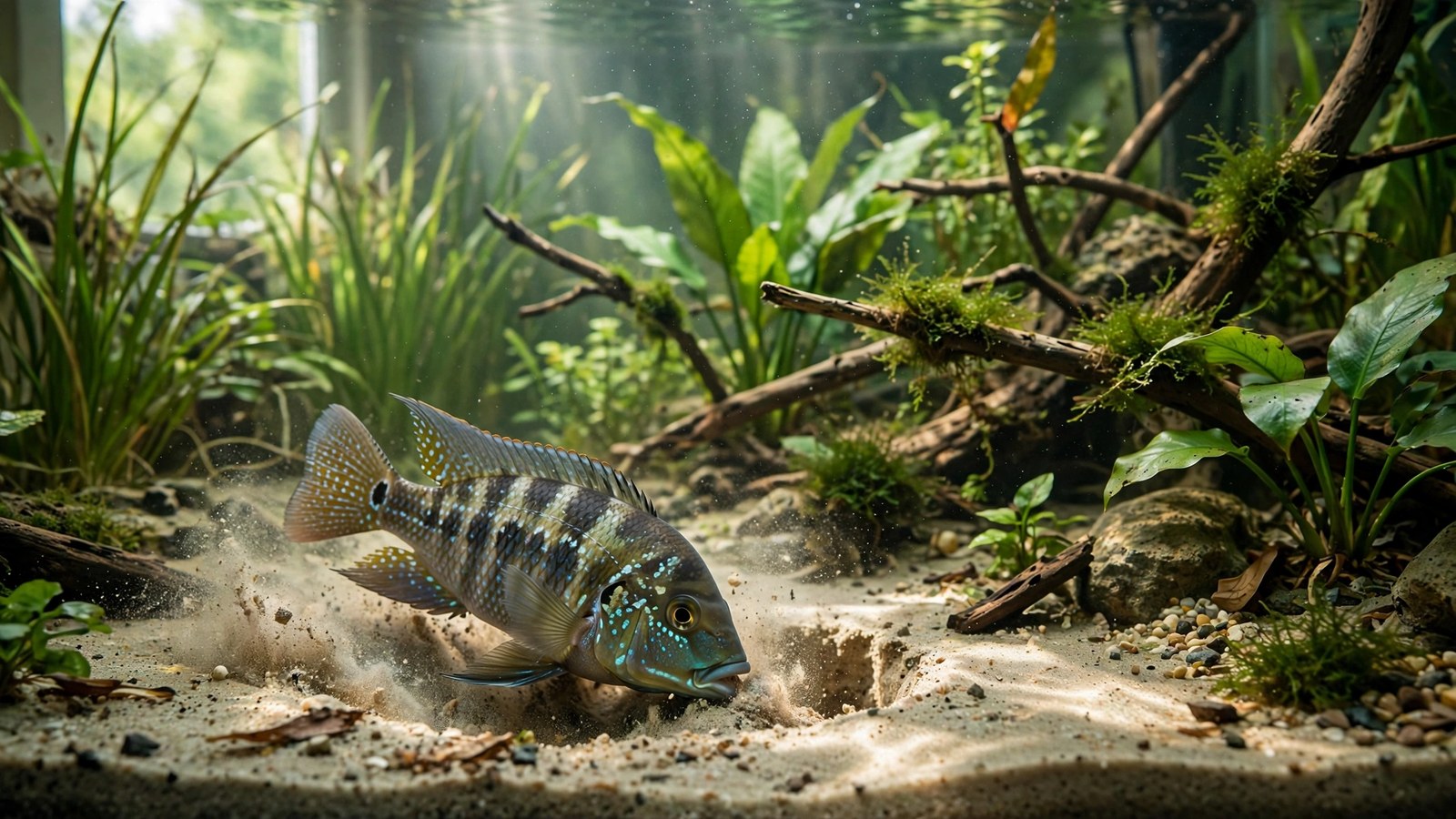
Most planted-tank mistakes cost you a few wilted leaves. The wrong setup for a texas cichlid planted tank costs you the entire aquascape in a single afternoon. Herichthys cyanoguttatus — the Rio Grande Perch, the only cichlid native to the United States — is a 12-inch earthmover that rearranges substrate the way a bulldozer rearranges a parking lot. By the end of this guide you will know exactly how to build a planted tank that survives it.
Yes — but conventionally planted substrate is doomed. The working formula: rocks directly on the bare tank bottom so digging cannot undermine them, driftwood as the visual anchor, Anubias and Java fern tied to hardscape, floating plants for cover, and rooted stems only inside stone root-guards in the back corners. House them at 75 gallons minimum, 70–75°F, pH 6.5–8.0, with heavy filtration and 30% weekly water changes.
Why This Is the Hardest Planted-Tank Challenge in the Hobby
Meet the fish. The Texas cichlid is a pearly-green, pearlescent powerhouse from the rivers of southern Texas and northern Mexico — and the only cichlid species native to the USA. Males grow to a foot long and are among the most aggressive cichlids in the trade: genuinely, structurally territorial. It is not a community fish, and pairing it with delicate plants is like keeping a goat in a flower garden.
Digging is the core problem. In the wild, Texas cichlids excavate pits in the substrate to spawn, and in a tank they practice that instinct constantly. A breeding pair turns nearly black, gets more aggressive, and digs harder — so every part of the aquascape must assume the substrate will be moved. If you are weighing fish-first plant choices for destructive diggers, this is the fish that guide was written for: the strategy below is built around the fish first and the plants second.
Setting Up a Texas Cichlid Planted Tank That Survives
The whole method rests on one idea: nothing in the tank depends on the substrate staying put. Every rock, every piece of wood, and every plant either sits on the glass or is anchored so hard the fish cannot move it.
Substrate, rocks, and wood
Use fine sand as the substrate. It is gentler on the fish's mouth and gills when it digs, and waste sits on top where the siphon can reach it. Then lay out the hardscape in this order:
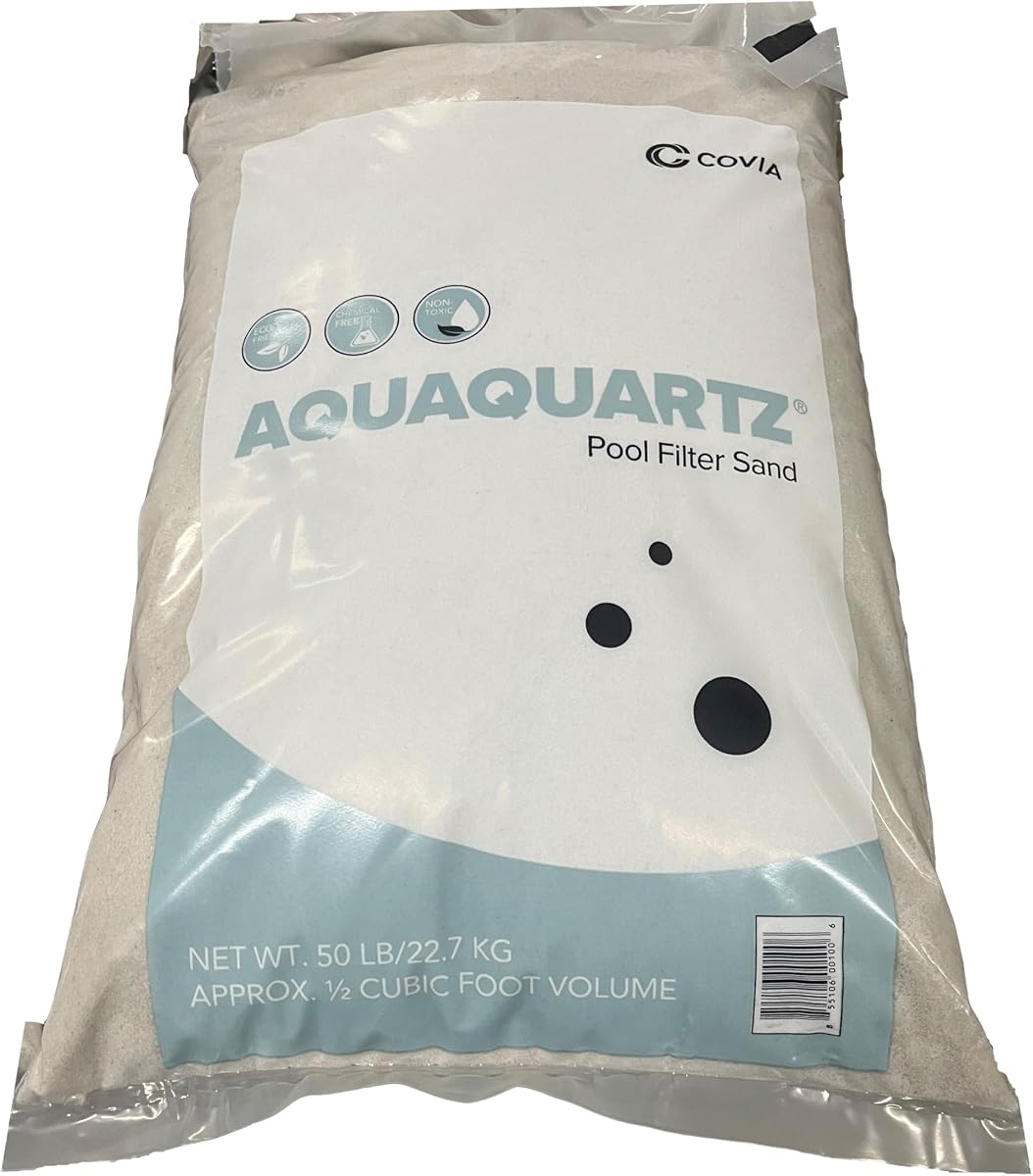
Covia AquaQuartz Pool Filter Sand
Check Price on Amazon- Rocks go directly on the bare glass, before any sand is added. Excavation can never undermine them.
- Driftwood goes on second, wedged between or resting on the rocks — your visual anchor where no plants grow.
- Build stone root-guards: small rings of rubble rock in the two back corners. Rooted plants live inside these rings and nowhere else.
This rock-first foundation is what separates a tank that survives a year from one that collapses in a week. For more on choosing plants that tolerate large territorial fish, see the freshwater aquarium plants complete guide.
Plants That Can Actually Survive
The short list is short for a reason. You want tough leaves, attachment-style growth, or floating habits — nothing delicate, nothing that depends on an intact substrate bed.
| Plant | Placement | Why it works |
|---|---|---|
| Anubias (nana, barteri) | Tied/glued to rock or wood | Rhizome stays out of substrate; leathery leaves resist nipping |
| Java fern | Tied to wood or high rock | Unpalatable, tough foliage; propagates on the hardscape itself |
| Water lettuce / frogbit | Floating | Completely out of digging range; diffuses overhead light for cover |
| Vallisneria | Inside stone root-guards only | Strong roots, but needs the guard ring to keep it anchored |
| Sword plants | Inside stone root-guards only | Deep roots anchor well — if the guard prevents excavation at the base |
Stem plants like rotala or ludwigia have no place here; uprooted within hours. Compare this approach to the best plants for cichlid tanks, and note the same rock-first logic applies to other large diggers — the convict cichlid planted tank setup uses it at a smaller scale.
Filtration, Water Changes, and the Weekly Rhythm
A 12-inch predator eating heavy meals produces serious waste, and disturbed substrate kicks fine silt into the water column constantly. Filtration should turn the tank over 8–10 times per hour — a large canister filter rated well above the tank volume is the baseline, with a large sponge filter added for redundancy.
The maintenance rhythm is non-negotiable:
- 30% water change every week, vacuuming the sand surface.
- Clean pre-filters every 2 weeks — digging stirs silt that clogs them fast.
- Trim floaters weekly, leaving about a third of the surface covered — your nutrient export.
- Check rock stability monthly, since the fish excavates under anything sitting on sand.
Tankmates: The Honest Answer
Texas cichlids are among the most aggressive cichlids in the hobby, so the safest stocking plan is one fish in 75 gallons — a complete, impressive display. Want tankmates? Budget 125 gallons and choose fast, robust, deep-bodied fish for the upper water column — even then, expect the cichlid to decide the final roster.
Breeding pairs are a separate escalation: they darken to nearly black, claim the whole tank, and dig the deepest pits of all. the firemouth cichlid planted tank guide shows a calmer alternative if you want cichlid behavior with easier planting.
Frequently Asked Questions
Can Texas cichlids live in a planted tank at all?
Yes, but only with a digger-proof layout. The fish will excavate substrate constantly, so standard planted beds fail within days. Use rocks placed directly on the tank bottom, driftwood as the anchor, Anubias and Java fern attached to hardscape, floating plants, and stone root-guards around any rooted plants. Accept that this is a fish-first aquascape.
What tank size does an adult Texas cichlid need?
Seventy-five gallons is the minimum for a single adult male, which can reach 10–12 inches. If you plan on tankmates, step up to 125 gallons so the cichlid can hold a territory without owning every square inch. Anything smaller compresses an already aggressive fish into conflict.
Why does my Texas cichlid keep uprooting everything?
Digging is instinct, not misbehavior — in the wild they excavate spawning pits in river substrate. You cannot train it out, so you build around it: rocks on glass, plants attached to wood, floating plants, and stone root-guards protecting the back-corner plants. Loose rooted plants in open substrate will always be temporary.
What temperature and water does Herichthys cyanoguttatus prefer?
They are subtropical: 70–75°F is the sweet spot, though they tolerate 70–82°F. Keep pH between 6.5 and 8.0 in moderate-hard water, which matches their southern Texas and northern Mexico river habitat. Heavy filtration and weekly 30% water changes matter more than chasing exact parameters.
Are Texas cichlids really the only cichlid native to the USA?
Yes. Herichthys cyanoguttatus, the Rio Grande Perch, is the only cichlid species native to the United States, found in rivers of southern Texas and northern Mexico. Its pearly-green pearlescent coloration is striking, and a breeding pair turns nearly black — a signal to give them extra space.
A Texas cichlid planted tank will never look like an aquascape contest entry — and it is not supposed to. Done right, it looks like a slice of Rio Grande riverbed: heavy stone, bold driftwood, tough plants clinging to the hardscape, and a magnificent pearly-green predator patrolling over it. For an authoritative species profile, see the Seriously Fish profile of Herichthys cyanoguttatus.