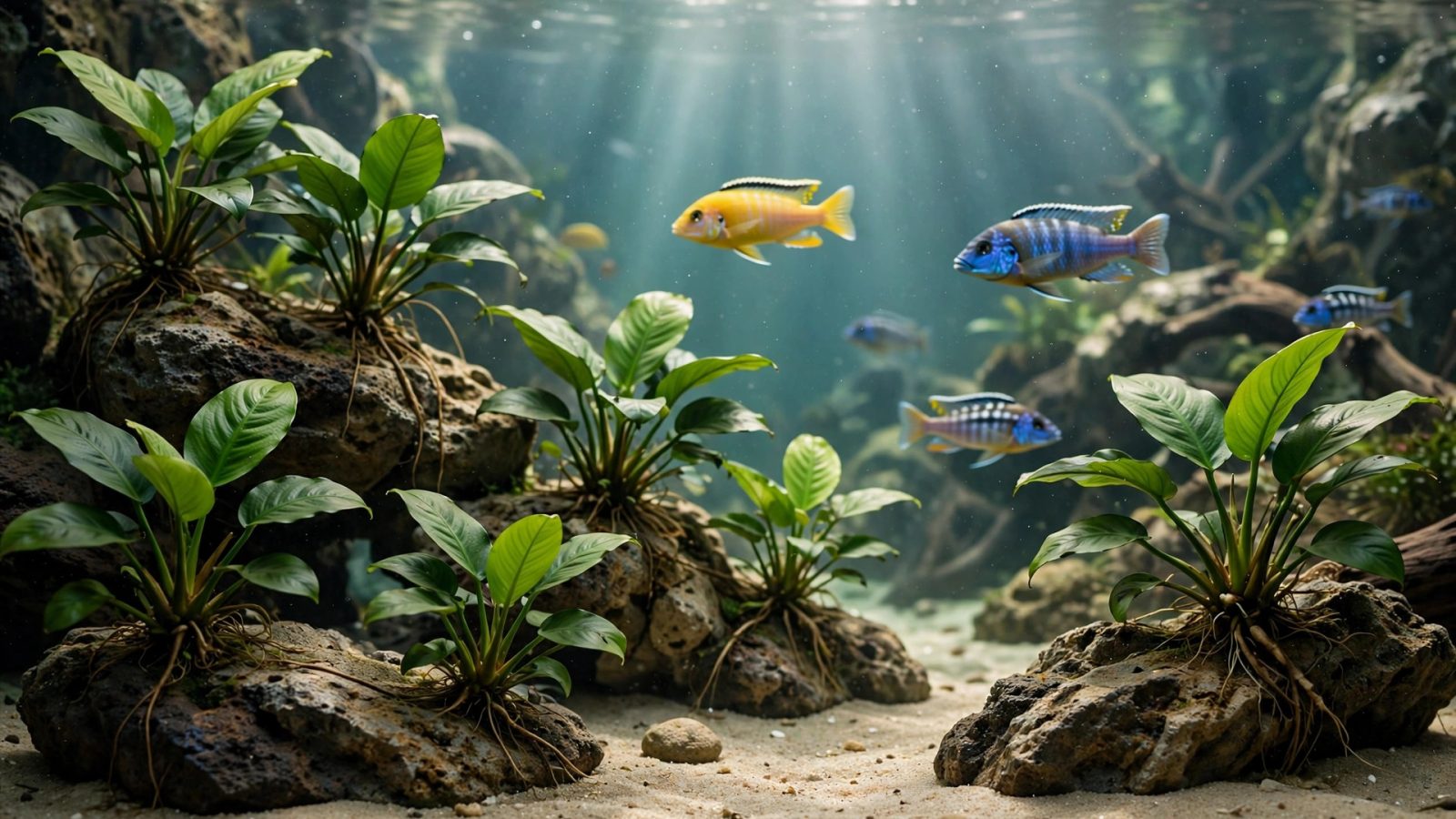
“Cichlids destroy plants” is one of the hobby’s most repeated truths — and like most absolutes, it’s only half true. Plenty of aquarists keep lush planted tanks with cichlids. The secret isn’t luck; it’s strategy. Plants for cichlid tanks need to survive digging, uprooting, and occasional taste-testing, which means choosing tough species and planting them in ways diggers can’t defeat.
This guide covers both: eight plants that stand up to cichlids, and the dig-proofing tactics — pots, epiphytes, rock-anchoring — that make planted cichlid tanks actually work. Note: “cichlid” spans gentle rams to tank-remodeling Oscars; advice is weighted toward the challenging middle (African cichlids, convicts, firemouths, jack dempseys). Truly large excavators (adult Oscars, dovii) defeat most planting — be honest about your species.
The Cichlid-Proofing Playbook
Before the plant list, the tactics that matter more than species choice:
- Epiphytes over rooted plants. Plants tied to wood and rock can’t be uprooted — there’s nothing to dig up. Anubias, java fern, and mosses attached to hardscape are the backbone of planted cichlid tanks.
- Pot everything else. Plant vulnerable species in terracotta or plastic pots buried in the substrate. Pots protect root zones from digging; determined fish may still push pots around, so wedge them between rocks.
- Go heavy from day one. Established, dense root systems resist uprooting far better than fresh plantings. Plant heavily and give roots weeks to anchor before adding the most destructive fish.
- Choose tough leaves. Thick, bitter-tasting leaves (anubias, java fern) get sampled once and ignored. Soft, salad-like plants (cabomba, ambulia) get eaten.
- Feed your cichlids well. Underfed cichlids graze plants out of hunger. Vegetable matter in the diet (spirulina flakes, blanched zucchini) reduces plant-nibbling dramatically — many “plant-eating” cichlids are just hungry herbivores.
1. Anubias (all varieties)
The #1 cichlid plant, by a wide margin. Thick, tough, bitter leaves that cichlids sample once and abandon. As an epiphyte, it ties to rock and wood — nothing to uproot. It tolerates the hard, alkaline water of African cichlid tanks (pH 7.5–8.5) without complaint, which eliminates half the candidate list immediately.
Use larger varieties (A. barteri, ‘coffeefolia’) as focal points on rockwork; nana and nana ‘petite’ for crevices. Never bury the rhizome. Growth is slow — that’s fine; slow plants don’t need replanting after disturbances.
2. Java Fern (Microsorum pterotrichoides)
Java fern shares anubias’s entire cichlid-proof resume: tough bitter leaves, epiphyte habit, hard-water tolerance. Its flowing leaf shape softens rockwork beautifully — a cluster of java fern on Texas holey rock is the classic African cichlid aquascape. Full care details in our Java fern care guide.
Attach with super glue gel or thread; the ‘Windelov’ lace variety adds texture contrast. Like anubias, it’s slow — plant generously from the start.
3. Vallisneria (Vallisneria americana / spiralis)
The best rooted option for cichlid tanks. Vallisneria loves hard, alkaline water — it’s one of few plants that genuinely prefers African cichlid parameters. Its deep, tenacious root system resists casual uprooting once established, and it spreads by runners into a background meadow that tolerates abuse.
Plant in pots for the first month, then let runners colonize. The giant variety (V. americana) suits large tanks; spiralis fits 40–55 gallons. Avoid liquid carbon supplements — vallisneria melts on contact with glutaraldehyde products.
4. Java Moss (Taxiphyllum barbieri)
Tie it to rocks and forget it. Java moss colonizes rockwork into soft green mats that cichlids can’t uproot (it’s attached, not planted) and mostly ignore. It thrives in hard water, needs minimal light, and turns stark cichlid rockscapes into something alive. It also provides grazing for fry and invertebrates.
Attach thin layers — thick wads trap detritus. In high-pH African tanks it grows slower but persists fine.
5. Amazon Sword (Echinodorus amazonicus)
Swords work in cichlid tanks if potted. Their massive root systems anchor well, broad leaves tolerate the occasional nip, and they grow large enough to make visual impact among rocks. The pot is non-negotiable with diggers — an unpotted sword in a convict tank lasts about a day.
Use heavy terracotta pots, top the soil with gravel, and wedge pots between rocks. Feed with root tabs — swords are hungry. The dwarf chain sword (E. tenellus) works similarly for foreground in milder cichlid tanks (rams, apistos, keyholes).
6. Cryptocoryne (C. wendtii, C. usteriana)
Crypts suit the milder end of the cichlid spectrum — dwarf cichlids, rams, angelfish, discus — where digging is modest. Their dense root clusters anchor firmly once established, and they tolerate the warm, soft water of South American cichlid setups. C. usteriana is notably tough-leaved.
Expect initial crypt melt; it regrows. Plant in groups, pot if your species digs enthusiastically. Not recommended for mbuna or large Central Americans.
7. Hornwort (Ceratophyllum demersum)
The expendable workhorse. Hornwort isn’t planted at all — it’s floated or weighted — so digging is irrelevant. It grows fast enough to outpace nibbling, absorbs nitrates in messy cichlid tanks, and provides cover that reduces aggression. Think of it as a renewable resource, not a specimen plant.
Keep a “mother bunch” in a bucket as backup; replace tank bunches as needed. In hard African water it thrives.
8. Floating Plants (Frogbit, Water Lettuce)
What’s above the substrate can’t be dug up. Floating plants are the cheat code for cichlid tanks: they shade (reducing aggression in some species), absorb the heavy nitrate load cichlids produce, and give the tank a finished look no matter what’s happening below. Our floater guide covers species and corralling — the mechanics transfer directly.
Matching Plants to Cichlid Types
- African (mbuna, peacocks, haps): Hard, alkaline water. Anubias, java fern, vallisneria, hornwort, floaters. Skip crypts and swords (wrong water).
- Dwarf South Americans (rams, apistos): Gentle diggers, soft warm water. Full palette available — crypts, swords, vallisneria, plus all epiphytes.
- Medium Central Americans (convicts, firemouths): Dedicated diggers. Epiphytes + potted vallisneria + floaters. Pot everything rooted.
- Angelfish / discus: Minimal digging, warm soft water. Nearly any plant works; broad leaves (swords, anubias) double as spawning sites.
- Large excavators (Oscars, dovii, red devils): Be realistic — epiphytes on heavy rock and floaters only. Everything else is landscaping for the fish to remodel.
Frequently Asked Questions
Will cichlids eat anubias? They’ll taste it once. Anubias leaves are thick and bitter; cichlids consistently reject them after sampling. It’s the most cichlid-proof plant in the hobby.
My cichlid keeps uprooting potted plants. Help? Bury pots deeper, wedge between rocks, or switch that species to epiphytes-only. Also check feeding — hungry cichlids dig more.
Can I keep plants with mbuna? Yes, with the right picks: anubias and java fern on rockwork, vallisneria in pots, floaters up top. Mbuna are primarily algae-grazers; supplement their diet with spirulina and they’ll largely ignore tough plants.
The Bottom Line
Planted cichlid tanks aren’t about finding magic indestructible plants — they’re about planting smart: epiphytes on hardscape, pots for everything rooted, tough leaves, and honest species matching. Start with anubias and java fern on your rockwork, add vallisneria in pots, throw floaters on top, and you’ll have a cichlid tank that’s genuinely planted — not just rocks with aspirations.
Building the Planted Cichlid Aquascape
Cichlid aquascapes differ from standard planted layouts: rockwork dominates, plants accent. The design that works:
- Rock first, plants second. Build the rock structure (caves, territories, sightline breaks) as the primary design. Plants then soften and fill — they’re the supporting cast, and that’s fine.
- Epiphytes in rock crevices. Wedge anubias and java fern into gaps; glue Bucephalandra to vertical faces. The rock is the planter.
- Background vallisneria curtain. Along the back glass, a vallisneria stand (potted initially) creates the green backdrop that makes rockwork pop.
- Floaters for the ceiling. Frogbit or water lettuce overhead completes the habitat feel and handles nitrates.
This rock-dominant style suits mbuna and other rock-dwelling cichlids perfectly — it’s literally their natural habitat structure, just with plants added.
Feeding to Protect Plants
The dietary angle deserves emphasis because it’s the most underused tactic. Many cichlids labeled “plant destroyers” are herbivores or omnivores getting insufficient vegetable matter:
- Mbuna: Primarily herbivores. Spirulina-based flakes/pellets as the staple, blanched zucchini or spinach weekly. Well-fed mbuna graze algae off rocks, not your anubias.
- Peacocks/haps: Carnivores — less plant interest naturally, but still benefit from the pot-and-epiphyte approach against digging.
- Central Americans: Omnivores. Mix quality pellets with vegetable matter; a hungry convict digs and shreds more than a satiated one.
Observe: if plant damage decreases after diet improvement, hunger was the driver. If it continues unchanged, you have a behavioral digger — manage with hardscape, not hope.
Tank Size and Territory
Cramped cichlids destroy more plants — stress and territory pressure redirect into digging and aggression. The planted cichlid tank needs more space than the minimum, not less: 40+ gallons for dwarf species communities, 55+ for mbuna groups, 75+ for medium Central Americans. Territory structure (rock caves breaking sightlines) reduces the stress behaviors that target plants. Our planting density principles apply, adapted: dense rockwork first, then plants at 50%+ coverage.
Water Parameters for Planted Cichlid Tanks
African cichlids need hard, alkaline water (pH 7.8–8.6, GH 10–20) — which suits anubias, java fern, vallisneria, and hornwort fine, but rules out soft-water plants entirely. Don’t fight it; the water parameters guide covers working with your tap. South American dwarfs want the opposite (soft, acidic, warm) — where crypts and swords join the palette. Match plants to the cichlid’s water, not vice versa.
Dwarf Cichlids: The Planted Tank Sweet Spot
If you want cichlids and a lush planted tank with minimal compromise, dwarf cichlids (German blue rams, apistogrammas, keyholes, kribensis) are the answer. They’re small, relatively gentle diggers, and their warm soft-water preferences overlap perfectly with the broad planted-tank palette — crypts, swords, stems, carpets, everything.
A 20-gallon long with a ram pair showcases what’s possible: crypt wendtii foreground, sword centerpiece, stem background, leaf litter, and wood — a genuine aquascape with cichlid personality. Apistogramma harems in 20-longs with heavy planting breed readily; the fry shelter in the plant cover. For dwarfs, skip the extreme dig-proofing — standard planted techniques with slight potting caution suffice.
Angelfish and Discus: The Gentle Giants
Angelfish and discus barely dig, making them the easiest large cichlids to plant around. Both appreciate the cover: angelfish spawn on broad sword leaves, discus color up better with shaded areas. Warm water (80–84°F for discus) limits plant choices slightly — favor heat-tolerant species (vallisneria, swords, anubias, java fern; avoid anacharis which dislikes heat). A discus planted tank is a high-budget, high-reward project — the fish alone cost more than most complete setups.
Quick-Start Shopping List
For a 40-gallon African cichlid tank, the dig-proof plant kit: 5 anubias barteri (rock-mounted), 3 java fern clusters, 1 vallisneria bundle (6–8 plants, potted), java moss portions for 3–4 rocks, frogbit handful, and 3 terracotta pots. Total: roughly $60–80. That’s a fully planted cichlid tank in one shopping trip.