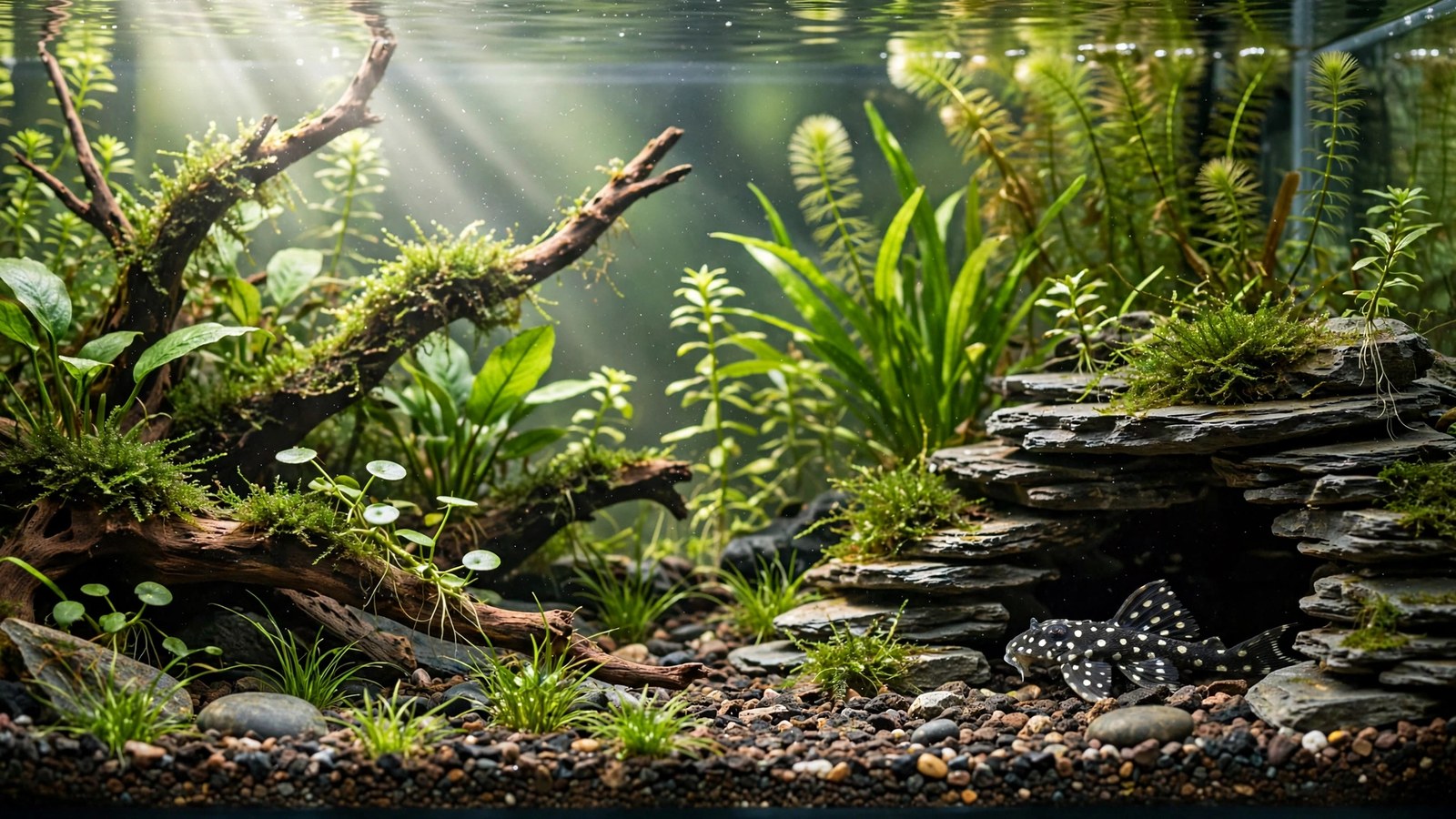
The snowball pleco's white spots glow against its charcoal body like stars, but the biggest mistake new owners make is buying one as a tank cleaner. A snowball pleco planted tank is not an algae-control strategy — this is a nocturnal cave-dwelling carnivore that needs meaty food, soft blackwater, and a fortress of hiding spots. Get those right, and Hypancistrus inspector (L201) becomes one of the most striking, peaceful centerpieces a planted tank can hold.
Meet the Polka-Dot Cave Dweller
The snowball pleco hails from the Rio Negro and upper Orinoco drainages of Brazil and Venezuela, living among submerged rocks and rapids in soft, warm water. Like its cousin the zebra pleco (L046), it is a Hypancistrus — peaceful, strictly nocturnal, and tucked into caves all day. Without enough hiding spots, an L201 stays stressed, pale, and fasting: design the tank around that instinct.
At 5.5–6.3 inches, it fits a 30-gallon tank, though 40 gallons or more gives it the territory and water stability it deserves across an 8–10 year lifespan. It is sociable with its own kind and most peaceful tankmates — what it cannot tolerate is competition for its caves.
Do not buy one to clean your tank. A planted tank built for a nocturnal carnivore looks different from one built for a grazing algae crew, and choosing plants with the fish's needs in mind starts with admitting that difference — the layout below shows exactly how.
Snowball Pleco Planted Tank Setup: Step by Step
Build the tank like its home river: dim, sheltered, and well oxygenated, with plants filling the open spaces rather than the fish's hiding spots.
Substrate and caves
Use fine sand — it cushions the pleco's soft belly in low crevices and anchors rooted plants without sharp gravel edges. Then build the cave network: driftwood with natural hollows, stacked slate or river rock, overturned terracotta pots, or terracotta pipes. Offer one cave per pleco plus one spare; territory disputes end the moment every fish owns a home.
Water: clean, warm, moving
Snowball plecos demand clean, well-oxygenated water with moderate flow — gentle river current, not a whirlpool. A canister filter with a spray-bar return along the surface gives turnover without blasting the caves. Keep 72–86°F (keepers settle at 78–82°F), pH 6.0–7.5, soft to medium hardness. Change 25–30% weekly; Hypancistrus species are sensitive to nitrate buildup, and the meaty diet makes water changes non-negotiable.
Planting around a cave dweller
Here is the good news: snowball plecos do not dig, uproot, or chew plants. Tie epiphytes to the hardscape — Anubias, Java fern, and Bucephalandra on driftwood and rock edges soften the cave zone without being dislodged. Put tough rosettes like Echinodorus in the midground behind the cave line, and floaters above to dim the light and make the nocturnal fish bolder after hours. The freshwater aquarium plants complete guide lists which epiphytes attach best to wood and rock — exactly the hardscape an L201 lives in.
 ★4.2
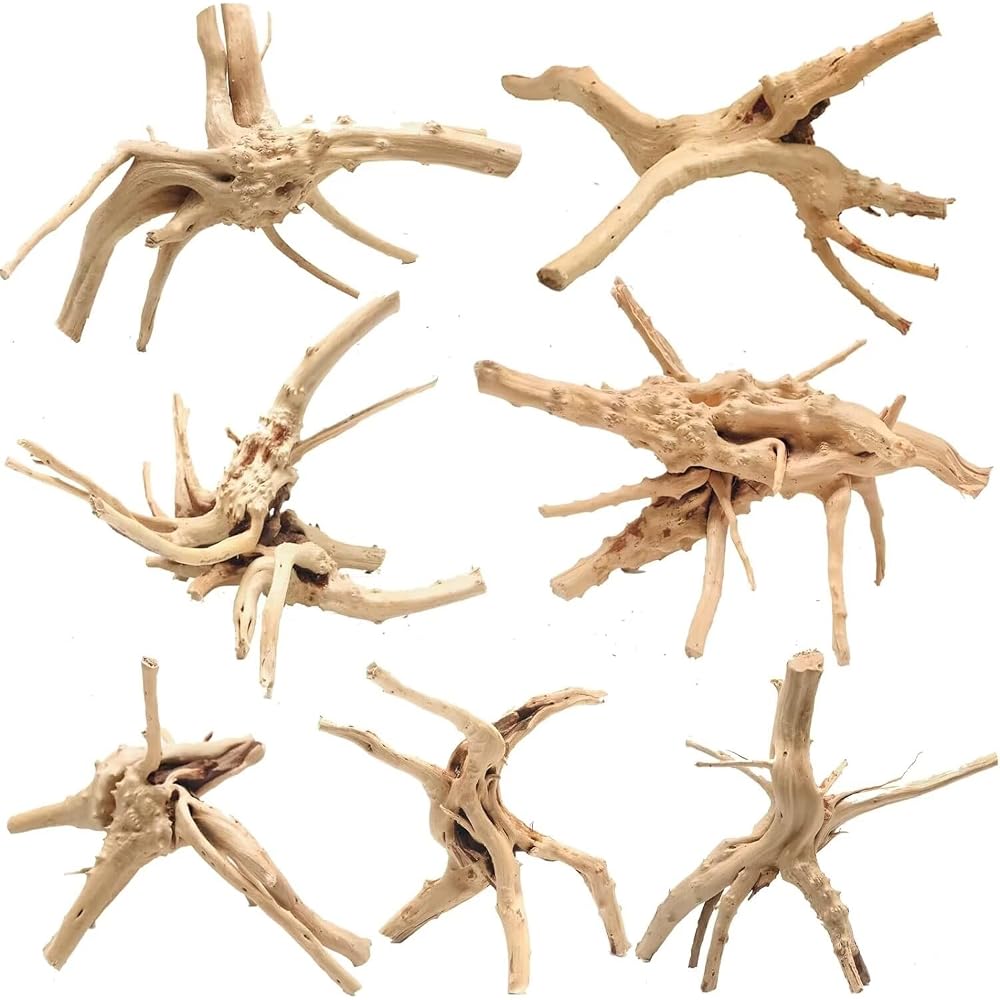
Hamiledyi Natural Spider Wood Driftwood
Check Price on Amazon ★4.2Feeding a Carnivore in a Planted Tank
This is where snowball care diverges sharply from bristlenose care. The bristlenose is a genuine algae grazer that thrives on wafers and vegetables; the snowball is an omnivore with a carnivore preference that needs real protein. Feed high-quality sinking carnivore pellets and frozen bloodworms or brine shrimp once daily after lights out. Blanched zucchini or an occasional algae wafer rounds out the diet, but plant matter alone will starve it.
Rotate proteins through the week — bloodworms, carnivore pellets, occasional frozen mysis shrimp — and portion carefully: a pea-sized pile per fish, gone within an hour. The meat-eating habit also explains why this fish ignores algae but leaves your plants untouched: it simply is not interested in scraping leaves.
Tankmates and Cave Territories
Snowball plecos are peaceful toward other fish; their territorial side appears only toward other plecos when caves are scarce. With enough hides, a small group works — in a 40-gallon tank, two or three snowballs each holding a cave is a calm, natural arrangement.
Best tankmates are calm midwater fish that feed by day: tetras, rasboras, small peaceful barbs. Avoid aggressive bottom-dwellers that contest caves, and boisterous surface feeders, since the pleco eats only after dark. Fellow cave plecos can work in cave-rich tanks: the zebra pleco planted tank shares the same Hypancistrus cave setup and water parameters, while the clown pleco planted tank is a smaller cave dweller with a very different wood-chewing diet. The gold nugget pleco planted tank is another compatible cave-pleco setup with similar warm-water needs.
Breeding Behavior: The Male Cave Spawner
Snowball plecos are male cave spawners: a male claims a cave, courts a female, and guards the eggs and fry inside it. This is why narrow, dark, single-entrance caves matter: a male holding a proper cave can breed, while one defending an open hollow cannot get traction. Spawning usually follows a cool water change that mimics an Orinoco rain event.
Frequently Asked Questions
Will a snowball pleco eat my plants?
No — snowball plecos are plant-safe. They do not uproot, dig under, or rasp leaves, and unlike starved bristlenoses they will not chew foliage either, because L201 is a carnivore-leaning omnivore with no interest in plant tissue at any age.
Will it eat algae like other plecos?
No, and this is the costliest misconception about the species. Snowball plecos are not effective algae eaters — they need sinking carnivore pellets and frozen bloodworms after lights out. If you want algae control, use dedicated grazers. If you want a pleco that actually grazes, see the bristlenose pleco planted tank setup instead.
What tank size does a snowball pleco need?
Thirty gallons is the accepted minimum for one adult, but 40 gallons or more is better — it fits a proper cave network, holds water quality stable, and lets you keep a small group so the nocturnal fish actually show themselves. At 5.5–6.3 inches and an 8–10 year lifespan, this is a long-term resident that deserves room.
How many caves does each snowball pleco need?
Plan one cave per pleco plus one spare. Driftwood hollows, stacked slate, overturned terracotta pots, and terracotta pipes all work — the key is darkness and a tight, defensible entrance. With enough caves, snowballs are peaceful even with their own kind and other cave plecos; without enough, males spar.
What water parameters do snowball plecos need?
Temperature 72–86°F (most keepers use 78–82°F), pH 6.0–7.5, soft to medium hardness — matching their Rio Negro and upper Orinoco origins. Water must be clean and well oxygenated with moderate flow, such as a spray bar along the surface. Change 25–30% weekly, because this species' meaty diet produces nitrate fast and Hypancistrus plecos are sensitive to it.
Can snowball plecos live with other plecos?
Yes, in a cave-rich tank — they are peaceful toward non-pleco tankmates and tolerate other plecos when every fish holds its own cave. Avoid crowding multiple cave species without enough hides, and never keep them with aggressive bottom-dwellers that evict them from caves.
A Fish Worth Building a Tank Around
Most plecos are sold as tools — algae eaters, wood chewers, tank janitors. The snowball pleco is better than that: a long-lived, polka-dotted, night-active centerpiece that rewards a planted tank built on its terms. Set up the caves, keep the water clean and moving, feed it meat after dark. For taxonomy and wild-distribution background, see the FishBase species summary for Hypancistrus inspector.