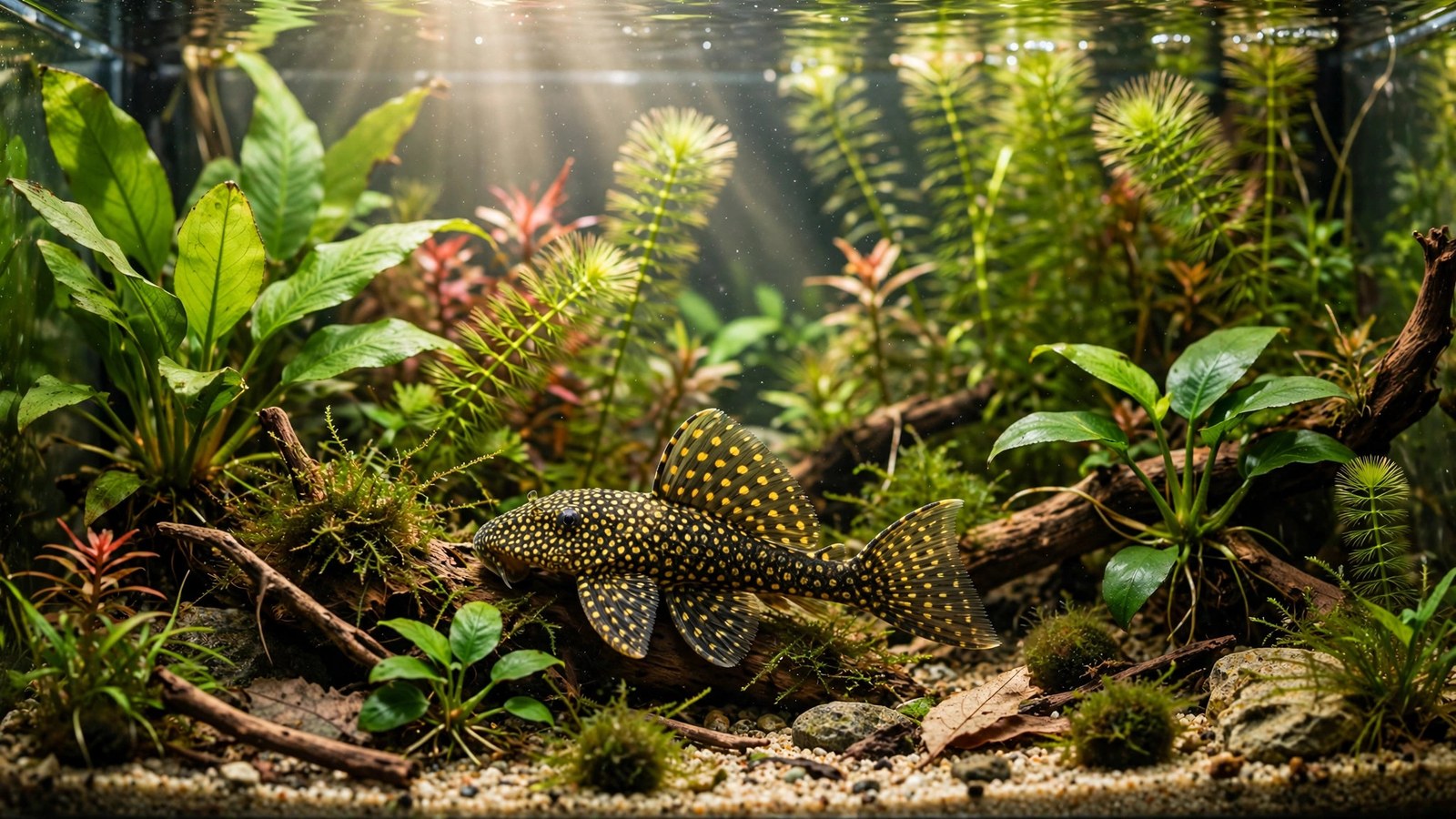
The gold nugget pleco planted tank is one of the hobby's most mislabeled setups. Many buyers pick up this glittering Rio Xingu catfish expecting an algae cleaner, then watch it waste away in a tank never built for what it is. Give it warm fast water, driftwood to rasp, caves to claim, and food an omnivore can use, and it becomes a decade-long centerpiece. Here is the build, step by step.
Can a gold nugget pleco live in a planted tank? Yes — at 55+ gallons, 77–86°F with extra surface agitation, driftwood, and cave hides. The catch: this wood-rasping omnivore wastes away when fed "just the algae." Fed properly, a gold nugget lives 10–15 years and ignores healthy plants.
Meet the Gold Nugget Pleco: Baryancistrus xanthellus
The "gold nugget pleco" is Baryancistrus xanthellus, sold as L018 (small spots) or L085 (large spots) — the same species, different wild pattern variants from Brazil's fast, warm Rio Xingu. Adults reach about 6 inches, spending their days wedged into wood and rock, rasping biofilm and wood fibers.
It is not a zebra pleco. The zebra pleco planted tank houses Hypancistrus zebra (L046), an endangered carnivore with totally different needs — confusing the two is expensive. It is also not a common pleco, which outgrows every tank under 125 gallons. Confirm the scientific name on the shop label before you pay.
Gold nuggets are almost entirely wild-caught, which explains the ~$50 price. Buy a plump, rounded belly — a sunken belly on a wild-caught pleco is starvation you can see with your eyes. Pick plants the fish-first way our fish-first plant guide recommends: species that tolerate warm, high-flow water.
Building your gold nugget pleco planted tank, step by step
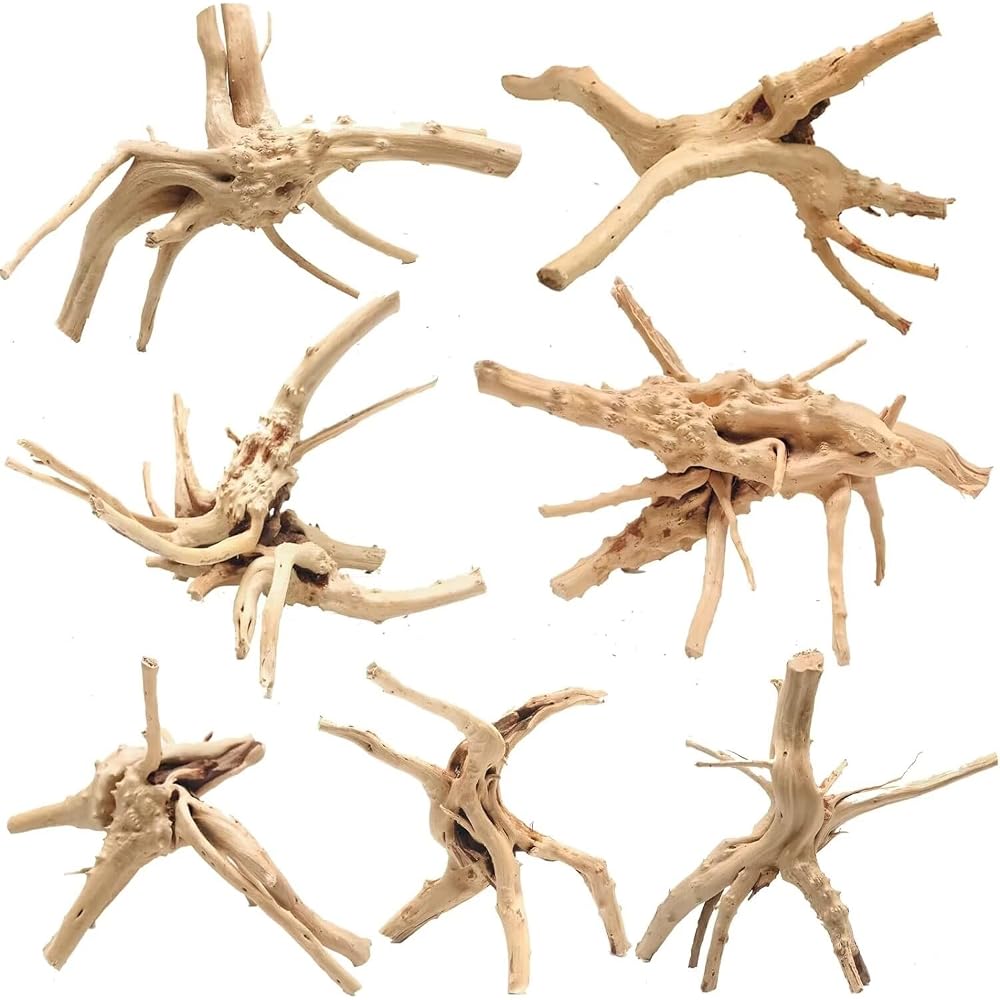
Start at 55 gallons, prioritizing footprint over height — a 48-inch 55 gives the fish patrol routes and cave choices. Sand is the right substrate; they root around with their barbels all night, and sharp gravel wears them down. Smooth rocks build stable cave piles, and driftwood is non-negotiable — two or three substantial pieces, rasped continuously.
Offer at least two caves or hides per pleco — slate lean-tos, coconut hides, rock piles — placed before you plant, since an established cave claim redraws territory lines. Tie Anubias and Java fern directly to wood and rock; a gold nugget bulldozes weakly rooted stems on its nightly patrols.
Choose warm-water-tolerant species — Anubias, Java fern, Vallisneria, Amazon swords, Cryptocoryne — and skip tiny carpets and cold-water favorites, which melt at pleco temperatures. Same fish-first logic as our aquarium plants for fish tanks guide: let the fish's parameters pick the plants. And run less light than you think — how much light aquarium plants actually need is modest, which also means less algae in a warm pleco tank.
 ★4.2
Hamiledyi Natural Spider Wood Driftwood
Check Price on Amazon ★4.2Warm Water vs. Your Plants: The Temperature Problem
Gold nuggets want 77–86°F (25–30°C) and tolerate cool water poorly — a 74°F tank stresses them while plants look fine. The real conflict is oxygen: warm water holds less dissolved oxygen, and this fish evolved in oxygen-rich rapids. Compensate with deliberate surface agitation — a powerhead rippling the surface or a spray bar — not a submerged airstone that strips CO2 from your plants. Our planted tank water flow guide covers positioning current without flattening your scape.
Most mainstream plants tolerate 80–82°F without complaint. What fails are delicate cold-preferring species and fussy high-tech carpets — exactly what a low-tech warm scape should not lean on. A planted discus tank staying lush at 84°F is the proof: tough broad-leafed plants plus stable warmth beat a delicate cool-water scape.
Feeding: The Starvation Mistake That Kills Most Gold Nuggets
Read this twice: this fish cannot live on algae. Baryancistrus xanthellus is an omnivore that grazes wood and biofilm with a real protein and vegetable requirement. The classic beginner failure is dropping one into a "mature, algae-covered" tank and calling it fed — six months later, a hollow shell behind the filter intake.
| Food | What it provides | How often |
|---|---|---|
| Blanched zucchini / cucumber | Vegetable bulk, fiber | 3–4 nights per week |
| Sinking carnivore tabs / shrimp pellets | Protein, balanced nutrition | 2–3 nights per week |
| Bloodworms (frozen, thawed) | High-value protein | 1–2 nights per week |
| Driftwood (always in tank) | Rasped fiber for digestion | Permanent fixture |
Feed after lights-out, when the nocturnal pleco actually eats — food offered at noon goes to your tetras. Weigh the vegetable slice down, and pull uneaten veg within 12 hours before it fouls the water. A healthy gold nugget has a rounded belly and active nocturnal grazing; a gaunt fish loitering in the open by day is not getting fed at night.
Tankmates and Territorial Behavior
Peaceful toward mid-water fish, territorial toward similar bottom-dwellers: keep one per tank unless you have 125+ gallons with a cave complex per pleco and sightline breaks. Two in a 55 spend every night in a grinding standoff. Never mix other Baryancistrus or look-alike plecos — conspecific aggression is the worst kind they have.
Choose peaceful mid-water fish that tolerate warm water: cardinal and rummy-nose tetras, harlequin rasboras, other warm-loving community species. German blue rams are the classic companion — the German blue ram planted tank runs the same 80°F+ water. Skip nippy fin-chasers and bottom food-thieves; the pleco owns the night shift.
Buying and Acclimating a Wild-Caught Gold Nugget
Expect around $50 for a 2–3-inch juvenile, more for L085 variants. Buy from a shop that can tell you when the fish arrived — a gold nugget less than two weeks off import is still adjusting, and you want the shop's losses, not yours. Demand a plump belly, clear eyes, intact fins; reject sunken flanks or labored breathing.
Acclimate slowly: float for temperature, then drip-acclimate 60–90 minutes. Wild Xingu water is soft, warm, and slightly acidic — a hard parameter jump is the top cause of day-one losses. Add the fish at lights-out into established caves; do not expect feeding the first night or two. Keep a good gold nugget pleco care guide bookmarked as a second reference.
Frequently Asked Questions
Will a gold nugget pleco eat my aquarium plants?
Healthy, established plants are generally safe — gold nuggets rasp wood and biofilm, not leaves. They will bulldoze weakly rooted stems on nightly patrols, so anchor rhizome plants to wood or rock and choose sturdy species. Tender new shoots in a fresh tank may get tasted first.
Can I keep two gold nugget plecos together?
Not in an ordinary tank — two in anything under 125 gallons will fight nightly over caves and driftwood. For a group, commit to 125+ gallons with two caves per fish and rock piles breaking every sightline, introduced all young and at once.
Why is my gold nugget pleco always hiding?
Because it is nocturnal and you gave it a good hiding spot — that is success, not a problem. If you never see it even at night, check whether food reaches it (feed after dark, verify a plump belly) and whether the temperature holds at 77°F or above.
Do gold nugget plecos clean algae?
No — not meaningfully. They graze biofilm and rasp driftwood, incidentally scraping soft algae, but they cannot control an outbreak and starve if algae is their only food. Buy one because you want the fish; solve algae with light, water changes, and nutrient balance.
How long do gold nugget plecos live?
Ten to fifteen years in a well-kept tank, sometimes longer. That longevity is why the feeding advice above matters so much: a fish that lives over a decade will be shaped entirely by whether its owner fed an omnivore's diet or hoped the algae would suffice.
Build for the Fish, and the Tank Follows
A gold nugget pleco planted tank works when the fish is the design constraint: warm Xingu water, real current, wood to rasp, caves to claim, dinner after dark. Do that, and the scape builds itself around a glittering pleco that will outlive most fish you have owned.