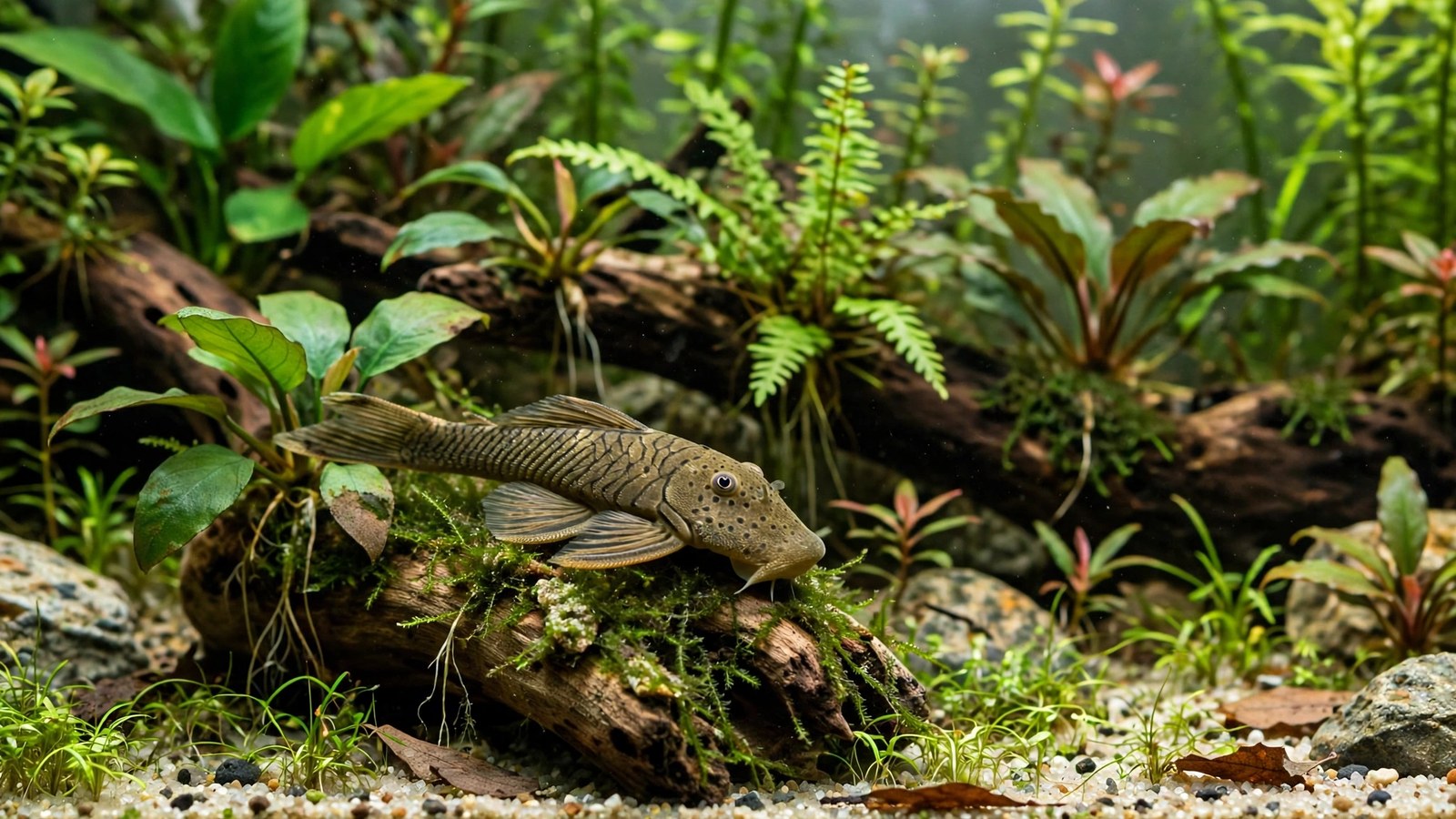
The rubber-lip pleco is the fish-store classic sold as "just like a bristlenose, but smoother" — and that advice quietly ruins planted tanks. Chaetostoma rubber-lips are not smooth bristlenose: they need cooler, current-swept water, noticeably more oxygen, and driftwood they actively graze on. Set up a rubber lip pleco planted tank around those four facts and you get a hardy algae-eater that leaves your swords and Anubias alone for years.
Your Rubber Lip Pleco Planted Tank Setup, Step by Step
Start with a 30-gallon or larger tank on sand or fine gravel — coarse sharp gravel wears the rubber-lip's soft underbelly as it grazes. Add one Malaysian driftwood piece per fish: this is both shelter and food, so buy generously. Pile smooth river rocks or ceramic pleco caves at the wood's base; rubber-lips are crevice sleepers that want one dark bolt-hole each.
Flow is where most rubber-lip setups fail. These fish come from oxygen-rich Andean foothill streams, so angle a powerhead or spray bar to push a visible current along the bottom and keep the surface rippling. A single oversized sponge filter plus a hang-on-back gives you both filtration and the current they want. Plant around the hardscape, not before it: tie Anubias and Java fern to the driftwood itself (attached rhizome plants are nearly pleco-proof), put Amazon swords in the back corners with root tabs, and let Java moss colonize the rocks.
Water Parameters for Chaetostoma
Hold 72–78 °F and pH 6.5–7.8; rubber-lips handle the cool end better than most tropical plecos, but wild day-night swings stress them regardless. Dissolved oxygen matters more than perfect pH — keep ammonia and nitrite at zero, nitrates under 20 ppm, and change 25–30% of the water weekly. Don't let the "planted" label tempt you into skipping water changes: Chaetostoma are messier than their 4-inch size suggests, and stale, oxygen-poor water is the most common reason they fade in home aquariums.
Feeding: Algae Alone Will Starve Them
The "algae eater" label is the most damaging thing about rubber-lips: no home tank grows enough algae to sustain one. Feed like an omnivore:
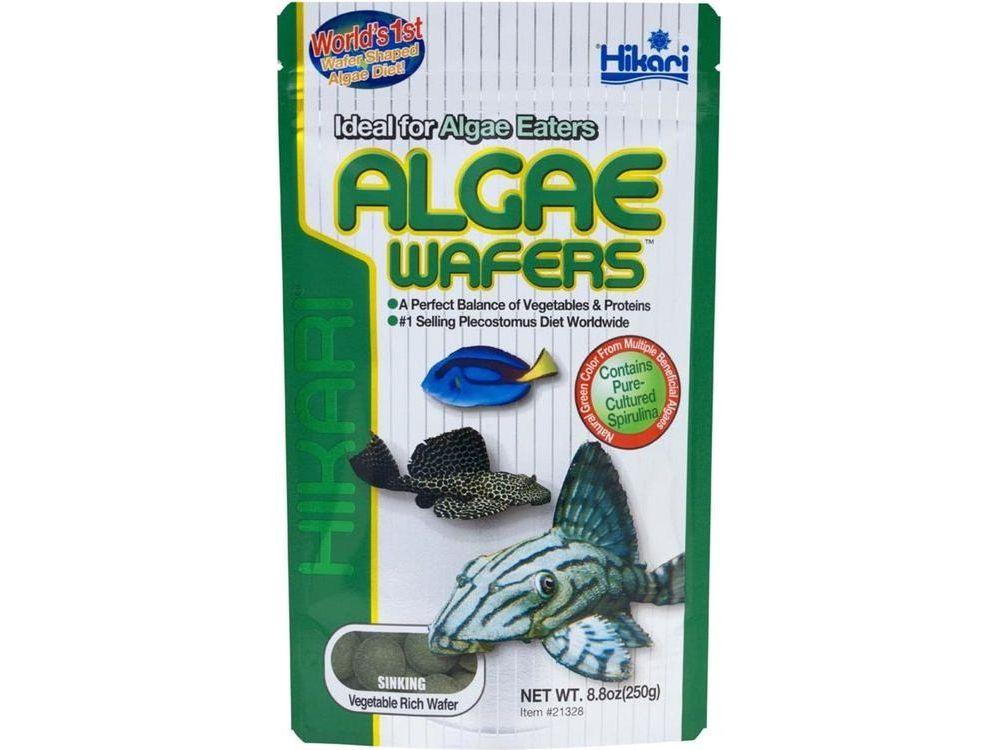
- Daily: one algae wafer or sinking veggie pellet per fish, dropped after lights-out.
- 2–3× weekly: blanched zucchini, cucumber, or spinach on a veggie clip — remove leftovers after 24 hours.
- Always available: driftwood to rasp on. This is the part bristlenose keepers don't expect: rubber-lips chew wood fibers as part of their digestion.
- Weekly: frozen bloodworm or daphnia — protein rounds out the diet, especially for juveniles.
 ★4.7
Hikari Tropical Algae Wafers, 8.8 oz
Check Price on Amazon ★4.7Rubber-Lip Pleco vs Bristlenose Pleco: What's the Difference?
Shops label both as generic "small algae plecos," but they belong to different genera with different needs. If you know bristlenose care, read this as the conversion guide — then see our full bristlenose pleco in a planted tank guide for that species' complete profile.
| Trait | Rubber-lip pleco | Bristlenose pleco |
|---|---|---|
| Genus | Chaetostoma | Ancistrus |
| Adult size | ~4 in (10 cm) | 4–6 in (10–15 cm) |
| Temperature | 72–78 °F; prefers the cooler end | 73–81 °F; more heat-tolerant |
| Flow & oxygen | Needs noticeable current, high oxygen | Adaptable to still water |
| Wood dependence | Essential — grazes driftwood as diet | Helpful shelter; far less diet-dependent |
| Appearance | Smooth head, fleshy "rubber" lips | Males grow snout bristles |
| Forgiveness | Punishes stale or warm water | One of the hardiest beginner plecos |
The rule: a warm, still, wood-free tank suits a bristlenose but stresses a rubber-lip. For other small-pleco comparisons, see the clown pleco planted tank guide and zebra pleco planted tank guide.
Plant Choices That Survive a Rubber-Lip
A rubber-lip won't bulldoze an aquascape like a common pleco, but its rasping mouthparts shred soft leaves as collateral damage while grazing. Build around thick leaves: Anubias and Java fern tied to driftwood (bitter, unpalatable, nearly indestructible), Amazon swords with root tabs in the back corners, Vallisneria ribbons that handle the current rubber-lips love, and Java moss on rocks.
Skip soft-stemmed Cabomba, Rotala, and delicate Ludwigia in the grazing lanes. For the wider scape design, our lightly planted aquarium setup guide pairs well with this species, and the aquarium plants for fish tank guide covers the full beginner plant list. For a showpiece pleco with very different needs, see the gold nugget pleco planted tank guide.
Three Mistakes That Kill Rubber-Lip Plecos
1. No driftwood. The fish grazes algae, looks fine for months, then wastes away because its gut evolved with wood fiber in the diet. No wood in the scape means a rubber-lip is the wrong fish.
2. Warm, stagnant water. Rubber-lips at 80 °F with a weak filter gasp at the surface and stop eating. Current and surface agitation are husbandry, not decoration.
3. Soft plants plus an algae-only diet. The stem-plant aquascape looks beautiful for six weeks, then grazing turns the soft stems to confetti while the fish thins out on algae alone. Hardy plants plus real food — or pick a different cleanup fish.
Frequently Asked Questions
Can a rubber-lip pleco live in a planted tank?
Yes. Give Chaetostoma a 30+ gallon tank, 72–78 °F water with good current and oxygen, driftwood for grazing, and thick-leaved plants like Anubias, Java fern, and Amazon swords. Avoid soft-stemmed plants, which get rasped as collateral damage while the pleco grazes surfaces.
Is a rubber-lip pleco the same as a bristlenose pleco?
No. Rubber-lips are Chaetostoma; bristlenose are Ancistrus. Rubber-lips stay around 4 inches, prefer cooler 72–78 °F water with strong current and high oxygen, and genuinely need driftwood in their diet. Bristlenose grow to 4–6 inches, tolerate warmer, stiller water, and are far more forgiving for beginners.
Do rubber-lip plecos eat aquarium plants?
Not deliberately, but they rasp soft leaves while grazing. Anubias, Java fern, Amazon swords, and Vallisneria are essentially pleco-proof. Soft-stemmed species like Cabomba and Rotala get shredded in the grazing lanes. A well-fed rubber-lip with driftwood to chew bothers plants far less than a hungry one.
What size tank does a rubber-lip pleco need?
A 30-gallon minimum for one adult — footprint matters more than height. Provide one cave or wood shelter per fish and room for current without blasting the whole tank. Two rubber-lips can share a 30-gallon if each has its own bolt-hole; in smaller tanks, territorial shoving over hiding spots becomes constant.
What do rubber-lip plecos eat besides algae?
Sinking algae wafers and veggie pellets daily, blanched zucchini, cucumber, or spinach 2–3 times a week, driftwood fiber as a constant dietary component, and weekly frozen bloodworm or daphnia for protein. "Algae eater" is a job description, not a diet.
Are rubber-lip plecos good for beginners?
Beginner-accessible but not beginner-proof. A cycled 30-gallon with driftwood, decent current, and a real feeding routine is all they ask — but they punish the classic beginner mistakes (no wood, warm stagnant water, algae-only diet) harder than a bristlenose would. For a simple low-flow setup, start with a bristlenose instead.
Bringing It Home
A rubber-lip pleco is a specialist hiding in a generalist's costume. Give Chaetostoma cool, current-swept, oxygen-rich water, driftwood to rasp, and plants too tough to care — and it becomes one of the most rewarding small plecos you can keep: active at dusk, industrious on the glass, gentle on a well-chosen aquascape.
External references: Chaetostoma milesi species profile on Wikipedia · Rubbernose pleco care profile on the Aquarium Wiki