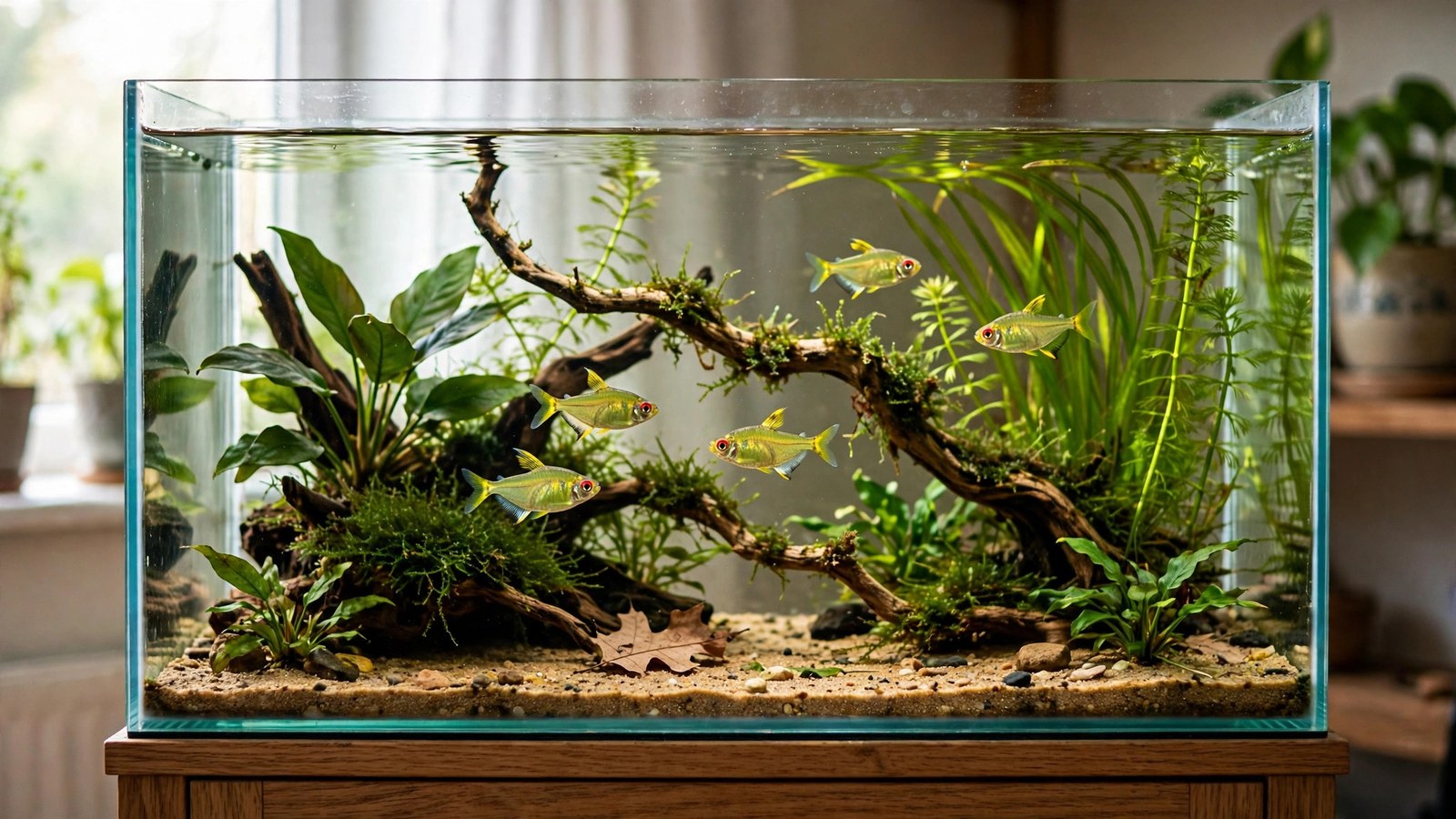
A lemon tetra planted tank is the cheapest way to unlock the color and behavior these fish are famous for, and it doubles as a forgiving first planted setup. Here you will learn the tank size, layout, plants, and water parameters that turn a pale, skittish school into a confident, lemon-bright centerpiece.
What does a lemon tetra need in a planted tank? A group of 10–12 lemon tetras (Hyphessobrycon pulchripinnis) in a 20-gallon or larger planted aquarium with dark substrate, 72–78°F soft-to-neutral water, dense perimeter planting with open center swimming space, and moderate lighting. This combination produces the fish's signature yellow coloration within 1–2 weeks — the same fish stay washed out and shy in bright, bare tanks.
Why Lemon Tetras Are Built for Planted Tanks
Lemon tetras come from the sluggish, vegetation-lined rivers of the Amazon basin — dappled light, leaf litter, dense margins. That history shows: they school loosely in open water, dart to cover when startled, and save their boldest yellow for tanks that feel like home. A planted layout recreates all three zones they need — open water, overhead cover, leafy perimeters — in a single aquarium.
For beginners, this species is unusually forgiving: it tolerates a wide pH range, accepts any quality flake or micro pellet, and never picks at plants. That makes it an easier first schooling fish than the tiny tetras beginners usually default to. If you are comparing species, our roundup of the best schooling fish for planted tanks puts the lemon's hardiness in context.
A planted layout also does something a bare tank cannot for this fish: contrast. Lemon tetras look dramatically brighter against dark substrate and green backgrounds because they feel secure enough to display. Pale, washed-out lemon tetras are almost never sick — they are stressed by too much light and too little cover.
Lemon Tetra Planted Tank: The Setup
The lemon tetra planted tank recipe below is designed for a 20-gallon long, the sweet spot for this species, and scales directly to 29s, 40 breeders, and 55s. It assumes you want a tank that looks finished on day one and gets better as plants grow in — not a bare cycling box.
Tank size and school composition
Lemon tetras reach about 2 inches and are genuinely active swimmers, so footprint matters more than height. Ten to twelve fish is the target: below 8, they sulk and hide; above 12 in a 20-long, the school becomes the living centerpiece the tank deserves. Skip the temptation of a 10-gallon — it can work, but the school never develops the flowing group movement that makes this species special.
Substrate and lighting
Use a dark substrate — nutrient-rich aquasoil or dark sand with root tabs under the heavy feeders. Dark substrate is the single highest-impact color trigger for lemon tetras, and it makes every plant look better too. Keep lighting medium for 6–8 hours daily on a timer; bright light without floating-plant shading drives these fish into the corners, while frogbit or water lettuce overhead lets them claim the whole water column. If this is your first planted aquarium, the low-tech planted tank setup approach keeps equipment costs down.
Equipment basics
A hang-on-back or small canister filter, gentle enough not to blast the mid-water zone — lemon tetras come from slow rivers. Add a reliable heater (target 74°F), a timer-controlled LED, and a weekly all-in-one liquid fertilizer. That is the entire kit. Before the school goes in, the tank still needs to cycle; our planted tank water parameters guide lists the numbers to hit first.
 ★4.6
NICREW ClassicLED Plus planted aquarium light
Check Price on Amazon ★4.6The Planting Plan: What to Grow With Lemon Tetras
Lemon tetras ignore plants entirely, so plant choice is about structure: tall background stems for security, leafy midground breaks to define territories, and low foreground cover with the center left open for schooling. Stick with plants that thrive in the same soft, warm water the fish want, as in Aquarium Plants for Fish Tanks: The Fish-First Plant Guide.
| Zone | Plant | Why it works here |
|---|---|---|
| Background | Amazon sword (Echinodorus grisebachii) | Big leafy cover; thrives in the same soft, warm water |
| Background | Vallisneria | Tall ribbon cover at the back corners; undemanding |
| Midground | Java fern | Tied to wood, unkillable; breaks sightlines without blocking swimming lanes |
| Midground | Anubias barteri | Slow, shade-tolerant; perfect under the floaters' dimmer zones |
| Surface | Frogbit or water lettuce | Dims bright light — the single best stress reducer for this fish |
| Foreground | Dwarf sagittaria or plain sand | Low cover at the front; keeps the center open for schooling |
This is also where easy, near-indestructible species earn their keep. If any of the picks above feel ambitious, start with the bulletproof options in What Are the Easiest Aquarium Plants for a Beginner Community Tank? — lemon tetras are compatible with every plant on that list, so you can substitute freely without redesigning the layout.
Water, Feeding, and Maintenance
Hold 72–78°F (74°F is the sweet spot), pH 6.0–7.5, and soft-to-moderate hardness — stability beats chasing perfect numbers for this adaptable tetra. Weekly 25–30% water changes solve most problems before they start. Fertilize after each change, and prune stems every 2–3 weeks so the center swimming lane never closes.
Feed a quality micro pellet or crushed flake as the staple, with frozen daphnia or baby brine shrimp 2–3 times a week — the carotenoid-rich frozen foods measurably deepen the yellow within a couple of weeks. Diet is the second color lever after environment. For the parameters behind this guide, see the Seriously Fish species profile for Hyphessobrycon pulchripinnis; Tropica's plant database confirms the light and nutrient needs of the species in the planting plan.
Frequently Asked Questions
How many lemon tetras should I keep in a planted tank?
Keep 10 to 12 in a 20-gallon or larger tank, and never fewer than 8. Below 8, lemon tetras turn shy, pale, and reclusive — symptoms most owners mistake for illness. A school of 10 or more displays tighter group movement, brighter color, and far more natural behavior.
Do lemon tetras need CO2 in a planted tank?
No. Lemon tetras thrive in low-tech planted tanks with no CO2 injection, medium lighting, and hardy plants like Java fern, Anubias, Amazon swords, and Vallisneria. CO2 only matters if you want demanding carpeting plants or fast stem-plant growth — the fish themselves are indifferent. A liquid all-in-one fertilizer dosed weekly is plenty.
Why are my lemon tetras pale or washed out?
Almost always the cause is environmental, not disease: too much light, no dark substrate, too few plants, or a school under 8 fish. Fix it with floating plants for shade, a dark substrate, dense perimeter planting, and 10+ tankmates. The signature yellow typically returns within 1 to 2 weeks once the fish feel secure.
What tank mates work with lemon tetras in a planted tank?
Peaceful community fish sharing 72–78°F soft-to-neutral water: corydoras, otocinclus, small rasboras, cherry shrimp, and mystery snails all work well. Avoid fin-nippers and anything large enough to eat a 2-inch tetra. Lemon tetras tolerate shrimp colonies, though newborn shrimplets may be picked off.
How long does a planted lemon tetra tank take to set up?
Plan 4 to 6 weeks: one weekend for hardscape and planting, then 3 to 4 weeks of cycling while plants establish, before the school goes in. Heavy planting from day one speeds the cycle because plants absorb ammonia directly. Add the tetras last, split into two groups a week apart if you are cautious about bioload.
Done right, this becomes the aquarium people stop to watch: a loose, confident school glowing against dark substrate and green walls, working the open center lane you left for them. Plant heavier than feels necessary at the margins, keep the middle open, and the fish handle the rest.