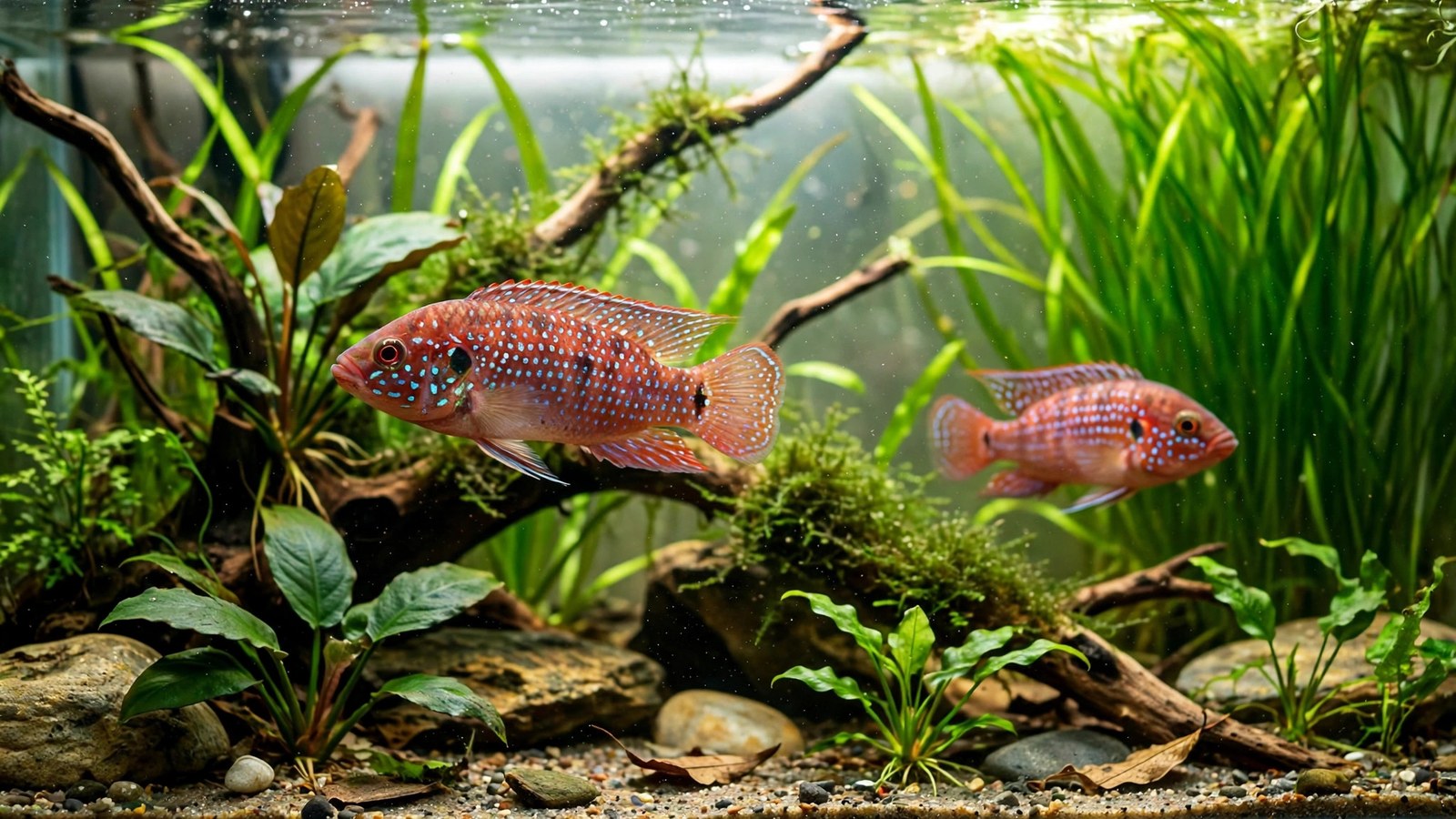
Most jewel cichlid keepers give up on live plants within weeks, and it is not their fault. Hemichromis bimaculatus, the African river bully from the Zaire region, digs relentlessly and shreds anything soft. A jewel cichlid planted tank is absolutely possible once you stop fighting the fish and start designing around it: tough epiphytes tied to rock, potted plants with stone-guarded roots, and a floating-plant canopy that turns dim lighting into the jewel's greatest strength.
The jewel cichlid planted tank strategy: beating the African river bully
Hemichromis bimaculatus reaches 5–6 inches and earns its name in breeding season, when the body ignites into intense red scattered with iridescent blue jewel spots. Between those displays it is a relentless digger and leaf shredder that will uproot an entire foreground overnight. The "red jewel" variants H. guttatus and H. lifalili share the same habits, so every plant decision below applies to them too.
The design principle is fish-first plant selection for digging cichlids: choose plants the fish physically cannot remove. The best plants for cichlid tanks playbook applies here — the jewel's version just leans harder into dim lighting, where this fish looks its best.
Accept the fish you bought
Jewels claim caves, defend territory fiercely when breeding, and treat soft-stemmed plants as decoration to be dismantled. Plan around digging, shredding, and aggression from day one — as constraints that shape the scape, not problems to fix.
The gloomy tank trick: dim light for maximum red
Jewel keepers trade one secret quietly: this species colors up most intensely under dim, shaded lighting. Under bright open light, jewels look washed out and stressed; under a dark canopy, the breeding red deepens and the blue spots glow. Planting strategy here is color strategy — every floating plant doubles as a dimmer switch.
Indian fern (Ceratopteris thalictroides) is the workhorse: it floats freely into a living ceiling with no roots to dig up, and sheltered jewels bicker less and breed more readily. Read the beginner's guide to floating aquarium plants for thinning rhythms — floaters will smother the tank if left unchecked.
Plants that survive jewel cichlids
The entire palette is five plants. Each one either clings to hardscape or hides its roots where a jewel cannot reach:
| Plant | Placement | Why it survives |
|---|---|---|
| Anubias (e.g. barteri var. nana) | Tied or glued to rock/wood | Leathery, bitter leaves; the Anubias barteri profile confirms the rhizome must stay exposed — ideal here. |
| Java fern | Tied or glued to rock/wood | Another rhizome plant; tough fronds jewels rarely chew through. |
| Amazon sword (Echinodorus) | Potted, pot buried and ringed with stones | Deep root system protected by the pot; broad leaves tolerate low light under floaters. |
| Cryptocoryne (C. wendtii) | Potted, pot buried and ringed with stones | Shade-tolerant rosette; potting defeats digging and its famous relocation "crypt melt". |
| Indian fern (Ceratopteris) | Floating | No roots to dig; dims light for the gloomy tank effect and drinks excess nitrates. |
Tie or glue epiphytes into crevices of rough lava rock and driftwood so rhizomes grip as the bond cures. Sink unglazed terracotta pots to the rim and ring each with flat slate pieces overlapping like roof tiles — a jewel can shove the stones all day without reaching the root ball. This guard-ring method is standard in kribensis planted tank builds, another African digger.
 ★4.2
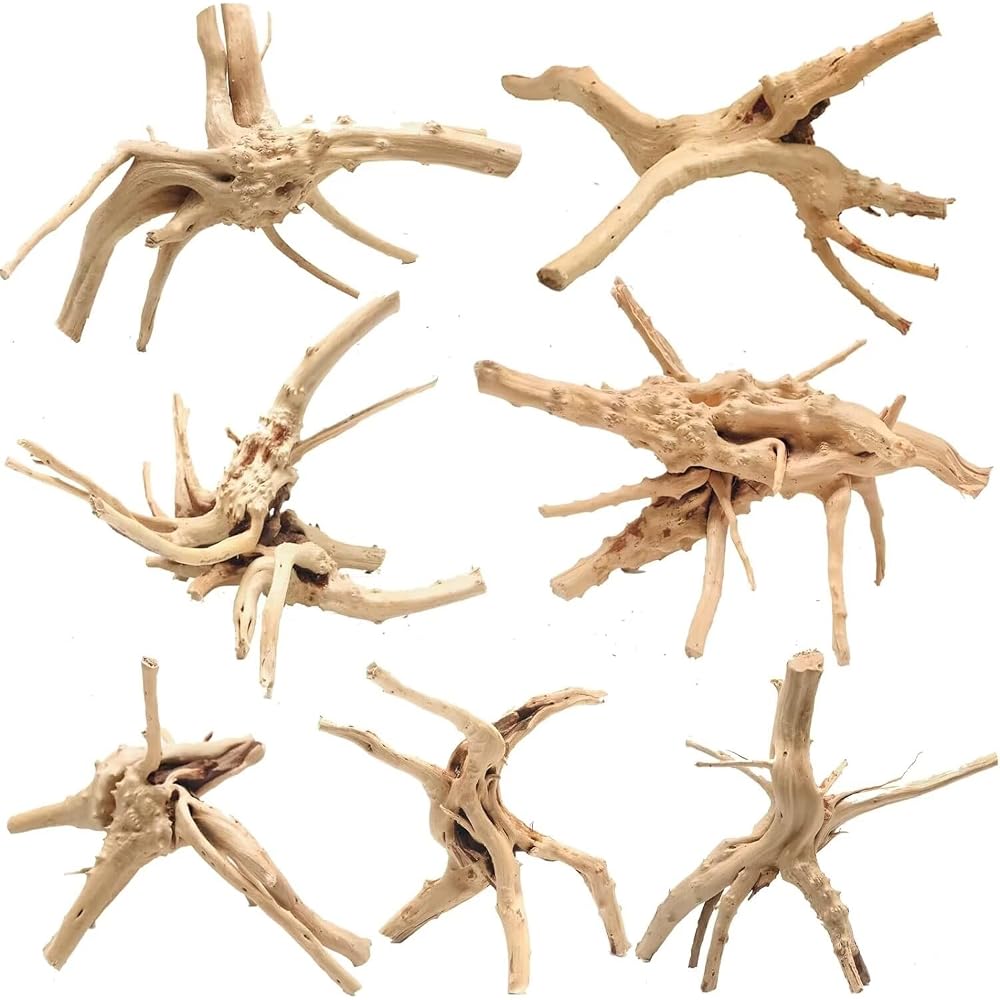
Hamiledyi Natural Spider Wood Driftwood
Check Price on Amazon ★4.2Tank setup: rock, caves, and sight-line breaks
Start with 30 gallons for a single pair; go 55 or larger with any other fish — and even then, only robust African tankmates, never typical community fish. Jewels will terrorize peaceful tankmates to death, especially when breeding.
Caves are not optional: provide at least one per fish, built from stacked slate or ceramic caves, plus rock piles that split the tank into visual compartments. A jewel that cannot see its rival cannot fight it, so breaking sight lines is the single most effective aggression reducer. Fine sand or fine gravel suits their sifting and pit-digging and is gentler on barbels than coarse gravel. The African jewelfish profile confirms the basics: up to 6 inches, red with jewel-like blue spots, explicitly unsuitable for typical community aquariums.
If you want to see how other territorial cichlids are handled, the convict cichlid planted tank guide and the firemouth cichlid planted tank guide both use the same sight-line-break architecture, adapted to each species' aggression style.
Weekly routine
Change 25–30% of the water weekly — diggers keep waste suspended, so filtration works overtime. Re-anchor wrestled-loose epiphytes, thin the floaters, and check the stone root-guards. Feed quality cichlid pellets as the staple with frozen foods a few times weekly; color foods help, but nothing deepens the red like dim light.
Frequently Asked Questions
Can jewel cichlids really live in a planted tank?
Yes, if you plant around their behavior instead of against it. Use rhizome plants tied to rock and wood (Anubias, Java fern), keep rooted plants in guarded pots, and float Indian fern on top. Jewels will destroy delicate stem plants and carpets, but they largely ignore tough epiphytes and cannot uproot pots ringed with stones.
Why do jewel cichlids turn redder in dim light?
Dim, shaded conditions make jewels feel secure, and a secure jewel displays rather than hides. Under bright open light the fish stays stressed and washed out; under a floating-plant canopy the intense breeding red deepens and the iridescent blue spots stand out sharply. This is the "gloomy tank" trick: low light is simultaneously a planting strategy and a color strategy.
Which plants survive jewel cichlids best?
The five safest are Anubias and Java fern attached to hardscape, Amazon swords and Cryptocoryne grown in stone-guarded pots, and floating Indian fern. All share one trait: nothing valuable sits in open substrate. Avoid soft stem plants, mosses, and carpets entirely — a determined jewel shreds or uproots them within days, sometimes overnight.
How do I stop jewel cichlids from uprooting my plants?
Stop giving them roots to find. Grow rooted plants in unglazed terracotta pots sunk to the rim, then overlap flat slate pieces around each pot like roof tiles so digging reaches stone, not root ball. For epiphytes, glue or tie them into rock crevices. The fish can shove hardscape around without harming a single plant.
What size tank does a jewel cichlid planted tank need?
30 gallons is the minimum for a single pair, and 55 gallons or more is the floor once other fish enter the picture. Rock piles and caves eat footprint fast, so buy bigger than the fish alone suggests. Jewels are never typical community fish — tankmates must be robust African species that can defend themselves, or skip tankmates entirely.
A jewel cichlid planted tank is not a compromise between fish and plants — it is a design where the fish's two defining traits, digging and glowing red under shade, dictate every choice. Build the gloom, guard the roots, give them caves, and the African river bully will reward you with the most vivid red in the fish room.