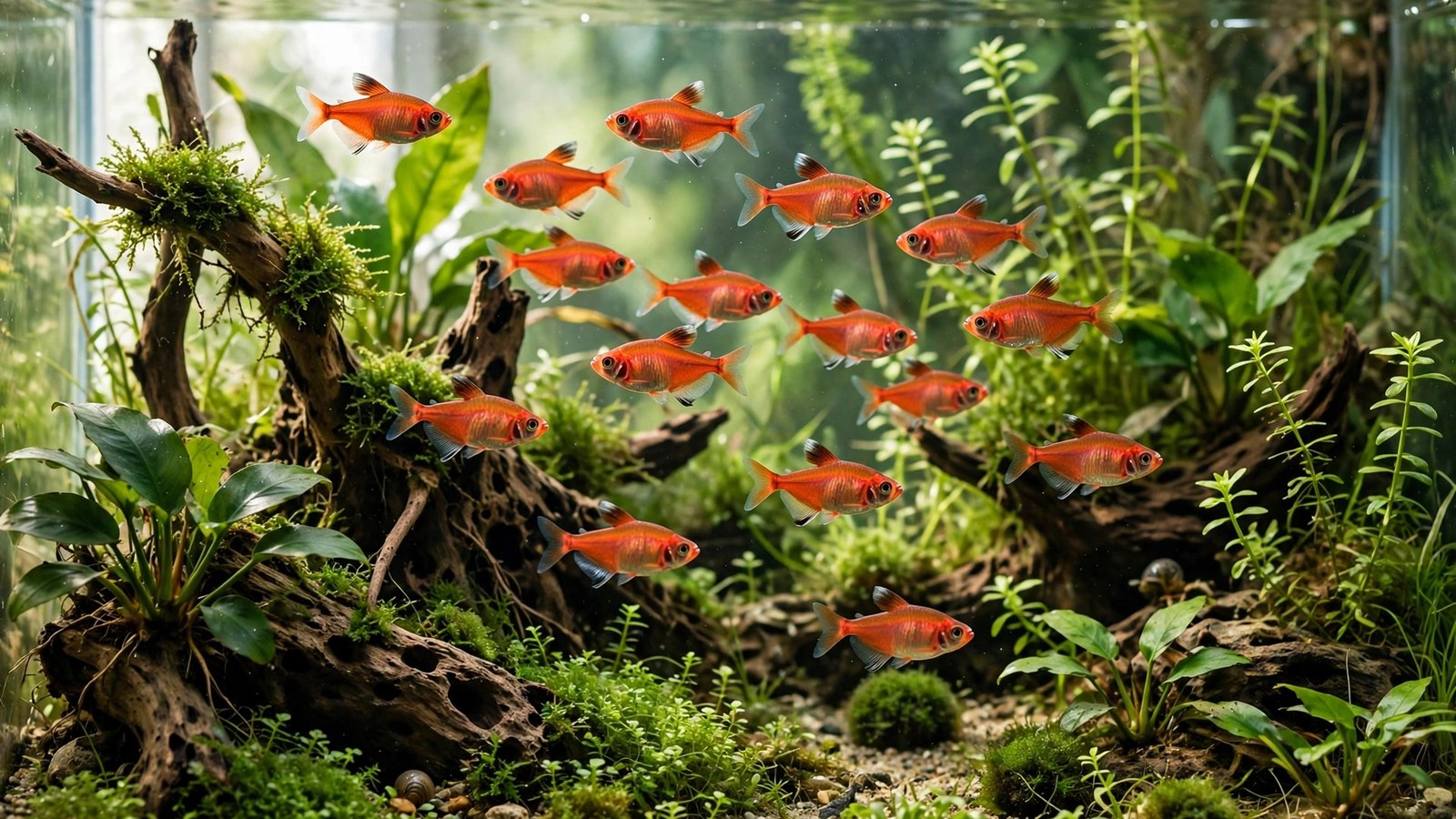
Walk past a row of flame tetras in any fish shop and you will see two different fish. In the bare holding tanks: washed-out orange ghosts. In the shop's one planted display: the same species burning copper-red with black shoulder bars. The difference is not genetics — it is the setup, and a flame tetra planted tank is where this fish finally looks like the photograph on the bag.
What a flame tetra planted tank needs first
Start with the layout, because it decides everything else. Plant the back and both sides densely — tall Vallisneria or Egeria at the rear, Cryptocoryne bushes midground — and keep a clear open lane across the front for the school to patrol. This border-and-lane plan follows the fish-first guide to aquarium plants: choose plants around what the fish does, and flame tetras live midwater, cruising the lane and ducking into the green at the first alarm.
Twenty gallons with a 24-inch footprint is the honest minimum. Eight to ten fish need room to stretch into a formation; in a shorter tank they stack in a nervous corner instead of schooling. Filter gently — a sponge filter or baffled HOB. Strong current is the classic beginner mistake: flame tetras come from slow, vegetation-choked water, and a jet stream makes them clamp their fins and fade.
Lay dark substrate before anything else. A dark aquasoil or gravel is half the color formula — pale sand reflects light back up at the fish and washes them pale from below, while a near-black base makes the copper-red rear half glow by contrast.
The color formula: shade, borders, and dark ground
The formula in one sentence: dense borders + dark substrate + dimmed light = the deepest red this fish can show. Miss any one and it goes pastel. The light half comes from above — floating plants for beginners like frogbit or water lettuce. A 30–40% cover of floaters dapples the light the way overhanging riverbank vegetation does in their native streams, and gives the overhead security that lets them display instead of hide.
The change is fast: under floater shade over dark substrate, the rear half deepens to copper-red within a week and the two dark shoulder bars sharpen. Diet does the rest — brine shrimp and daphnia carry carotenoids the fish deposits into red pigment, visibly deepening color over two to four weeks.
 ★3.9
PAGOW Floating Plant Corral Rings
Check Price on Amazon ★3.9Water that stays cool and calm
Flame tetras tolerate 22–28°C, but they are one of the few common tetras that look and behave better cool. Hold the tank at 22–24°C — roughly a room-temperature home — and you get tighter schooling and richer color than at a standard 26°C. This is the number most care sheets bury: under 24°C is the flame tetra sweet spot.
pH from 5.8 to 7.8 works, soft to medium hardness, and stable beats perfect — a steady 7.2 wins over a swinging 6.4 every time. Keep nitrates under 20 ppm with weekly 25–30% water changes; this species shows stress as fading long before it shows it as illness.
| Parameter | Range |
|---|---|
| Temperature | 22–24°C sweet spot; tolerate 22–28°C |
| pH | 5.8–7.8 |
| Hardness | Soft–medium |
| Tank size | 20 gal / 24" long minimum |
| Flow | Gentle — sponge filter or baffled HOB |
| Lighting | Moderate, ~30–40% dimmed by floaters |
Schooling and tank mates that keep the peace
Six is the number every shop sticker prints; eight to ten is the number that works. At eight-plus, flame tetras settle into a loose, confident school — and the social competition of a proper group visibly intensifies male color. They are peaceful but livelier than neons, so pair them with tank mates that enjoy activity: other small tetras and rasboras, corydoras below, and calm centerpiece fish that will not bully them.
For a multi-school display, the blue tetra stays small and peaceful, and the kerri tetra adds a violet counterpoint without fin-nipping drama. When shopping, do not confuse them with lookalikes: serpae tetras are noticeably nippier, while red phantoms are deeper-bodied and slower. Flames are the gentler, livelier middle of that red-tetra trio.
Feeding micro-foods that deepen the red
Small fish, small mouths — feed small food. A quality micro pellet or crushed flake as the daily staple, in two small feedings, keeps the school conditioned without fouling water. Layer in the color foods two to three times a week: frozen daphnia, baby brine shrimp, the occasional small bloodworm. Their carotenoids feed directly into the red pigment, which is why diet shows up in the body within weeks.
Rotate rather than repeat — daphnia Monday, brine shrimp Wednesday beats the same food daily. A varied week also triggers breeding-condition sparkle: deeper red, males showing black anal-fin edging.
Breeding egg-scatterers among fine leaves
Flame tetras are classic egg-scatterers: conditioned pairs spawn in the morning among fine-leaved plants or spawning mops, scattering adhesive eggs that hatch in about a day. Use a dedicated ten-gallon breeding tank — dim light, soft slightly acidic water, java moss or a mop — and remove the adults afterward, or they eat the eggs. Even if you never breed them, fine texture among the borders lets the school's natural morning spawning chases play out in front of you.
Frequently Asked Questions
Why did my flame tetras lose their red color?
Fading is almost always environmental: bright direct lighting, pale substrate, sparse planting, or a too-small school. Restore color by dimming light with floating plants, switching to dark substrate, planting dense borders, and keeping eight or more fish. With carotenoid-rich foods added, expect visible red deepening within two to four weeks.
What temperature do flame tetras need?
They tolerate 22–28°C but look and behave best at 22–24°C — cooler than the standard 26°C most tropical communities run, matching their shaded native streams near Rio de Janeiro. Keep temperature stable and change no more than 2°C per water change.
How many flame tetras should I keep together?
Eight to ten is the practical minimum for real schooling and confident color. Six produces a nervous, loosely associated group that fades more easily. In a 20-gallon tank, ten to twelve make a superb display, and more fish spreads the lively chasing so no single fish gets harassed.
Are flame tetras fin nippers like serpae tetras?
No — that is the key difference between the two lookalikes. Serpaes are genuinely nippy and harass slow or long-finned tank mates; flame tetras are livelier than neons but fundamentally peaceful, safe with small community fish, corydoras, and most rasboras. A "flame tetra" shredding fins was likely mislabeled serpae.
Do flame tetras eat aquarium plants?
No. Flame tetras are plant-safe omnivores that browse micro-foods in the water column and leave foliage alone. They occasionally pick algae off leaf surfaces, which is harmless. Use fine-leaved plants freely — they double as spawning sites — without the fear this species' plant-eating cousins deserve.
The flame tetra's real color is a setup, not a fish
Nobody sells you the copper-red flame tetra — you build the conditions that let it appear. Dark ground, dimmed light, dense green borders, cool steady water, a school big enough to feel brave. For full species data, the Aquadiction flame tetra profile documents the wild habitat and strains.