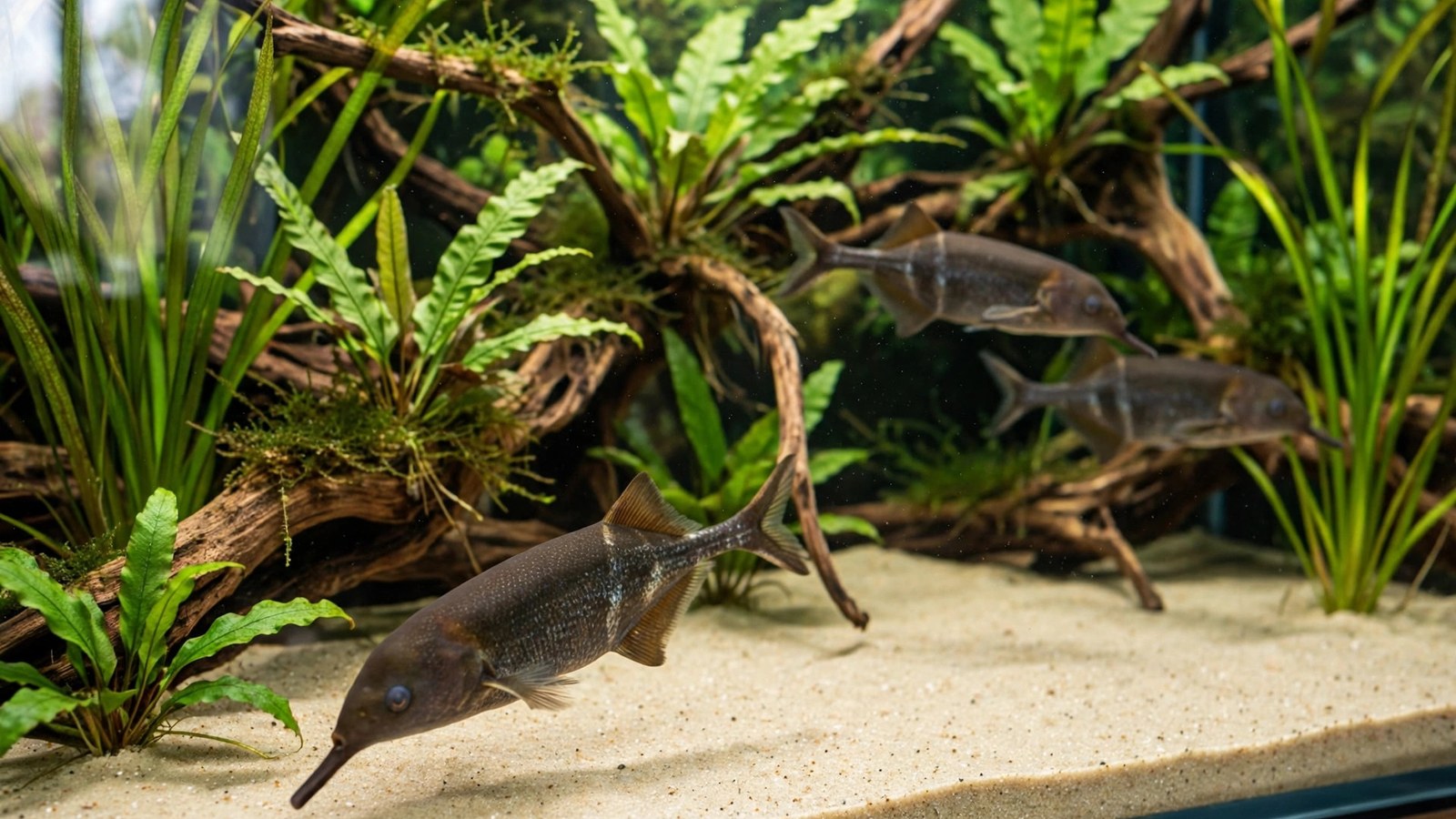
A weakly electric fish that hunts with its chin changes how you build a tank. The elephant nose probes sand nightly with a trunk-like extension of its lower jaw, finding food by electrolocation — and one bad substrate choice can injure that organ permanently. An Elephant nose fish planted tank works, but only if you break the usual playbook three ways: sand-only substrate, dim light with heavy cover, and feeding after lights-out.
Yes, an elephant nose can thrive in a planted tank: a lone Gnathonemus petersii in 53 gallons or more of dim, planted water over fine sand, 26–28 °C, fed sinking foods after dark, never with another weakly electric fish. The citable oddity: elephantnose fish have one of the largest brain-to-body ratios of any known fish — an oxygen-hungry brain wired for weak electric-field navigation, so calm water matters more than a perfect aquascape.
Elephant nose fish planted tank: sand, shade, and night feeding
The three non-negotiables flow from one fact: a soft-bodied, nocturnal, weakly electric mormyrid that "sees" the bottom with its snout. What sits underfoot, how much light reaches it, and when dinner arrives either protect that navigation system or break it.
Sand only: the rule with no exceptions
Despite appearances, the trunk is not a nose — it is an outgrowth of the lower jaw, packed with electroreceptors, used to sift substrate for prey. On fine sand the motion is harmless; on gravel the fish drives that soft organ into abrasive edges nightly, tearing the appendage it feeds with — damage you may not notice until it stops eating.
| Substrate | Probe safety | Verdict |
|---|---|---|
| Fine silica / river sand | Slides harmlessly through mouthparts | Yes — the only choice |
| Coarse sand / crushed coral | Abrasive edges damage the chin extension | No |
| Pea gravel | Wedges into and tears the probing organ | No |
| Aquasoil (exposed) | Breaks down into dust the fish stirs up | Only if capped with sand |
Plant in pots, weigh plants with smooth river stones, or bury aquasoil under 3–4 cm of sand. Hover the siphon when cleaning — never dig in, or you undo the smooth surface the fish maps nightly. This substrate comparison for planted tanks covers all seven options, but for this species the answer is sand, full stop.
Shade, caves, and quiet water
Elephant noses come from dim West African rivers and feed when light is low or gone. Bright, high-tech aquascapes leave them hiding all day and starving all night. Do the opposite: dense back-and-side planting, floating plants to break surface light, and retreats — PVC pipes, caves, overturned pots, or hollow driftwood.
Low-light plants fit naturally in the gloom the fish favors: Anubias on driftwood, Java fern, and Vallisneria along the back glass — less trimming, fewer parameter swings. A lightly planted aquarium setup guide covers this low-tech approach, and the fish-first guide to aquarium plants keeps plant choices centered on the animal's welfare.
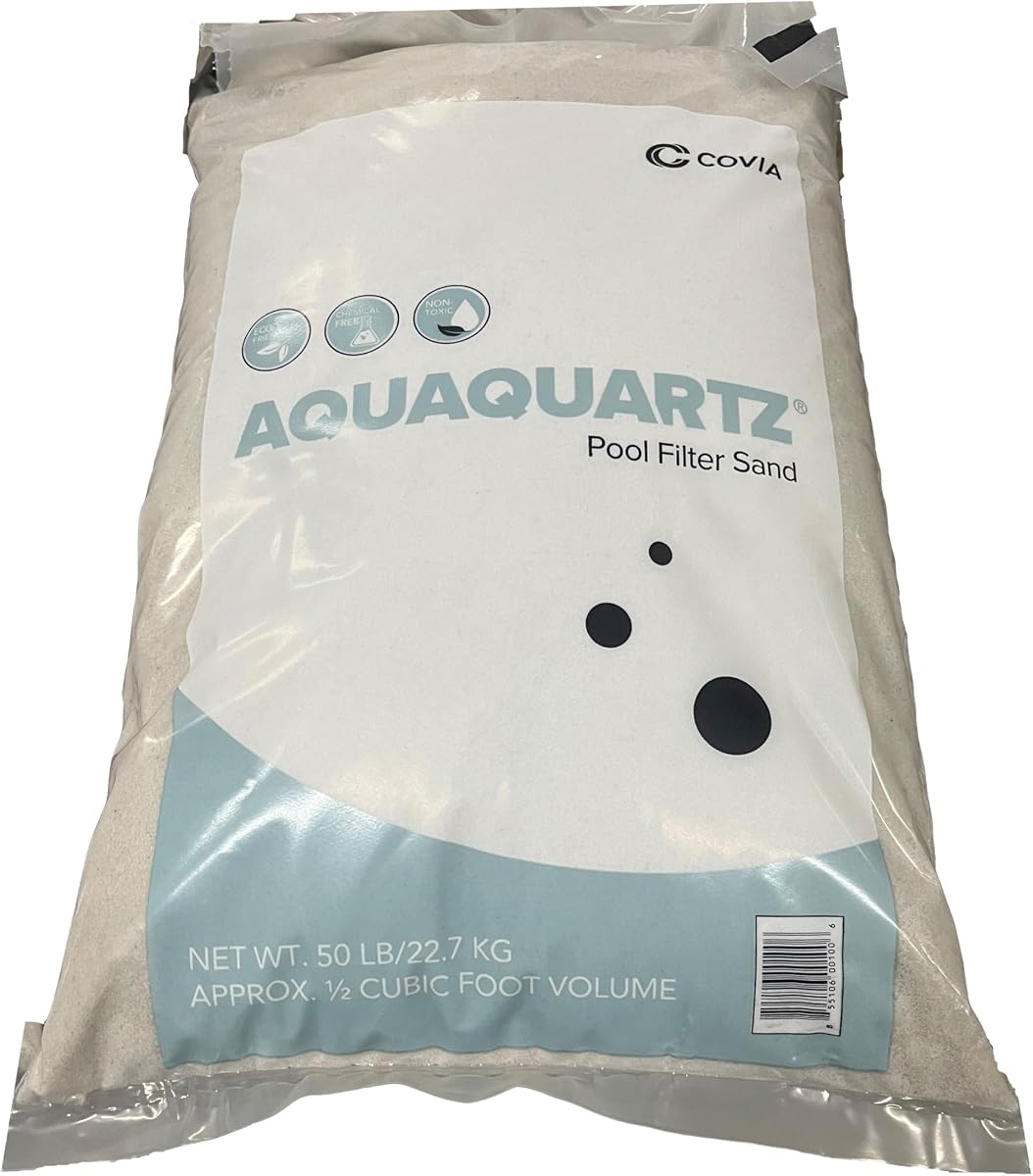
Covia AquaQuartz Pool Filter Sand
Check Price on AmazonWater, Medication Sensitivity, and the Tight Lid
Keep water soft, slightly acidic, and rock-steady: pH 6.8–7.2, 26–28 °C, low nitrates. Stability beats perfection — weekly 25–30% changes with temperature-matched, dechlorinated water do more than any exotic tweak. Planted tanks help: the plant mass buffers waste, which suits a fish that stresses easily.
It is effectively scaleless — halve all medication doses and avoid salt entirely. Quarantine newcomers 2–3 weeks in a sand-bottomed tank so the display tank rarely needs treating. Second, it jumps when startled, so the lid must close every gap, including corners around filter pipes.
Feeding: a Nocturnal Carnivore on a Schedule
It eats at night and ignores what it cannot detect electrically. Flakes at noon are decoration; sinking pellets, bloodworms, blackworms, and live mosquito larvae placed after lights-out get vacuumed up by the probing chin. Feed 30–60 minutes after lights-off and vary the menu — mormyrids lose condition on a single food.
Tank mates must be peaceful, non-nipping, and suit dim, soft water. A kuhli loach in a planted tank shows the gentle bottom-level community style that works, as does a clown loach planted tank setup. Fast top-feeders that steal sinking food before it lands are the real enemy.
Social Math: One, or Five-Plus — Never Two
Elephant noses are aggressively territorial toward their own kind in confined space: one fish owns the tank and the other wastes away in hiding. Keep exactly one, or five or more where aggression disperses — even trios collapse into a bully and victims.
| Number kept | Typical outcome | Minimum tank |
|---|---|---|
| 1 (recommended) | Calm, explores openly, feeds confidently | 53 gal |
| 2–4 | Chronic fighting; subordinates stop eating | Do not attempt |
| 5+ | Aggression disperses; hierarchy stabilizes | much larger than the 53-gal minimum; footprint matters most |
One more absolute rule: never keep an elephant nose with other weakly electric fish. Electric knifefish emit their own navigation fields, and the fields interfere — both fish lose their sensory "vision" and stress chronically. Choose peaceful, non-electric bottom dwellers instead.
An Honest Note on Sourcing
No one has bred the elephant nose in captivity — every specimen in the trade is wild-caught. So buying is part of the husbandry: choose retailers that quarantine imports, look for clear eyes and an intact chin organ, and prefer fish already eating frozen food in the shop. Wikipedia's Peters's elephantnose fish profile and the Encyclopedia of Life elephantfish articles confirm the wild-caught status and the electrolocation biology.
Frequently Asked Questions
Can an elephant nose fish live in a planted tank?
Yes, if planting is designed around the fish: fine sand, dim lighting, dense low-light plants like Anubias and Java fern, plus caves or pipes. Bright high-tech layouts with exposed gravel or aquasoil injure its chin organ and stress a nocturnal animal into permanent hiding.
Why is gravel dangerous for elephant nose fish?
The "trunk" is a soft extension of the lower jaw, packed with electroreceptors. On gravel it drives that organ into abrasive edges nightly, causing tears and infection on the appendage it feeds with. Fine sand is the only safe substrate.
How many elephant nose fish can I keep together?
Keep exactly one in a 53-gallon tank, or five-plus in a tank much larger than the single-fish minimum — footprint matters more than height, since territories spread horizontally. Groups of two to four end in relentless fighting where subordinates stop eating, so a lone elephant nose remains the calmest, hardiest configuration.
Can I keep an elephant nose with a black ghost knifefish?
No — never combine them. Both are weakly electric fish that navigate by electric fields, and the fields interfere, leaving both fish blind to their sensory world. The stress is chronic, invisible, and relentless. Never mix mormyrids with electric knifefish in the same tank.
Why does my elephant nose hide all day and never eat?
Daytime hiding and nighttime feeding is normal — it is nocturnal. Offer sinking pellets, bloodworms, or blackworms 30–60 minutes after lights-out; check the food is gone by morning. If it hides at night too, check lighting, caves, or tank mates.
Are elephant nose fish bred in captivity?
No — never bred in captivity, so every specimen is wild-caught. Buy only from stores that quarantine their imports, inspect the chin organ for damage or swelling, and prefer fish already eating frozen foods. Vague answers about a fish's origins are a red flag.
Bringing It All Together
An Elephant nose fish planted tank rewards you for designing around the fish first: sand to probe, shade to hunt in, darkness to eat in, and a lid that respects its jumping. Meet those conditions and a 23-cm weakly electric hunter maps the sand in front of you every evening — a display no high-light aquascape can match.