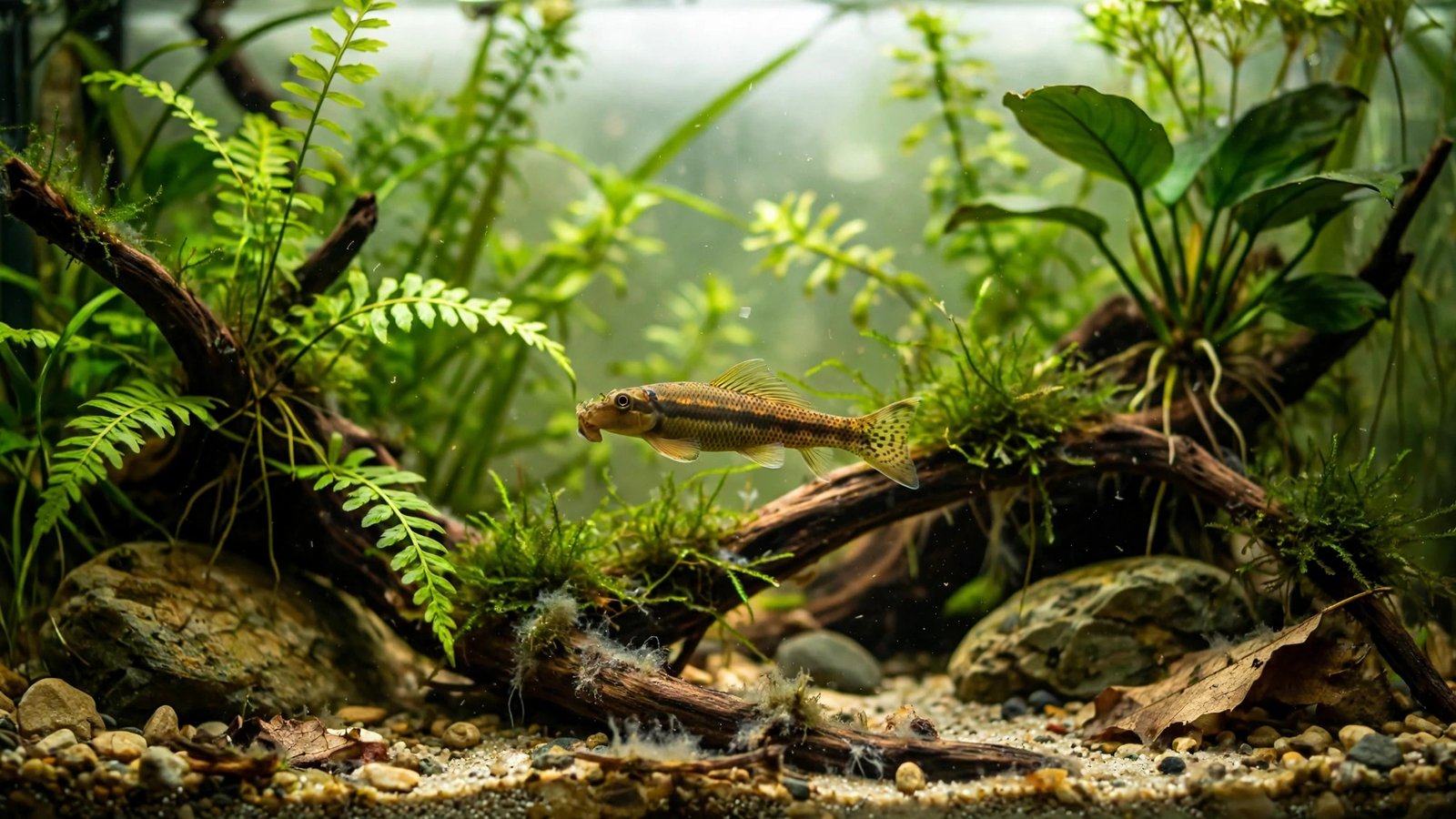
The two-inch "algae eater" vacuuming the glass at your local shop is one of the most regretted fish purchases in the hobby. It grows to a foot long, stops eating algae as it matures, chews through soft-leaf plants, and rasp-grazes the slime coats off slow tankmates. This is the honest guide to the chinese algae eater in a planted tank — and why you should almost certainly not buy one.
One critical distinction first: the Chinese algae eater (Gyrinocheilus aymonieri, also sold as the golden sucking loach) is a completely different species from the Siamese algae eater (Crossocheilus), which is genuinely one of the best planted-tank grazers. Shops mix up the names constantly. If you need to tell them apart, our ID guide to the Siamese algae eater vs flying fox shows how — then come back to learn why the Chinese species is a problem.
When building a fish-first planted tank, every livestock choice has to earn its place against the plants you paid money for. The Chinese algae eater earns nothing and costs plenty. Here's the full picture, so you can spot the trap before your carpet gets shredded.
Why the Chinese Algae Eater Fails in a Planted Tank
The failure happens in three acts. Act one: you bring home a two-inch juvenile that vacuums the glass with impressive energy. For a few months it looks like the best five dollars you've ever spent. Act two: it hits 10 cm and its metabolism changes. Algae stops being enough. Its sucker mouth, once a cleaning tool, becomes a weapon it latches onto slow, flat-bodied tankmates to rasp off their slime coat. Act three: at 25 cm it's a foot-long territorial bulldog that treats your aquascape as a feeding station — and the shop that sold it to you won't take it back.
This metabolic switch is documented in the Fishkeeping.co.uk Chinese algae eater caresheet, which notes the fish becomes more omnivorous with age, often includes soft aquarium plants in its diet, and develops a nasty habit of chewing tankmates — calling it probably the most commonly sold and least suitable algae eater for the community aquarium.
What It Actually Does to Plants
The Chinese algae eater doesn't trim plants — it vandalizes them. Its sucker mouth rasp-scrapes surfaces for food, and in a tank that surface is often a leaf. Fine soft-leaf species get shredded first: chewed Hygrophila tips, ragged Ludwigia foliage, tattered Rotala stems.
Then comes the uprooting. A heavy, ten-inch fish doesn't hover delicately — it bulldozes. Carpet plants get lifted at the roots when the fish parks on them, and unrooted stems get ripped out entirely. One adult can undo a month of careful carpeting work in a single evening of restless patrolling.
Compare that to what a planted tank actually needs: grazers with small, precise mouths that clean leaf surfaces without damaging them. That's the entire case against this fish in one line — it has the wrong mouth for the job, and everything else it does with that mouth is collateral damage.
What to Buy Instead
The algae problem is real — buying the wrong fish just adds a fish problem on top of it. What you want depends on the algae and the surface:
| Your algae problem | The fish that actually fixes it | Why it works in a planted tank |
|---|---|---|
| Soft green film on glass and hardscape | Otocinclus | Stays small (3–4 cm), schools, rasps leaves clean without chewing them |
| Green spot and film algae on rocks/wood | Nerite snails | Can't reproduce in freshwater, ignores plants entirely, relentless on hardscape |
| Soft algae, leftover food, detritus | Amano shrimp | Constant grazers, climb everywhere, zero risk to healthy plant tissue |
| Hair/thread algae on plants | True Siamese algae eater | One of the few animals that actually eats hair algae; verify species first |
Match the eater to the algae, not the price tag. Our algae eater guide for planted tanks breaks down which species handles which algae type, so you can buy the right grazer the first time. And if you're staring down black beard algae — the number-one reason people impulse-buy Chinese algae eaters — know that no fish eats it reliably once it's established. The BBA removal guide covers the manual and CO2-based fixes that actually work, because throwing a foot-long loach at it never will.
Peaceful Fish That Belong in a Planted Tank
If the real reason you're shopping is that you want an active, living planted community tank — not just algae removal — there are fish that genuinely belong in the scape. Our recent batch covers three of them: the penguin tetra, an honest schooling tetra that stays plant-safe when fed properly; the empire gudgeon, a sleeper goby whose breeding colors ignite under broken sightlines and shade; and the red neon blue eye, a nano rainbowfish that uses the aquascape as its display stage. None of them will rasp your angelfish.
Frequently Asked Questions
Is a Chinese algae eater the same as a Siamese algae eater?
No — they are completely different species. The Chinese algae eater (Gyrinocheilus aymonieri) grows to 25–30 cm, stops eating algae as an adult, and turns aggressive. The Siamese algae eater (Crossocheilus) stays smaller, keeps eating hair algae all its life, and is safe with plants. Shops confuse the names constantly, so learn the ID differences before buying either.
Will a Chinese algae eater eat my plants?
Yes — adults chew soft-leaf plants like Hygrophila, Ludwigia, and Rotala, and their bulk uproots carpets and unrooted stems. One adult can destroy weeks of aquascaping work. If you own one and see ragged leaves, that's the fish, not a nutrient deficiency — rehome it to a large setup with robust tankmates.
Do Chinese algae eaters really stop eating algae?
Largely, yes. Juveniles under ~10 cm graze enthusiastically, but adults shift toward protein and lose interest in algae — and they never touch black beard or hair algae at any age. That's the central bait-and-switch of the hobby's most mis-sold fish.
What fish does a Chinese algae eater attack?
Slow, flat-bodied, or long-finned fish are the classic victims: angelfish, discus, gouramis, and fancy goldfish. The algae eater latches onto their flanks to rasp off the protective slime coat, leaving wounds prone to infection. Keep it only with fast, boisterous tankmates in a large tank — or better, don't keep it at all.
What is the best algae eater for a planted tank?
Match the grazer to the algae: otocinclus clean leaf surfaces without chewing them, nerite snails handle hardscape, and Amano shrimp graze soft algae and detritus everywhere. For hair algae, a true Siamese algae eater is one of the few real fixes. The right crew of small grazers beats one big "sucker fish" in every planted tank.
The Chinese algae eater is a big, hardy, interesting fish — and spectacularly wrong for a planted tank. Admire the juveniles vacuuming the shop glass, walk past to the otocinclus tank, and your carpet, soft leaves, and angelfish will all stay intact.