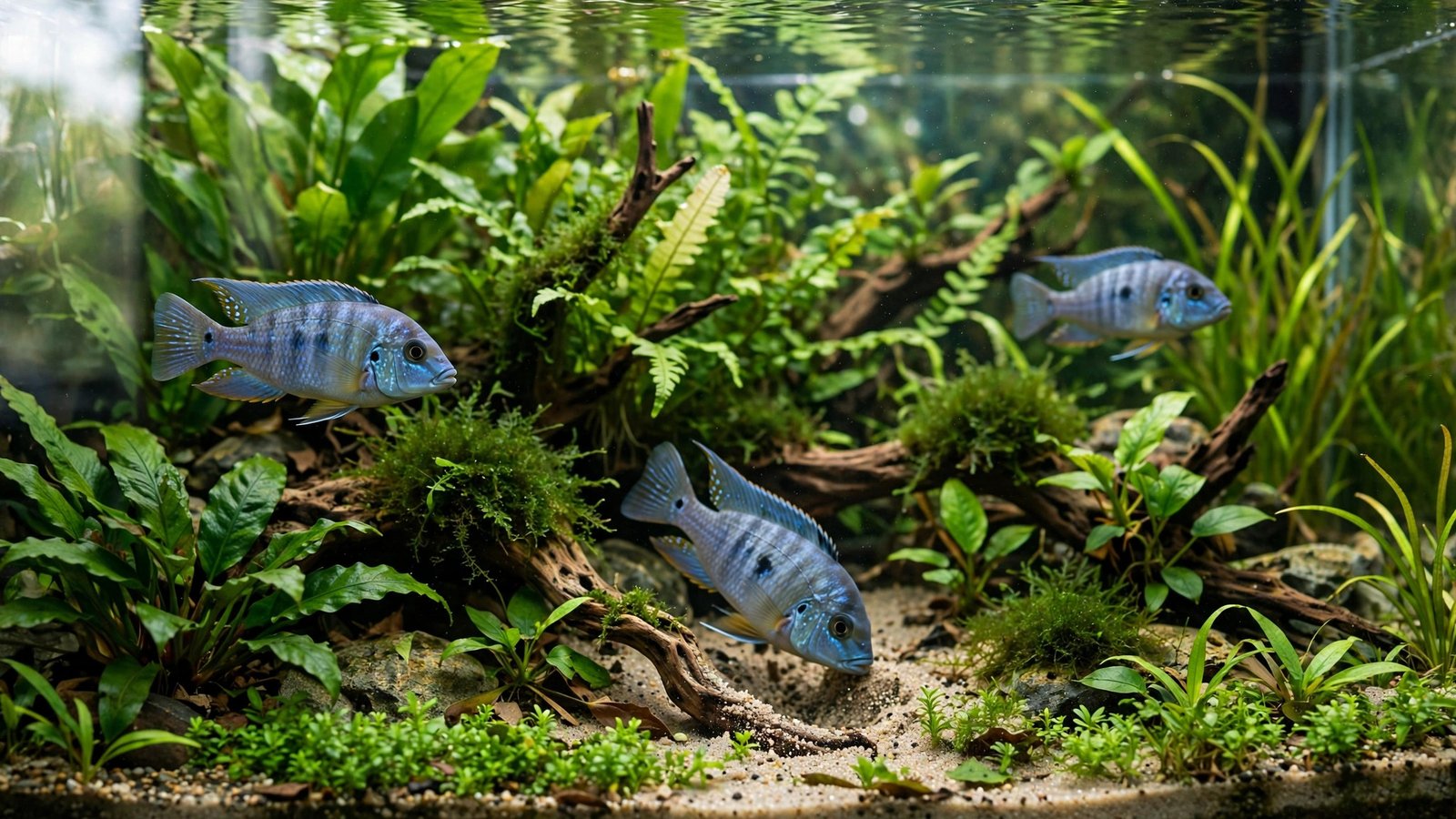
Most cichlid keepers treat plants as decorations the fish haven't destroyed yet. Blue acara are the happy exception: these mild-mannered cichlids dig shallow scrapes but almost never bulldoze a well-rooted plant the way convicts or firemouths do. That single trait makes a blue acara planted tank one of the most rewarding community builds — a densely planted 55-gallon like a flooded forest edge that lets you watch pair-bonding, spawning, and biparental care.
Here is the build: the sand bed, digger-proof plants, a spawning-stage layout, and community tank mates that thrive alongside a bonded pair.
Why a Blue Acara Planted Tank Succeeds Where Other Cichlid Tanks Fail
The reputation of "cichlids destroy plants" comes from true excavators — convicts that crater the substrate, firemouths that pit every open patch, blood parrots that re-scape weekly. Blue acara (Andinoacara pulcher) dig too, but they are more like gardeners turning soil: shallow scrapes, a little pushed sand, and then they leave the plants alone. Aquarium growers choosing plants for gentle digging cichlids rank blue acara near the top of the safe list for this reason.
That difference changes the whole design. Instead of the open-pit look of a convict tank — bare gravel, a cave, a few armored plants — a blue acara tank wants to be dense and shady, closer to the slow forest streams of Trinidad and Venezuela where these fish live. Heavy planting gives broken sight lines, which keeps territorial tension low, and shade keeps their coloration rich: pale blue acara are almost always a sign of a bare, bright tank.
Step 1: Sand — the Non-Negotiable Foundation
Blue acara sift substrate while foraging, and rough gravel wears their mouths. A fine sand bed 2–3 inches deep is the most important decision in this build: it protects the fish, absorbs their digging, and lets roots establish firmly. See our guide to the best substrate for planted tanks — for this species the answer is simple: sand first, everything else second.
Rinse the sand until the water runs nearly clear, slope it from 2 inches at the front to 3 at the back, and never vacuum hard — hover the siphon just above the surface so you don't disturb roots or a breeding pair's pit. A deep substrate method for planted tanks keeps plants and diggers happy at once.
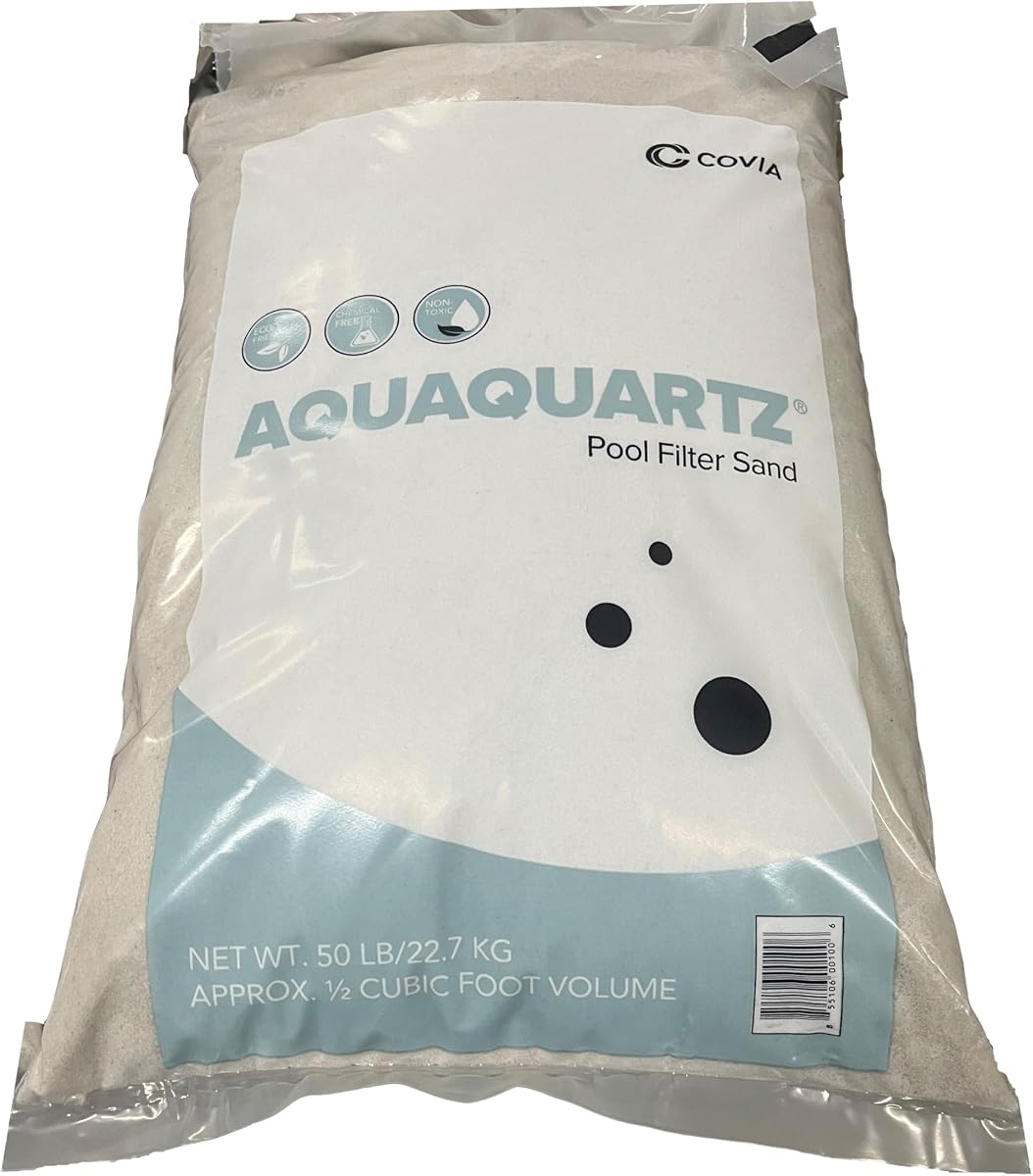
Covia AquaQuartz Pool Filter Sand
Check Price on AmazonStep 2: The Plant Palette — Epiphytes, Pots, and Floaters
The winning strategy is three layers, each chosen around a digger's habits:
| Layer | Best choices | Why it works for acara |
|---|---|---|
| Decor-attached | Anubias barteri, Java fern, Anubias nana 'Petite' | Tied to driftwood — nothing to uproot |
| Potted / heavy-rooted | Amazon sword, Cryptocoryne wendtii, Vallisneria | Deep roots survive scrapes; pots add insurance |
| Floating | Hornwort, water sprite, Amazon frogbit | Shade the tank; hornwort is cheap to replace |
| Background stems | Bacopa caroliniana, Ludwigia repens | Fast growers — spawning-season losses are painless |
Epiphytes are the backbone. Anubias and java fern grow from rhizomes tied to driftwood — no substrate roots to expose. Keep rhizomes above the sand line or they rot. The best plants for cichlid tanks round out the list with more armored options.
For stems, plant thick clusters rather than single stems — a dense thicket of bacopa reads as one plant and tolerates a stray uprooted stem. Amazon swords anchor so deeply that digging pairs simply work around them. Before buying, check Tropica's plant database for each species' exact light and CO2 needs — a reliable cross-check.
Step 3: Give a Pair a Spawning Stage
The real payoff is watching a bonded pair choose a spawning site. Unlike cave-breeding convicts or pit-digging firemouths, blue acara clean a flat surface — a broad Amazon sword leaf, a slate slab, or a flat river rock — and lay 300–500 eggs there, with both parents guarding and fanning.
Plant one large, mature Amazon sword slightly off-center, with open water in front. The pair will claim its territory, and the surrounding plants give fry cover when they become free-swimming in about a week. Let them clear sand from one corner — that pit is courtship behavior, not destruction.
Step 4: Stocking the Community Around Them
Blue acara are peaceful by cichlid standards, which opens community options closed to convicts or blood parrots. Aim for calm, warm-water fish that occupy different zones than the acara's mid-bottom territory:
- Dither fish: 10–12 rummy-nose or lemon tetras; tight schooling settles the acara.
- Bottom crew: 6+ corydoras or a small pleco — sand-safe mates that ignore the acara.
- Top companions: one angelfish or a pair of pearl gouramis use the upper levels.
- Avoid: tiny shrimp (eaten), slow long-finned fish, and aggressive cichlids.
The electric-blue morph behaves identically but washes out faster in bright tanks — give it the same shady treatment for the coloration you're paying for.
Water, Feeding, and Maintenance Rhythm
Blue acara are forgiving, but a planted tank does best with a consistent weekly routine. Keep temperature 74–78°F, pH 6.5–7.5, and nitrates under 20 ppm — plants and fish share that target. Our planted tank water parameters guide lists full targets; measure before you dose anything.
Feed a quality cichlid pellet as the staple with frozen bloodworms twice a week — varied diet sharpens their blue-green iridescence within a month. Fertilize conservatively: an all-in-one liquid at half the label dose weekly works for low-tech builds; start low, observe livestock, and increase only if growth stalls. Cross-check parameters against Seriously Fish's blue acara species profile, which independently recommends sand, driftwood, and decor-attached plants for this digger. A 75-gallon planted build walkthrough shows the same cadence scaled up. One 30% water change per week with a canister filter is the whole mechanical system.
Frequently Asked Questions
Will blue acara eat or destroy my aquarium plants?
Rarely. Blue acara dig shallow scrapes but rarely uproot established plants or chew leaves the way convicts or firemouths do. Protect new plantings for 3–4 weeks while roots establish, tie anubias and java fern to driftwood, and replant any stem that floats loose during spawning season.
What tank size does a planted blue acara setup need?
A 55-gallon with a 48-inch footprint is the practical minimum for a pair plus community tank mates. A bonded pair alone can work in a 40-gallon breeder, but the dense planting and community that make this build special need the longer footprint.
Can blue acara breed in a planted tank?
Yes, and it is one of the best reasons to build one. A bonded pair will clean a broad Amazon sword leaf or flat rock and lay several hundred eggs, with both parents guarding and fanning them. Eggs hatch in 3–4 days, fry are free-swimming within a week, and the surrounding plants give fry cover that bare breeding tanks lack.
Do blue acara need CO2 or high light with plants?
No. They thrive in low-tech tanks with low–medium light and hardy species like anubias, java fern, crypts, and swords. CO2 is optional — run it at the lowest effective rate and watch livestock closely before increasing. Floating plants dim the light, which improves acara coloration.
What tank mates work best with blue acara?
Peaceful warm-water fish spread across different zones: schooling tetras as dithers, corydoras on the sand bottom, and an angelfish or pearl gourami up top. Avoid tiny shrimp and aggressive cichlids; every tank mate should tolerate 74–78°F and not nip fins.
The Gentle Digger Earns Its Plants
A planted blue acara tank asks for one thing — sand — and repays you with an aquascape that stays intact and a pair-bonding story on a broad sword leaf. For a calm-water cousin with different demands, see the planted discus tank setup.