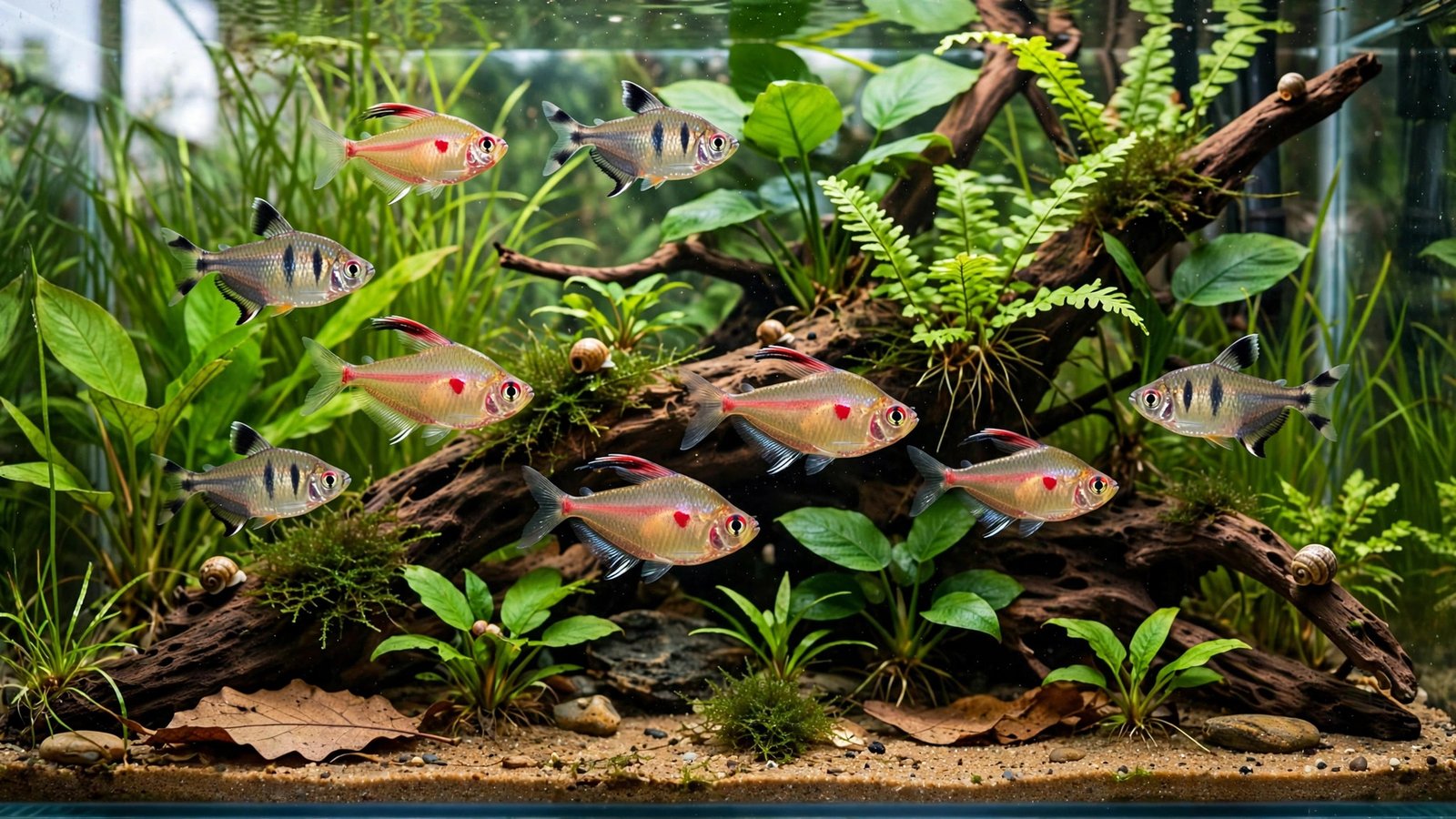
Most tetras zip. Bleeding heart tetras glide. A bleeding heart tetra planted tank is built around that unhurried dignity: a school of silver, six-centimeter Hyphessobrycon erythrostigma drifting through tall plants, each male wearing the namesake crimson heart behind his gills. Build it wrong — too small, too bright, too frantic — and they shrink into skittish wallflowers.
An ideal bleeding heart tetra planted tank is a 30-gallon (120 L) or larger setup with 8–10 Hyphessobrycon erythrostigma in soft, slightly acidic water (pH 6.0–7.0, 22–26 °C), tall vallisneria at the back, open mid-water for schooling, and floating plants shading the surface to the dappled light of their Amazon home. Feed twice daily, change 30% weekly, and keep only slow tankmates. School size is the critical variable: groups under six hide constantly and lose color.
Why the Gentle Giant Tetra Deserves a Dedicated Tank
The bleeding heart tetra is a big fish with a gentle soul. At 6 cm (about 2.4 inches) — roughly double a neon tetra — it swims slow and stately through its Amazon tributary home, where tannin-stained water and overhanging vegetation keep light soft. Deep body, long fins, measured movement: glider, not sprinter.
The red blotch is a patch of pigment just behind the gills, not a wound, deepening to rich crimson when the fish is settled, well fed, and in a proper school. Experienced keepers read it as a health gauge: a fading heart almost always means the tank, not the fish, needs fixing. That is also why species-focused design matters — these fish cannot compete with frantic feeders, and constant jostling pushes them into hiding, where their colors wash out. They reward a calm, forest-edge aquascape built from aquarium plants chosen for real fish-tank conditions.
Designing your bleeding heart tetra planted tank: size and school rules
Thirty gallons is the honest minimum, and shape matters more than volume. Bleeding hearts swim in loose horizontal schools, so a standard 36-inch (90 cm) tank beats a tall column of the same capacity. Ten fish in a 30-gallon long look majestic; the same ten in a 20-gallon high hover in a corner.
Buy eight to ten juveniles and grow them into the tank. Groups smaller than six never settle — without enough conspecifics they hide, fade, and eat poorly. A school of eight-plus develops a gentle hierarchy, with males flaring their long dorsal fins at each other in one of the finest displays in the hobby. Stock the school first, let it settle two to three weeks, then consider tankmates.
Water Parameters and Weekly Maintenance
Bleeding hearts adapt widely, but color up best in soft, slightly acidic water echoing their blackwater home. For hard, alkaline tap water, cut it with reverse-osmosis water or add Indian almond leaves and driftwood — both suit the scape anyway.
| Parameter | Target |
|---|---|
| Temperature | 72–79 °F (22–26 °C) |
| pH | 6.0–7.0 |
| Hardness | 2–10 dGH |
| Ammonia / nitrite | 0 ppm |
| Nitrate | Below 20 ppm |
| Water change | 30% weekly, temperature-matched |
| Flow | Gentle — spray bar or sponge filter |
Keep this rhythm: 30% water change weekly, filter rinse monthly in old tank water, and a plant trim every two to three weeks to hold the mid-water corridor open. Feed lightly twice daily — what the school eats in two minutes — and fast one day per week. Consistency beats intensity.
Planting for Slow, Calm Swimmers
Shape the scape as a forest edge: dense tall growth at back and sides, a clear runway through the middle, a shaded ceiling. Tall vallisneria (Vallisneria spiralis) is the backbone — ribbon leaves arch over the swimming space and sway in gentle current exactly the way bleeding hearts like their world to move. Amazon swords anchor the corners; anubias or Java fern on driftwood fills the midground without stealing swimming room.
The surface is the secret. Under dappled light, bleeding hearts are visibly bolder than under flat bright light. A cover of floating aquarium plants for beginners — frogbit, salvinia, or dwarf water lettuce — filters light to a forest-floor glow and gives the school a ceiling of security. Leave a few gaps for lower plants and feeding.
Tankmates: Slow Company Only
This is where bleeding heart tanks are most often ruined: if a fish dashes, darts, or nips, it does not belong here. Good tankmates share the unhurried pace and live at other water levels, leaving the mid-water to the school.
| Good tankmates | Why they work |
|---|---|
| Cardinal tetras (10–12) | Peaceful, same water needs, red-blue contrast |
| Congo tetras (6–8) | Another large, graceful tetra; same calm pace |
| Corydoras (6+), otocinclus (6+) | Bottom dwellers; never compete for food |
| Honey gouramis (pair) | Slow, shy — a perfect temperament match |
Avoid the energy mismatch: tiger barbs, zebra danios, and serpae tetras bring constant motion and, in the serpae's case, real fin-nipping aimed at those long fins.
Feeding, Sexing, and Breeding
Bleeding hearts are unfussy omnivores, but variety drives color. Base the diet on micro pellets or small flakes, supplemented two to three times weekly with frozen daphnia, brine shrimp, or bloodworms. The heart blotch is carotenoid-based — these foods keep it crimson; flake-only fish often show a pale pink mark. Feed what the school finishes in two minutes.
Males are slightly smaller, with a bolder blotch, longer dorsal and anal fins, and pale fin edging that intensifies during displays. Females are rounder-bellied with a smaller, softer mark. Watch the school at feeding time for a week and the sexes sort themselves out.
Breeding is a realistic next step: condition a pair on frozen foods for two weeks, then move them to a 10-gallon tank with very soft water (2–4 dGH), pH near 6.0, 78 °F, and a thick bed of Java moss. They scatter several hundred adhesive eggs at first light — remove the parents at once, feed fry infusoria for a week, then baby brine shrimp. The Seriously Fish profile of Hyphessobrycon erythrostigma remains the standard reference for the wild data behind these parameters.
Frequently Asked Questions
How many bleeding heart tetras should I keep together?
Eight to ten minimum in a 30-gallon (120 L) tank. Groups under six hide constantly, eat poorly, and lose their red coloration. Schools of ten or more trigger the males' fin-flaring displays and the calmest, tightest schooling behavior.
How big do bleeding heart tetras get?
About 6 cm (2.4 inches) — roughly double a neon tetra — growing steadily over their first year. Juveniles bought at 2–3 cm need the full 30-gallon footprint within six months, so plan around adult size from the start.
Why is my bleeding heart tetra's red spot fading?
The blotch is a carotenoid pigment gauge: stress, poor water quality, a flake-only diet, or too few schoolmates fade it toward pale pink. Check ammonia and nitrate, feed frozen daphnia or brine shrimp two to three times weekly, and keep at least eight fish.
Can bleeding heart tetras live with neon tetras?
Yes — neons are peaceful and share similar soft-water needs. The mismatch is feeding: neons eat much faster and can outcompete the slower bleeding hearts. Spread food across two areas of the tank, or pick cardinal tetras as a more evenly paced companion school.
Do bleeding heart tetras need a heater?
In almost every climate, yes: they need 72–79 °F (22–26 °C), and room temperature in most homes drops below that overnight or in winter. Use an adjustable heater rated for your tank size, placed away from drafty windows.
The Slow Tank That Pays You Back
A bleeding heart tetra planted tank asks for restraint — fewer species, slower company, gentler flow — and returns one of the most elegant displays in freshwater fishkeeping. Build the forest edge, shade the surface, school them properly, and those crimson hearts will glow against the green for years.