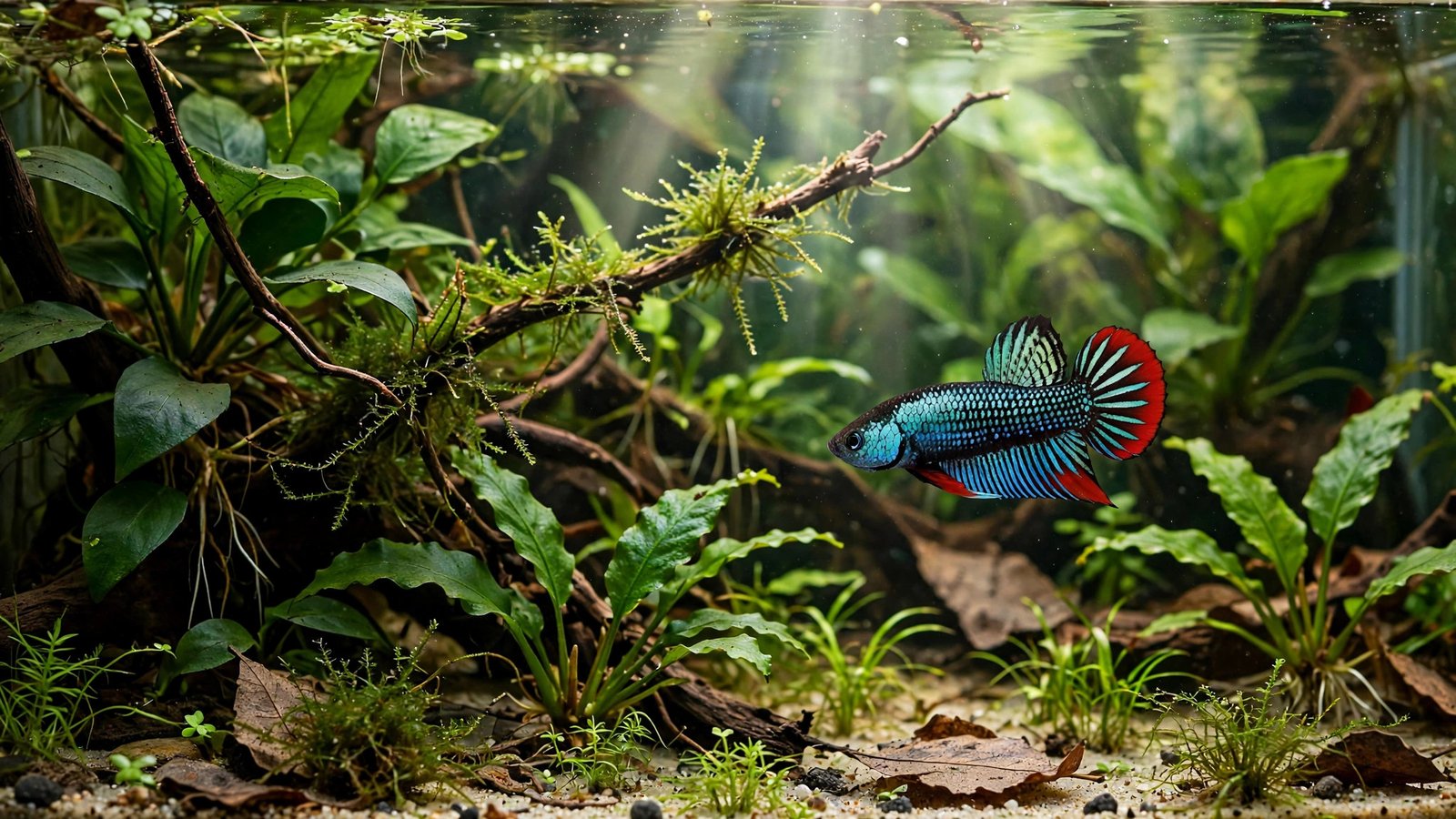
Most people meet a Betta imbellis expecting a mellower pet-store betta, then set the tank up exactly wrong: bright, bare, and alkaline. Build this fish a betta imbellis planted tank the way its home waters look — dim, still, and steeped in leaf litter — and it transforms within weeks from a shy surface ghost into a confident, foraging wild betta.
Meet the Wild Betta — Not a Domestic Betta
Betta imbellis — the peaceful betta, named for the red crescent on the male's tail — looks nothing like a pet-store fighter. Males reach about 6 cm, with iridescent blue-green gill covers and dark fins edged in red. Toward other fish it earns the "peaceful" name, but rival males still fight in breeding condition, and it jumps — so fit a tight lid from day one.
In the wild it haunts slow waters across southern Thailand, Malaysia, and Indonesia — rice paddies, peat swamps, forest streams — where soft acidic water runs brown over leaf litter (the species profile on Wikipedia summarizes its range and habitat). Mirror that — still water, dim light, plants overhead — and everything gets easier. Because imbellis loves the same soft leaves and surface cover as domestic bettas, our guide to the best aquarium plants for betta tanks doubles as a plant shortlist for this species.
The Betta Imbellis Planted Tank, Step by Step
Start with size. A pair thrives in 10 gallons; the classic harem — one male with four to five females — needs 15 to 20 gallons so every fish can break the line of sight. Prefer a long footprint over a tall cube, since imbellis patrol the surface and midwater.
Filter gently: a sponge filter, or a baffled hang-on-back, keeps the surface calm enough for bubble nests. Set the heater to 75–82°F. Then build the biotope floor — dark sand or aquasoil, driftwood, and two to three centimeters of dried leaves. That leaf litter is the floor this fish evolved over, and it feeds your tannin system.
Light it dim, six to eight hours a day. Plant Cryptocoryne in the substrate, tie anubias and Java fern to the wood, and cover 40–60% of the surface with salvinia, frogbit, or red root floaters — overhead cover is what turns a hiding imbellis into a visible one. Cycle the tank, then start the tannins 10–14 days before adding fish.
Blackwater Chemistry: pH, Tannins, and Leaf Dosing
Imbellis wants soft, acidic water: pH 5.0–7.0, hardness below about 6 dGH. If your tap is hard and alkaline, cut it with RO water rather than chasing pH with chemicals — stability beats any single number. Tannins lower pH gently, add mild antifungal protection for eggs, and tint the water the amber this fish reads as home.
| Parameter | Target | Notes |
|---|---|---|
| pH | 5.0–7.0 | 5.5–6.5 for breeding; 6.5–7.0 fine for display |
| Temperature | 75–82°F (24–28°C) | 78°F is the sweet spot |
| Hardness | Below ~6 dGH | Mix RO water if tap is harder |
| Flow | Minimal | Surface must stay still for bubble nests |
| Lighting | Low, 6–8 hrs/day | Dim light + tannin tint = confident fish |
Dose one large Indian almond leaf (15–20 cm) per 5–10 gallons, replacing leaves every 2–3 weeks. Alder cones and seed pods work as backups at a handful per 10 gallons. The water colors within 48 hours — that tint is the target. Run carbon-free filtration while tannins build; carbon strips exactly what you are adding.
 ★4.8
Seachem Catappa Leaves 12-pack
Check Price on Amazon ★4.8Plants and Layout That Make Imbellis Confident
Plant for overhead security first. The floating layer is the highest-impact choice — it dims the light and gives males bubble-nest anchor points. Below it, break the midground with broad-leaf plants: crypts in the substrate, anubias and Java fern tied to wood, so a harem female can always duck out of a male's sight line.
Resist bare bottom. Dark substrate deepens the fish's colors, hosts the microfauna imbellis pick at between meals, and reads as safety to a leaf-litter fish. If easy cleaning tempts you, read our bare-bottom planted tank guide first — it suits breeding setups, but a display imbellis tank is calmer and prettier with soil or sand underneath.
 ★4.2
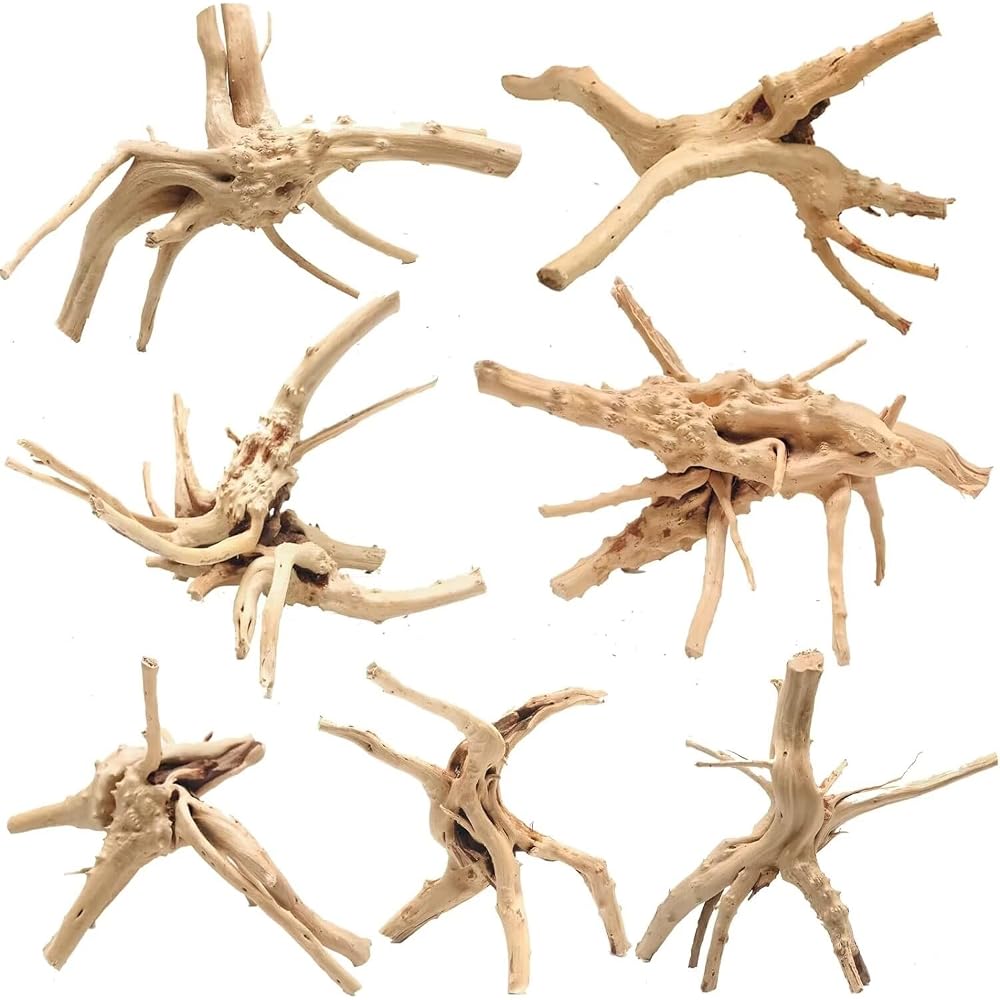
Hamiledyi Natural Spider Wood Driftwood
Check Price on Amazon ★4.2Harem Ratios, Tankmates, and the "Peaceful" Myth
The word "peaceful" gets this species into trouble. Toward other fish, imbellis is gentle; toward rival males — and females right after spawning — it is still a betta. One male per tank: two males in a home aquarium will posture, flare, and tear fins in breeding condition. Plan on 5–10 gallons for a single male, 10 for a pair, 15–20 for a one-male-to-four-or-five-female harem, and 20 for one male with a nano community.
Good companions share the blackwater brief. Clown killifish make excellent surface companions in larger tanks — see our clown killifish planted tank setup — and sterbai corydoras work the bottom without bothering anyone, as in our sterbai cory planted tank guide. Skip fin-nippers and anything with a temper: a red tail shark planted tank is a fine project, but it belongs in a different aquarium.
Feeding a Wild Insectivore
Imbellis are surface-feeding insectivores: frozen daphnia, baby brine shrimp, and bloodworms trigger feeding responses dry flakes never will. Feed small amounts twice daily — micro pellets in the morning, frozen foods in the evening — and fast one day a week. Live mosquito larvae or grindal worms once or twice a week deepen the males' iridescence and often kick off bubble-nest building. Wild-caught stock can refuse dry food at first; frozen daphnia is the usual bridge.
Frequently Asked Questions
Can I keep two male Betta imbellis in one tank?
Not in a normal home aquarium. Despite the "peaceful betta" name, males flare, chase, and tear fins when they meet — especially in breeding condition. One male per tank is the safe rule. Very large, heavily broken-up tanks can occasionally work, but that is an expert gamble with real injury risk.
Do I really need tannins, or is clear water fine?
Imbellis survive in clear water but do not thrive in it. Tannins push pH into the preferred 5–7 range, add mild antifungal protection for eggs and fry, and visibly calm the fish. Treat blackwater as a requirement, not a styling choice.
Will Betta imbellis eat my shrimp?
They will hunt shrimplets — any baby shrimp small enough to fit in an imbellis mouth is live food. Adult amano and ghost shrimp are generally left alone and make fine cleanup crew. For a breeding shrimp colony, use a separate tank.
Can they live with domestic betta splendens?
Never mix them. A splendens male will maul an imbellis, and the two species can hybridize — escaped domestic genes are already a documented threat to wild imbellis populations. Keeping them apart protects your fish and the species' genetics — even juveniles should not share a tank long-term.
How long does blackwater prep take before adding fish?
Ten to fourteen days: cycle the tank, add boiled Indian almond leaves at one large leaf per 5–10 gallons, and let the water color up while the filter matures. Replace leaves every two to three weeks to keep tannin levels steady.
The Quiet Reward
A betta imbellis planted tank asks for patience — two weeks of amber water before a single fish arrives — and pays it back with behavior no domestic betta shows: males tending nests under frogbit roots, females foraging through leaf litter. If the wild-betta bug bites, our Bolivian ram planted tank guide is another peaceful-centerpiece setup built the same plant-first way.