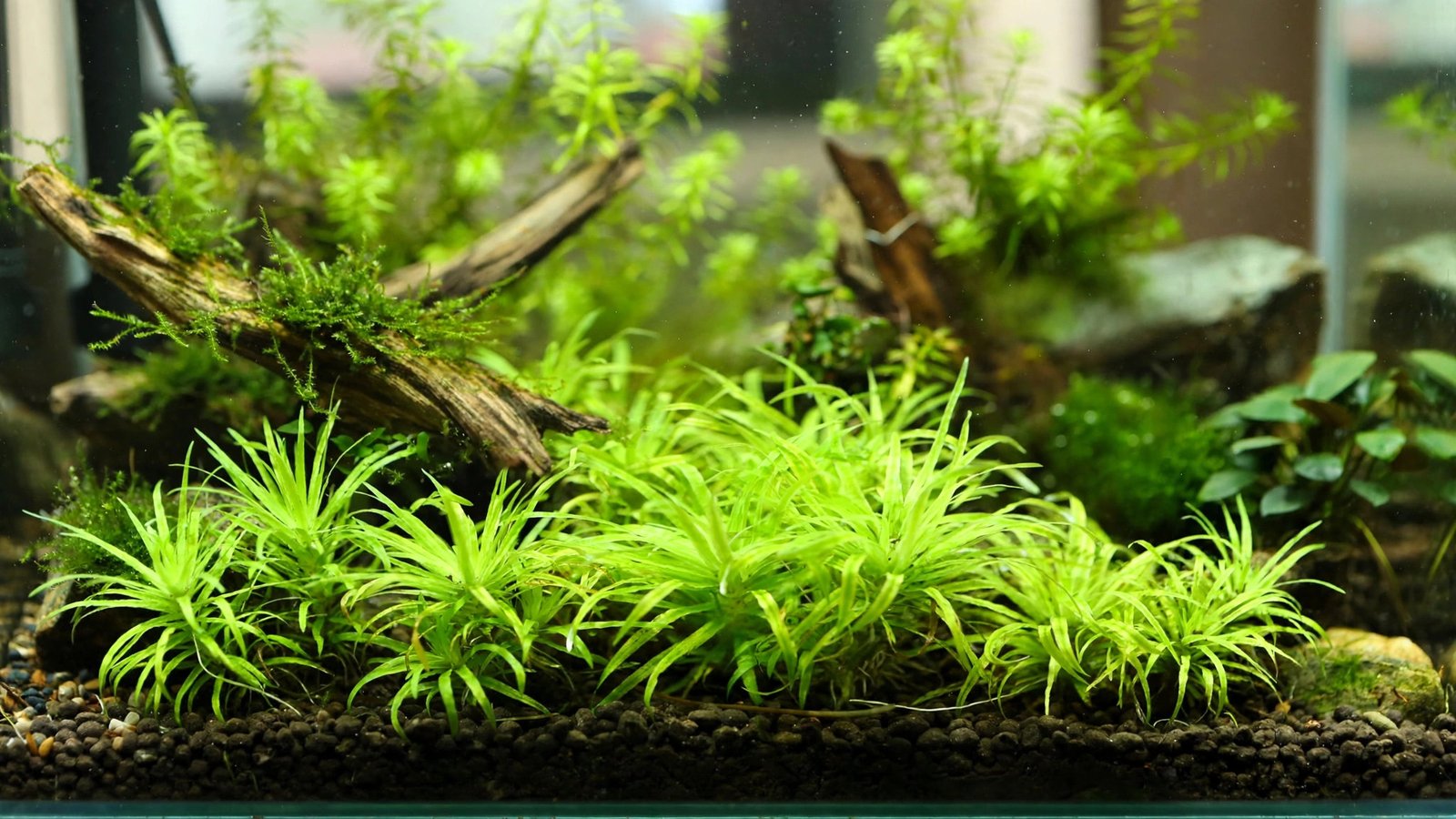
Most pipeworts you can buy are forgiving. Syngonanthus uaupes care is the exception that proves the rule — the Rio Uaupes pipewort that collectors chase for months on waitlists, then melt in weeks when their CO2 bottle runs dry. Everything below assumes one non-negotiable: pressurized CO2, high light, and soft acidic water. Without that trio, the plant will not live.
The short answer: Syngonanthus 'Uaupes' is a difficult, slow-growing foreground pipewort from Brazil's Rio Uaupes needing pressurized CO2 (~25–30 mg/l), high light, and soft acidic water. Without CO2, crowns stall — new leaves emerge stunted and twisted — and the plant declines within weeks. Distinct from the easier S. 'Belem': never expect Belem-level forgiveness.
What Makes Syngonanthus 'Uaupes' So Difficult
The name tells you most of what matters. This plant comes from the Rio Uaupes, a blackwater tributary of the Rio Negro in northwestern Brazil — warm, soft, acidic water with almost no carbonate hardness. You have to build that environment; you cannot fake it casually.
Growth habit sets expectations: 'Uaupes' forms low rosettes of fine needle-like leaves and creeps at a pace that tests patience — a healthy crown adds a handful of leaves per week and spreads sideways only over months. That slowness is why mistakes compound: algae and deficiencies show up long before the plant recovers. This is a long-arc plant, not a tank-filler.
How It Differs From S. 'Belem'
The most expensive mistake beginners make is confusing the two. Syngonanthus 'Belem' is the easier Syngonanthus cousin — adaptable, faster, far more forgiving of lean CO2 and moderate light. 'Uaupes' is the difficult true Rio Uaupes species. Treat them as entirely different difficulty classes: Belem is the practice plant, 'Uaupes' is the commitment.
Syngonanthus Uaupes Care: The Non-Negotiable Setup
Check this table before you buy the plant. If any line is missing, postpone the purchase — tissue-culture cups of 'Uaupes' are rare and expensive, and buying one for a tank that can't support it wastes both.
| Parameter | Target range | Why it matters |
|---|---|---|
| CO2 | ~25–30 mg/l, drop checker lime green | The deciding factor — without it crowns stunt and the plant melts over weeks |
| Light | High — 80+ PAR at the substrate | Keeps rosettes compact; dim light stretches them and invites algae |
| Temperature | 22–28°C | Warm Rio Negro water; growth stalls below ~22°C |
| pH | 5.5–6.8 | Soft, acidic blackwater-style chemistry |
| GH / KH | GH 2–6, KH 0–3 | Very soft water; hard water locks out nutrients |
| Substrate | Fine aquasoil | Shallow roots still feed from the substrate; coarse gravel sheds crowns |
CO2 is where most 'Uaupes' attempts die. This plant wants roughly 25–30 mg/l — the same zone that the Eriocaulaceae family literature cites for Syngonanthus. Get a proper pressurized CO2 system running first, then start low and raise the rate over a week while watching livestock. If fish gasp at the surface, back off — no plant is worth suffocated fish. Stability beats chasing a number.
Lighting and Placement
Plant 'Uaupes' in the foreground where it receives direct light. At 80+ PAR it stays tight and low, forming the dense starburst rosettes collectors want. Weaker light stretches rosettes upward and stalls growth further — which is why understanding how much light aquarium plants actually need matters before you commit. Verify PAR at the substrate rather than guessing from wattage.
Keep flow gentle and siphon lightly during each water change — pipewort leaves trap detritus easily. Never plant it in hardscape shade; 'Uaupes' thins from the shaded side outward.
 ★4.6
NICREW ClassicLED Plus planted aquarium light
Check Price on Amazon ★4.6Water, Substrate, and Fertilization
Recreate the Rio Uaupes: soft, acidic, clean water. Remineralize RO water to GH 2–4 if your tap is hard, and let aquasoil buffer pH down. Weekly 30–50% water changes keep organics low — slow growers can't outrun algae, so prevention is the strategy.
Feeding is where the iron narrative lives. The Eriocaulaceae are famous for yellowing tips that point to iron deficiency, and UKAPS discussions link pipewort health to steady micro dosing. Dose a full all-in-one fertilizer regularly and add iron separately if new growth pales. Diagnose by location: new leaves emerging twisted and stunted from the crown means starvation (CO2 first, then micros); pale yellowing from the tips inward means iron.
Planting and Propagation
Rinse every trace of gel medium from tissue-culture cups — residue feeds algae — then split the mass into portions of 3–5 crowns. Plant each portion shallowly in fine aquasoil with tweezers, crown base just at the surface. Burying the crown rots it; planting too shallow lets it float out.
Expect a 2–4 week adjustment sulk while emersed leaves die back. Don't move crowns: every relocation restarts the adjustment clock, and on a slow grower that costs a month. Mature rosettes throw daughter crowns at the base — separate them once rooted.
Comparing 'Uaupes' to Its Pipewort Cousins
| Species | Difficulty | Speed | Who it's for |
|---|---|---|---|
| S. 'Belem' | Moderate | Moderate | The training-wheels pipewort — start here |
| S. macrocaulon | Moderate–difficult | Moderate | Collectors wanting a taller, bolder rosette |
| S. 'Makau' | Difficult | Slow | Same collector audience, different look |
| S. 'Uaupes' | Difficult | Slow | Experienced keepers with stable high-tech tanks |
The pattern is clear: climbing toward 'Uaupes', CO2 and light requirements sharpen and forgiveness shrinks. If your macrocaulon or Makau crowns are thriving, your tank is probably ready. If you're new to the genus, start with Belem and come back in six months.
Frequently Asked Questions
Can Syngonanthus 'Uaupes' grow without CO2 injection?
No. Injected CO2 at roughly 25–30 mg/l is mandatory. Without it, crowns stall — new leaves emerge stunted and twisted from the center — and the plant declines within weeks. Liquid carbon products are not a substitute. Only buy 'Uaupes' once your CO2 system is stable.
How is 'Uaupes' different from Syngonanthus 'Belem'?
'Belem' is the easier, more forgiving Syngonanthus cousin: it tolerates moderate light and leaner CO2, grows faster, and adapts to wider water. 'Uaupes' is the difficult true Rio Uaupes species — slower, fussier, strictly high-tech. Different difficulty classes entirely. Master Belem first; the skills transfer, but the forgiveness does not.
Why are the new leaves coming in stunted and twisted?
A stunted crown is the classic Eriocaulaceae distress signal. First suspect: CO2 dropped or never reached target — verify the drop checker is lime green at the substrate. Second: micro-nutrient shortage, especially iron. Fix CO2 first, then steady out your fertilizer routine. Don't uproot the plant; crowns recover in place.
What causes yellowing tips on 'Uaupes'?
Yellowing tips progressing inward on new growth usually point to iron deficiency — the well-known pipewort iron narrative from family-care literature and hobbyist reports. Dose a complete micro fertilizer consistently and supplement iron if tips stay pale after two weeks.
How fast does Syngonanthus 'Uaupes' grow?
Very slowly. A healthy rosette adds a few leaves per week and spreads sideways only over months; a full foreground effect can take half a year from tissue-culture cups. That slowness is normal — but it means mistakes take longer to recover from, so stabilize CO2, light, and water before planting.
Is 'Uaupes' a good beginner plant?
Honestly, no. It is a difficult, slow-growing collector species requiring pressurized CO2, high light, soft acidic water, and disciplined fertilization. Beginners will almost certainly lose it. Start with the easier Syngonanthus cousin, Belem pipewort, instead — 'Uaupes' rewards experience, not enthusiasm.
Worth It If You're Ready
Syngonanthus 'Uaupes' is not a plant you buy on impulse. You buy it when your CO2 is dialed in, your light is metered, your water is soft, and you've kept an easier pipewort for months. Meet it on those terms and it becomes a quiet masterpiece — low, dense rosettes of fine green needles nothing else in the foreground can imitate. The hard plants aren't hard because they're rare. They're rare because they're hard.