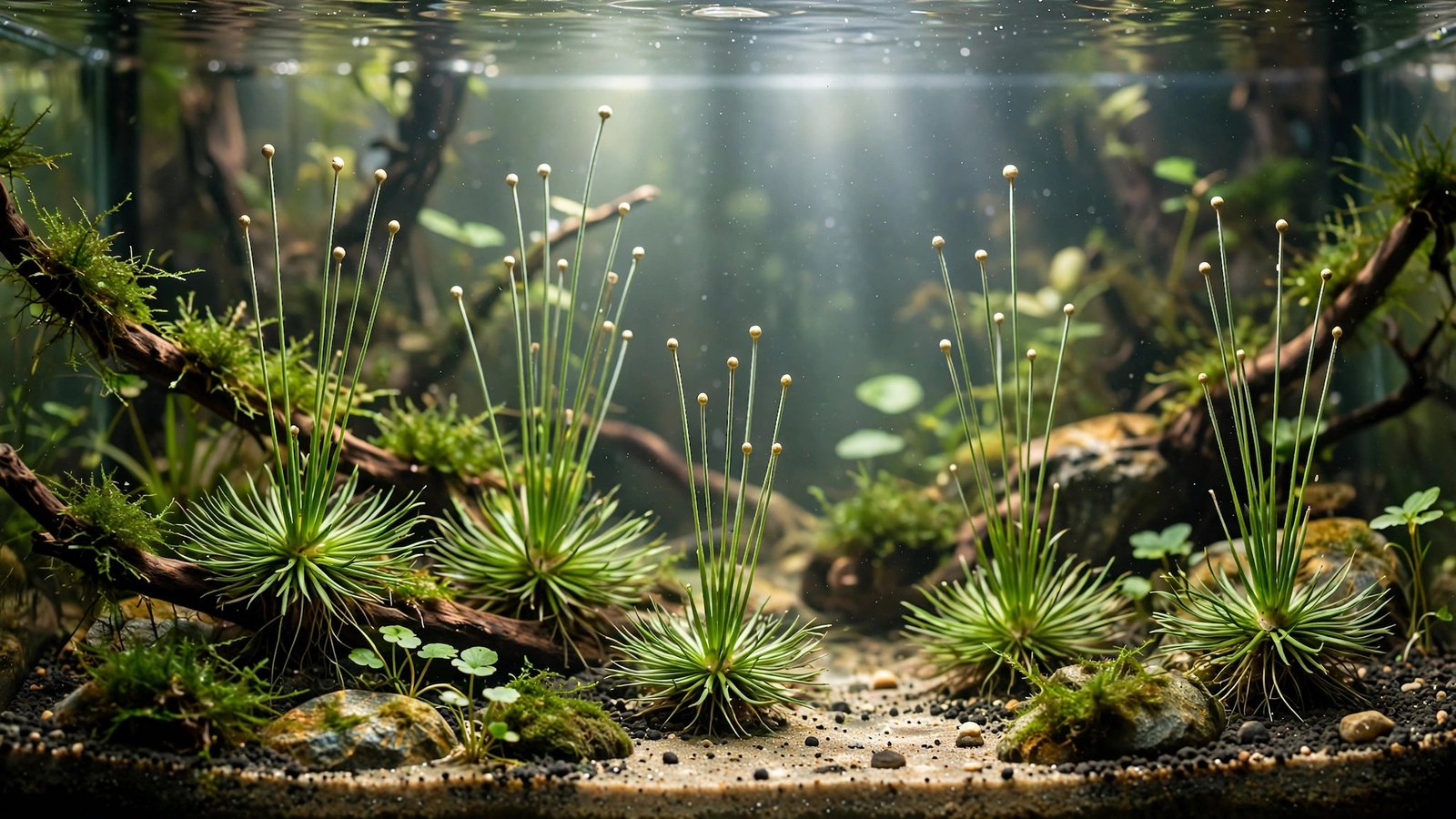
The collector circles whisper about it like a secret: a Syngonanthus with foliage so fine it looks stitched from green thread. Syngonanthus Makau care is not a beginner's project — it is a test of water chemistry patience, and most Makau cups die in the first month for one reason: they were planted into water the plant never agreed to. Do the chemistry first, plant once, and Makau rewards you with one of the most delicate textures in the hobby. For the genus-level picture, see the Syngonanthus Care Guide: Growing Belem Pipewort in a Planted Tank before diving into this species profile.
Syngonanthus Makau Care: What This Collector Pipewort Demands
Makau circulates among collectors as a fine-leaved Syngonanthus form — a member of the Eriocaulaceae family grown for lace-like, densely set foliage rather than the bold crown fans of its famous cousins. It behaves like other fine-leaf pipeworts: a stem plant that bushes from lateral shoots when the chemistry is right, and simply stops when it is not. Because documentation is thin, buy only from sellers who show submersed-grown photos; names in the collector trade shift faster than the plants do.
The difficulty is honest: Makau does not forgive hard water, CO2 swings, or shaded planting. Grow it if you already run aquasoil, soft water or remineralized RO, and pressurized CO2 — everyone else should pick an easier pipewort first.
Makau vs the other pipeworts
| Plant | Look | Tempo and demands |
|---|---|---|
| S. 'Makau' | Finest, most delicate foliage; lace-like texture | Slowest to settle; strictest about stability |
| S. macrocaulon | Star-like crowns, 2–3 cm arching leaves | Four to six weeks to a dense bush; the reference standard |
| S. 'Lago Grande' | Similar size, spikier crown tips | Comparable demands, slightly faster |
The care chemistry is identical across all three — soft, acidic, bright, CO2-rich — so a thriving macrocaulon tank is Makau-ready. The difference is tempo: Makau settles slower and shows stress earlier.
Setup: soft, acidic, bright
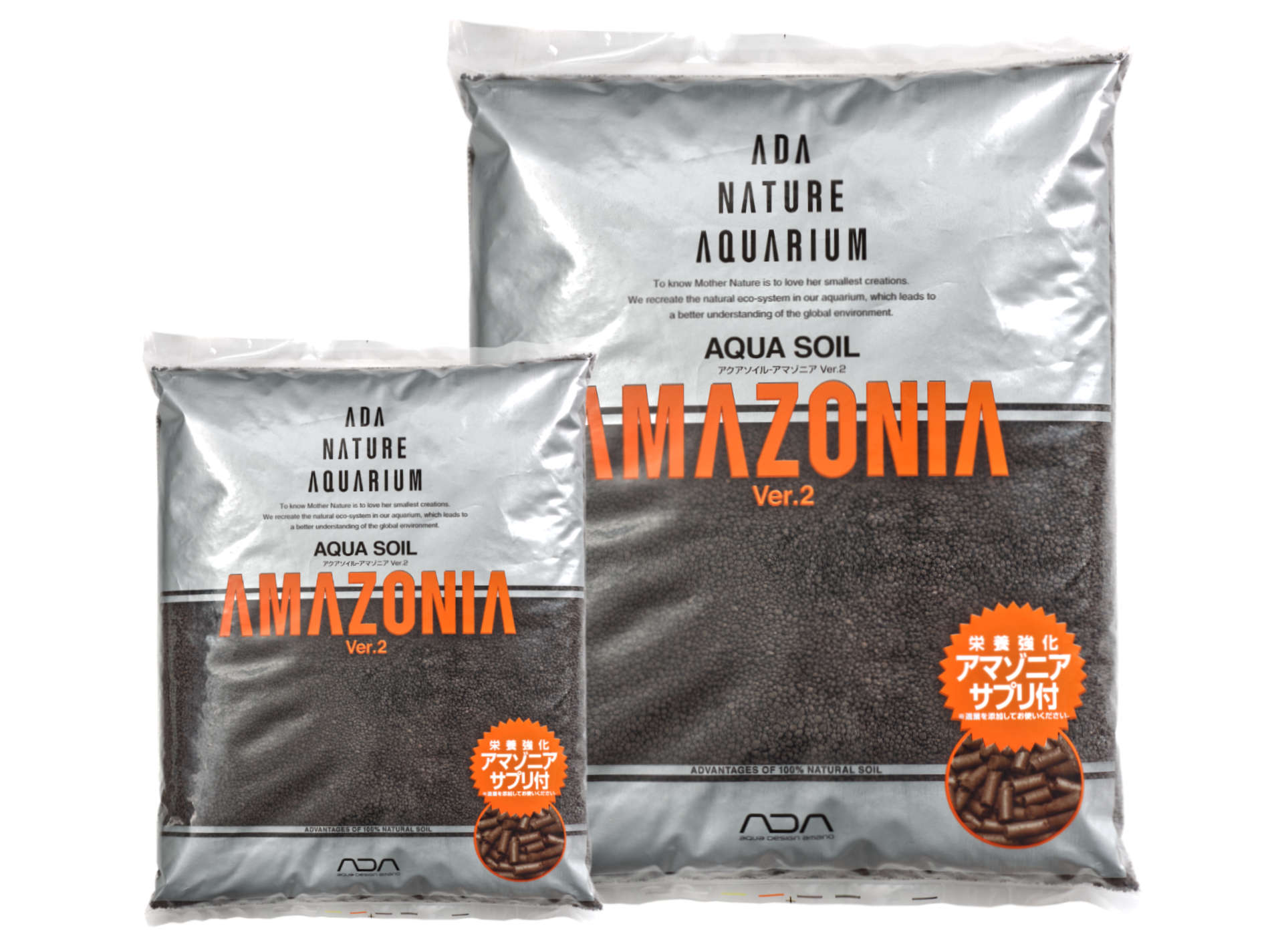
Water first. Aim for GH and KH ≤ 5, pH 5.5–6.5, and 22–28 °C. Above 8 dGH from the tap, use remineralized RO — no additive substitutes for genuinely soft water with Eriocaulaceae. Fine nutrient-rich aquasoil does double duty: it feeds roots and buffers KH and pH downward, and it is the single best upgrade for this plant's survival odds.
Light must be strong and unshaded: 80–120 µmol PAR at the substrate, 7–8 hours daily while settling, 8–9 once growth is steady. Shade it under floaters and the fine lower leaves melt first — this is the most common placement mistake. If you are unsure what your light actually delivers, our guide to how much light aquarium plants need explains PAR and photoperiod in practical terms.
Run CO2 near 30 mg/L, and prize stability over intensity. Our walkthrough on how to set up CO2 in a planted tank covers drop checkers and diffusion — reach your target gradually and watch livestock for gasping before nudging higher. Gentle circulation matters: stagnant corners let the fine foliage gather algae and biofilm. Dose balanced macros and micros with enough iron, and keep pH under 6.5 so iron stays available.
 ★4.7
ADA Aqua Soil Amazonia Ver 2
Check Price on Amazon ★4.7Planting and propagation: the patience method
Rinse tissue-culture gel off, split the portion into small clumps of three to five stems, and plant each with tweezers at 45 degrees, 2–3 cm apart, deep enough to anchor. Finer stems float more readily — press each clump a touch deeper and check the tank next morning; replant any that surfaced immediately, because a half-floating clump never roots well.
Expect four to six weeks of slow settling. Side shoots appear at the stem bases once the plant trusts the water; separate them at four or five leaves and replant. For cuttings, take only the top 4 cm — short tips root cleanly, while longer cuttings root along their whole lower stem and look ragged. Do not move the plant during the settling window; every replanting resets the clock.
Troubleshooting: melt, tips, algae
Judge it by fresh shoot tips, not the first leaves. Whole-plant melt or stalled crowns mean water first: hardness creep as aquasoil exhausts its buffering, or CO2 fluctuating through the day.
| Symptom | Likely cause | Fix |
|---|---|---|
| Old leaves melt in week one, tips stay green | Normal transition from tissue culture | Leave it alone; trim dead leaves after two weeks |
| Whole plant melts, no new tips | Hard water or aquasoil buffering exhausted | Test GH/KH; refresh substrate buffering or switch to RO |
| Transparent tips turning brown, growth stalls | CO2 instability or hardness creep | Stabilize CO2 near 30 mg/L; check KH |
| Pale, washed-out foliage | Iron or micro deficiency | Raise iron/micros; keep pH under 6.5 |
| Algae on the fine leaves | Too much light for the CO2 balance, poor flow | Cut photoperiod to 7 hours; fix flow and CO2 before touching light |
It grows alongside the same soft-water crew as its cousins — Eriocaulon cinereum and Tonina fluviatilis share its water and CO2 demands. Botanical background is on Wikipedia's Syngonanthus page.
Should you grow Makau? An honest verdict
Grow it if you run aquasoil, soft water or RO, pressurized CO2, and have kept a demanding plant before — Makau is the pipewort you graduate to, not the one you start with. Not it for hard tap water, no CO2, or a first high-tech tank; you will pay collector prices for a month of melt. Want color instead of texture? A demanding red like Rotala Blood Red scratches the same high-tech itch.
Frequently Asked Questions
Is Syngonanthus 'Makau' a beginner plant?
No. Makau is an advanced pipewort: it needs soft acidic water (GH and KH at or below 5, pH 5.5–6.5), strong light, and steady injected CO2. Beginners should master an easier stem plant first, then step up to macrocaulon or Belem before trying Makau.
Can Makau grow without CO2?
Realistically, no. Like other fine-leaf Syngonanthus, Makau wants injected CO2 near 30 mg/L along with high light and soft water. Without CO2 the fine foliage stunts, algae takes hold, and the plant declines over weeks. This is a high-tech plant by nature.
Why is my Makau melting after planting?
Some melt in the first week is normal — the plant is discarding old or emersed-grown leaves while building submersed ones. Watch the fresh shoot tips: if they stay green, leave it alone. If the whole plant melts with no new tips, check GH, KH, and CO2 stability; whole-plant melt is a chemistry problem, not a transition.
How long does Makau take to settle?
Budget four to six weeks before it looks happy, longer than macrocaulon. Do not move it during this window — every replanting resets the settling clock. Side shoots at the stem bases are your sign that it has committed to your water.
How do you propagate Syngonanthus 'Makau'?
It propagates itself once settled: side shoots appear at the stem bases — separate them at four or five leaves and replant. For cuttings, take only the top 4 cm; longer cuttings root along their whole lower stem and look ragged. Expect roots within 7–10 days in stable, soft, CO2-rich water.
Will Makau grow in hard tap water?
No. Hard water is this plant's dealbreaker — it wants GH and KH at or below 5 and pH 5.5–6.5. Above 8 dGH from the tap, use remineralized RO or pick a different plant. No fertilizer or additive substitutes for genuinely soft water with pipeworts.
Set the chemistry before the plant arrives, plant once, and wait without fiddling.