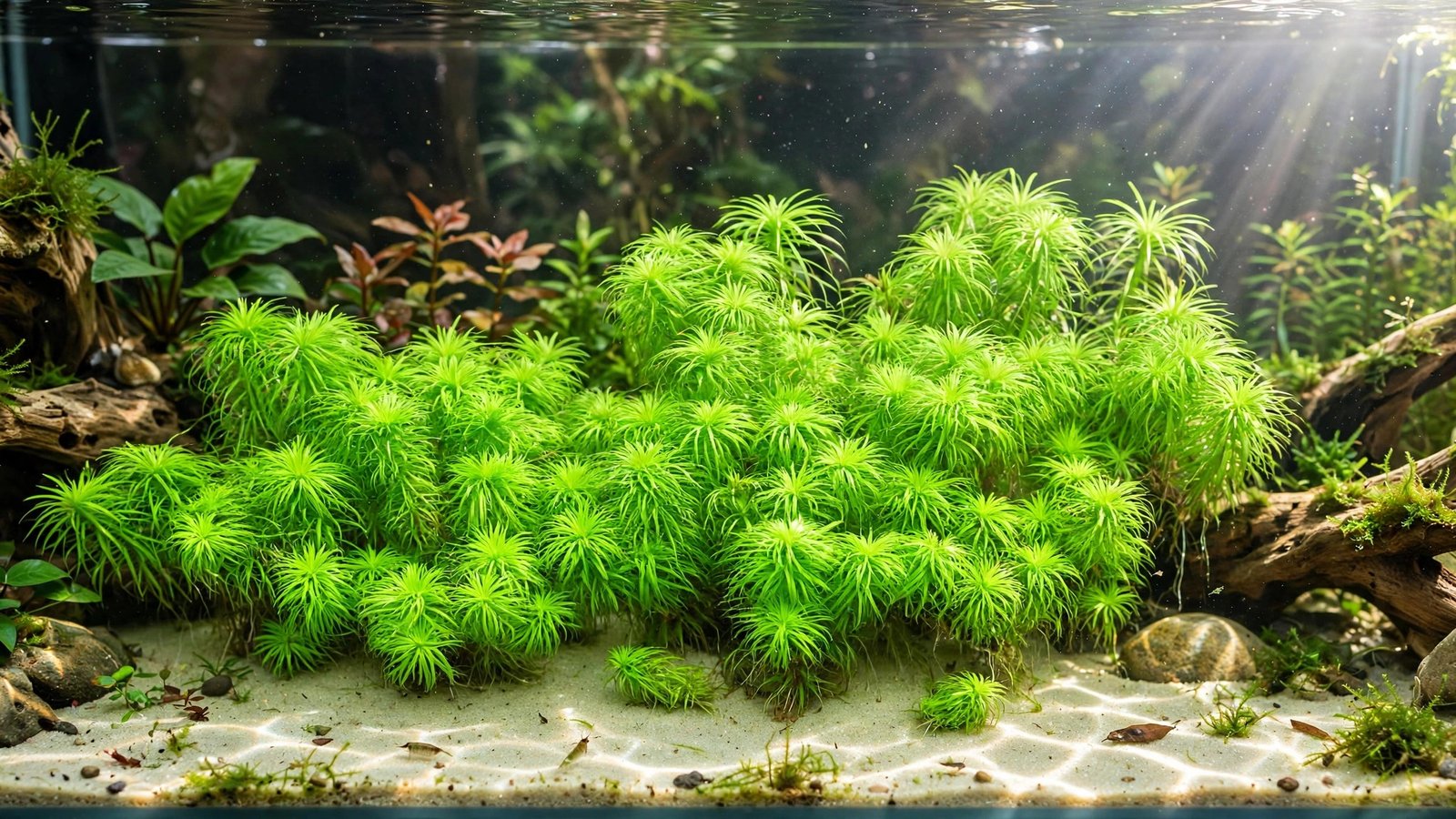
Few aquarium plants carry the collector prestige of Syngonanthus belem, the Brazilian pipewort whose dense, umbrella-like tufts make it one of the most distinctive midground accents in high-tech aquascaping. Syngonanthus care is genuinely demanding: this is a soft-water specialist that needs strong light, injected CO2, and acidic, nutrient-rich soil to do more than merely survive. But when those conditions are in place, few plants reward the effort quite like this one. This guide walks through exactly what Belem pipewort needs, where most keepers go wrong, and how to know whether your tank is ready for it.
What Is Syngonanthus Belem?
Syngonanthus belem — commonly sold as Belem pipewort — belongs to the Eriocaulaceae family, the same broad family as the prized Eriocaulon species. It entered the hobby years ago under the provisional label "Tonina sp. belem," named for the city of Belém in northern Brazil near the soft, acidic blackwater rivers where it grows wild. Botanists later placed it in the genus Syngonanthus, though you will still see the old Tonina name on shop tags, which causes endless confusion for buyers.
The plant forms compact rosettes of fine, needle-like leaves that arch outward, giving mature clumps a starburst or tiny-palm appearance from above. It is a stem plant at heart: as it grows taller it throws side shoots from the base and lower stem, which you can split off to multiply your stock. Unlike the fast carpeting plants most beginners start with, Belem pipewort is slow to moderate in growth, and it spends its first few weeks in a new tank establishing roots before it shows much upward progress. Expect patience to be part of the program from day one.
Syngonanthus Care at a Glance
The short version of everything below: soft acidic water, strong light, injected CO2, rich substrate. If any one of those four is missing, this plant will stall, melt, or grow in thin and leggy.
| Parameter | Target range |
|---|---|
| Difficulty | High — best for experienced keepers with high-tech tanks |
| Light | High (aim for 50+ PAR at the substrate); do not shade it |
| CO2 | Injected CO2 required — drop checker lime-green (~30 ppm); start low, observe livestock, then adjust |
| Temperature | 22–28 °C (72–82 °F) |
| pH | 5.0–6.5 |
| KH / GH | KH 0–3 dKH, low GH — soft water is the single most critical requirement |
| Growth rate | Slow to moderate once established |
| Placement | Midground accent cluster, or foreground in taller layouts |
| Substrate | Nutrient-rich aqua soil, acidic and fine-grained |
| Propagation | Splitting side shoots and dividing rosettes |
Setting Up a Tank for Belem Pipewort
Syngonanthus does not forgive a tank that was built for something else. The most successful keepers plant it into a system that was already dialed in for demanding soft-water stems. Here is how each element should look before the first rosette goes in.
Substrate: Soft, Acidic Soil Is Non-Negotiable
Give this plant a quality aqua soil — the fired-clay type that buffers water toward acidic, low-KH conditions and carries nutrients in its granules. Pipeworts feed heavily through their roots, and they root poorly in coarse gravel or plain sand, where the fine root hairs cannot get purchase and nutrients are scarce. A 4–5 cm (roughly 2-inch) soil bed gives the rosettes room to anchor and spread.
If you already run a soil tank and want to add Syngonanthus months later, the soil's nutrient content may be largely exhausted. Push a few root tabs deep around the planting area a couple of weeks before the plants arrive so the substrate is charged and waiting. Avoid capping soil with a heavy gravel layer for this species — fine roots struggle to penetrate it.
Lighting: Strong Light, No Shading
Belem pipewort comes from bright, shallow tropical water, and it sulks under dim or dappled light. Aim for genuinely high light — enough that the plant never sits in another plant's shadow for most of the photoperiod. Position rosettes so taller background stems cannot arch over them, and keep floating plants well thinned if the tank has them.
Run a consistent photoperiod of 7–9 hours daily rather than marathon lighting; more hours do not compensate for weak fixtures, they just invite algae. If you are upgrading lighting specifically for this plant, ramp the intensity up over a week or two while watching how the tank responds, rather than blasting a new tank at full power from day one.
CO2 and Water Chemistry: Soft Water First
Soft water is the hill this plant will die on. Syngonanthus belem evolved in water that is nearly mineral-free, and keepers consistently report that hard, alkaline water is the difference between thriving and melting. Target KH in the 0–3 dKH band with an acidic pH around 5.0–6.5. If your tap water is hard, plan on remineralized RO water or a similar soft-water strategy before buying the plant — retrofitting water chemistry after the fact rarely saves a struggling rosette.
Injected CO2 is required, not optional. Run a drop checker and hold it at a steady lime-green through the photoperiod (roughly 30 ppm is the common reference point). Start your CO2 rate low when the plants are newly planted and increase it gradually over a week or two, watching your fish and shrimp closely the whole time — start low, observe livestock, and only then settle on your final rate. Because soft, low-KH water has little buffering capacity, CO2 swings can push pH down hard; keep the injection consistent and timed to start about an hour before lights-on, not switched on and off mid-day.
Fertilization: Feed It, But Start Conservative
Once established, Syngonanthus appreciates steady, complete fertilization — nitrogen, phosphorus, potassium, and especially micronutrients including iron, which supports its bright green foliage. However, a newly planted rosette with a small root system cannot use much, and heavy dosing in an immature tank is an algae invitation. Start with roughly half of whatever dosing regimen you plan long-term, then step up over three to four weeks as new growth appears. As with CO2, start low, observe livestock, and let the plant's response — not a rigid calendar — tell you when to increase.
Watch the newest leaves for the earliest signals. Pale, undersized new growth points toward a nutrient or iron shortfall; transparent or dissolving older leaves more often trace back to water-chemistry or acclimation problems than to fertilizer levels. Keep a simple dosing log — it makes cause-and-effect dramatically easier to spot a month later.
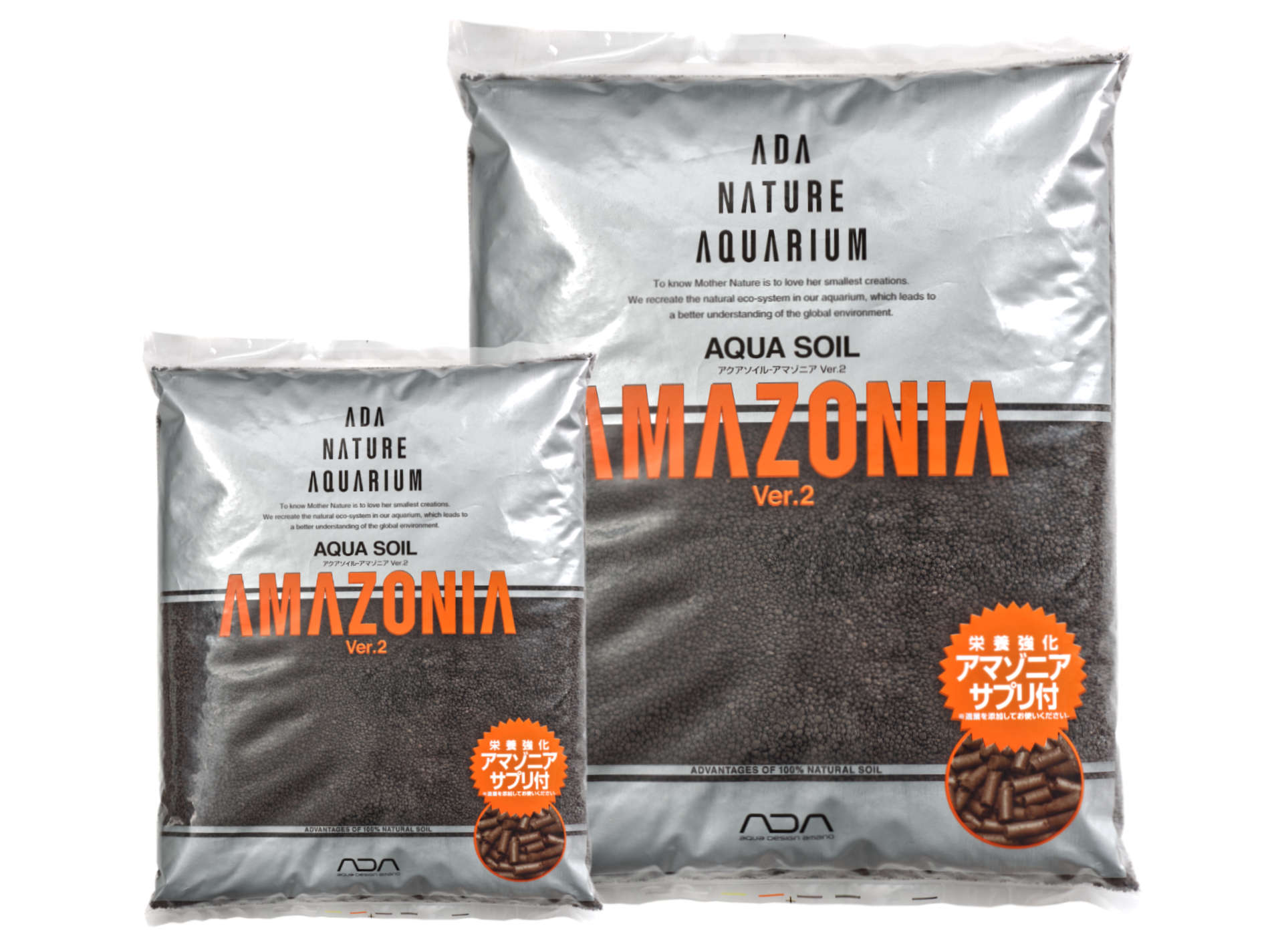
Soft, acidic aquasoil matches its blackwater preferences: ADA Aqua Soil Amazonia.
 ★4.7
ADA Aqua Soil Amazonia Ver 2
Check Price on Amazon ★4.7Gentle water-column feeding once established: a comprehensive liquid like Seachem Flourish.
Planting Syngonanthus the Right Way
Most Syngonanthus sold today comes as tissue-culture cups, which is good news: the plants are sterile, pest-free, and free of the emersed-grown leaves that melt off after submerging. Divide the cup into 6–10 small plugs with clean scissors or tweezers, and plant each plug 2–3 cm apart in the midground. Press each one in at a slight angle with aquascaping tweezers, deep enough that the base is buried but the crown — where the leaves emerge — sits just above the substrate. Burying the crown invites rot; leaving roots exposed lets the plug float away.
Space the plugs generously rather than jamming them together. Syngonanthus needs flow and light around every rosette, and cramped planting traps detritus in the crown, which decays and fouls the water. A loose cluster will fill in over a couple of months into a natural-looking tuft; a crammed one often melts from the inside out. Give the planting area gentle but steady water movement so fresh, CO2-rich water reaches the leaf bases without blasting the fine foliage flat.
Routine Maintenance and Propagation
Once established, this is not a plant you need to constantly fuss over — the work is mostly keeping its environment stable. Stability matters more than any single parameter: pipeworts respond badly to sudden changes in water chemistry, lighting, or CO2.
Weekly Maintenance Rhythm
- Water changes: Change 30–40% weekly without fail. In a low-KH soft-water tank, regular water changes are what keep organics low and chemistry stable; skipping them is the fastest route to algae on the fine leaves.
- Grooming: Siphon detritus gently from around the rosettes, and snip away any browning or algae-coated outer leaves at the base. Never let damaged leaves linger — they become algae anchors.
- Parameter checks: Test KH and pH regularly, especially in the first month, and glance at the drop checker daily. If KH creeps up (from hardscape leaching or top-offs with hard water), address the source rather than chasing the number with chemicals.
- Algae patrol: The fine foliage collects algae faster than broad-leaved plants. A small cleanup crew of shrimp or otocinclus helps, but nothing replaces correct light, CO2, and water-change discipline.
Propagating Side Shoots
As the plant matures, it produces side shoots from the base and lower stem. Wait until a shoot has developed its own small rosette of leaves and visible roots before separating it — premature divisions are the main reason propagated plugs fail. Uproot the mother plant gently, tease the shoot away with its roots intact, and replant it as a new plug using the same angled technique. You can also divide an overgrown rosette into two or three pieces with a clean blade, keeping roots attached to each division.
Growth is slow, so do not expect to double your stock quickly; a healthy plant might yield a few divisions over a season. That scarcity is part of why this plant commands its price and its reputation.
Troubleshooting Common Problems
- Melting after planting: The classic symptom. Almost always caused by hard or alkaline water, a harsh transition, or a buried crown. Confirm KH is in the 0–3 range, pH acidic, and CO2 stable; give the plant 2–3 weeks before judging, and remove fully melted leaves so they do not foul the water.
- Stunted, pale new growth: Usually insufficient light reaching the rosette (check for shading) or inadequate CO2. Increase light penetration by trimming neighbors first; raise CO2 only gradually while watching livestock.
- Algae coating the tufts: Fine leaves are algae magnets when light and CO2 are out of balance. Verify the drop checker is lime-green through the whole photoperiod, reduce the photoperiod slightly, and keep up weekly water changes. Damaged, algae-covered leaves should be trimmed off — they rarely recover.
- Plant floats up repeatedly: The root system is not anchored yet. Replant deeper at an angle, keep flow moderate for the first two weeks, and let roots establish before disturbing the area.
- Browning leaf tips: Often old damage from shipping or emersed-to-submerged transition rather than a current problem. If new growth looks healthy and tips brown only on the oldest leaves, prune them and carry on.
Honest Difficulty Assessment: Is This Plant Right for Your Tank?
Let us be direct: Syngonanthus belem is not a beginner plant, and it is not a plant to buy as motivation to "level up." It belongs in a tank that is already high-tech and stable — injected CO2, strong lighting, soft acidic water, and a nutrient-rich substrate running smoothly for other plants. If that describes your setup and you want a rare, sculptural accent that few tanks have, it can absolutely work.
If any of those four pillars is missing or shaky, start with plants that teach you the skills this one demands. A Pogostemon helferi care guide covers another demanding rosette plant that rewards similar techniques, while cryptocoryne care basics and Cryptocoryne wendtii care build your skill with root-feeding plants in gentler water. Growers who master Rotala rotundifolia care will already understand CO2 stability and trimming rhythms. And if you want beauty with less risk, the Anubias care guide and Anubias nana petite care show what near-indestructible foreground accents look like. There is no shame in returning to Syngonanthus in six months with a stronger tank.
Frequently Asked Questions
Can Syngonanthus belem grow without CO2 injection?
No — not in any way worth attempting. Injected CO2 is a hard requirement for this species, and liquid carbon supplements are not a substitute. Without pressurized CO2, Belem pipewort typically stalls within weeks: new growth comes in thin and pale, then the rosette melts from the base. If you are not running CO2 yet, get your injection system stable with easier stems first, then revisit this plant.
Why is my Syngonanthus melting right after planting?
Post-planting melt almost always traces to one of three causes: water that is too hard or alkaline (KH above ~3 dKH is the usual culprit), unstable or insufficient CO2 during the critical first two weeks, or a crown buried too deep and rotting. Check KH and pH first, confirm the drop checker holds lime-green through the photoperiod, and remove fully melted leaves. Healthy new growth from the crown within 2–3 weeks means it is acclimating.
How do you propagate Syngonanthus belem?
Let the plant produce side shoots from the base, which happens naturally as it matures. Wait until each shoot has its own small leaf rosette and roots, then gently separate it from the mother plant with roots attached and replant it as a new plug. You can also divide a large rosette with a clean blade, keeping roots on every division. Growth is slow, so divisions are few per season — patience is the whole method.
My tufts are turning brown at the tips. What should I do?
Brown tips on the oldest leaves are usually leftover damage from shipping or the emersed-to-submerged transition, not a current emergency — if the newest growth looks green and healthy, just prune the old leaves and carry on. If browning spreads to new growth, suspect CO2 instability or nutrient shortfalls: verify CO2 is steady through the whole photoperiod, then review your dosing, starting increases conservatively while observing livestock.
Is Syngonanthus belem the same thing as Tonina sp. Belem?
Yes — the names refer to the same plant. It entered the hobby labeled "Tonina sp. belem" after the Brazilian city of Belém near its wild habitat, and botanists later reclassified it into the genus Syngonanthus. Shop tags still use both names interchangeably, so treat any listing under either name as this species and apply the same soft-water, high-CO2 care described here.
The Reward for Getting It Right
A thriving colony of Syngonanthus belem is one of those sights that stops other aquarists mid-sentence — starburst rosettes of fine green needles, glowing under strong light, holding a midground cluster together like no common plant can. It asks for a lot: soft water, real CO2, strong light, and the patience to let it settle. But if your tank already speaks that language, this pipewort is one of the finest accents you can add to it. Plant it well, keep the water soft and stable, and give it the time it has always demanded.