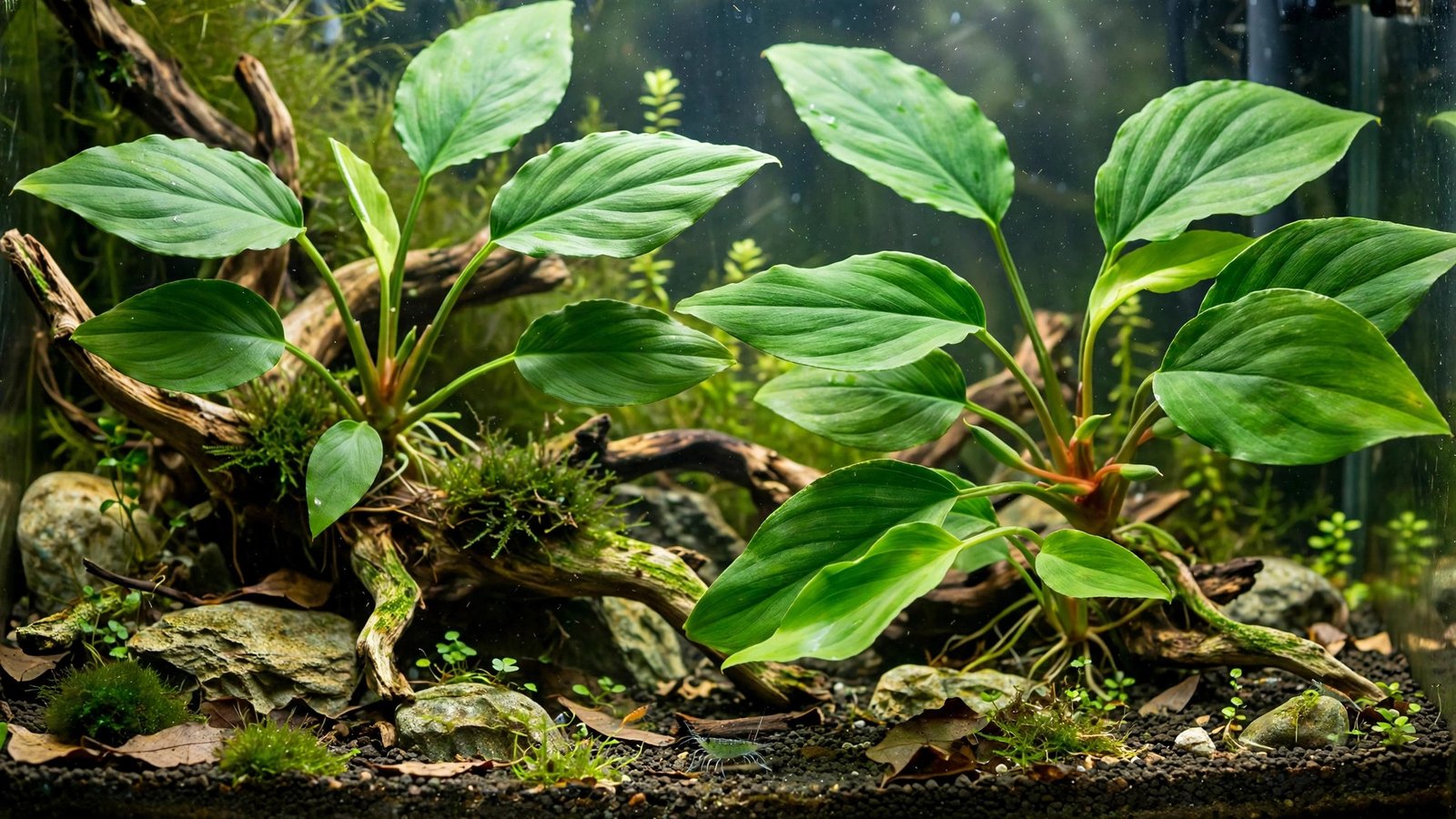
Most hardscape epiphytes get buried alive by the people who buy them. They arrive looking lush, a well-meaning aquarist tucks them into the substrate — and the rhizome turns to mush in two weeks. If you have been tempted by the rare-shelf epiphyte called the homalomena aquarium plant, this guide makes sure you are not that aquarist. By the end, you will know exactly how to mount it on your driftwood and why collectors reach for it when buce feels overdone.
Why the Homalomena Aquarium Plant Earns a Spot on Your Hardscape
Homalomena is still a newcomer to the aquarium hobby, and that is exactly its appeal. It comes from the same Araceae family as Bucephalandra, and it shares the traits collectors love in buce: thick, sculptural leaves and a creeping rhizome habit. Where it differs is presence — varieties like 'Broad Cuneate Red Stem' push broad, glossy leaves on reddish stems that anchor a midground rather than decorating it.
It is a true epiphyte. In the wild, species like Homalomena humilis, a Borneo endemic, cling to rocks and root mats in shaded forest streams, and that lifestyle defines how you keep it. The care parallels with other rhizome plants are direct — our guide to anubias care walks through the same planting rules: tie or glue, never bury. Treat Homalomena with the same respect and it settles in within a couple of weeks.
The One Rule: Never Bury the Rhizome
Every Homalomena death story starts the same way: the rhizome went under the substrate and rotted. The rhizome is the thick, creeping horizontal stem that leaves and roots sprout from, and it needs water circulating around it. Bury it and the tissue suffocates, turns brown and mushy within days, and the melt travels leaf by leaf.
Attachment takes five minutes. Rinse the plant first — especially tissue-culture cups, to wash off gel medium — then pick one of three methods:
- Cotton thread or fishing line. Lay the rhizome against your driftwood or rock and wrap loosely in three or four places. Cotton dissolves in a few weeks, by which time the feeder roots have taken hold.
- Cyanoacrylate gel glue. Dab a pea-sized drop on the rhizome's underside, press it to rock or wood for 10 seconds, and it is set. Use gel, not liquid, and keep glue off the leaves.
- Wedge it. Slide the rhizome into a natural crevice in the hardscape — no materials at all, just check it cannot drift loose before the roots grab on.
Angle it midground so light reaches the leaf tops, and give each plant 3–4 inches of room — the rhizome creeps outward over months.
Light, Water, and the Stability It Craves
Homalomena wants low to medium light — roughly 15–40 PAR at leaf level. A modest LED on a 6–8 hour photoperiod does fine, and it tolerates shadier tank corners. Push it much past 50 PAR without CO2 and you invite algae onto those broad, slow-growing leaves faster than the plant can outgrow it.
Parameters are forgiving, but stability matters most: 72–82°F, pH 6.0–7.5, soft to moderately hard water (2–12 dGH). What Homalomena dislikes is churn — big rescapes and swinging CO2 set it back for weeks. CO2 is optional — growth speeds up noticeably at 20–30 ppm injected, but a low-tech tank with a healthy planted-tank foundation grows it perfectly well, just slower.
Fertilization should be light and regular: a lean all-in-one liquid dose at half to three-quarter strength once a week. Epiphytes feed from the water column, so root tabs do nothing for them. New leaves emerge tightly rolled and unfurl over 3–7 days — a reliable sign your plant has settled in.
Homalomena vs Bucephalandra vs Anubias
These three are the holy trinity of hardscape epiphytes, and they overlap heavily in care. The differences that matter:
| Trait | Homalomena | Bucephalandra | Anubias |
|---|---|---|---|
| Family | Araceae | Araceae | Araceae |
| Leaf look | Broad, glossy, sometimes variegated | Small, rippled, iridescent | Oval, leathery, deep green |
| Growth rate | Slow (1 leaf / 1–3 wks) | Very slow | Slow |
| Light | Low–medium (15–40 PAR) | Low–medium | Low–medium |
| Typical price | $7.99–$29.99 | $6.99–$30+ | $5.99–$15 |
| Beginner ease | Easy–moderate | Easy–moderate | Easy |
The takeaway: if you can keep anubias alive, you can keep Homalomena — the choice is aesthetic. Our head-to-head on bucephalandra vs anubias breaks down how the Araceae epiphytes differ, and the Schismatoglottis prietoi care guide covers another Araceae cousin that grows the same creeping way.
Propagation: Splitting the Rhizome
Homalomena propagates exactly like its buce cousins: rhizome division. Wait until the creeping stem is 2–3 inches long with several leaf nodes. With clean scissors, cut the rhizome into sections — each carrying at least 3–4 healthy leaves and a few feeder roots. Cut the bare rhizome between rosettes, never through a leaf rosette.
Let cut ends air-dry 10–15 minutes to seal the wound, then attach each division like the original. Divisions pause 1–2 weeks, then push a rolled new leaf — the surest sign the cut took. One mature plant becomes two or three within a year.
Choosing a Variety
Retailers like Buce Plant's Homalomena 'Broad Cuneate Red Stem' (about $7.99) show how the genus is sold: named varieties with stem or leaf color notes in the name. 'Sp. Sekadau South' runs $7.99–$29.99 depending on size — their Sekadau South page shows the leaf-form range. Tissue-culture cups near $10.99 are the pest-free route; 'Humilis' with pink-green variegation is the collector's pick.
Quarantine new arrivals for a week and inspect for algae or melt before mounting. Pair it with fellow slow growers so it is never shaded out — a midground of Homalomena alongside buce and anubias gives the layered jungle look with almost no trimming. Our bucephalandra varieties for beginners guide helps you pick tankmates at the same pace.
Frequently Asked Questions
Can I plant Homalomena in substrate?
No. Burying the rhizome kills the plant — it rots within weeks. Always attach Homalomena to driftwood or rock with cotton thread, fishing line, or cyanoacrylate gel glue, or wedge it into a crevice. Feeder roots grip the mount on their own.
Does Homalomena need CO2?
No. It grows well in a low-tech tank at 15–40 PAR with weekly liquid fertilizer — just slowly, about one leaf every 2–3 weeks. Injecting 20–30 ppm CO2 speeds growth and deepens color, but stable low-tech beats unstable high-tech every time.
Why are my Homalomena leaves melting?
Early melting is usually normal: emersed-grown leaves shed as the plant transitions to submerged growth over 2–4 weeks. Do not move or bury it meanwhile. If melt continues past a month, confirm the rhizome is exposed and light is not excessive — then wait before changing anything.
How fast does Homalomena grow?
Slowly: roughly one new leaf every 1–3 weeks, emerging rolled and unfurling over several days. The rhizome creeps outward over months, and a plant typically doubles within a year under steady conditions. A plant for patient aquascapers, not instant-fill layouts.
Is Homalomena good for beginners?
Yes, with one caveat: you must understand the rhizome rule. If you can keep anubias alive — tie or glue, never bury — you already know the essentials. Its demands are stable parameters, low to medium light, and patience through the first month of melt.
The Collector's Epiphyte, Without the Collector's Headaches
Homalomena occupies a sweet spot the hobby rarely gets: genuinely new and interesting, yet no harder to keep than the anubias already in your tank. Mount the rhizome above the substrate, give it dim-to-moderate light and stable water, and it becomes the piece of hardscape everyone asks about.