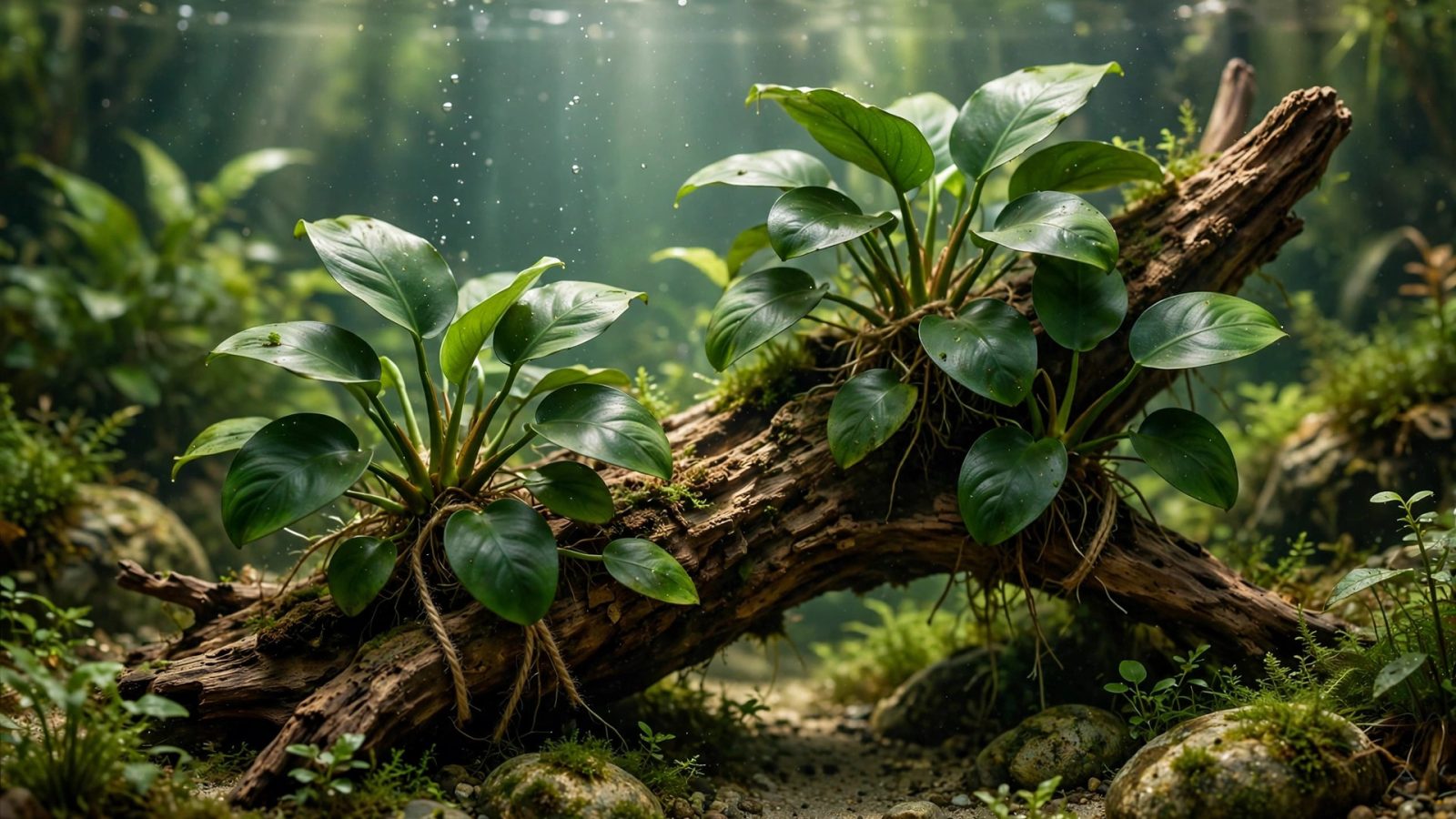
Anubias care is about as close to foolproof as aquarium plants get. These tough, slow-growing rhizome plants tolerate low light, shrug off inconsistent fertilizing, and survive in tanks where more demanding species melt within weeks. If you want green, living decor that asks almost nothing of you, anubias belongs on your short list.
But “hard to kill” is not the same as “impossible to kill.” Most anubias problems come from a short list of beginner mistakes: burying the rhizome in the substrate, parking it under blazing light where algae smothers the leaves, or buying a plant grown emersed and panicking when the old leaves fade. This guide covers everything you need to grow anubias well — planting, light, nutrients, the popular varieties, propagation, and the problems worth watching for.
Anubias Care at a Glance
| Parameter | Recommendation |
|---|---|
| Scientific name | Anubias barteri (and varieties) |
| Light | Low to medium (15–35 PAR); shade from brighter light is ideal |
| Temperature | 72–82°F (22–28°C) |
| pH | 6.0–7.5 |
| Water hardness | Soft to moderately hard; very adaptable |
| CO2 | Not required |
| Fertilizer | Light liquid dosing; root tabs unnecessary |
| Growth rate | Slow (a new leaf every 2–4 weeks) |
| Placement | Foreground to midground; attach to wood or rock |
| Difficulty | Beginner |
Why Anubias Is a Beginner Favorite
Anubias earns its reputation for three reasons. First, it feeds from the water column through its rhizome and roots, so it never needs nutrient-rich substrate — plain gravel or sand works fine. Second, its thick, leathery leaves resist algae better than delicate stem plants and stand up to nibbling fish that shred softer species. Third, it grows slowly enough that you will almost never need to trim it, which makes it perfect for low-tech tanks without CO2 where fast growers can quickly get out of hand.
The trade-off for all that toughness is patience. Anubias grows slowly — expect a new leaf every few weeks, not every few days. Buy the size you want to see, because you will wait months for a small plant to fill in. That slow growth is also why algae can be an issue: each leaf sits in your tank for months, giving algae plenty of time to colonize it if your light and nutrient balance is off.
How to Plant Anubias (The Rhizome Rule)
There is one rule that matters more than everything else in anubias care: never bury the rhizome. The rhizome is the thick horizontal stem from which the leaves and roots grow. If you bury it in the substrate, it rots — and a rotted rhizome kills the whole plant. This is the single most common reason beginners lose anubias.
Instead, attach anubias to hardscape:
- Tie it down with cotton thread or fishing line to driftwood or rock. The roots will grip the surface within a few weeks, and cotton thread dissolves on its own.
- Glue it with cyanoacrylate-based super glue gel (the plain kind, no additives). Dab a small amount on the rhizome, press it to the wood or stone for 30 seconds, and you’re done. It is fish-safe once cured.
- Wedge it into a crack or crevice in the hardscape, letting the roots dangle freely.
The dangling roots are normal — anubias is an epiphyte, and its roots are designed to grip surfaces and pull nutrients from the water, not to dig into soil. Over time they will wrap around the wood or rock and anchor the plant firmly. For step-by-step technique, see our guide on how to attach aquarium plants to driftwood.
Light Requirements
Anubias thrives in low to medium light — roughly 15–35 PAR at the leaf level. The stock LED that came with your tank kit is almost certainly enough. In fact, anubias does best when it is shaded from intense light: tuck it under taller plants, beneath a piece of driftwood overhang, or in the shadow of your hardscape.
Too much light is the main enemy. Under high light, anubias leaves become magnets for green spot algae and hair algae, which the slow-growing plant cannot outrun. If your anubias sits directly under a powerful light, either dim the fixture, raise it, shorten your photoperiod to 6–7 hours, or move the plant into shade. A shaded anubias with clean leaves will always look better than a sun-blasted one covered in algae.
CO2 and Fertilizer Needs
Anubias does not need injected CO2. It grows perfectly well in low-tech tanks, which is why it appears on nearly every low-light plant list for beginners. CO2 will speed up its already-slow growth slightly, but the difference is modest and not worth the equipment for most keepers.
Fertilizer needs are light. A basic all-in-one liquid fertilizer dosed once or twice a week is plenty — anubias grows too slowly to be a heavy feeder. Root tabs are pointless since the plant is not rooted in the substrate. If you see yellowing leaves, the cause is usually too much light or a rhizome problem rather than starvation, but a gentle increase in liquid ferts is a reasonable first step.
Popular Anubias Varieties
The anubias family offers a surprising range of sizes and leaf shapes once you look past the standard green:
- Anubias barteri var. nana (Anubias nana) — the classic. Compact, dark green, 2–4 inches tall. The default choice for most tanks.
- Anubias nana ‘Petite’ — a miniature version with leaves under an inch. Perfect for nano tanks and detailed foreground work on hardscape.
- Anubias barteri — the full-size species, with broad leaves reaching 6+ inches. Good for background placement on large driftwood.
- Anubias coffeefolia — deeply ridged, textured leaves with a striking pleated look. A favorite for aquascapers.
- Anubias ‘Golden’ — bright yellow-green new leaves that deepen with age. Adds color contrast without needing high light.
- Anubias ‘Pinto’ — variegated white-and-green marbled leaves. Stunning but slow, pricey, and needs stable conditions.
Growth Rate and Placement
Expect slow, steady growth: a healthy anubias produces a new leaf every 2–4 weeks under good conditions. Do not expect it to fill a background or outcompete algae through sheer biomass — that is not its job. Its job is to sit on your hardscape looking lush and green with minimal intervention.
Placement-wise, anubias works in the foreground (nana ‘Petite’), midground (nana), or even background (full-size barteri) as long as it is attached to hardscape rather than planted. It pairs beautifully with java fern and bucephalandra — the three classic epiphytes share the same low-maintenance philosophy and look natural growing side by side on the same piece of wood.
How to Propagate Anubias
Propagating anubias is simple but slow. Wait until the rhizome has grown long with several healthy leaves, then:
- Remove the plant from the tank (or work in place if you can reach it).
- Using sharp scissors or a clean blade, cut the rhizome into sections, making sure each section has at least 3–4 healthy leaves and some roots.
- Attach each section to hardscape as you would a new plant.
Each division will continue growing from the cut end. There is no rush — a single anubias can be divided every 6–12 months once established. Never tear the rhizome; a clean cut heals faster and reduces rot risk.
Common Anubias Problems
Rhizome rot
The rhizome turns brown, mushy, and foul-smelling. Cause: buried rhizome or physical damage. Fix: trim away all rotted tissue back to firm green-white rhizome, and replant with the rhizome fully exposed. Severely rotted plants rarely recover — prevention is everything.
Algae on leaves
Green spot algae or hair algae coating the slow-growing leaves. Cause: too much light, usually combined with excess nutrients. Fix: reduce light intensity or photoperiod, move the plant into shade, and consider adding algae-eating crew like nerite snails or Amano shrimp. Badly coated old leaves can be trimmed off — the plant will replace them.
Yellowing leaves
Older leaves yellow and die while new growth looks fine — this is normal aging. But widespread yellowing, especially in new leaves, signals a problem: too much light, nutrient deficiency, or rhizome damage. Our full anubias yellowing diagnosis guide walks through all nine causes systematically.
Melting after planting
Leaves turn translucent and dissolve within days or weeks of introduction. This is usually transition melt — the plant was grown emersed (out of water) at the nursery and is shedding old leaves to grow submersed ones. Leave the rhizome in place; if it stays firm, new leaves will emerge. Only worry if the rhizome itself softens.
Anubias in Different Tank Types
Betta tanks: Anubias nana on a small piece of driftwood is ideal — broad leaves near the surface give bettas resting spots, and the low light needs match typical betta setups. See our floating plants for betta tanks for complementary surface cover.
Shrimp tanks: The textured leaf surfaces grow biofilm that shrimp graze on constantly. Anubias ‘Petite’ on small stones creates perfect shrimp foraging stations.
Goldfish and cichlid tanks: The tough, bitter-tasting leaves are among the few plants that survive with plant-eating fish. Attach securely — large fish will knock loose plants around.
Buying Healthy Anubias: What to Look For
Not all anubias at the store is equal. Knowing how to pick a good plant saves you months of frustration:
- Firm, green rhizome: squeeze it gently — it should feel solid like a fresh carrot, not soft or mushy. The rhizome is the plant’s lifeline; everything else is replaceable.
- Leaf condition: look for intact, deep-green leaves without yellowing edges, pinholes, or heavy algae coating. A few algae spots are fine (they clean up), but leaves that are mostly brown or translucent indicate a struggling plant.
- Root mass: healthy white or light-green roots, not brown mush. Some browning on older roots is normal.
- New growth: a tiny leaf spike emerging from the rhizome tip is the best sign — the plant is actively growing, not just surviving.
- Smell test: seriously. A healthy anubias smells like fresh pond water. A rotting one smells swampy and foul. Trust your nose.
Buy from tanks, not dry shelves — anubias sold in sealed tubes or on dry displays has been out of water and faces a harder transition. If tube plants are your only option, expect a longer adjustment period and be extra careful about rhizome firmness.
Anubias in Low-Tech vs. High-Tech Tanks
Anubias thrives in both worlds, but plays different roles in each:
In low-tech tanks, anubias is a star. It asks nothing — no CO2, modest light, occasional fertilizer — and delivers lush green structure for years. It is the backbone plant of the low-maintenance aquascape, pairing with java fern and mosses to create depth without demanding equipment. Most low-tech keepers find anubias performs better than in high-tech setups because the moderate light of low-tech tanks is exactly what it prefers.
In high-tech tanks, anubias is a supporting actor. The intense light that carpets and stem plants need is hostile to anubias leaves — algae colonizes them relentlessly. Successful high-tech keepers relegate anubias to shaded positions: under hardscape overhangs, in the shadow of tall stems, or in corners the main light barely reaches. It still grows (slightly faster with CO2), but placement discipline is mandatory.
The lesson: match the plant to the light, not the light to the plant. Anubias in shade always outperforms anubias in glare, regardless of your CO2 setup.
Seasonal and Long-Term Care
Anubias is a multi-year plant — a single rhizome can live and grow for five years or more. Long-term care is minimal but worth noting:
- Annual rhizome check: once a year, inspect the rhizome for soft spots, especially on older sections. Trim any decay back to firm tissue.
- Division schedule: a rhizome that has grown 6+ inches with dense leaf clusters is ready to divide. Regular division keeps the plant vigorous and gives you free plants.
- Summer heat: anubias tolerates warmth well, but prolonged temperatures above 84°F slow growth. Ensure good water circulation in summer.
- Leaf lifespan: individual leaves last 6–12 months. Gradual replacement of old leaves is normal and healthy — only worry when new growth stops or young leaves fail.
Anubias FAQs
Anubias nana vs. nana petite — which one do I want?
Standard Anubias barteri var. nana grows leaves two to three inches long — ideal for midground hardscape on driftwood. Nana petite stays under an inch, perfect for nano tanks and detailed rockwork. Both want identical care; the choice is purely about scale. Petite costs more per leaf, so plan your hardscape before buying rather than improvising at the shop.
Can anubias flower underwater?
Occasionally, yes — a white spathe resembling a tiny peace lily emerges. It is a sign of a mature, content plant, not a problem. The flower lasts a week or two; snip it off if it starts to decay, since rotting tissue in the tank feeds algae.
How do I clean algae off anubias leaves?
For mild cases, a soft toothbrush during a water change works. For stubborn spot algae, a brief dip — one part 3% hydrogen peroxide to twenty parts tank water, two to three minutes, then rinse — usually clears it; the tough leaves tolerate treatment that would melt delicate stems. Prevention beats scrubbing: dial back the light rather than fighting algae weekly. See our green spot algae on anubias guide for the full protocol.
The Bottom Line
Anubias care comes down to three things: keep the rhizome exposed, keep the light modest, and be patient. Do those and anubias will reward you with years of deep-green, nearly maintenance-free growth on your hardscape. It will not win any growth races, but no other plant delivers this much beauty for this little effort — which is exactly why it has earned its place in nearly every beginner’s tank.