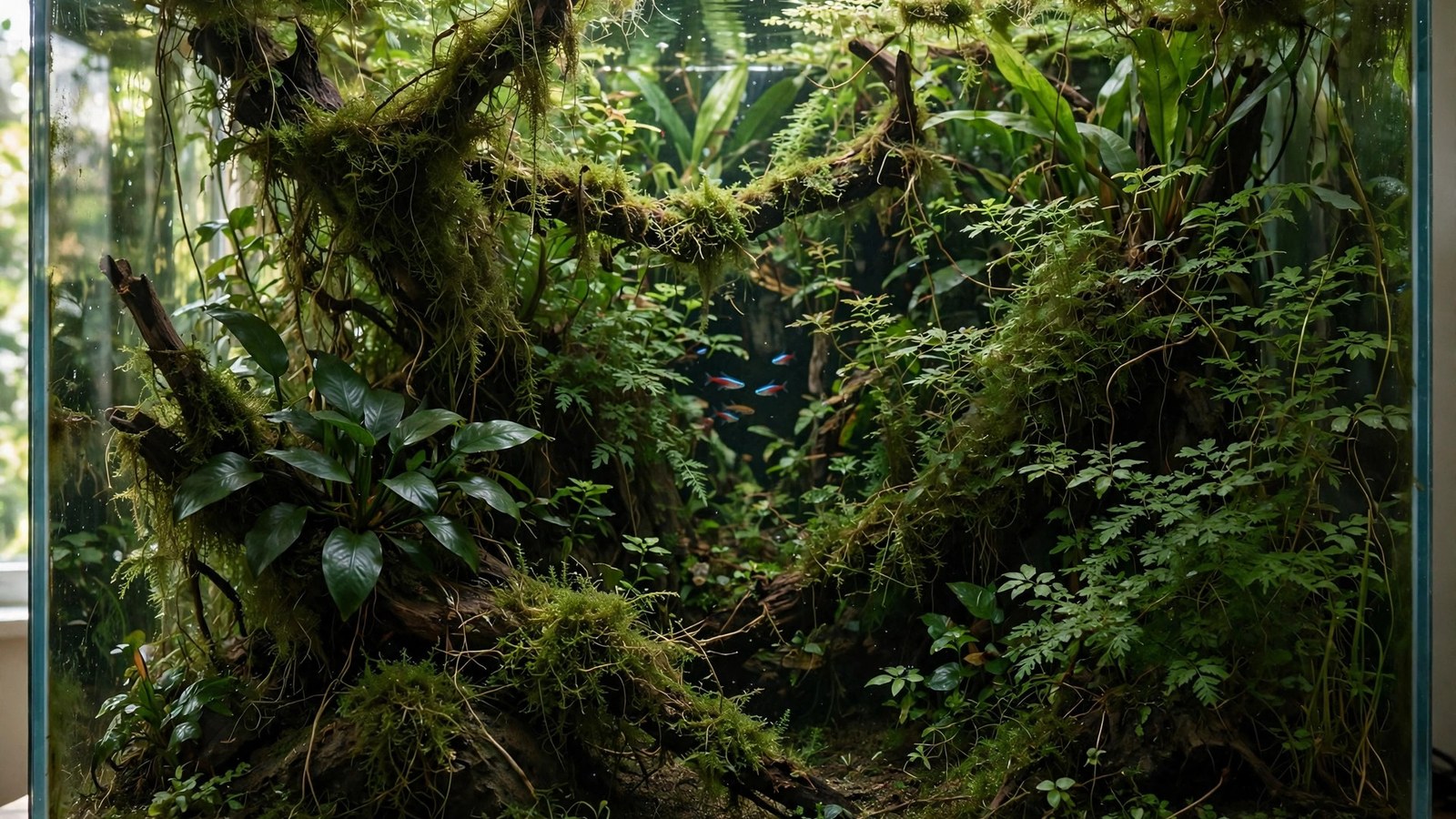
You have seen the tanks that stop you mid-scroll: jungles so thick the fish look like they live inside a hedge. Then someone comments — "you have too many plants, that's going to crash." The honest answer is more interesting than a yes or no. Too many plants in a fish tank is almost never the problem during the day. The problems are real but specific: oxygen swings overnight, flow dead-spots, detritus in stem thickets, and your own arms not reaching the back glass. This guide separates the myth from the machinery.
Before you tear anything out, get one fact straight: most beginners plant far less than how much planting a fish tank actually wants. Dense planting is the single best cheat code for a new tank — plants drink ammonia, nitrate, and phosphate, outcompete algae, and give shy fish cover. If your tank looks like a jungle and your fish are spawning, you do not have a problem.
The daytime myth: plants don't suffocate tanks
During the photoperiod, photosynthesis pumps oxygen into the water, so a heavily planted tank in daylight is more oxygen-rich than a bare one — which is why breeding tanks are often planted wall to wall. While the lights are on, your plants are doing unpaid water-quality work.
too many plants fish tank problems: nighttime respiration
When the lights go out, photosynthesis stops and every plant starts respiring, burning oxygen like your fish. In lightly planted tanks the overnight dip is trivial; in a tank stuffed stem-to-stem with still surface water, fish can gasp or hover by dawn. The warning sign is timing: fine all day, at the surface first thing in the morning. Run an air stone or surface ripple on a timer when lights go off — you keep the jungle and the dawn gasping disappears.
Flow dead-spots: the hidden cost of density
Dense growth physically blocks your filter's current. Water takes the easy path around the thicket, and the interior becomes a dead zone: debris settles, plant bases rot first. When one corner always collects mulm, you have a circulation problem wearing a plant costume. Re-aim the outflow, add a small circulation pump on low, or thin the densest third so water passes through instead of around it.
| Symptom | Likely cause | Fix |
|---|---|---|
| Fish gasping at dawn only | Nighttime respiration + low surface agitation | Nighttime air stone or surface ripple |
| Mulm building behind stems | Flow dead-spot | Re-aim outflow; thin the thicket |
| Algae growing in plant shadows | Shaded pockets with still water | Prune for flow; add circulation |
| Base of stems melting | Trapped detritus + no light at base | Siphon detritus; replant tops |
| Picky species starving, weeds thriving | Nutrient competition | Targeted dosing; separate heavy feeders |
Detritus traps and the cleaning paradox
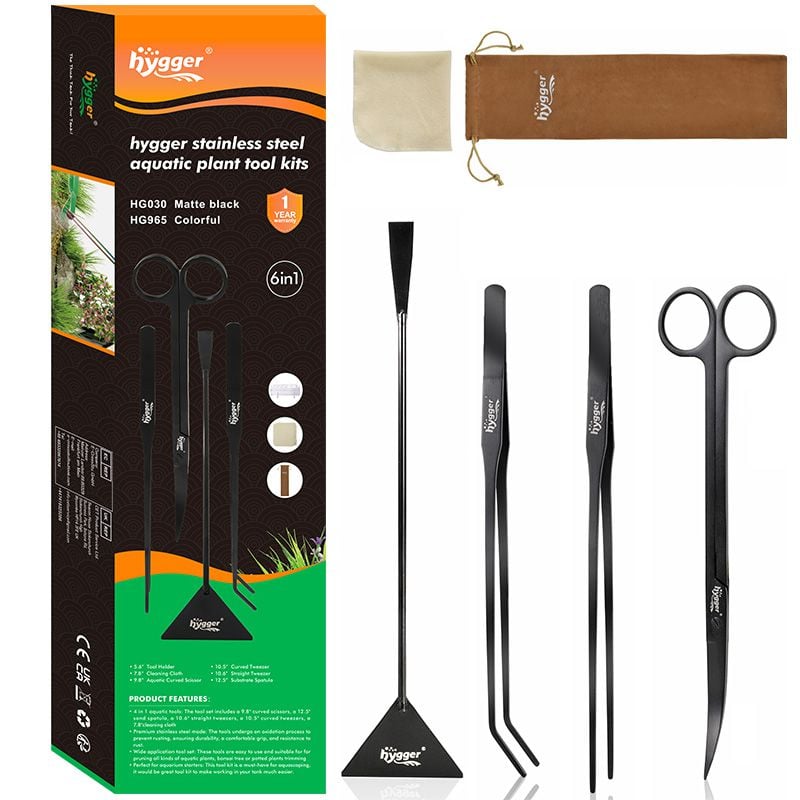
Fallen leaves, fish waste, and uneaten food collect between stems where your siphon cannot reach, rotting slowly and spiking nitrates when disturbed. If you cannot reach the back of the tank to prune and siphon, the tank is too densely planted for the routine you can sustain. Keeping cleaning tools handy matters less than designing the tank so you can reach everything: leave a slim access channel behind the back stems.
Nutrient wars: when weeds starve picky species
Heavy planting means heavy nutrient demand — which is why whether aquarium plants really need fertilizer matters here: fast stem plants drink ammonia, nitrate, potassium, and iron far faster than slow growers. In a sparse tank you can often get away with no fertilizer, but in a jungle the weeds starve the picky species. Demanding plants melting while fast growers explode is nutrient competition, not overplanting. Dose for your total biomass, not the tank size on the bottle, and add root tabs under heavy root-feeders. Mystery holes and melting edges mean deficiency — see holes in aquarium plant leaves for the diagnosis.
Stressed, trapped, or bullied fish
Not every fish wants a jungle. Large active swimmers — giant danios, large rainbows — need open lanes, and long-finned bettas can snag fine-leaved plants. Watch your fish: are they using the cover, or pinned against the glass avoiding it? Behavior beats theory.
The counterpoint: signs you don't have enough plants
Before you blame density, check the opposite. Persistent algae, nitrates that never stay down, or shy fish hiding constantly usually mean underplanting, not overplanting. Hair algae running wild in a sparse tank is the classic signal that plants need reinforcements, not removal.
Pest hitchhikers tell the same story: tiny white bugs in planted tanks point at detritus buildup — clean the detritus and the population collapses on its own.
The practical sweet spot
For most community tanks, 70–80% substrate coverage is the sweet spot: enough biomass to stabilize water and suppress algae, open enough that water circulates and you can reach everything with scissors and a siphon. Treat pruning as routine care — a 10-minute weekly trim beats a quarterly jungle-clearing session. Stems throwing aerial roots between trims are overdue for the chop — see our aerial roots on stem plants guide.
If you love the wall-to-wall look, it is absolutely achievable — just budget for what it costs: more pruning, deliberate nutrient dosing, and nighttime aeration. Overplanting is not a sin. It is a gardening style with a maintenance bill attached: oxygen, flow, detritus, nutrients, access. Pay those cheaply and keep the jungle.
 ★4.6
hygger 6-in-1 aquarium aquascaping tool kit
Check Price on Amazon ★4.6Frequently Asked Questions
Can too many plants kill my fish?
Not by their presence. The dangerous scenario is a very dense tank with low surface agitation, where overnight respiration drops oxygen enough to stress fish by dawn — and chronic stress weakens immunity. Nighttime aeration removes the risk entirely. Test before dawn.
How many plants are too many in a fish tank?
There is no magic count — it's about the maintenance bill. If you can prune weekly, reach every corner with a siphon, keep water circulating, and dose enough fertilizer for the biomass, even a wall-to-wall jungle works. The sweet spot for most tanks is 70–80% substrate coverage.
Do plants use up all the oxygen at night?
They consume oxygen through respiration once lights go out, yes. In moderate tanks the dip is harmless; in very dense tanks with still surface water it can drop noticeably by morning. An air stone or surface-rippling pump on a timer overnight solves it.
Should I remove plants if I have algae?
Usually the opposite. Algae thrives where light and nutrients sit uncontested — removing plants often makes it worse. Fix the flow dead-spots and detritus traps feeding it, and add fast-growing plants to outcompete it. Remove only plants that are already rotting.
Why are my slow-growing plants melting while stem plants thrive?
Nutrient competition. Fast stem plants absorb minerals far faster than slow growers, winning the nutrient race in a jungle. Dose a balanced fertilizer matched to your total plant mass, and add root tabs under heavy root-feeders. Watch for greener new growth within two weeks.
What's the easiest way to keep a dense tank maintainable?
Leave an access channel behind the back stems, prune weekly instead of quarterly, and keep stem bunches replantable rather than rooted into fortresses. Ten minutes a week with long pruning scissors beats a full teardown every few months. Photo the tank after each trim.
In the daytime, plants are allies. Treat nighttime oxygen dips, flow dead-spots, detritus traps, and nutrient competition as engineering problems, and you can keep your jungle. The real limit is the garden you can tend: plant what you can prune, aerate what you plant.
Aquarium Co-op's planted tank guide covers dense-planting maintenance routines, and the Practical Fishkeeping community forums are full of hobbyists troubleshooting the exact nighttime oxygen question covered here.