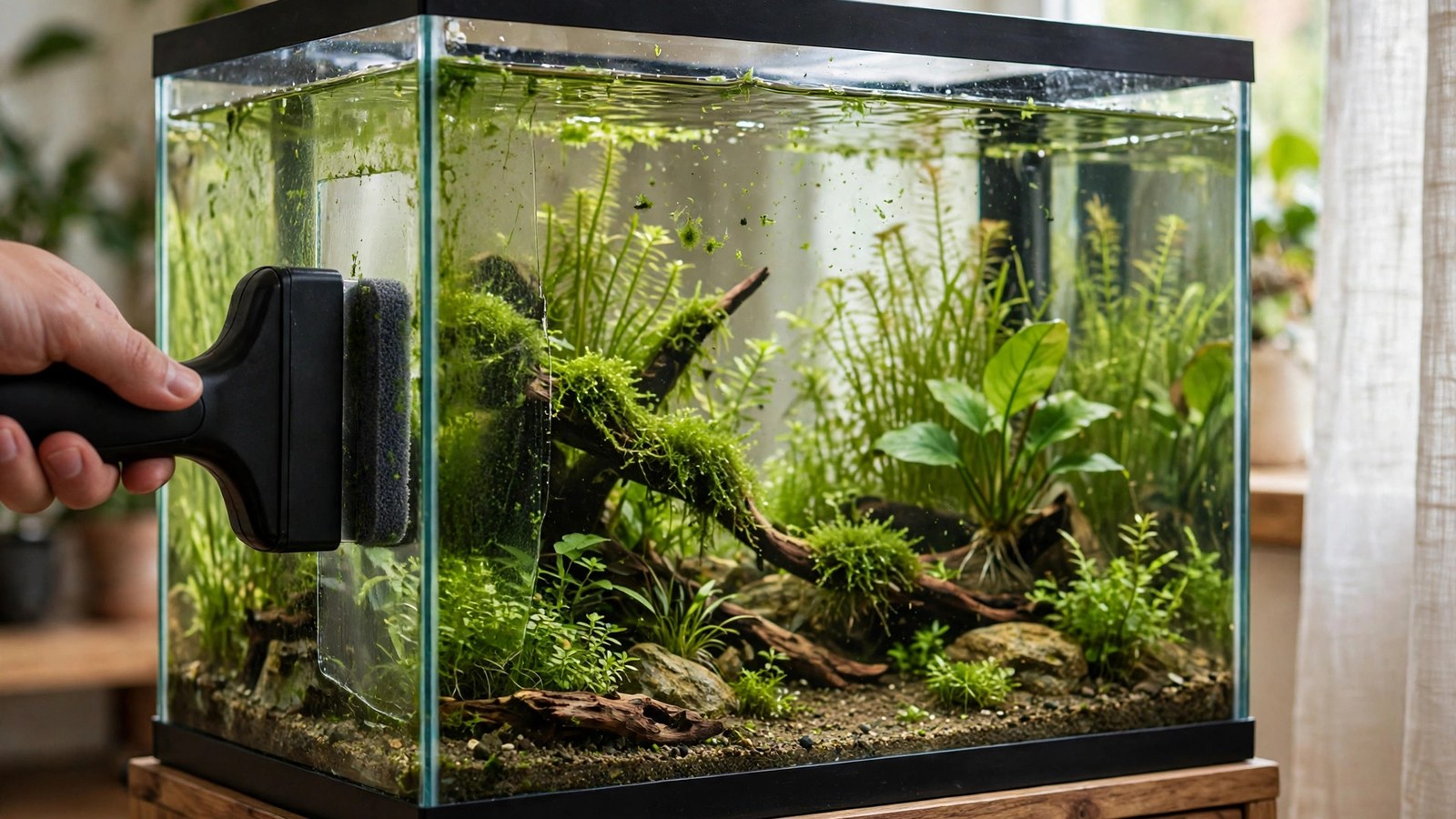
Every planted tank reaches a point where the front glass looks more like a smudged window than an underwater garden. You wipe with a sponge and the haze returns within days. The mistake is treating all glass tools as interchangeable — the best algae scraper aquarium setups pair two different tools, because the film that wipes off with a fingertip and the green dots that ignore your fingernail are different enemies.
This guide covers the four tool types, which algae each one beats, and how to clean around delicate stems and carpet without turning your aquascape into a demolition site. If the algae is on your leaves rather than the glass, tools are the wrong answer — start with our black beard algae on plants removal guide instead.
The four tool types every planted tank owner should know
Almost every scraper falls into four categories. Knowing which is which is the whole skill.
Long-handle blade scrapers
The workhorse: a 40–60 cm rigid handle ending in a replaceable razor-style blade, held at roughly 45 degrees to the glass. It shaves green spot algae — the hard round dots that resist every sponge — off in single passes, and reaches deep tanks without submerging your arm. Stainless blades rust slowly; carbon steel starts sharper but needs towel-drying after every use. Plastic-edge versions suit acrylic tanks: safe on panels and seams, but they bounce off mature spot algae where steel bites.
Magnetic cleaners
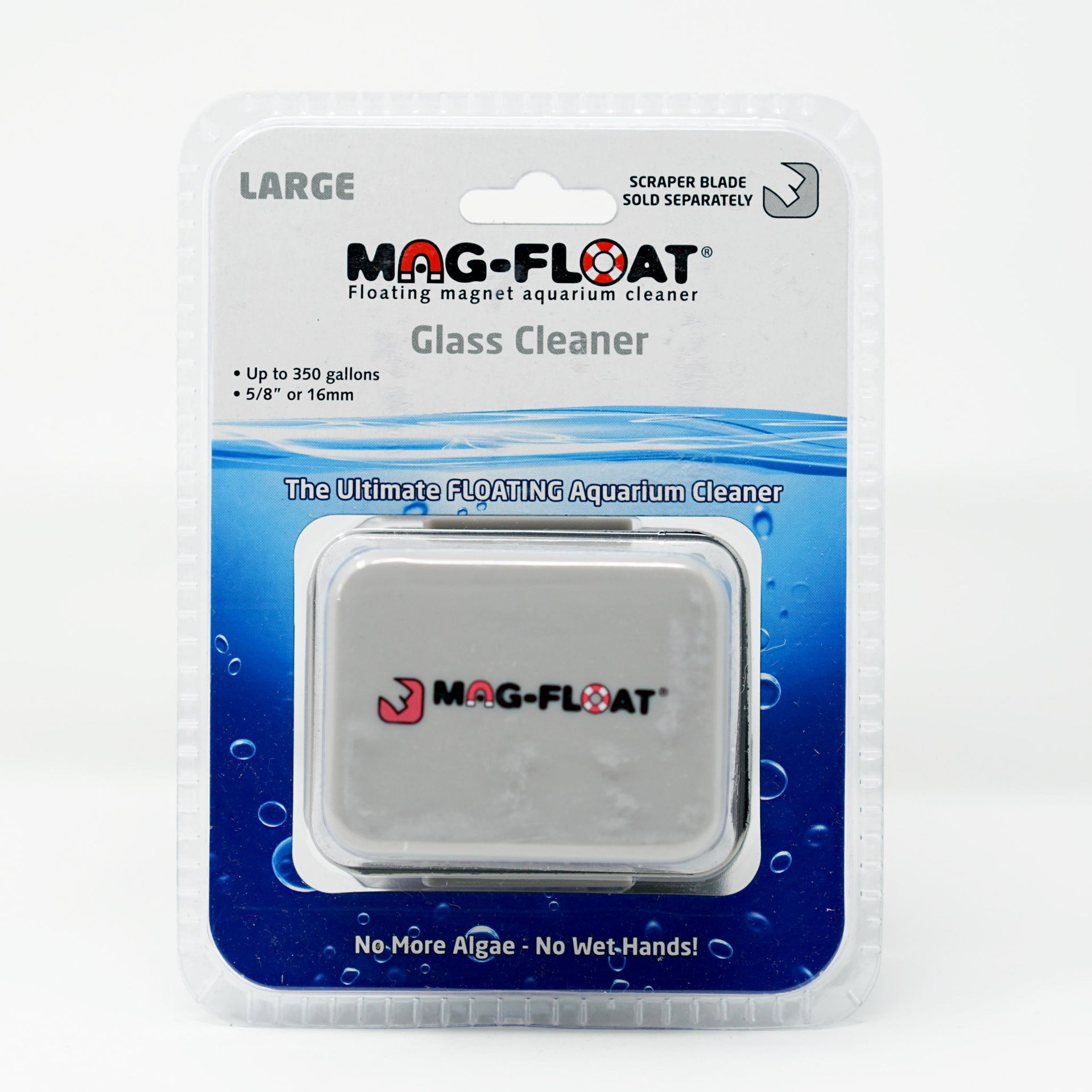
Two magnets — one inside carrying a scrubbing pad, one outside steering it — so your hands stay dry. Designs like the Mag-Float and Flipper earned their names — check the maker's model-size chart matched to glass thickness before buying, since weak knockoffs fall off mid-pass. Magnets handle the weekly dust-film wipe in about thirty seconds. Their limits: they cannot shave hard green spot algae, they struggle in corners, and the inside pad is a grit trap — one grain of sand turns it into sandpaper. Rinse the pad after use; keep it off the substrate line.
Melamine foam pads
Plain "magic eraser" foam, sold aquarium-branded as algae pads. Melamine is a micro-abrasive: on glass it lifts green dust algae, waterline crust, and protein film that magnets smear. The cautions are specific: never on acrylic, never near silicone seams, and only undoped foam. Foam sheds particles, so rinse the panel afterward and run a water change within the day.
Detail brushes
For algae on equipment — filter intakes, lily pipes, heater stems — a soft toothbrush beats every blade, since flat edges cannot sit flush on textured surfaces. Keep one brush tank-dedicated; toothpaste residue contaminates water.
The best algae scraper aquarium kit for every tank size
| Setup | Tools | Best for | Weekly time |
|---|---|---|---|
| Nano (up to 10 gal) | Small magnetic cleaner + plastic scraper | Dust film, light spot algae, dry hands in a small box | ~2 min |
| Standard (20–30 gal) | Magnetic cleaner + 40 cm blade scraper + melamine pads | Full coverage: film, spot algae, waterline crust | ~5 min |
| Large (40+ gal) | Large magnetic cleaner + 60 cm blade + plastic scraper + pads | Deep reaches, corners near hardscape, seam-safe edges | ~8 min |
Two complementary tools plus pads cover nearly everything; spend the difference on replacement blades. Our aquarium algae identification chart matches the algae to the cause before you scrape.
 ★4.4
Mag-Float Large Magnetic Algae Cleaner
Check Price on Amazon ★4.4Matching the tool to the algae
- Green dust algae — soft uniform film, wipes off with a finger. A magnet or melamine pad clears a panel in under a minute. See our green dust algae removal guide for why it recurs.
- Green spot algae — hard round dots bonded to the glass. Magnets only polish them; a stainless blade at 45 degrees shaves each dot off. On acrylic, a plastic scraper with firm repeated pressure eventually wins. See our green spot algae guide for the cause.
- Brown diatom film — the powdery brown coating in a tank's first weeks. It wipes off with almost anything because the cells barely attach. Per our brown diatom algae guide, patience beats tools: diatoms usually clear on their own as the tank matures.
- Hair algae on glass — stringy strands anchored to the panel. Blades cut the strands but leave the bases; follow with a toothbrush on the attachment points, then siphon the threads at the next water change. Full strategy: our hair algae removal guide.
- Hard water marks — white crust from evaporation above the waterline. Melamine foam with tank water dissolves it; a plastic edge works as a chisel on stubborn buildup. Never grind these with steel on dry glass.
Scraping around plants without wrecking the aquascape
Work the front panel first with long, vertical, overlapping strokes, top to bottom, and siphon loosened algae away at the next water change. Around stems, use the blade's corner in short 5 cm strokes near plant bases — a full-width pass levers stems out of the substrate.
Carpet plants root shallowly, so keep the blade riding just above the substrate at the glass line, or finish the last centimeter with a melamine pad. Near hardscape, switch to the plastic scraper or toothbrush: one strike on stone chips a fresh blade edge permanently.
Blade care, replacement, and what to buy
A stainless blade in weekly service lasts 2–3 months before micro-chips make it chatter. Replace on schedule: a dull edge needs more pressure, and pressure scratches glass and nicks silicone. Carbon steel cuts beautifully but rusts at the first neglected rinse — towel-dry it after every use. Rinse tools in old tank water after each session; store the blade edge-up and keep magnets separated.
Buy the tool types, not brand mythology. A long-handle stainless scraper from any reputable brand performs like the premium one — the blade is the consumable. Melamine pads are a commodity; plain undoped foam in bulk costs pennies per session. Buy replacement blade packs with the scraper, so a worn edge never stays in service for lack of a spare.
Frequently Asked Questions
Can I use a metal razor blade scraper on an acrylic tank?
No — never. Steel blades scratch acrylic on the first stroke, and those scratches cannot be polished out in place. Use a plastic-edge scraper on acrylic, keep steel tools away from the tank, and accept that green spot algae takes more passes with plastic.
How often should I scrape the glass in a planted tank?
Wipe the front panel with a magnet every 3–7 days — dust film builds fast under strong lighting. Do a blade session for green spot algae every 2–4 weeks, or whenever dots become visible from your chair. Side and back panels can wait; aquascapers often leave the back for snails.
Do magnetic algae cleaners work on green spot algae?
Not on mature green spot algae — the dots are bonded to the glass and a magnet's pad only polishes their tops. Magnets excel at the soft dust film of weekly maintenance. For established spot algae, use a stainless blade on glass or a plastic scraper with firm pressure on acrylic.
Will scraping algae off the glass spread it around the tank?
Loosened algae settles on plants and substrate, which is why timing matters: scrape the evening before a water change so the siphon removes the debris. Those cells were already everywhere in the tank — scraping relocates them, it does not introduce anything new.
Is melamine foam safe for aquariums?
Plain, undoped melamine foam is widely used on glass tanks and is safe when rinsed well and followed by a water change. Buy foam with no added detergents or fragrances — household brands often include them. Never on acrylic or near silicone seams.
A clean panel is a habit, not a purchase
The right tools make glass maintenance fast, but the habit keeps the view clear: two minutes with a magnet every few days, one blade session a month, and the time you spent fighting algae goes back to the scape.