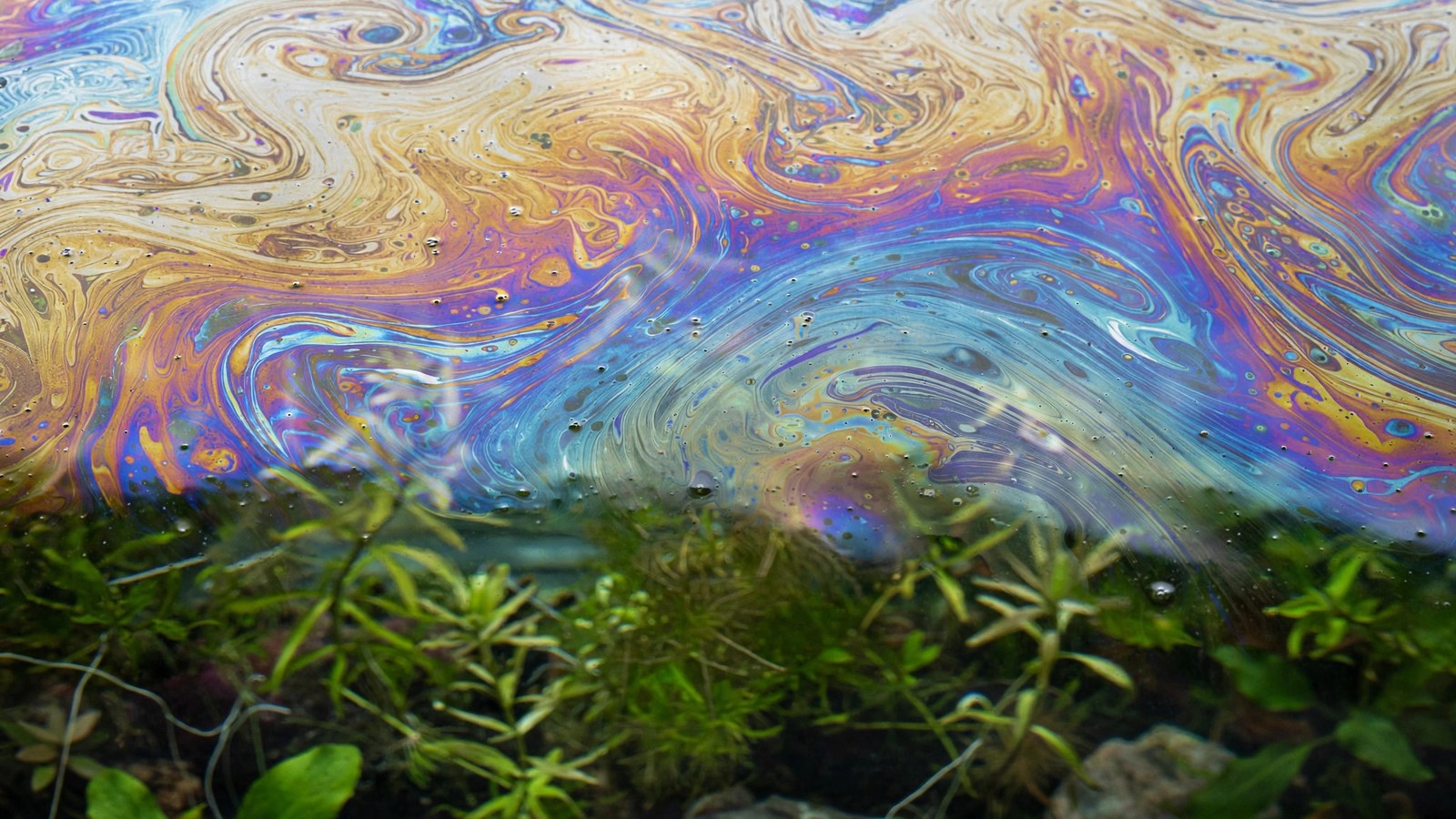
You look at your tank one morning and the water surface is shimmering with an oily film — a rainbow-colored slick that dulls the light, blocks gas exchange, and makes the whole aquarium look dirty from above. That oily film on aquarium water is one of the most common surface problems in planted tanks, and it is almost always harmless to fish yet damaging to plants. Here is what causes it, how to remove it today, and the permanent fixes that keep it from coming back.
What the Oily Film Actually Is
The rainbow sheen is not motor oil and not some mysterious contaminant. In most tanks it is a protein biofilm — a microscopic layer of dissolved organics (proteins, fats, and carbohydrates from fish food, fish waste, and decaying plant matter) colonized by bacteria. These organics are lighter than water, so they accumulate at the surface, and the bacteria form a skin that gives the water that shimmering, iridescent look.
The film comes in a few flavors, and knowing which you have helps you pick the right fix:
| What it looks like | Likely cause | Common in |
|---|---|---|
| Rainbow/iridescent shimmer, breaks into flakes when touched | Protein biofilm from food, waste, decay | Nearly all planted tanks occasionally |
| Dull gray or white cloudy skin | Bacterial bloom at the surface | New tanks, overstocked tanks |
| Visible yellowish or oily slick that smells | Decomposition of dead leaves or dead fish | Tanks with untrimmed melt or casualties |
| True greasy slick, does not break up | Cosmetic or cleaning products, hand lotion | Tanks near kitchens or after hand contact |
If the film breaks into flakes or streaks when you touch the surface, it is organic — the common, fixable kind. A slick that resists breaking up and has a chemical smell points to a contaminant from outside the tank, which is a different and more urgent problem.
Why Surface Film Harms Planted Tanks
A thin sheen looks cosmetic, but it does real damage in a planted aquarium. First, it cuts the light. Even a thin film reflects and diffuses a measurable fraction of incoming light before it reaches your plants — in high-light setups, that can be the difference between thriving carpets and stunted ones. If your plants have been sluggish and you notice a slick, the two are often connected; read our guide to why aquarium plants stop growing for the full checklist.
Second, it blocks gas exchange. Oxygen enters and carbon dioxide escapes through the water surface, and the film acts like a lid. During the day your plants produce oxygen, but at night the whole tank respires — plants, fish, and bacteria all consuming oxygen. A sealed surface can mean dangerously low morning oxygen, especially in heavily planted tanks, which often shows up as fish gasping at the surface before the lights come on.
Third, the film signals an organics problem. If the surface is slick, your water column is carrying a heavy load of dissolved waste — and that is the same load that feeds algae blooms and blue-green algae (cyanobacteria) outbreaks.
The Main Causes, Ranked
1. Overfeeding and rich foods
This is the number-one cause. Flakes, pellets, and frozen foods all release oils and proteins as they break down, and uneaten food floats to the surface. High-fat foods like frozen bloodworms and some pellet formulas are especially guilty. If you feed generous pinches twice a day, the surface is getting a constant supply of film material.
2. Decaying plant matter
Melting leaves, trimmed stems left floating, and rotting roots all leach organics. New tanks are especially prone to this because plants shed their emersed leaves as they transition — exactly the stage when surface film appears most often. Pruning regularly and removing melt promptly does more for film prevention than most products. If decay is widespread, check whether your plants are melting in new aquasoil or generally struggling.
3. Poor surface agitation
In a still-surfaced tank — a lily-pipe outflow pointed at the substrate, a gentle sponge filter, a rimless tank with no surface ripple — organics accumulate instead of mixing back into the water column where bacteria can process them. This is why film is worst in low-flow and canister-filter setups with submerged outflows.
4. No surface skimming
Most filters draw water from mid-column or the bottom. Nothing in a standard setup collects surface water, so the top millimeter of the tank is a dead zone where film builds undisturbed.
5. Contamination from hands and the room
Sunscreen, hand lotion, cooking grease from a kitchen-adjacent tank, scented sprays, or cleaning products used near the aquarium can all deposit genuine oils. The tell is a film that appears suddenly after you have had your hands in the tank or used a product nearby.
How to Remove Surface Film Today
You can clear the surface in minutes with methods that cost nothing:
- Paper towel method. Lay a sheet of plain, unscented paper towel flat on the surface, let it soak for a few seconds, then lift it straight off. The film clings to the towel. Repeat with fresh sheets until the water looks clear. This is the fastest single removal trick in the hobby.
- Large water change with surface focus. Drain from the top: hold the siphon at the surface so you pull the film layer out first, then do your normal water change. A 40–50% change with the siphon skimming the surface resets the problem completely.
- Cup scoop. Tilt a cup at the surface and let the top layer flow in. Crude but effective for heavy slicks.
Do not reach for chemical "surface removers" or water clarifiers. Most bind organics with polymers that the filter eventually has to process anyway, and they do nothing about the cause. Physical removal plus a root-cause fix beats every bottle.
Permanent Fixes: Keep It Gone
Add surface agitation
A gentle ripple across the surface is the single most effective prevention. Aim for visible movement on roughly a third of the surface — enough to mix the top layer into the water column, not enough to churn the tank. You can:
- Tilt your lily pipe or filter outlet upward 10–15 degrees so it ruffles the surface.
- Add a small air stone on a timer, running at night when oxygen demand peaks (also helps gas exchange directly).
- Run a small powerhead or wavemaker aimed slightly upward near the surface.
Install a surface skimmer
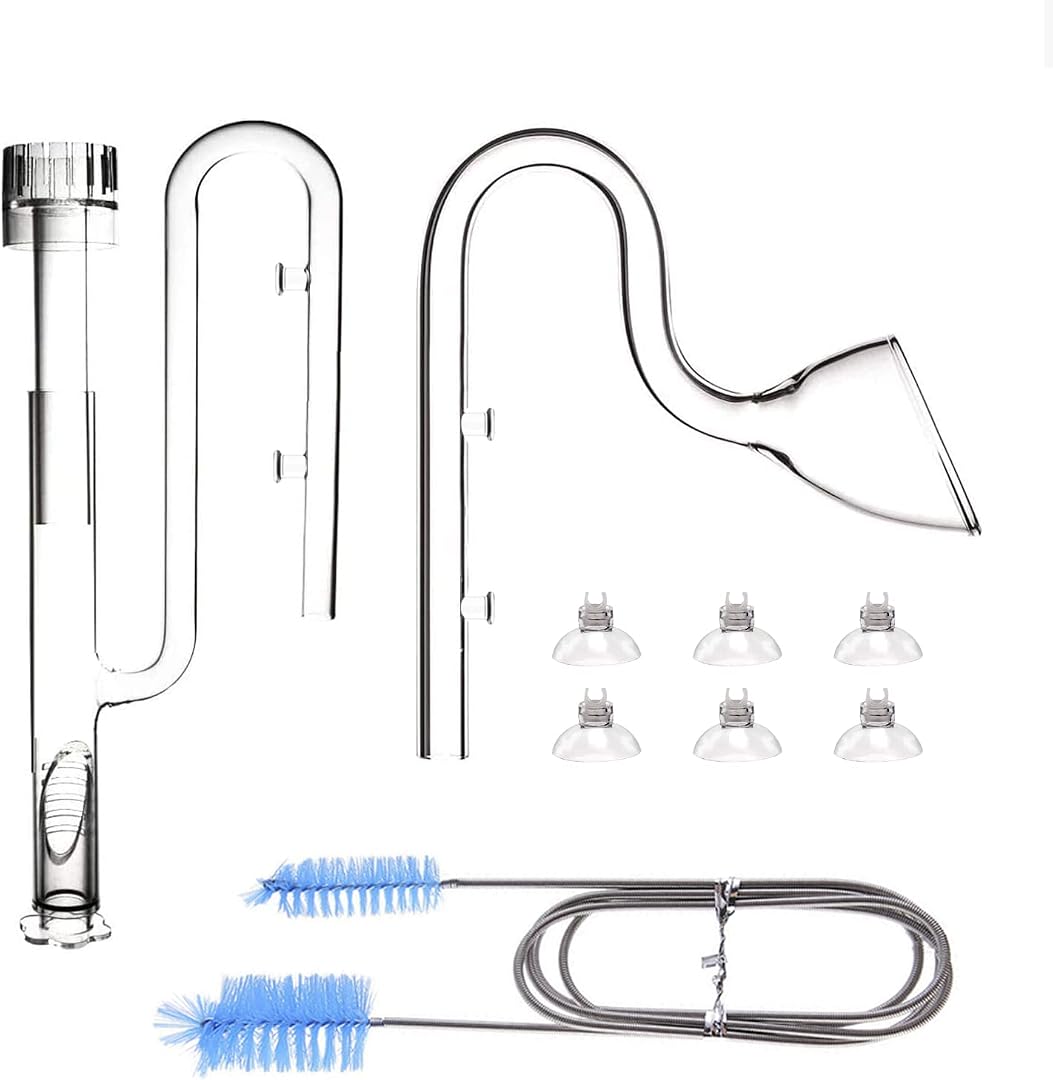
For tanks where the film keeps returning, a surface skimmer attachment is the permanent answer. These draw water from the top few millimeters — pulling the film into the filter intake before it builds up. Most canister filter brands sell skimmer intake pipes, and there are standalone nano skimmers for small tanks. Within a day or two of installing one, the surface stays glass-clear permanently. Clear the film with the paper-towel method first, then install the skimmer so it starts from clean water.
Reduce the organic load
Less film material entering the tank means less film forming. Feed once daily what your fish eat in two minutes and siphon uneaten food after ten. Remove dead and melting leaves during your weekly maintenance rather than letting them disintegrate — a five-minute trim session is film prevention. And gravel-vac or siphon the visible mulm buildup, since that debris is the same organics that migrate to the surface.
Watch your fertilization too. Overdosing liquid ferts — especially iron-heavy mixes — adds dissolved organics and can coincide with surface films; if your film appeared after a dosing change, review the signs of over-fertilizing and dial back.
Keep contaminants out
Rinse your hands and forearms with plain water (no soap) before putting them in the tank. Keep aerosol sprays, scented candles, and cleaning products away from the aquarium. If the tank sits in a kitchen, a lid or a surface skimmer becomes nearly mandatory, because cooking grease will reach it no matter how careful you are.
Consider floating plants — carefully
Fast-growing floaters like frogbit or water lettuce consume dissolved organics and can reduce film, but dense mats trap the film underneath and make it worse, not better. If you use floaters for nutrient uptake, keep a ring of clear surface around the filter outflow so the film has somewhere to be pulled in. Thin the mat weekly so light still reaches the plants below.
 ★4.0
FZONE Aquatic Glass Lily Pipe Set with Skimmer
Check Price on Amazon ★4.0When Surface Film Means a Bigger Problem
A light recurring film is normal maintenance territory. But these patterns mean something deeper is wrong:
- Film with cloudy water: you likely have a bacterial bloom in the water column too — check the cloudy water causes and fixes guide and test ammonia and nitrite.
- Film plus a rotten or sulfurous smell: something is decomposing — a dead fish, rotting root tab, or anaerobic pocket. Test your water and investigate before it cascades.
- Film right after setup, alongside diatoms: classic new-tank organics from aquasoil leaching and plant transition melt; it usually resolves within 3–6 weeks as the tank matures.
- Film that will not break up, with a chemical odor: suspect a contaminant — lotion, spray, or a non-aquarium product. Large water changes plus activated carbon in the filter will strip most household chemicals; for what carbon can and cannot do, see manufacturer guidance on activated carbon filtration (Seachem's documentation on MatrixCarbon explains adsorption limits well).
For any recurring water-quality mystery, the fastest route to an answer is testing, not guessing — which water test kits actually matter for planted tanks will get you a short, honest kit list.
Finally, remember that identifying the exact symptom is half the diagnosis. If the surface issue is accompanied by visible algae rather than just a sheen, run it through the aquarium algae identification chart to match the algae to the right treatment.
Frequently Asked Questions
Is the oily film on aquarium water harmful to fish?
Usually not directly — it is just organic matter and bacteria. The indirect harm is real, though: it blocks oxygen exchange, which matters most at night when plants stop producing oxygen and everything in the tank is consuming it. Chronic heavy film in a stocked tank can contribute to low morning oxygen, so treat it as a maintenance issue worth fixing rather than a cosmetic one.
Will a water change get rid of the surface film?
Yes, temporarily. Siphoning from the surface during a 40–50% water change removes the film completely — but it will return within days if you do not fix the cause. Pair the water change with one permanent fix: surface agitation from your filter outflow, a skimmer attachment, or cutting back on feeding. The water change clears it; the fix keeps it gone.
Why does the film keep coming back every few days?
Because the source is ongoing: overfeeding, decaying leaves, or a still surface that lets organics accumulate faster than bacteria can process them. Run through the three fixes in order — reduce organics (feed less, trim dead leaves), add surface ripple by tilting your outflow, and if it still returns, add a surface skimmer. One of those three almost always breaks the cycle.
Is an oily film the same as an oil spill in my tank?
Almost never. True oil spills from the room (lotion, spray, cooking grease) look slicker, smell chemical or perfumed, and do not break into flakes when you touch the surface. The rainbow shimmer most people see is a harmless protein biofilm. If you suspect a real contaminant, do a large water change and run activated carbon, and keep sprays and scented products away from the tank.
Do I need to buy a surface skimmer?
Not always. Many tanks are fixed by simply angling the filter outflow to ripple the surface, which costs nothing. A skimmer attachment earns its keep when the film returns despite good surface movement — common in kitchen-adjacent tanks, heavily fed tanks, and rimless setups with submerged lily pipes. It is the most reliable permanent solution if you would rather install it once than manage the surface weekly.
The Bottom Line
That oily film on your aquarium water is a protein biofilm telling you the tank is carrying more organics than its surface can handle. Skim it off with a paper towel today, ripple the surface with your filter outflow, feed a little less, and trim the dead leaves. In most tanks those four steps end the problem permanently. And if the film keeps coming back despite all of that, a surface skimmer attachment is the one-time purchase that ends it for good — leaving you with a glass-clear surface, better light, and healthier plants.