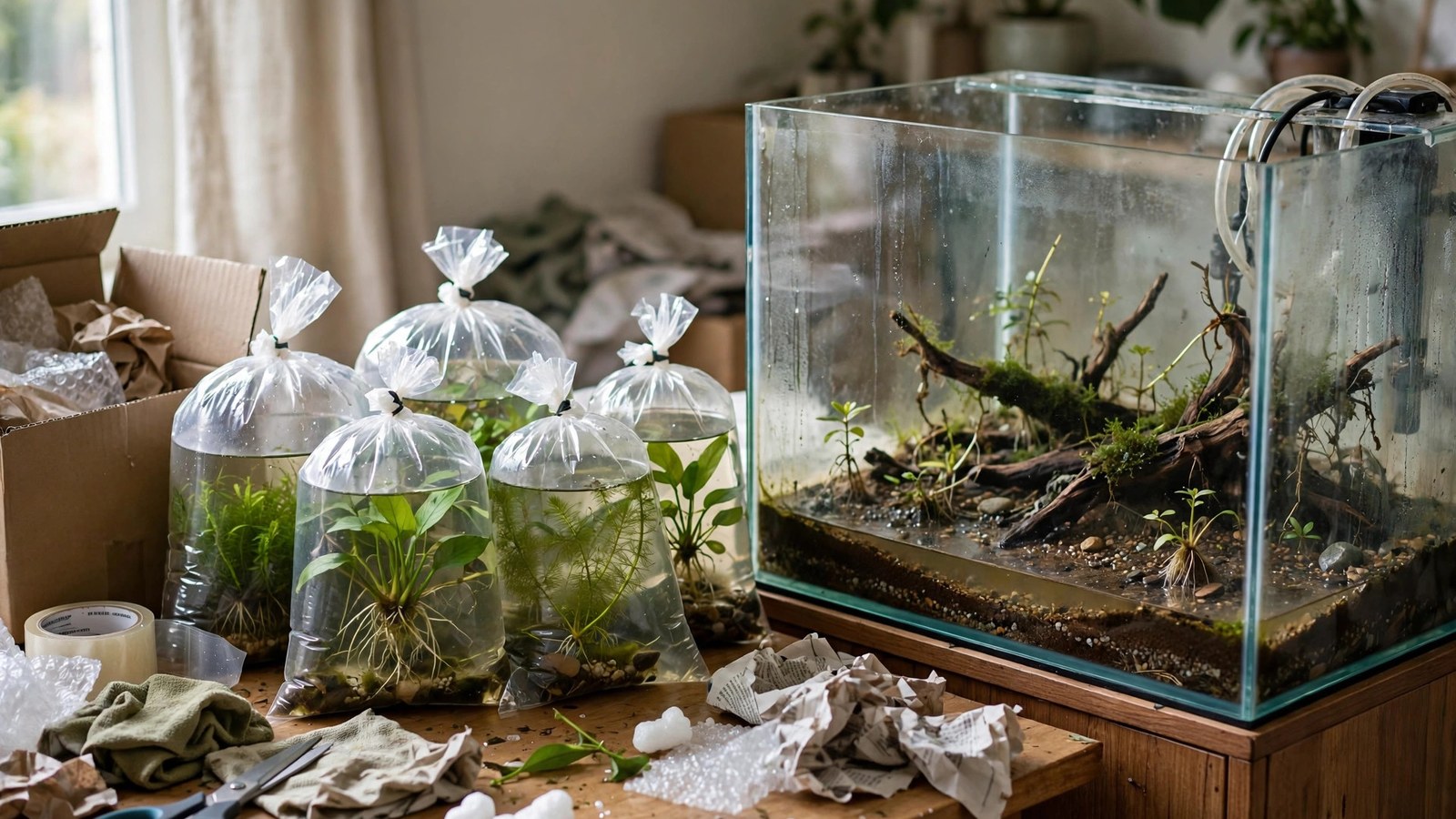
Most people kill their aquarium plants during a move before the truck even leaves the driveway — by draining the tank to the last drop and leaving a forest of stems exposed to open air while they load furniture. The tank survives the trip fine. The plants don't. The good news: plants are tougher than they look, and moving aquarium plants alive — without melting, crushing, or shocking them — is a solved problem. Below is the plant-first protocol — drain levels, packing by plant type, temperature control, and a day-by-day recovery plan.
Why Plants Die During Moves: The Three Killers
When a planted tank fails after a move, people usually blame "shock." But three specific, preventable things do the killing — worth understanding before you drain a drop.
Desiccation is killer number one. Aquarium leaves are thin and evolved to lose water freely; most submerged leaves have no waxy cuticle because they've never needed one. A stem plant lying exposed on a countertop starts losing moisture immediately, and once leaves curl and crisp at the edges, that tissue is dead. The difference between a plant that lives and one that dies is almost always whether it stayed damp — in damp substrate, in a wet bag, under a wet paper towel.
Crushing is killer number two. Sloshing water in a half-drained tank turns hardscape into battering rams and flattens tall stems against the glass. Plants that would have survived the trip die because rocks rolled onto them.
Temperature swings are the silent third killer. Plants packed in sealed bags in a 120°F (49°C) car trunk cook in under an hour. Plants left in an unheated garage overnight in winter chill below 50°F (10°C) and suffer cold damage you won't see until leaves melt three days later.
The protocol below neutralizes all three.
How Long Can Aquarium Plants Survive Out of Water?
The answer depends on the plant — and on whether it stays humid.
| Plant type | Examples | Safe window (kept damp) | Survival if fully exposed to air |
|---|---|---|---|
| Stem plants | Rotala, Ludwigia, Bacopa, Hygrophila | 6–12 hours | ~30–60 minutes before damage |
| Rhizome / epiphyte | Anubias, Java fern, Bucephalandra | 12–24 hours | 1–2 hours (thick leaves resist drying) |
| Carpeting plants | Dwarf hairgrass, Monte Carlo, HC Cuba | Best left planted in damp substrate | 15–30 minutes — most fragile |
| Floating plants | Frogbit, salvinia, duckweed, red root floaters | 2–4 hours in a bag with tank water | 20–40 minutes |
| Heavy root-feeders | Cryptocoryne, Amazon swords, Vallisneria | 4–8 hours with roots wrapped damp | ~30 minutes for leaves; roots die slower |
Two rules of thumb: damp buys you hours, dry gives you minutes — and the windows above assume cool (65–75°F / 18–24°C), shaded conditions. Short on time? Pack carpets and floaters first; leave the tough epiphytes for last.
Drain Strategy: The 2–3 Inch Rule
People either drain everything (plants desiccate) or leave half the tank full (plants get crushed). The sweet spot: 2–3 inches (5–8 cm) of water above the substrate — enough to keep roots and low plants wet, shallow enough that nothing sloshes.
Compare the three options:
| Drain level | Plant survival | Crush risk | Verdict |
|---|---|---|---|
| Full tank | Perfect | Extreme — sloshing rocks/plants | Never transport a full tank |
| 2–3 inches above substrate | Excellent for rooted plants | Low — shallow water barely moves | The right choice |
| Drained to bare substrate | Risky — surface plants dry within an hour | None | Only if you then cover with damp towels + plastic wrap |
Drain into clean 5-gallon buckets (save the water for refilling; keep filter media submerged in one). As the water drops, tall stems will flop — gently lay them along the substrate in the direction of travel rather than letting them fold against the glass. Once you're at 2–3 inches, lay damp (not soaking) paper towels or newspaper over any exposed carpet or moss, then stretch cling film over the tank top to lock in humidity. The shallow water plus the humid headspace keeps everything alive for the typical 2–6 hour move window.
Should You Uproot Everything?
In fact, plants you don't uproot survive moves far better than plants you do — every uprooting tears fine root hairs. Decide by plant type:
- Leave planted: carpets, crypts, swords, Vallisneria, and thriving stems. They ride in the damp substrate under the 2-inch water layer.
- Uproot and bag: tall stems near the waterline, floaters (stranded as water drops), and anything within 3 inches of hardscape that could shift.
- Detach and bin: epiphytes on wood or rock (Anubias, Java fern, Buce, moss) — they come off before hardscape travels separately. Toughest plants you own.
Exception: if professional movers handle the tank or transit exceeds ~8 hours, uproot everything except the carpet and bag it all — you gain control over humidity and temperature.
Moving Aquarium Plants Alive: How to Pack Each Plant Type
You'll need gallon zip bags, damp paper towels, rubber bands, and one or two plastic totes. Method differs by plant:
Stem plants: bag them damp
Trim stems to 4–6 inches, bundle 5–8 stems, and wrap the bundle loosely in a damp (wrung-out, not dripping) paper towel. Slide each bundle into a gallon zip bag, puff a little air in for cushioning, and seal. Pack bags upright in a tote so stems don't fold. They'll stay healthy 6–12 hours — the same technique used when shipping aquarium plants.
Rhizome plants (Anubias, Java fern, Buce): the dark-tote method
These are your hardiest passengers — thick leaves, tough rhizomes. Lay them rhizome-down in a plastic tote lined with a damp towel, mist once, and close the lid (darkness reduces transpiration). They'll shrug off 12–24 hours like this. Keep Bucephalandra especially shaded; it's slow to replace.
Carpeting plants: don't move them at all
HC Cuba and Monte Carlo dry out in under 30 minutes once exposed, and their root mats tear when uprooted. They travel in place: drain to 2–3 inches, lay damp paper towels directly on the carpet, and cling-wrap the tank. If a patch lifts, press it back down when you refill — most carpets re-root within a week.
Floating plants: bag with tank water
Scoop floaters into gallon bags with about 2 inches of tank water — enough to keep roots wet, not so much that leaves pile and rot. Seal with air inside and keep them shaded.
Crypts and swords: wrap the roots, expect melt
Uproot gently, keeping the root ball intact, and wrap roots in a damp paper towel inside a bag. Honest warning: Cryptocoryne will likely melt regardless of how carefully you pack them. Don't throw away melted crypts — the roots are almost always alive, and new leaves emerge in 1–3 weeks.
Bagged stems lose moisture in transit; a fine mist before sealing keeps them hydrated: a fine-mist spray bottle like the FLAIROSOL Botanica plant mister.
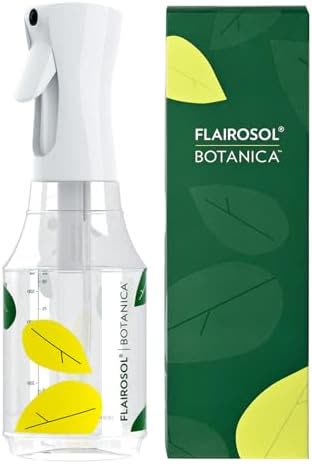
FLAIROSOL Botanica Plant Mister
Check Price on AmazonTemperature Control During the Move
Keep plants between 65–75°F (18–24°C) for the whole trip:
- Transport bags and totes inside the car's cabin, never the trunk — trunks hit 120°F+ (49°C+) in summer and below freezing in winter.
- On hot days, add a frozen water bottle (wrapped in a towel) to each tote. On cold days, pre-warm the car and wrap totes in a blanket.
- A cheap insulated cooler works as a plant-transport box in both seasons — it's the single best $25 you can spend on a plant move.
- Never leave packed plants in a parked car — the greenhouse effect works fast.
For the full picture, our guide to temperature swings and plant stress covers the recovery side too.
Substrate: Keep It Damp or Replace It?
Your substrate holds most of the tank's beneficial bacteria — worth preserving if you can.
- Gravel and sand: nearly indestructible. Keep it damp in the tank (under your 2–3 inches of water) or bag it wet if you're switching tanks. It survives anything.
- Aquasoil: never let it dry out completely — it crumbles to dust and can release ammonia when re-wetted. Keep it saturated under the shallow water layer and plastic wrap.
- When to replace: if your aquasoil is over 2 years old and breaking down into mud, a move is the natural moment to start fresh. Keep a bucket of the old mulm to seed the new tank.
Don't "deep clean" reused substrate before the move — that brown mulm is fertilizer and bacteria.
Replanting and Recovery: The Day 1–14 Timeline
You've arrived — now don't lose them in the recovery. Treat the post-move tank like a brand-new setup for two weeks: reduced light, no CO₂ changes, no heavy fertilizing.
Day 0: Refill gently
Set the tank in its final spot first. Replant before adding water: push stem bundles 1–2 inches into the substrate, reattach epiphytes to hardscape, and press lifted carpet patches down. Refill by pouring dechlorinated water over a plate laid on the substrate, matched to the old tank's temperature within 2–3°F. Run the filter with its original media and do a 30–50% planted-tank water change to clear the disturbed-substrate haze.
Days 1–3: Dim the lights
Run lights at 50–60% intensity for 6 hours a day. Full light right now just feeds algae on stressed leaves. Skip liquid fertilizers for the first week — disturbed substrate releases plenty of nutrients on its own. If you run CO₂, keep it at your pre-move setting (don't "boost" it) and watch livestock closely.
Days 4–7: Watch for melt
This is when transplant melt shows up — old leaves going translucent, yellowing, or disintegrating, starting with crypts and sensitive stems. It's normal: the plant is abandoning leaves grown for the old conditions and will regrow. Remove dead and melting leaves promptly (decaying tissue fuels algae and ammonia), but leave any leaf that's still green and firm. Don't re-scape or change parameters — stability is the medicine.
Days 8–14: Ramp back up
Add one hour of light every 2–3 days until you're back to your normal photoperiod. Resume fertilizers at half dose for a week. By day 10–14 look for new growth: green stem tips, unfurling sword leaves, spreading carpet runners. Crypts can look dead at day 7 and sprout at day 14–21, so don't judge early — compost only plants with zero new growth and mushy roots. If several plants are struggling, our guide to reviving dying aquarium plants walks through triage.
Treat replanted specimens like store-bought ones — the acclimation process for new aquarium plants (dim light, stable parameters, no immediate trimming) applies to post-move recovery too.
Frequently Asked Questions
Can I move a fish tank with water and plants still in it?
Not a full tank — never. The water weight risks cracking the glass and the sloshing crushes plants against hardscape. The plant-safe compromise is draining to 2–3 inches (5–8 cm) of water over the substrate with cling film over the top: roots stay wet, nothing sloshes, and the tank stays liftable.
How long can aquarium plants survive out of water during a move?
Kept damp and cool (65–75°F / 18–24°C), stem plants last 6–12 hours, rhizome plants like Anubias and Java fern last 12–24 hours, and floaters in shallow tank water last 2–4 hours. Fully exposed to open air, most plants start taking damage within 30 minutes, and carpeting plants like HC Cuba can desiccate in 15–30 minutes. The rule is simple: damp buys you hours, dry air gives you minutes. Plan your packing order accordingly — carpets and floaters first.
Should I reuse my old substrate or start fresh after moving?
Reuse it if it's healthy. Gravel and sand are nearly indestructible — just keep them damp. Aquasoil should be kept saturated (never let it dry completely or it crumbles and can release ammonia) and is worth reusing if it's under about 2 years old. Replace aquasoil that's already breaking down into mud; a move is the natural moment. Either way, don't deep-clean old substrate — the mulm holds bacteria and nutrients your recovering plants need.
Why are my plants melting a few days after the move?
Transplant melt 3–7 days after moving is normal, not a failure. The plant is shedding leaves adapted to the old tank's conditions and will regrow new ones — Cryptocoryne is famous for melting at any disturbance and almost always recovers from the roots within 1–3 weeks. Remove mushy leaves so they don't fuel algae, keep light at 50–60% for the first week, and don't change fertilizers or CO₂ while the plants stabilize. New growth by day 10–14 means you're in the clear.
When can I turn CO₂ and fertilizers back on after moving?
Keep CO₂ at your exact pre-move setting from day 0 — don't increase it to "help" recovery, since stressed plants can't use the extra carbon and your livestock is already dealing with a disturbed tank. Hold off liquid fertilizers for the first 7 days; disturbed substrate releases enough nutrients on its own, and dosing into a tank with damaged roots invites algae. Resume fertilizers at half dose around day 7–10, going full strength once you see active new growth.
Your Plants Can Handle the Move — If You Pack for Them
A planted move is two moves in one: the tank and the living garden inside it. The garden survives on three things — staying damp, staying cool, and two calm weeks to re-root. Drain to 2–3 inches, pack by plant type, keep everything between 65–75°F, and expect a little melt before the rebound. For species-specific transport sensitivity, Tropica's aquatic plant database lists the growth forms and care needs that tell you which plants need the most protection.