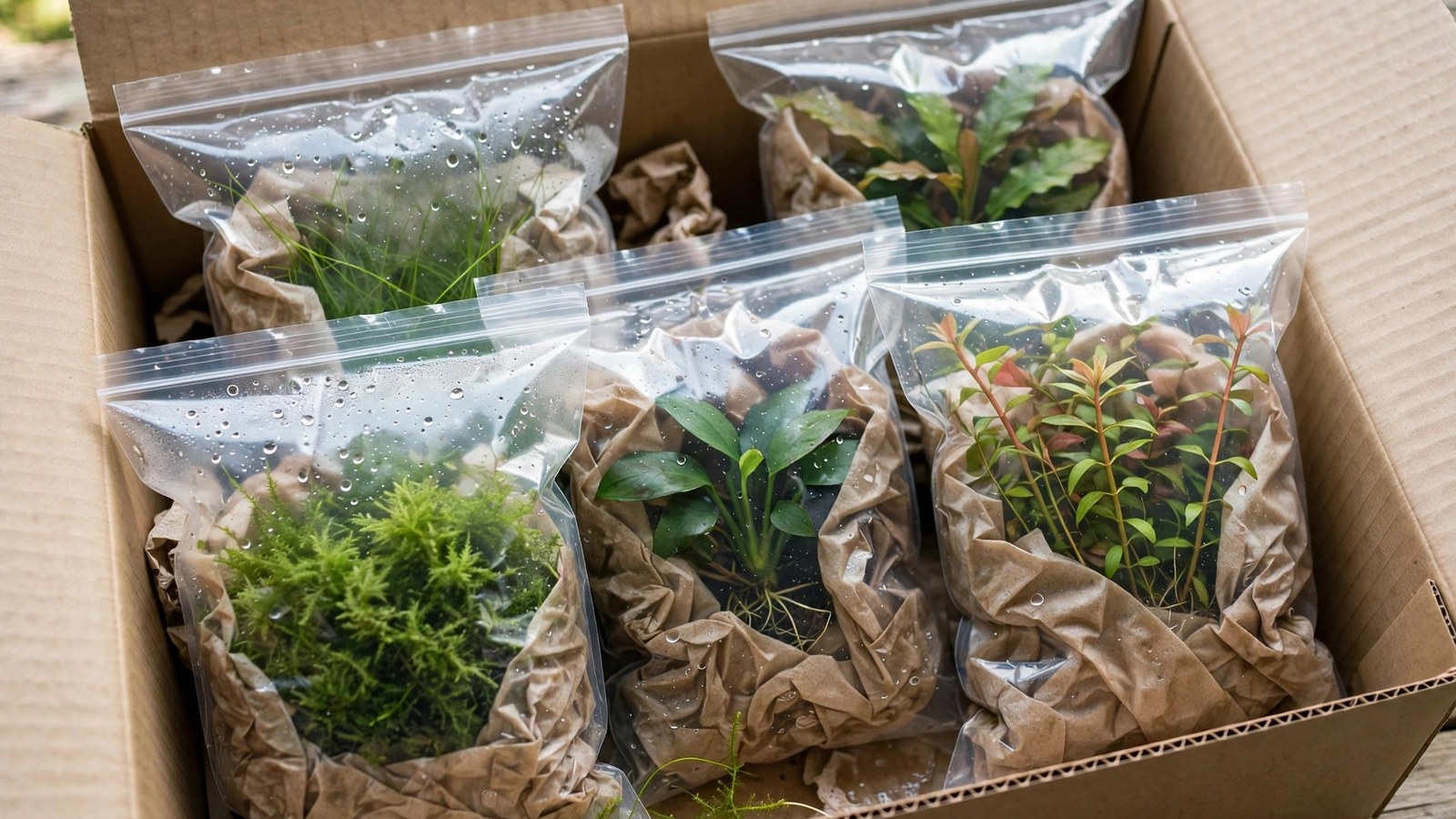
Knowing how to ship aquarium plants so they arrive green, firm, and ready to plant is a skill every hobbyist trader and small-scale seller eventually needs. A perfectly healthy stem can arrive as brown mush if it was sealed in the wrong bag, packed in the wrong season, or left baking in a mail truck over a long weekend. This guide walks you through the packing methods experienced sellers actually use — damp paper towel versus floating in bags, when heat and cold packs matter, how to insulate a box properly, and which species refuse to travel dry — plus labeling, carrier timing strategy, and how to set a fair dead-on-arrival policy.
Before You Pack: Timing Is Half the Battle
Most shipping disasters are decided before a single leaf goes in a bag. Plants survive transit based on three variables: time in the dark, temperature, and how fast they dry out. You control all three with timing decisions that cost nothing.
Choose Your Shipping Days Wisely
Ship Monday through Wednesday only. A package dropped off Thursday can sit in a sorting facility over the weekend, and a Friday shipment may bake in a delivery vehicle for two extra days. Monday is the gold standard: it gives the carrier three full business days of leeway before the weekend becomes a risk. Watch the weather at both ends of the journey. If the forecast shows highs above 85°F (29°C) or below 35°F (2°C) on either end, wait for a better window — no packing method fully compensates for extreme temperature over a multi-day trip.
Prep the Plants First
Harvest trimmings the evening before or morning of shipping — never days ahead. Give each portion a quick inspection: remove melted or algae-covered leaves, shake off loose debris, and make sure you know what you are sending. If you dip your plants, do it at least a full day ahead — a bleach dip or peroxide treatment hours before bagging leaves foliage irritated, and that stress compounds during transit. Buyers also value plants that were recently quarantined, so mention it in your listing.
How to Ship Aquarium Plants: The Two Core Packing Methods
Almost every seller uses one of two approaches: damp paper towel wrapping or floating plants in a water-filled bag. Both work, and each suits different plants.
Method 1: Damp Paper Towel Wrap
This is the workhorse of the hobby. Soak a paper towel in dechlorinated water, wring it out until it is damp but not dripping, lay the plants flat on it, and fold or roll it around them. Then slide the wrapped bundle into a zip-seal bag and squeeze out the excess air before sealing. The towel keeps humidity high without the standing water that accelerates rotting. Stems, rosettes, rhizome plants, and most swords and crypts travel well this way. The catch: the towel must actually be damp — bone-dry towels wick moisture out of leaves, sopping ones invite decay. Think "wrung-out sponge," not "dripping."
Method 2: Floating in Bags
Place the plants in a fish bag or zip-seal bag with just enough tank water to keep them submerged — usually a third of the bag — then inflate the remaining space with air before sealing. The trapped air provides oxygen and a cushion. This suits plants that wilt the moment they leave water: mosses, delicate fine-stem plants, and floaters. Downside: water adds weight and postage, and a leaky bag can soak the whole box. Double-bagging is standard practice.
| Factor | Damp Paper Towel | Floating in Bag |
|---|---|---|
| Best for | Stem plants, rosettes, rhizomes, swords, crypts | Mosses, fine stems, floaters, delicate foliage |
| Rot risk | Low when wrung out properly | Moderate — some plants dislike standing water |
| Drying risk | Moderate if towel is too dry | Very low |
| Weight/postage | Light | Heavier |
| Leak risk | Minimal | Real — double-bag always |
Species That Refuse to Travel Dry
Most aquarium plants are more tolerant of damp-dark transit than beginners expect, but a few are genuinely fragile and need the floating method or extra care.
- Mosses (Java moss, Christmas moss, Phoenix moss) — dry out alarmingly fast; ship floating or in well-moistened wrap.
- Fine-leaved stems (pearl weed, baby tears, Rotala wallichii) — paper-thin leaves desiccate in hours; floating bags with an air cushion are safest.
- Floaters (frogbit, red root floaters, salvinia) — fragile roots and leaves crush easily; float them in a wide bag with plenty of air.
- Freshly divided carpets (Monte Carlo, dwarf hairgrass plugs) — tiny roots lose moisture fast; wrap damp and seal quickly.
- Tissue culture plants — ship in their original sealed cups whenever possible; they travel best undisturbed.
Hardy outliers exist at the other end too: Java fern, anubias, and most swords can survive damp-dark shipping for many days, which is why they are popular starter plants for new traders.
Heat Packs, Cold Packs, and Box Insulation
When Temperature Protection Matters
For trips under two days in mild weather (roughly 50–80°F / 10–27°C at both ends), insulation alone is usually enough. Beyond that — or when forecasts flirt with extremes — add a thermal pack.
- Heat packs (40-hour shipping warmers) for winter shipments. Use one per box, placed against an inner wall rather than directly on the plants; two warmers in a small box can overheat it.
- Cold packs for summer shipments. Gel ice packs wrapped in newspaper or bubble wrap work; dry ice is overkill and can freeze plants solid on contact. Freeze the gel pack the night before.
- Never guess the season. A mild 60°F departure can meet a 95°F delivery city in the same shipment. Check both endpoints.
Insulating the Box
Thermal protection only works if the box holds it in. Line the interior walls with styrofoam panels or crumpled newspaper — dead air is the actual insulator — and fill every void so plant bags cannot shift. Use a sturdy double-wall box sized close to your payload: flimsy boxes crush under warehouse stacking, oversized ones let contents shift, and undersized ones crush foliage.
The industry-standard shipping warmer for cold-weather plant shipments; matches the article's insulation section: UniHeat 40+ hour shipping warmers.
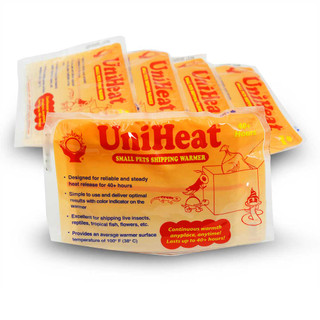
UniHeat 40+ Hour Shipping Warmers, 4-pack
Check Price on AmazonMoisture Barriers and the Layered Pack
Water is the enemy of your box and the friend of your plants. Every bag should be sealed, and sealed bags should sit inside a larger moisture barrier such as a garbage bag or big zip bag. If one bag leaks, the barrier keeps the cardboard from turning to pulp.
Assemble in this order:
- Plants packed by method (towel or floating), each in its own labeled zip bag.
- Individual bags grouped inside one large moisture-barrier bag, knotted or sealed shut.
- Barrier placed in the insulated box; thermal pack positioned against a wall, not touching bags directly.
- Voids filled with crumpled newspaper or bubble wrap so nothing shifts.
- Box taped with strong packing tape — run tape across every seam at least twice.
Labeling Your Package
Labels do not just identify the contents — they steer how the box is handled.
- "LIVE PLANTS — PERISHABLE" in large lettering on at least two sides, signaling handlers to avoid hot zones and direct sun.
- "THIS SIDE UP" arrows when it matters (floating bags should stay upright).
- "DO NOT FREEZE / KEEP FROM HEAT" in extreme seasons — a reminder that costs nothing.
- Hold-at-post-office: where the carrier allows it, this keeps the package out of a hot delivery truck all day in summer. Offer it in your listings.
Inside the box, include a packing slip naming each plant — ideally with the scientific name alongside the trade name, verified against a trusted reference such as Tropica's plant database. Buyers comparing your package against their order do not want to decode handwriting, and correct naming prevents the "is this the right plant?" dispute.
Carrier and Timing Strategy: USPS, UPS, FedEx
No carrier is universally best; the right choice depends on distance, season, and how fast the buyer needs the plants.
- USPS Priority Mail is the hobby standard: 1–3 business days with tracking and Saturday delivery. Ground Advantage is cheaper but slower — reserve it for hardy plants in mild weather only.
- UPS and FedEx offer faster ground and air options with more precise tracking. For expensive or delicate orders, their 2-day and overnight services are worth the cost.
- Always provide tracking, whatever you ship with. It protects you in disputes and lets buyers plan to be home for perishable delivery.
Ship early in the week and early in the day — morning drop-offs move through the system faster. In summer, steer buyers toward hold-at-location pickup instead of a package baking in an apartment mailbox. Keep a small postal scale: water-filled bags, gel packs, and insulation add up, and underpaid postage delays or returns the package — both fatal for perishables.
Setting a Fair Dead-on-Arrival (DOA) Policy
Every seller needs a DOA policy, stated publicly before the sale. It is the difference between one angry message and a lost repeat customer.
- Require photo proof within 24 hours of the delivery scan — plants removed from the bag, shown clearly. This filters out buyers who planted them wrong and blamed the shipment a week later.
- Cover delays you caused. If you shipped late or chose slow service, honor the DOA. Decide in advance how you handle carrier-caused delays: many sellers offer partial credit or replacement at cost.
- Replace or refund? Replacements cost you postage again; refunds cost you the sale. For small orders a refund is often cheaper and faster; for large orders, partial credit toward the next purchase keeps the customer.
- Exclude obvious abuse: plants claimed a week after arrival, tanks with clearly no light, and claims without photos are not your liability.
Write the policy into every listing and follow it consistently. Sellers who honor a clear policy visibly build reputations — hobby forums remember who made things right.
What to Tell the Buyer: Unpacking and Acclimation
A shipment that arrives perfectly can still fail in a careless tank. Include a short care card — even a handwritten note — with these essentials:
- Open the package immediately; do not leave it in the mailbox or on the porch.
- Rinse plants gently in dechlorinated water to wash off any transit debris.
- Remove dead or mushy leaves — they will not recover and they pollute the tank.
- Plant or float the same day if possible; if you must wait, keep them in a bucket of dechlorinated water under a light.
- Expect some adjustment: many plants shed leaves grown in different conditions before growing new ones. Our guide on acclimating new aquarium plants explains what is normal and what is a warning sign.
This card reduces DOA disputes dramatically — half of "dead on arrival" claims are actually plants the buyer mishandled. If you want to go further, link them to our plant rescue guide for the ones that arrive looking rough but recoverable.
Frequently Asked Questions
How long can aquarium plants survive in shipping?
Most hardy plants survive 3–5 days sealed with damp conditions and moderate temperatures. Delicate species like fine stems and mosses prefer 1–2 day transit. Beyond a week, survival drops sharply no matter how well you pack — which is why weekday-only shipping and priority service matter for long-distance orders.
Should I ship aquarium plants in water or damp paper towels?
Either works when done right. Damp paper towels are lighter, cheaper, and rot-resistant, suiting stems, rosettes, and rhizome plants. Floating in bags with trapped air is better for mosses, fine-leaved stems, and floaters that dry out quickly. Always double-bag the floating method, since leaks can destroy the whole box.
Do I need a heat pack when shipping plants in winter?
Yes, when temperatures at either end dip near or below freezing. A 40-hour shipping warmer placed against the box wall (never touching the plants directly) keeps the interior above freezing for the critical window. Without one, even a brief freeze during transit can rupture plant cells and turn a healthy order to mush overnight.
Can I ship aquarium plants with USPS Ground Advantage?
You can, but reserve it for hardy species in mild weather and short distances. Ground Advantage can take up to 5 business days, which is too long for delicate plants in hot or cold seasons. For anything fragile or valuable, USPS Priority Mail or a 2-day UPS/FedEx service is the safer investment and reduces your DOA refund rate.
What is a fair DOA policy for selling aquarium plants?
A standard policy: require clear photo proof within 24 hours of the delivery scan, then offer replacement or refund at your discretion. Cover delays caused by your own late shipping; decide in advance how you handle carrier-caused delays. Put the policy in writing in every listing so buyers know the terms before they pay.
Why did my shipped plants melt even though they arrived green?
Post-shipping melting is usually adjustment, not damage. Plants shed leaves grown under the seller's water parameters and regrow leaves suited to yours — especially crypts and stems. Keep them planted, maintain stable conditions, and give them two to three weeks. This guide focuses on packing and arrival condition; the acclimation guide linked above covers what happens after planting.
Final Checklist Before You Seal the Box
Run through this before taping: plants harvested fresh, each bag sealed and labeled, moisture barrier in place, thermal pack positioned for the season, voids filled so nothing shifts, "LIVE PLANTS" labels on the box, care card and packing slip inside, tracking number recorded, and shipment going out Monday through Wednesday morning. Keep a packing station stocked with bags, towels, tape, and insulation, and this becomes a twenty-minute routine. For more on turning excess growth into income, see our guide to what to do with aquarium plant trimmings — including when to propagate versus trim and ship.