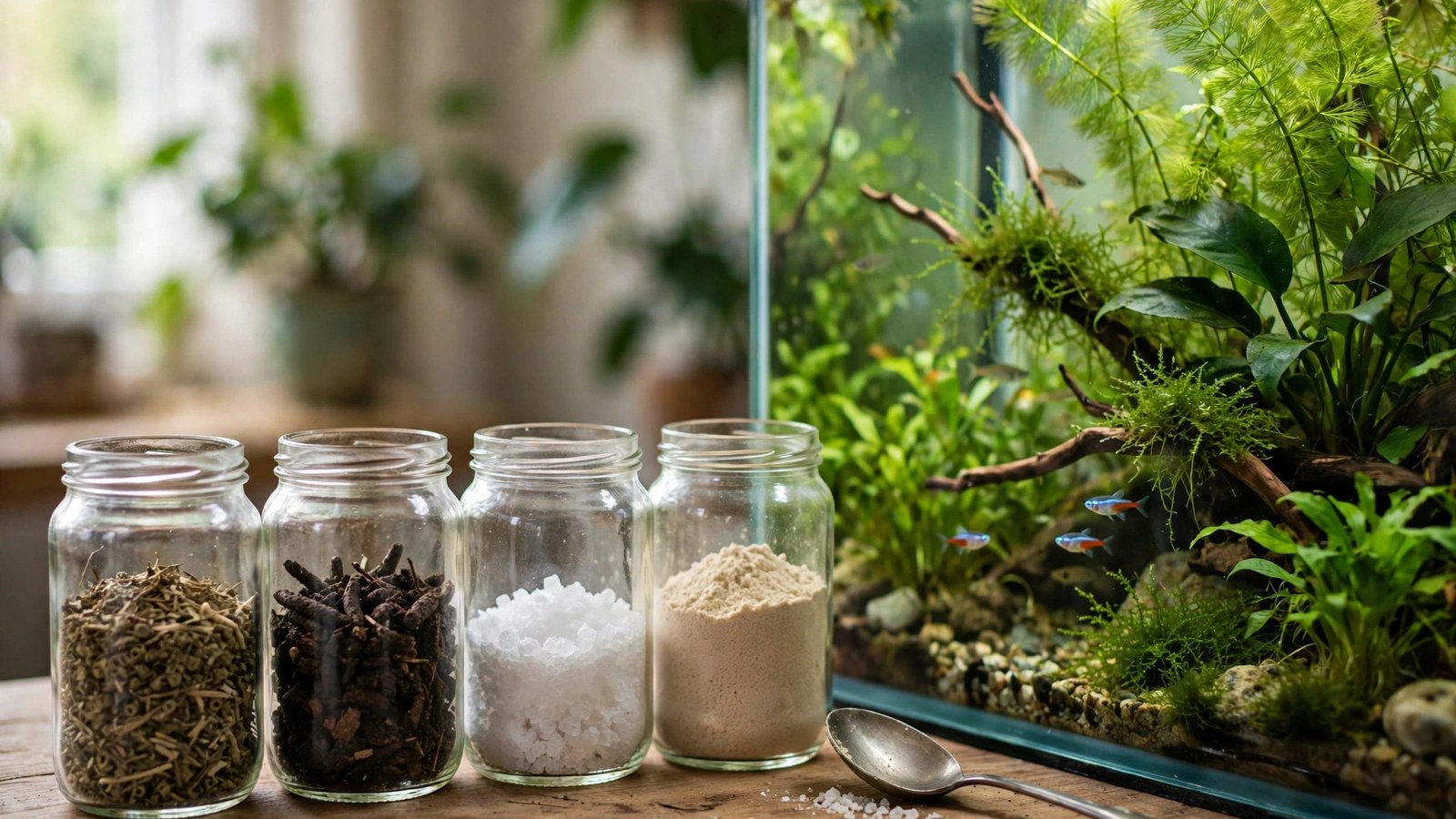
Somewhere on aquarium YouTube right now, someone is pouring banana-peel water into their tank and calling it a homemade aquarium plant fertilizer — and their shrimp are already doomed. This guide is the honest half of the DIY fertilizer world: the kitchen-ingredient myths that don't work and why (real chemistry, not vibes), the household and garden products that can kill your livestock, the genuinely free fertilizer your weekly water change already produces, and an honest DIY-vs-commercial cost decision. The full gram-by-gram recipes already live on this site — this guide links you to them rather than reprinting them — so what follows is the net-new material nobody else writes down: myth-busting, safety, and the decision math.
The Hard Truth About "Kitchen" Fertilizer
Let's start with the uncomfortable part, because honesty saves livestock. The most-shared homemade recipes — banana peel soaks, eggshell powder, coffee grounds — deliver almost nothing a plant can use. A whole banana peel soaked in a liter of water for 48 hours releases potassium in the range of hundredths of a part per million: background noise compared to the 3–5 ppm per dose your stem plants actually need. Meanwhile the sugars in the peel feed bacteria, and bacterial blooms eat oxygen your fish were counting on.
Eggshells are just slow-release calcium carbonate — they nudge your pH and KH upward without delivering any nitrogen, phosphorus, or usable iron. Coffee grounds acidify the substrate and contain caffeine and phenols you don't want near gills. None of this is plant nutrition; it's garden folklore smuggled into a glass box full of sensitive animals. The genuinely working DIY fertilizer isn't a kitchen ingredient at all — it's dry horticultural salts, the same raw ingredients the commercial bottles are made from, just without the brand markup.
The chemistry is simple: plants absorb nutrients as dissolved ions — nitrate, phosphate, potassium, chelated iron — and kitchen scraps release them slowly, unpredictably, and bundled with organics. In soil, bacteria break those organics down over weeks and the plant never notices the lag. In an aquarium, the same breakdown consumes dissolved oxygen and fuels the bacterial blooms that stress fish. A working fertilizer skips the middleman and supplies the ions directly — which is exactly what dry salts are. If the banana-peel video worked, it worked because the tank was already getting nutrients some other way.
Where the Working Homemade Fertilizer Recipes Live
The gram-and-milliliter recipes that actually work already exist on this site, so this guide doesn't reprint them. Reprinting the same dosing tables in two places is how bad advice drifts out of sync — one page gets updated, the other doesn't, and someone doses from the stale one. What you need to know here:
- For an all-in-one liquid (dry salts — KNO3, KH2PO4, MgSO4, plus a chelated trace mix — dissolved into a dosable bottle): the full recipe, including ingredient list, mix order, storage, and the per-tank-size dosing table, is our DIY aquarium plant fertilizer recipe.
- For heavy root feeders (swords, crypts, lotus) in sand or gravel, liquid dosing alone won't satisfy them — you need substrate tabs buried where the roots are. The capsule blend and placement strategy are covered in our DIY root tabs recipe guide.
One note on trace mixes and shrimp, since it comes up in every comment section: CSM+B is a chelated trace mix — the copper it contains is bound in chelates at trace ratios, not free copper ions. Keep to measured doses, start low, and observe your livestock. That conservative rule applies to every DIY mix: if a number isn't measured, the dose isn't safe.
The One Free Homemade Fertilizer: Your Water-Change Water
Your weekly water change is already a fertilizer factory. Aquarium water — carrying nitrates from the nitrogen cycle, plus potassium and micros from fish food — is genuinely useful plant food. Just not inside the tank: give it to your houseplants, emersed setups, and riparium plants, where the nutrients get used without livestock risk.
Typical water-change water from a stocked tank runs 10–40 ppm nitrate — comparable to a diluted commercial houseplant feed. Water your pothos, peace lilies, and herbs with it straight; dilute it half-and-half with fresh water for seedlings and delicate plants. One caution: if you medicate the tank, skip the plants that week. And if you keep plants growing out of the tank itself, that guide pairs well with growing pothos out of aquariums.
What Will Kill Your Livestock: The Do-Not-Dose List
This is the section YouTube skips. Aquarium animals — especially shrimp and snails — are invertebrates with far lower toxin tolerance than garden soil biology. Several "homemade fertilizer" ingredients are outright poisons in a closed system:
| Ingredient | Why people try it | What actually happens in your tank |
|---|---|---|
| Copper sulfate (algicide, garden fungicide) | "Plants need copper as a micronutrient" | Lethal to shrimp and snails at ~0.03 ppm — and home scales can't measure that. Never dose free copper salts. |
| Urea / urine | "It's nitrogen!" | Converts to ammonia fast. In a planted tank without massive bacterial capacity, that's an ammonia spike — burned gills, dead shrimp. |
| Table salt (NaCl) | "Sodium and chloride are nutrients" | Accumulates with every dose; causes osmotic stress in plants and fish. Epsom salt (MgSO4) is the correct sulfate source. |
| All-purpose garden fertilizer (e.g. Miracle-Gro) | "It's just NPK" | High urea nitrogen + copper formulated for soil, not water. Dosed in tanks it fuels algae blooms and kills invertebrates. |
| Rusty nails / steel wool | "Iron for red plants" | Iron oxide is insoluble at tank pH — plants can't absorb it. It also precipitates phosphate out of the water. Use chelated iron instead. |
| Wood ash | "Potassium source" | Spikes pH unpredictably and carries heavy metals from treated wood. Potassium sulfate costs pennies and is exact. |
The shrimp-safety rule is simple: if you're keeping Caridina or Neocaridina, every ingredient you dose must be chelated or in a known, measured trace ratio. Our shrimp-safe fertilizer guide lists the commercial options that pass that bar, and the same logic applies to anything you mix yourself.
Homemade Aquarium Plant Fertilizer vs Commercial All-in-Ones: An Honest Comparison
DIY isn't automatically better — it's cheaper and more flexible, but it demands consistency from you. Here's how the two approaches stack up for a typical 100 L tank over a year:
| Factor | DIY dry salts | Commercial all-in-one |
|---|---|---|
| Yearly cost (100 L tank) | ~$3–5 (salts + distilled water) | ~$40–80 (2–4 bottles) |
| Precision | Exact — you choose every gram | Fixed ratios; often light on iron for red plants |
| Convenience | 10 min mixing + careful measuring | Open and pump — zero prep |
| Flexibility | Adjust N:P:K per tank (high-light tanks want more K) | One ratio fits all |
| Shrimp safety | Safe if you use chelated micros at measured doses | Guaranteed — tested formulations |
| Shelf life | ~3 months (mixed); salts keep for years dry | 12–24 months unopened |
| Biggest risk | Your measuring error | Under-dosing (weak ratios) or price |
Two things the table hides: chelation and your time. Commercial chelated iron (usually DTPA) stays available across a wider pH range than the EDTA iron in most home mixes, which matters for red plants in harder water. And the DIY "10 minutes of mixing" doesn't count label-reading, weighing, cleanup, and the weekly discipline of dosing days — if dosing discipline is what breaks your routine, the cheapest bottle you actually dose beats the perfect mix you forget. That's not a knock on DIY; it's the honest variable most cost comparisons ignore.
If you're leaning commercial after all, start with our all-in-one fertilizer dosing guide — it covers how to read guaranteed-analysis labels so you can compare products against the DIY numbers above. And if you want to keep the DIY habit organized, a weekly fertilizer schedule keeps dosing days consistent, which matters more than the brand on the bottle.
When DIY Makes Sense — and When to Just Buy the Bottle
Use this decision framework instead of guessing:
- DIY wins when: your tank is 100 L or larger; you run two or more tanks; you're comfortable weighing grams; you keep demanding plants (Dutch-style stems, red species) and want to tune ratios. At 200 L+, commercial costs get silly.
- Buy wins when: you have one small tank (under 60 L) and one bottle lasts you six months anyway; you keep expensive shrimp and want zero formulation risk; you'd rather spend Saturday watching the tank than measuring salts. Nothing about DIY makes your plants grow faster — it just makes each dose cheaper.
- The hybrid sweet spot: DIY macro bottle (cheap, forgiving) + a commercial chelated-iron supplement for red plants. Iron is the one nutrient where formulation quality — DTPA vs EDTA chelation, stability at your pH — matters most, and it's the hardest to get right at home. See our iron dosing for redder plants and potassium guide for the two nutrients most worth fine-tuning individually.
 ★4.7
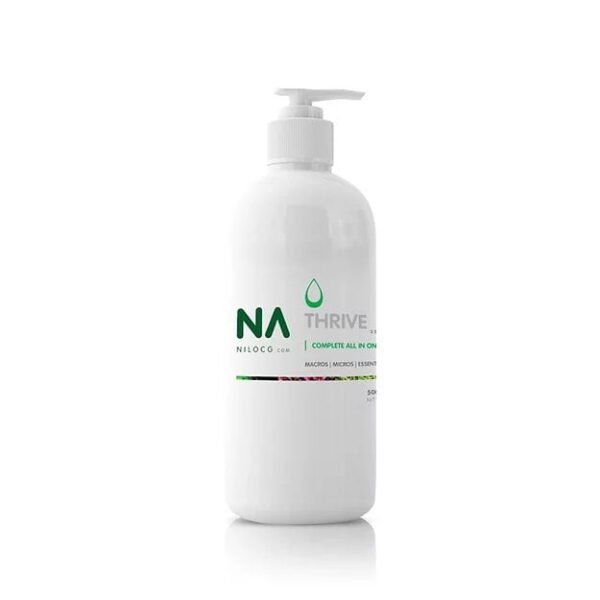
NilocG Thrive All-in-One 500ml
Check Price on Amazon ★4.7Frequently Asked Questions
Can I use Miracle-Gro in my aquarium?
No — not safely. All-purpose garden fertilizers use urea-based nitrogen that converts to ammonia in water, and their micronutrient ratios (including copper) are calibrated for soil, where they're diluted across kilograms of substrate. In a 50 L tank, a "pinch" is an unmeasured overdose. If you want cheap nitrogen at measured doses, the DIY fertilizer recipe linked above uses potassium nitrate with exact gram measurements instead of guesswork.
Is homemade fertilizer safe for shrimp?
Yes, provided you stick to pure dry salts — KNO3, KH2PO4, K2SO4, MgSO4, and a chelated trace mix like CSM+B — at the measured doses in our linked DIY recipe. Chelated copper in a trace mix is bound and dosed at trace levels, far below free-copper toxicity; the danger comes from unmeasured ingredients: garden fertilizers, copper sulfate, and urea, which is why those are on the do-not-dose list.
How long does a mixed DIY bottle last?
A macros-only bottle keeps 6+ months in a cool, dark place. Once micros (chelated traces) are in the mix, iron starts degrading and precipitating with phosphate — plan on 2–3 months of full potency, or split into the two-bottle system from the pro tip box. Dry salts themselves last years. Write the mix date on the bottle with a marker; faded color or sediment at the bottom means it's time to remix.
Can I just rely on fish waste and skip fertilizer?
Fish waste supplies nitrogen and some phosphorus, but it's chronically short on potassium, magnesium, and iron — the exact nutrients plants need most for color and growth. That's why "my fish poop should feed the plants" tanks develop pinhole-riddled leaves (potassium deficiency) and pale new growth (iron deficiency). Waste is a fine supplement, never a complete diet. A simple potassium top-up is the single highest-value addition; see our potassium guide linked above.
Do I still need water changes if I'm dosing DIY fertilizer?
Yes — arguably more so. Dosing adds nutrients on a schedule, but plants don't consume them in the exact ratios you add, so unused minerals accumulate over weeks. A 30–50% weekly water change resets the system and prevents the slow buildup that fuels algae. Think of it this way: fertilizer sets the ceiling for growth; water changes keep the floor from falling out.
Is DIY actually cheaper once I buy the scale and salts?
For one small tank, the payback takes a while — a $15 digital scale plus ~$20 in salts pays for itself in under a year on a 100 L tank versus $50+ in commercial bottles, but on a 20 L nano you might never break even. Where DIY is undeniably cheaper: multiple tanks, large tanks, or long-term hobbyists. The salts don't expire, so every tank you ever own after the first is fertilized for pennies.
The Bottom Line: Measure Twice, Dose Once
Homemade aquarium plant fertilizer isn't banana water — it's chemistry you can do at your kitchen counter for less than the cost of a coffee, built on dry salts rather than kitchen folklore. The full recipes are linked above; this guide's job was everything around them: why the kitchen myths fail, what never to dose, the free fertilizer your water changes already produce, and the honest math on when DIY beats buying. Just respect the rules that matter: use pure dry salts, never garden products or mystery "household tricks," measure with a scale, not a spoon, and start low while observing your livestock. Do that, and your plants get a complete diet, your shrimp stay alive, and your wallet stays full.