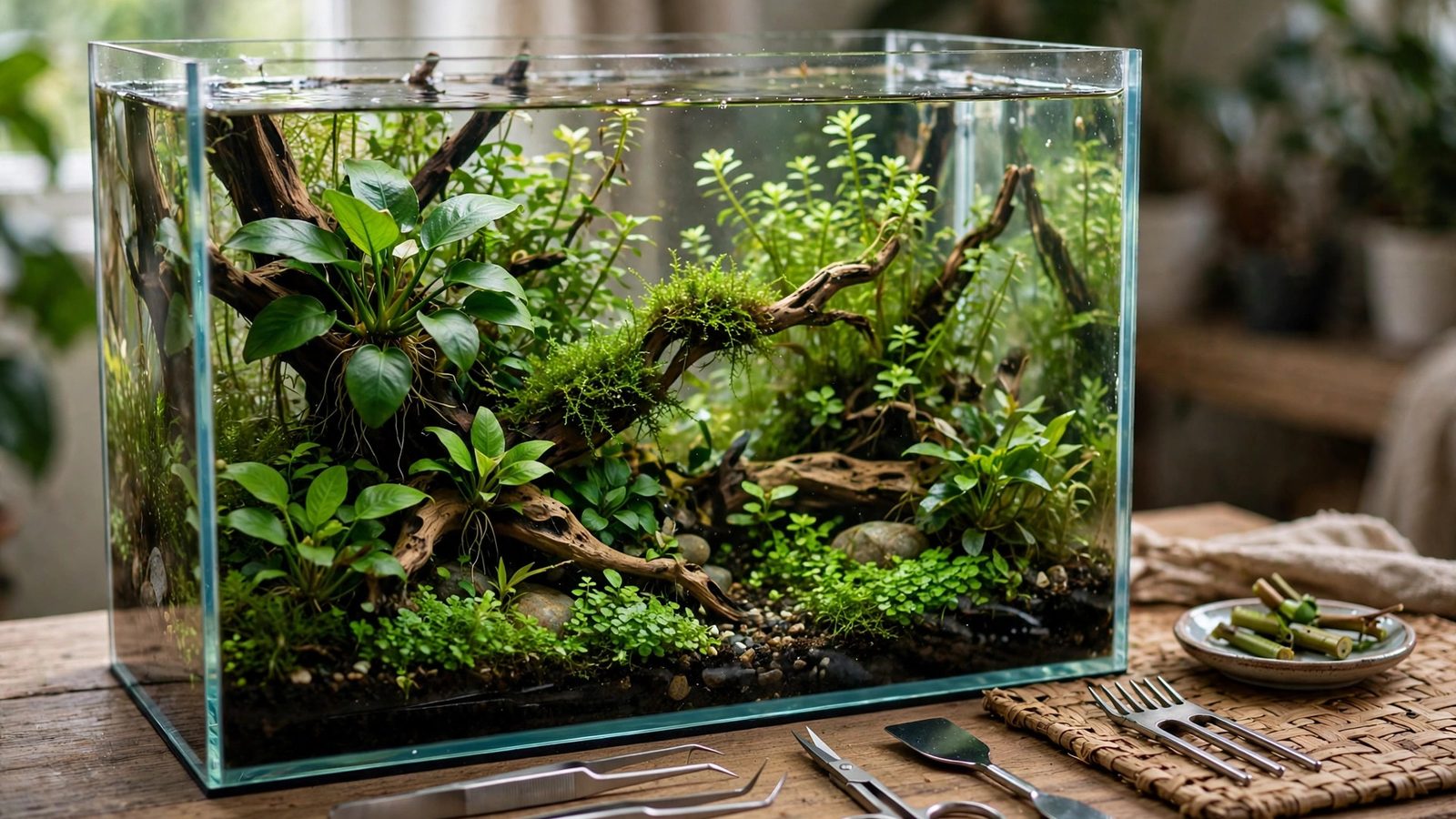
Plant one stem of rotala with your fingers and you displace a tablespoon of aquasoil; plant fifty of them and you displace the whole layout. That quiet math is why aquascaping tweezers are the most-used tool in the hobby — more than scissors, more than spatulas. By the end of this guide you will know exactly which tip shape, length, and material suits your tank, and the 30-second planting technique that keeps new stems anchored instead of floating to the surface.
Why Ordinary Tweezers Ruin Planting Sessions
Human fingers are 2 cm wide; a carpeting plug is 3 mm wide. Every finger-planted plug leaves a 2 cm crater that collapses, floats, or buries its neighbors. Cosmetic tweezers are no rescue: at 7–9 cm long they force your whole hand underwater, and their weak spring either drops the stem or crushes it. A proper aquascaping pinsette is 25–38 cm of springy stainless steel that holds a 2 mm stem gently and releases it underwater without disturbing the soil.
Within the full aquascaping tools kit guide, tweezers are the tool you will reach for in every single session. Even a simple low-tech planted tank setup needs them: pressing carpet plugs and stem bunches into aquasoil is nearly impossible bare-handed once the tank is filled.
Straight vs Curved: Which Aquascaping Tweezers Should You Buy?
Straight pinsettes continue the handle's axis into the tip. You push them vertically 3–4 cm into open substrate, open the blades slightly, and wiggle as you withdraw. They are the fastest option for planting long rows of stems — the kind of precise, dense planting a Dutch-style plant arrangement demands — and for plugging carpet sections into open foreground soil.
Curved pinsettes bend about 45° near the tip, which changes the geometry completely. You hold the handle almost horizontal while the tips point down, so knuckles never crowd the glass and tips slide beneath overhanging driftwood that blocks a vertical approach. Curved tips are the tool of choice for tucking beginner carpeting plants into seams, wedging moss into crevices, and planting back corners. Growers growing a carpet without CO2 lean on curved tips too, since those slow carpets get replanted plug by plug and every disturbance costs weeks of growth.
Own both eventually, buy curved first. A 25 cm curved pair plants open beds almost as fast as a straight one, while a straight pair simply cannot reach what a curved pair can.
Length and Materials: 25–38 cm, Stainless vs Carbon
A 25 cm (10-inch) pair suits tanks up to about 45 cm tall — standard 5 to 20-gallon setups. A 30 cm pair keeps your hand above the waterline in 60 cm tall tanks and gives steadier leverage. 38 cm (15-inch) pairs exist for monster tanks, but the long lever arm means weak tip grip: fine for dropping food, poor for planting.
Most hobby tweezers are 304 or 316 stainless steel — corrosion-resistant and stiff enough for plant work. Carbon steel ("black") pinsettes have a snappier spring and stronger grip, which professionals like for heavy root-feeders, but they rust fast and need drying plus an occasional drop of mineral oil. Coated stainless — like the satin-grey finish in UNS's curved pinsettes specifications — adds a corrosion barrier over the steel; inspect it for chips, since bare spots corrode first.
| Type | Length | Best for | Typical price |
|---|---|---|---|
| Straight, stainless | 25 cm | Fast stem planting in open substrate | $10–$18 |
| Straight, stainless | 30 cm | Deeper tanks, back-corner planting | $14–$24 |
| Curved, stainless | 25 cm | Carpet plugs, under hardscape, front glass | $12–$22 |
| Curved, coated | 25–30 cm | Daily drivers; best corrosion resistance | $20–$35 |
| Straight, carbon steel | 30–38 cm | Heavy root-feeders, deep tanks | $25–$60 |
If you plant with the dry start carpeting method, length matters less than tip fineness: a 25 cm pair with narrow, even tips seats plugs into damp soil with surgical precision.
Grip, Tension, and Price Tiers
Test three things before buying. First, spring tension: squeeze a stem plug and hold — it should stay put with gentle pressure, not slip and not need a death grip. Second, tip alignment: close the tweezers and look head-on; both tips must meet evenly with no gap and no overlap. Misaligned tips are the number-one defect on cheap pairs. Third, serrations: fine micro-serrations near the tip grip slippery stems far better than polished jaws.
Budget sets ($8–$15) ship a straight and curved pair that work fine — just reject any pair with gapped tips. Mid-tier ($18–$30) buys better steel, tighter tolerances, and coatings that survive daily fertilizer exposure. Professional pairs ($40–$60) use hardened steel that keeps its edge and tension for years of daily use.
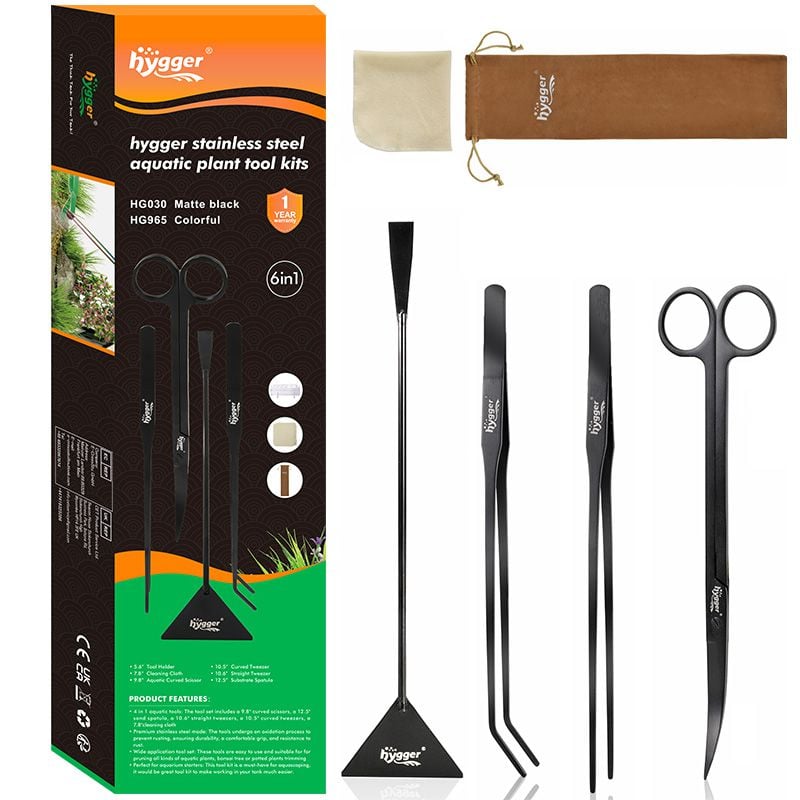 ★4.6
hygger 6-in-1 Aquascaping Tools Kit
Check Price on Amazon ★4.6Cleaning and Care: Making One Pair Last Years
Tweezers die from neglect, not use. Rinse them in fresh tap water immediately after every session — especially after water changes or fertilizer dosing — then towel-dry completely. Store them dry: a tool rack, stand, or magnetic bar away from the humid zone above the tank preserves spring tension. Carbon-steel pairs get a thin wipe of mineral oil every few weeks. Once a month, close the tips and check alignment; a pair that passed from day one can drift after a drop.
The same pair handles more than planting: use it to wedge moss into crevices when attaching aquarium plants to driftwood, pick detritus off carpets, and place root tabs at the base of heavy feeders.
Frequently Asked Questions
Can I use regular eyebrow or kitchen tweezers for aquascaping?
Only in an emergency. Cosmetic tweezers are 7–9 cm long, so your whole hand goes underwater and displaces substrate. Their chrome plating corrodes in fertilized tank water, and the weak spring crushes delicate stems. A dedicated 25 cm stainless pair costs about the same as a good cosmetic tweezer and plants ten times faster with far less tank disturbance.
Which tweezer length should I buy for a 20-gallon tall tank?
Buy 30 cm. A 20-gallon tall is about 60 cm high, and a 25 cm pair leaves your wrist submerged and your aim wobbly at the substrate. The 30 cm length keeps your hand above the waterline and gives steadier leverage. Add a 25 cm curved pair later for detail work along the front glass.
How do I stop plants from floating up when I pull the tweezers out?
Insert the stem 3–4 cm deep, open the blades slightly so they no longer grip, then wiggle the tool side to side as you withdraw slowly. The wiggle lets surrounding substrate collapse over the roots and lock them in. Wetting the tips before planting also helps them release cleanly instead of dragging the stem upward.
Do aquascaping tweezers rust?
Stainless steel resists rust but is not immune — left wet in fertilized water, even 316-grade steel develops pits and spots within months. Carbon steel rusts in days if stored damp. The fix is simple: rinse in fresh water after every use, dry fully, and store away from tank humidity. Coated pairs add a barrier layer but need inspection for chips.
How soon after planting should I start trimming?
Most stems need their first trim 2–3 weeks after planting, once new roots anchor them and side shoots appear. Trimming before roots establish risks uprooting the whole stem. Our aquascape trimming and maintenance guide covers the schedule and the pinch-and-cut technique that keeps layouts dense instead of leggy.
Your First Tweezer Purchase: A Simple Verdict
If you buy one pair, buy a 25 cm curved stainless-steel pinsette in the $18–$25 range — it will plant 80% of everything you own. If you buy two, add a 30 cm straight pair for fast bulk planting in open substrate. Check tip alignment before buying, rinse them after every session, and you will still be planting with the same pair years from now.