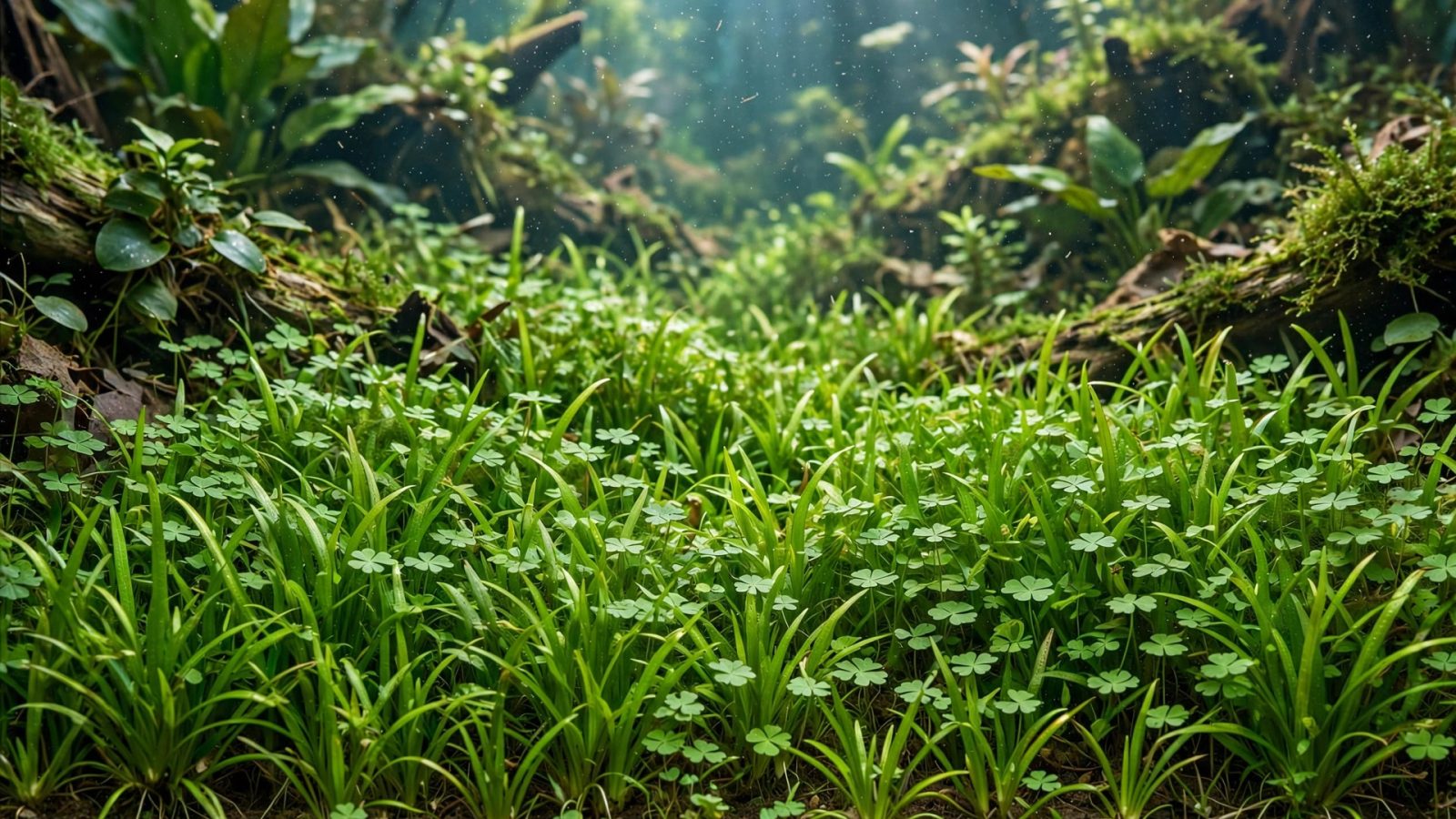
Growing a carpeting aquarium plant without CO2 is one of the most-asked low-tech challenges in the hobby — and it’s absolutely doable. The secret isn’t a trick product; it’s choosing the right species, giving them a rich substrate, lighting them correctly, and accepting a slower timeline. This guide covers the best low-tech carpet plants and the exact method to get them spreading across your substrate.
Can You Really Carpet Without CO2?
Yes — with caveats. CO2 injection roughly doubles carpeting speed and density, so a low-tech carpet takes 3–6 months to fill in versus 6–12 weeks high-tech. The carpet will also grow slightly taller and less compact. But species like Monte Carlo, dwarf hairgrass, and Marsilea hirsuta all form genuine, attractive carpets without injected CO2. The failures you read about online are almost always wrong species choice (HC Cuba without CO2) or insufficient light — not the absence of CO2 per se.
For the broader low-tech philosophy, see how to grow aquarium plants without CO2.
The 7 Best Carpet Plants for Low-Tech Tanks
1. Monte Carlo (Micranthemum tweediei) — best overall
The #1 low-tech carpet. Small round leaves, bright green, spreads by creeping runners, and tolerates moderate light. It carpets slower without CO2 but it does carpet — the most forgiving choice for your first low-tech carpet.
2. Dwarf hairgrass (Eleocharis parvula)
The classic grass carpet. Spreads by underground runners; without CO2 it grows a bit taller (5–8 cm) and thinner, so trim regularly to encourage horizontal spread. The iwagumi staple.
3. Marsilea hirsuta (dwarf water clover)
Clover-like leaves under 3 cm in good light. Extremely undemanding — it carpets in plain gravel with root tabs. Slow starter (4–6 weeks of nothing, then steady spread), but nearly indestructible.
4. Dwarf sagittaria (Sagittaria subulata)
Grass-like leaves 5–10 cm; spreads aggressively by runners even in low-tech setups. More of a “lawn” than a tight carpet — great for jungle and natural styles.
5. Staurogyne repens
Not a traditional carpet, but planted densely and trimmed short it forms a compact 3–5 cm foreground mat. Very hardy; tolerates the widest range of conditions on this list.
6. Helanthium tenellum (pygmy chain sword)
Fine grassy rosettes spreading by runners. Stays under 5–8 cm; an excellent low-tech foreground that asks for almost nothing.
7. Glossostigma elatinoides (with reservations)
Carpets fast even low-tech, but grows upward toward light and needs constant trimming to stay flat. Only for hobbyists willing to trim weekly — otherwise it becomes a 10 cm tall mess.
Plants to avoid without CO2
- HC Cuba (Hemianthus callitrichoides) — the #1 low-tech heartbreak. It survives but never carpets densely without CO2.
- Utricularia graminifolia — beautiful but melts at the slightest instability; a CO2-and-soft-water specialist.
The Low-Tech Carpet Method: Step by Step
Step 1 — Rich substrate, 4–6 cm deep
Without CO2, the substrate does the heavy lifting. Use aquasoil — its stored nutrients feed the carpet for months. Inert sand/gravel works only with heavy root-tab supplementation and much slower results. See our substrate guides for the full comparison.
Step 2 — Light: moderate and consistent
Aim for 30–45 PAR at the substrate — medium light. Too dim and carpets grow upward, leggy; too bright without CO2 and algae wins. Run a strict 7–8 hour photoperiod on a timer. Consistency matters more than intensity.
Step 3 — Plant densely in a grid
Divide tissue-culture cups into 1–2 cm clumps and plant on a 2–3 cm grid with tweezers. Dense initial planting is more important low-tech than high-tech — every bare patch is an algae farm, and slow growth means patches stay bare for months. Buy more plants than feels reasonable.
Step 4 — Consider the dry-start method
The dry-start method (DSM) is the low-tech carper’s secret weapon: plant in damp (not flooded) substrate, cover the tank with cling film, and let the carpet grow emersed for 4–8 weeks. Emersed plants have unlimited atmospheric CO2, so they establish dense root systems and full coverage with zero algae. Then flood. The transition melt is minor for Monte Carlo and hairgrass, and you skip the fragile early submerged phase entirely.
Step 5 — Fertilize lean but complete
Dose a complete liquid fertilizer once or twice weekly at half to full strength. Low-tech carpets still need water-column nutrients — the “no ferts” approach produces pale, stunted carpets. Root tabs under the carpet zone every 2–3 months top up the substrate.
Step 6 — Water changes and patience
30% weekly water changes for the first two months keep organics low while the carpet establishes. Then settle into your normal routine. And patience: check progress monthly, not daily. Photograph the carpet on the 1st of each month — the time-lapse will show spread you’d never notice day to day.
Trimming a Low-Tech Carpet
- First trim at ~50% coverage. Trimming encourages horizontal runner spread — the plant responds to being cut by sending energy sideways.
- Monte Carlo: pinch or scissor-trim to 2–3 cm; replant the trimmings into thin spots (free plants!).
- Hairgrass: mow to 3–4 cm with curved scissors; remove the cut blades (they rot and fuel algae).
- Frequency: every 3–4 weeks low-tech (versus every 1–2 high-tech). Less growth = less trimming — the upside of patience.
Troubleshooting
- Carpet growing up, not out: insufficient light at the substrate. Increase intensity or raise the photoperiod to 8 hours; trim tall growth to force runners.
- Melting after flooding (post dry-start): normal for 1–2 weeks; established roots push new submerged growth. Don’t replant — wait.
- Algae on the carpet: usually too much light or too long a photoperiod. Drop to 6 hours temporarily, spot-dose Excel-type carbon if desired, and manually remove.
- Bare patches that won’t fill: replant with fresh clumps; old patches may have exhausted local substrate nutrients — push in a root tab.
- Carpet lifting in mats: roots never anchored — usually planted too shallow or trimmed too infrequently, letting the top shade and rot the base. Replant firmly, trim more often.
Frequently Asked Questions
What is the easiest carpet plant without CO2?
Monte Carlo. It carpets reliably in moderate light with aquasoil, tolerates beginner mistakes, and even the dry-start transition is gentle.
How long does a low-tech carpet take?
3–6 months to full coverage from dense initial planting; 2–3 months with the dry-start method. High-tech does it in 6–12 weeks.
Can dwarf hairgrass grow without CO2?
Yes — it spreads by runners and forms a real carpet, just taller and thinner than CO2-grown. Regular mowing keeps it lawn-like.
Do carpet plants need special substrate?
They do best in aquasoil. Inert substrates work with root tabs but carpet roughly half as fast — the substrate is doing CO2’s job in a low-tech tank.
Dry-Start Method: The Complete Protocol
The dry-start method (DSM) deserves its full detail — it’s the highest-success path to a low-tech carpet:
Setup
- Add aquasoil, sculpt, and plant the carpet densely as described above — but don’t flood.
- Mist the substrate until damp (not waterlogged — no puddles).
- Cover the tank tightly with cling film. Poke 5–10 small holes for gas exchange.
- Place under your normal light on a 10–12 hour photoperiod (emersed plants can use more light — unlimited atmospheric CO2).
- Keep at 22–28°C. A heat mat helps in cold rooms.
Maintenance during dry-start
- Mist daily with dechlorinated water — the substrate surface should glisten, never dry out or puddle.
- Ventilate 10 minutes daily — lift the film to exchange air and prevent mold.
- Watch for mold — white fuzz on soil means too wet / too little air. Increase venting holes, mist less.
- Duration: 4–8 weeks, until the carpet covers 80%+ of its area with rooted, spreading growth.
Flooding
- Fill slowly over plastic wrap to avoid disturbing the carpet.
- Expect minor melt of emersed leaves over 1–2 weeks — the established root systems push submerged growth fast.
- Run lights at 6 hours for the first week post-flood, then ramp to 7–8.
- Water change 50% twice in the first week (flooding releases organics from the soil).
Monte Carlo and dwarf hairgrass transition best; Marsilea barely notices. HC Cuba transitions poorly — another reason it’s off the low-tech list.
Carpet Species Deep-Dive: Monte Carlo vs. Hairgrass
The two top low-tech carpets compared head-to-head:
- Leaf texture: Monte Carlo = small round leaves, lush clover look. Hairgrass = fine blades, lawn look.
- Speed (low-tech): roughly equal — 3–5 months to full carpet from dense planting.
- Trimming: Monte Carlo needs pinching every 3–4 weeks; hairgrass needs mowing every 3–4 weeks. Equal effort, different tools.
- Algae resistance: Monte Carlo’s dense low growth shades its own base well; hairgrass traps a bit more detritus between blades.
- Fish compatibility: both handle shrimp and small fish; diggers (corydoras) uproot hairgrass runners more easily than Monte Carlo mats.
- Dry-start: both excellent candidates.
Can’t decide? Plant both — a Monte Carlo foreground with a hairgrass midground band is a classic combination, and the texture contrast looks deliberate and designed.
Realistic Expectations: The Honest Timeline
- Week 4: runners visible, ~20% coverage. Looks unimpressive. Normal.
- Week 8: ~40–50% coverage. The exponential phase begins — each plantlet is now a colony.
- Week 12: ~70–80%. Photographs well; visitors notice.
- Week 16–20: full, dense carpet. First major trim and replant of thin spots.
- Month 6+: mature carpet — dense, even, the tank’s defining feature.
Add 4–8 weeks if you skipped dry-start and planted sparsely. Subtract a month with CO2. The single variable that matters most isn’t CO2 or fertilizer — it’s initial planting density. Every extra tissue-culture cup on day one pays back in weeks saved.
Carpet + Livestock: Compatibility Guide
- Shrimp (cherry, Amano): perfect carpet companions — they graze the carpet clean without disturbing it. A shrimp colony is the best thing you can add to a carpeted tank.
- Otocinclus: gentle algae grazers that won’t uproot anything.
- Small tetras/rasboras: midwater fish that ignore the carpet entirely.
- Corydoras (dwarf species): pygmy cories are carpet-safe; larger bronze/peppered cories root around and can lift carpet edges — plant the carpet’s perimeter extra-firmly if you keep them.
- Avoid: goldfish (eat and uproot everything), large cichlids (excavate), common plecos (bulldoze), loaches that dig (clown loaches).
CO2 Alternatives: Liquid Carbon and Passive CO2
If pressurized CO2 isn’t in the cards but you want a boost over pure low-tech:
- Liquid carbon (glutaraldehyde products): daily dosing gives a modest growth boost and doubles as an algaecide. Not a CO2 replacement — expect maybe 20–30% faster carpeting, not 100%. Some plants (Vallisneria, mosses) are sensitive; carpets on this list tolerate it.
- Passive CO2 (bell diffusers, yeast): inconsistent output makes them poor primary sources, but they take the edge off in small tanks. Fine as a supplement, frustrating as the plan.
- Soil CO2: fresh aquasoil releases CO2 for the first weeks — planting into brand-new soil captures this free boost. Another reason fresh substrate matters.
- Surface agitation balance: too much surface ripple drives off CO2 (even the natural atmospheric CO2 plants use); gentle surface movement preserves it. Point filter outputs slightly downward in carpet tanks.
When to Upgrade to CO2
Consider pressurized CO2 when: you’ve mastered a low-tech carpet and want HC Cuba or UG; you’re entering aquascaping contests; or you’re impatient (honest and valid). A paintball-tank regulator setup costs less than most people expect and transforms not just carpets but every plant in the tank. Until then, the low-tech method above grows genuinely beautiful carpets — the difference is time, not possibility. Our lighting and CO2 section covers the upgrade path when you’re ready.
Carpet FAQs: Extended
Why is my carpet melting after I planted it?
Tissue-culture and emersed-grown plants shed their air-grown leaves when submerged — this is adaptation, not death. If the roots are white and firm and tiny new submerged leaves are appearing, wait. If everything turns to mush with no new growth after 3 weeks, the planting was too shallow, light is too dim, or the species wants CO2 (HC Cuba, I’m looking at you).
Can I carpet in sand without aquasoil?
Yes, but slower — roughly half the speed. Use root tabs generously (one every 5 cm in the carpet zone, replaced every 2–3 months), dose liquid fertilizer, and choose the toughest species: Marsilea hirsuta and dwarf sagittaria handle sand best. Monte Carlo carpets in sand but wants the tabs. See our substrate guides for the full comparison.
How do I stop my carpet from trapping debris?
Gentle hover-siphoning during water changes lifts detritus without uprooting the carpet. Shrimp colonies are the biological solution — 10+ cherry or Amano shrimp keep a carpet remarkably clean. And trim regularly: an overgrown carpet traps far more debris than a mowed one.
Is CO2 worth it just for a carpet?
If the carpet is the centerpiece of your layout (iwagumi, for example), yes — CO2 is the single biggest quality upgrade. If the carpet is just a foreground accent in a jungle or community tank, low-tech carpeting is perfectly satisfying. Match the investment to the ambition.
What’s the fastest low-tech carpet?
Glossostigma (4–8 weeks) — but it demands weekly trimming to stay flat. For speed plus manageability, Monte Carlo via dry-start: 8–10 weeks to a carpet you barely have to fight.
Bottom line: a low-tech carpet rewards the patient and punishes the hasty. Choose Monte Carlo or dwarf hairgrass, plant densely into rich aquasoil, light moderately and consistently, and give it four to six months. The carpet will come — and the wait teaches the observation skills that make every future scape better.