Every aquarist has a duckweed horror story — the kind where a pinch of green turns into a tank-wide green-out in six weeks. Spirodela polyrhiza is the duckweed that broke the curse. It still grows fast, shades everything below it, and punishes neglect — but its coin-sized fronds are a different beast. This spirodela care guide shows you how to run it like a deliberate tool instead of an accident.
The short version: Spirodela polyrhiza is the largest duckweed species in the world — fronds up to about 1 cm across with a tuft of 7–21 roots each. A handful of fronds can blanket a 40-liter tank surface in roughly four weeks. The catch: it also produces dormant turions, 2–3 mm kidney-shaped buds that sink to the substrate and sprout back weeks later, which is why it can "come back from nothing" after a full removal.
First, the Honest Truth: This Is Not Lemna
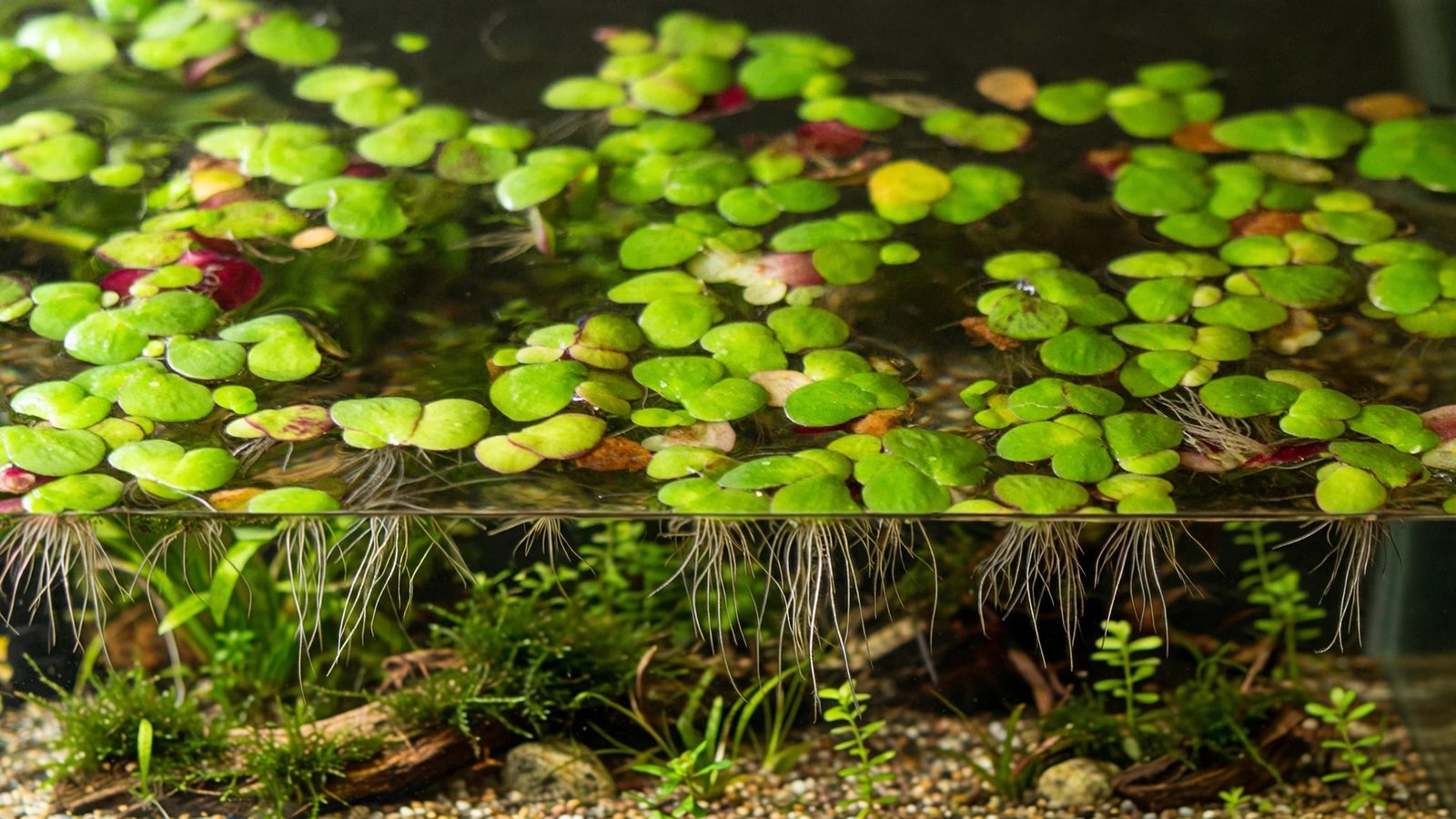
If you have trauma from common duckweed (Lemna), that species earned it: its pinhead fronds cling to glass, nets, and forearms, and fishing them all out is an ordeal. Spirodela polyrhiza — giant duckweed, greater duckweed — is a different proposition. Each frond is up to a centimeter across, round, green above with a reddish tinge in bright light, reddish to dark-red beneath, trailing a tuft of 7–21 roots. Daughter fronds sprout from side pouches and stay attached until they can float on their own.
That size is the whole selling point: you can clear a mat in minutes with a fish net or a cup. It is the duckweed you can actually remove — which is why it ranks among the 8 Best Floating Aquarium Plants for Beginners for people who want the benefits without the Lemna curse. But "manageable" is not "slow." It doubles fast, shades out plants below, and produces those sinking turion buds — so stay ahead of it with a monthly thinning habit, never with neglect.
Spirodela Care: Water, Light, and the No-CO2 Lifestyle
Spirodela care is about as forgiving as the hobby gets. This cosmopolitan plant — found on every continent except Antarctica — wants low to moderate light, relatively still water, and nutrients in the water column. It grows under modest LEDs and even ambient room light, though stronger light speeds growth and blushes the fronds redder.
No CO2 injection is needed: floating fronds take carbon dioxide directly from the air, where it is far more abundant than in water. No substrate is required either — it lives entirely at the surface. Water parameters are broad: 15–30°C (59–86°F), pH 6.0–8.0, from tropical tanks to cool-seasoned ponds. The one dislike is strong surface agitation — splashing filters push fronds around and damage roots. Baffle the filter outlet and keep movement gentle. For the full planted-tank spectrum, see the Freshwater Aquarium Plants: The Complete Guide.
| Parameter | Spirodela polyrhiza | Common duckweed (Lemna) |
|---|---|---|
| Frond size | 0.5–1 cm | 1–3 mm |
| Roots per frond | 7–21 | 1 |
| Underside | Red to dark red | Pale green |
| Manual removal | Easy — scoop by the handful | Difficult — fronds cling everywhere |
| Surface cover speed | Fast | Faster |
| Dormant buds | Sinking turions (2–3 mm) | No true turions |
Feeding It: Fertilizer Without the Algae Bloom
Giant duckweed is a nutrient vacuum: nitrates, phosphates, and potassium from the water column. Every milligram of nitrate it locks up is one algae cannot use, which makes a well-fed mat one of the simplest forms of floating plant algae control.
The dosing rule is simple: start low, observe livestock. In a stocked tank, fish waste and food usually supply enough that it needs nothing from you. If fronds yellow or growth stalls, add a comprehensive liquid fertilizer at half the label dose — full doses in a low-tech tank are a classic algae-bloom trigger. Reassess weekly and increase only if growth stays stunted. For the general principle, read up on whether floating plants need fertilizer.
Thinning, Turions, and Disposal: Keeping It Out of Trouble
Thinning is the one non-negotiable chore — at least monthly, more often in warm, well-lit tanks. Wall-to-wall cover starves lower plants of light and cuts surface oxygen exchange. Skim off enough to reopen 30–50% of the surface; the removed fronds make excellent compost or free fish food.
Then the turions: under poor conditions — cold snaps, lean nutrients, shortening days — Spirodela produces 2–3 mm kidney-shaped dormant buds that sink to the substrate and sprout weeks later. That is the mechanism behind "it came back from nothing." On a full reset, siphon the substrate surface; otherwise treat resprouts as a minor recurring chore, not a mystery.
 ★3.9
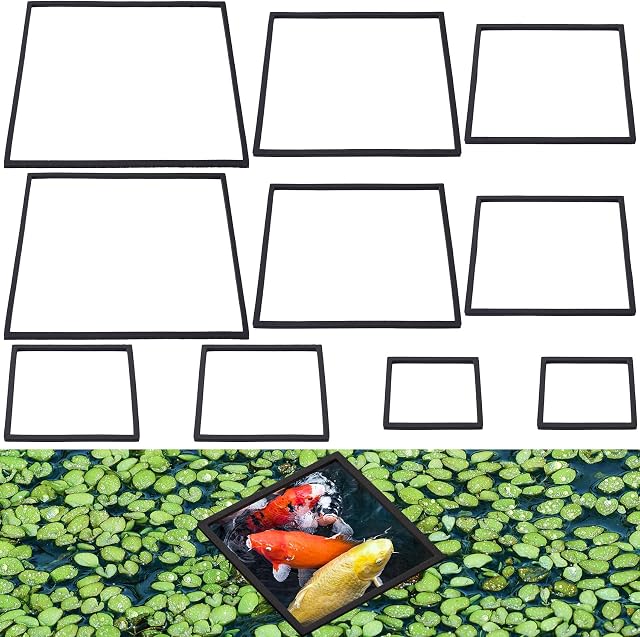
PAGOW Floating Plant Corral Rings
Check Price on Amazon ★3.9Where Spirodela Shines: Shrimp Tanks, Ponds, and Fry Cover
Giant duckweed earns its place anywhere shelter and shade matter. In breeding and shrimp tanks, the dangling root tufts give fry and baby shrimp grazing surfaces and hiding cover at the surface; the dappled shade calms skittish fish. It does the same job on pond and paludarium edges.
It is also legitimate fish food: goldfish, guppies, and most herbivorous or omnivorous species graze the fronds eagerly — the full rundown is in this duckweed as fish food guide. A Spirodela mat in a spare tank doubles as a free, self-renewing food culture. Before buying, compare nursery stock at Aquasabi's Spirodela polyrhiza listing and the GlassBoxDiaries Spirodela polyrhiza care guide.
Frequently Asked Questions
Is giant duckweed really different from the duckweed that ruins tanks?
Yes, in the ways that matter. Common duckweed (Lemna) has 1–3 mm fronds that cling to glass, nets, and skin, making removal miserable. Spirodela polyrhiza fronds reach a centimeter across and lift out by the handful. It still grows fast and needs monthly thinning, but you can stay ahead of it — the duckweed without the regret.
How fast will Spirodela cover my tank?
In warm water (24–28°C) with moderate light and decent nutrients, a handful of fronds can cover a 40-liter tank's surface in roughly four weeks. Cooler water or lean nutrients slow it considerably. Start with a small portion, track coverage weekly, and begin thinning when coverage passes about 50%.
Does Spirodela need CO2 or fertilizer?
No CO2 — floating fronds absorb carbon dioxide directly from the air. Fertilizer is optional: in a stocked tank, fish waste usually feeds it well. Dose only if fronds yellow or growth stalls, and start at half the label dose. Increase gradually only if growth stays stunted.
What are the sinking buds, and how do I deal with turions?
Turions are 2–3 mm kidney-shaped dormant buds produced when conditions turn poor — cold, nutrient shortage, or shortening days. They sink to the substrate and can sprout weeks later, which is how a "cleared" tank regrows. Siphon the substrate surface during a reset; otherwise treat resprouts as a minor recurring chore.
Can I feed Spirodela to my fish?
Absolutely — goldfish, guppies, platies, and most herbivorous or omnivorous species graze on it eagerly. It is a solid source of fresh greens and good foraging enrichment. A separate Spirodela mat in a spare tank works as a free, self-renewing food culture.
Give it still water, light, and a monthly scoop, and Spirodela pays you back with shade, fry cover, algae competition, and free fish food — without the Lemna-era dread. Start small, thin on schedule, compost your extras.