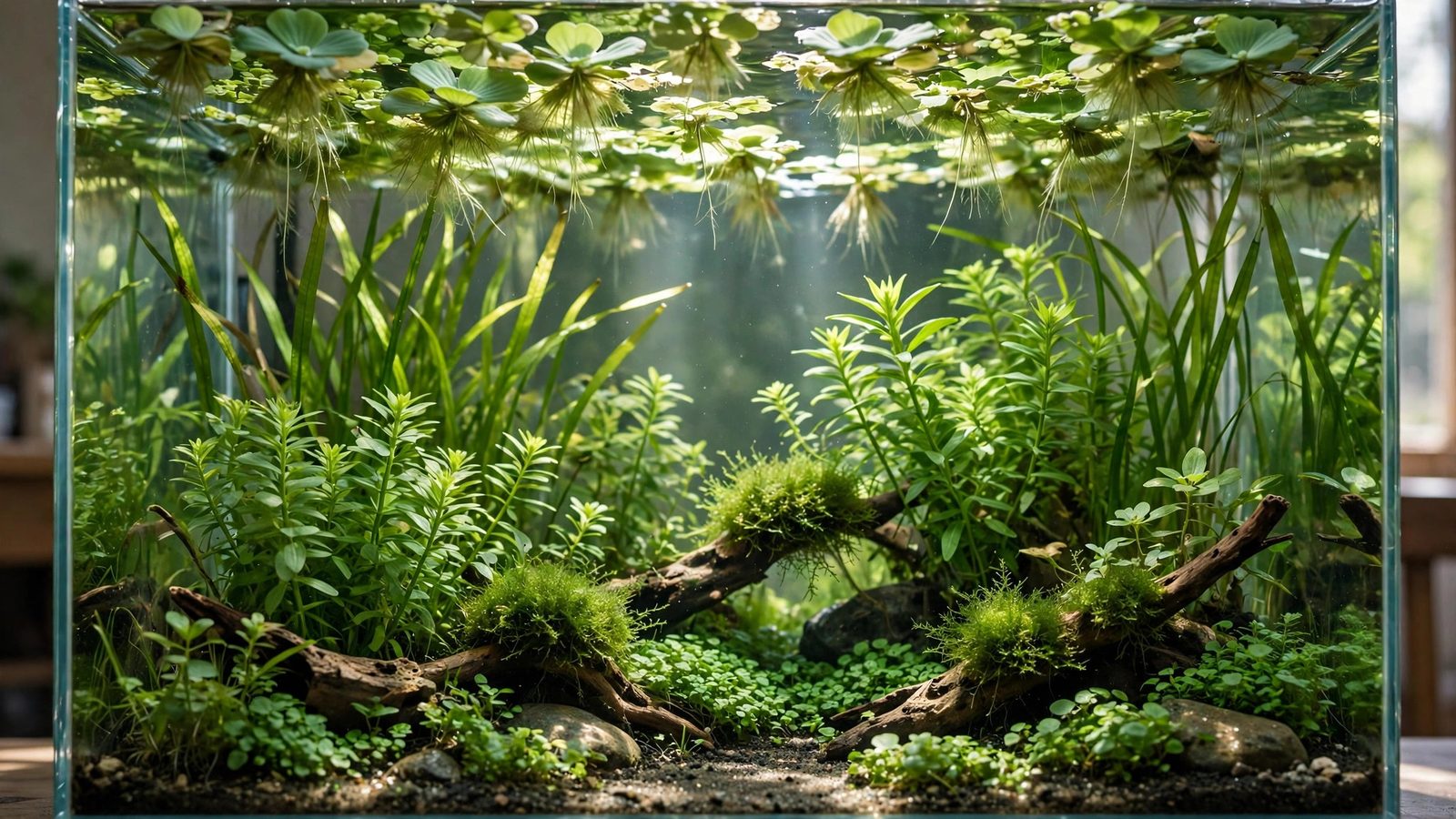
Green dust on the glass three days after every scrub, hair algae creeping over the hardscape — then someone tells you to toss in a handful of duckweed. Floating plants algae control is one of the oldest tricks in the hobby, and the answer is yes, floaters suppress algae — but only under the right conditions. Here's how they work, their real limits, the best species, and how to run them as an algae-fighting layer.
How Floating Plants Control Algae: The Real Mechanisms
Algae and plants compete for the same two resources: nutrients and light. Floating plants are ruthless competitors at both. At the surface they get first pick of light and unlimited atmospheric CO2, so they grow fast — and fast growth means pulling ammonia, nitrate, and phosphate out of the water before algae can use them. Most hobbyists see less green dust and clearer water within two weeks. If you haven't chosen floaters yet, start with our roundup of the best floating aquarium plants for beginners to compare the easiest species.
The second mechanism is shading — a floater layer acts like a living dimmer switch. Algae thrives on excess light, and cutting what reaches the lower water column directly slows its growth. A third mechanism, allelopathy (chemicals that inhibit algae), shows up in lab studies on duckweed, but its real-world effect in a home tank is genuinely debated. Count on nutrient competition and shading — those are proven.
The honest limits: what floaters can't do
Floating plants excel at preventing algae and suppressing mild cases — early green dust, light film algae, the first fuzz on driftwood. They are not a rescue crew for a tank deep in trouble. Severe green-water blooms need a UV sterilizer or blackout; floaters help prevent the next bloom, not the current one. Black beard algae is the other big exception: BBA is driven by CO2 instability and organic waste, so a floater layer that doesn't address those causes will watch it keep spreading.
The other honest limit is collateral damage. Floaters don't distinguish algae from your plants. A full-surface mat can cut light to the lower tank by 50–70%, and slow, light-hungry species stall or melt underneath — several of the best aquarium mosses suffer first when the surface closes over, as do many anubias varieties.
Which floater works best for algae suppression?
All floaters do the job, but they differ in shading power, growth speed, and headache level:
| Species | Shading | Nutrient uptake | Messiness | Containment |
|---|---|---|---|---|
| Duckweed | High — dense tiny-leaf carpet | Fastest — explosive growth | Very high — sticks to everything | Poor — nearly impossible to remove |
| Amazon frogbit | Medium-high — broad leaves, long roots | Fast — steady, vigorous | Low — easy to net out | Good — corral rings hold it |
| Water lettuce | Very high — large rosettes | Fast — big nitrate appetite | Low — lifts out in handfuls | Good — stays where corrals put it |
| Red root floater | Medium — smaller leaves | Moderate — needs strong light | Low — tidy, easy to thin | Very good — clumps politely |
Read our full duckweed care guide (including the removal reality) before you commit. Red root floater is the prettiest option and fine for mild algae, but don't rely on it alone for a serious nutrient problem.
Setting up your algae-fighting floater layer
Cover 30–50% of the surface
Below 30% coverage, the effect is too weak to out-compete established algae. Above 50–60%, you steal too much light from the plants below and reduce gas exchange. Start near 30% and let the colony grow into the 40–50% range over two to three weeks. Buy more than you think you need — a single portion of frogbit can cover half a 20-gallon surface within a month.
Corral them, don't let them roam
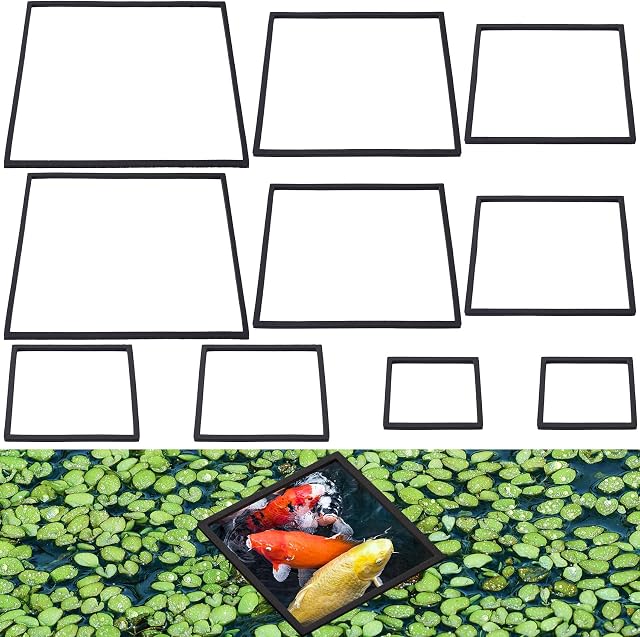
Loose floaters drift into the filter outflow, get pushed underwater, and rot — releasing every nutrient they absorbed back into the tank. The classic fix costs almost nothing: a loop of airline tubing on the surface, or a commercial plant ring. Park the corral on the side away from the filter output and keep the outflow zone clear for gas exchange.
Thin weekly — this is the whole game
Floaters only remove nutrients when you remove the plants. Every handful you toss is nitrate and phosphate leaving the system for good. Thin back to your target coverage once a week. Skip this for a month and the mat overgrows, self-shades, and starts dying — a dying mat dumps nutrients and triggers the exact bloom you were preventing.
 ★3.9
PAGOW Floating Plant Corral Rings
Check Price on Amazon ★3.9When floaters backfire
- High-light carpeted tanks. Even 30% coverage can stall a demanding carpet. Thin to 15–20% or skip floaters entirely.
- Lean, already-balanced tanks. In a low-nutrient tank with no algae problem, aggressive floaters can out-compete your plants and cause deficiencies.
- When they're dying. Water lettuce melts under tight, dry lids; melting floaters release ammonia. Remove dying rosettes immediately.
- Strong surface flow. Hang-on-back filters and wavemakers batter floaters and sink them. Corral away from the flow or baffle the output.
The one-two punch: floaters plus the real fix
They buy you a clean-looking tank while you fix what's actually feeding the algae:
- Light duration. 6–8 hours daily beats 12 for almost every tank. Shorten the photoperiod before anything else.
- Nutrient balance. Consistent, measured dosing beats the feast-or-famine cycle that fuels algae — our DIY aquarium plant fertilizer guide shows how to mix balanced doses cheaply.
- CO2 stability. Fluctuating CO2 is the classic black beard algae trigger, which floaters alone can't touch.
- Manual removal first. Scrub the glass, pull the hair algae, trim affected leaves. Floaters keep it from coming back; they rarely erase what's already there.
For new tanks going through the predictable first-month algae phase, floaters are arguably the best single investment — pair them with fast growers from our stem plants that fight algae in new tanks roundup and the cycling phase gets far less ugly.
Frequently Asked Questions
How long does it take for floating plants to reduce algae?
Most hobbyists see a difference in 1–3 weeks: slower green-dust buildup and clearer water. The colony needs enough biomass to matter, so give it at least two weeks at 30%+ surface coverage before judging. Severe or established algae still needs manual removal first.
Will floating plants kill black beard algae?
No — not on their own. BBA is driven by CO2 instability and organic waste, not by the nutrients and light floaters compete for. Floaters can prevent new BBA by stabilizing the tank, but existing tufts must be removed manually while you fix the underlying CO2 or flow issue.
Do floating plants starve my other aquarium plants?
They can, if unmanaged. A full-surface mat blocks most light and hogs nutrients, stalling slow growers like anubias and mosses below. Hold coverage at 30–50%, corral the colony away from the brightest zone, and thin weekly — run this way, most tanks see no harm.
Is duckweed or frogbit better for algae control?
Duckweed wins on raw nutrient uptake — it grows explosively and drinks nitrate fast. But it's messy, clogs filters, and is nearly impossible to eradicate. Frogbit is the better all-rounder: strong shading and uptake, long attractive roots, easy to thin and contain.
Can floating plants replace water changes?
No. Floaters export nitrate and phosphate when you thin them, which can stretch water-change intervals slightly, but they don't replenish minerals or reset dissolved organics. Keep your regular water-change schedule and treat floaters as a helpful supplement, never a substitute.
Floating plants are one of the few algae tools that live up to the hype — with honest boundaries. They compete hard for nutrients and light, they're cheap, and a corralled, thinned colony exports nitrate from your tank forever. Run floaters as the shield while you fix the cause, and your tank stays ahead of algae instead of chasing it.