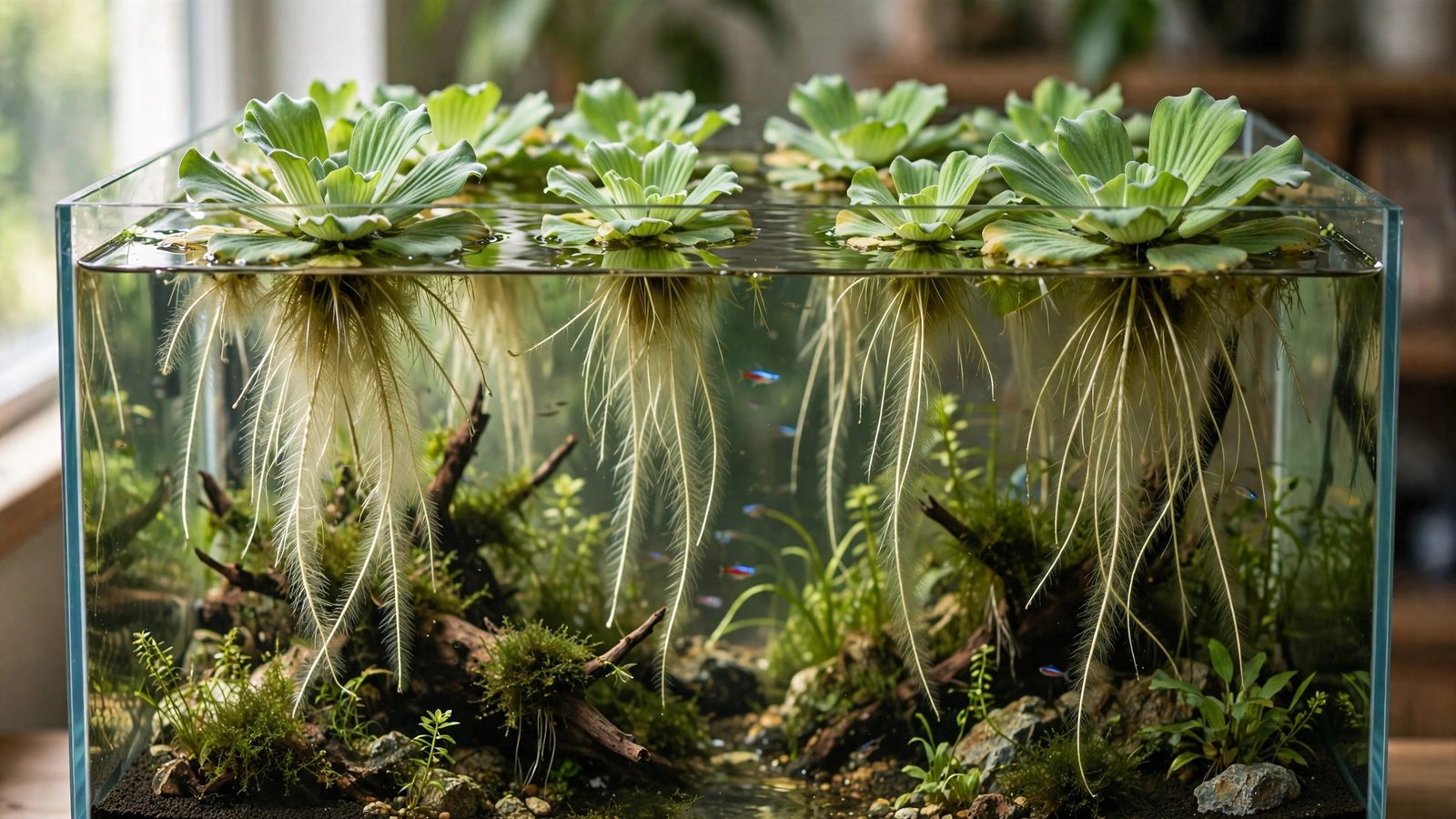
Here is the twist most beginners get backwards: the plants floating on your tank's surface are usually the hungriest ones in the whole aquarium. A healthy duckweed mat can double its mass in 24–48 hours, and every new leaf is built out of nutrients pulled straight from the water column. So do floating plants need fertilizer? In most tanks, yes — and they're the one plant group that can't wait for root tabs or fish waste to catch up. Still choosing species? Start with our beginner guide to floating aquarium plants.
Why Floating Plants Are Your Tank's Biggest Nutrient Consumers
Rooted plants cheat. They tap into substrate packed with organic waste, and many keep backup nutrients stored in their root systems. Floating plants get none of that. Their roots dangle free in the current, absorbing dissolved minerals directly — a clever design, but one that makes them completely dependent on what is dissolved in the water right now.
Then add speed. Frogbit, salvinia, and duckweed are among the hobby's fastest growers, sitting inches from the light and running photosynthesis at full throttle for 8–10 hours daily. That burn rate is why floaters are usually the first plants to show deficiency in an otherwise healthy tank.
Do Floating Plants Need Fertilizer? What They Actually Need
Floaters need the same nutrients as other aquarium plants. The difference is where they must be: dissolved in the water, not locked in the substrate. Practical targets:
| Nutrient | What it does | Target in water column | Hunger looks like |
|---|---|---|---|
| Nitrogen (N) | Leaf and tissue growth | 5–20 ppm nitrate | Tiny new leaves, spread stalls |
| Phosphorus (P) | Energy transfer, root growth | 0.5–2 ppm phosphate | Stunted growth, dark green or purplish tint |
| Potassium (K) | Overall vigor, enzyme function | 10–30 ppm | Pinholes and yellowing leaf edges |
| Iron (Fe) | Chlorophyll production | 0.1–0.5 ppm | New leaves emerge pale or yellow |
| Magnesium (Mg) | Central atom of chlorophyll | 5–10 ppm | Older leaves yellow between veins |
Aquarium water with healthy fish typically measures under 0.05 ppm iron — well below the 0.1–0.5 ppm floaters want. That gap is exactly what a liquid fertilizer fills.
3 Signs Your Floaters Are Starving (Before They Melt)
Floaters signal hunger loudly and early — usually within 2–3 weeks of the water running low. Catch these signs before the mat collapses.
- New growth comes in pale or yellow. This is the classic iron shortfall — old leaves stay green while fresh centers bleach out. A weekly liquid dose usually greens things up within 10–14 days.
- The mat stops spreading, and new leaves are miniature. Duckweed colonies that doubled every other day suddenly sit still, or frogbit produces pea-sized leaves. Low nitrogen or phosphate is the usual culprit.
- Roots brown, tangle, and collect algae. Algae coating floater roots means the nutrient balance has tipped — our guide on using floating plants for algae control explains how to read it.
A Simple Dosing Schedule That Works
The right schedule depends on how much waste goes in versus how much plant mass pulls nutrients out. Pick the column matching your tank, watch the plants for two weeks, then adjust.
| Tank type | What to dose | Frequency | Notes |
|---|---|---|---|
| Low-tech, heavily stocked (lots of fish) | Half-dose all-in-one liquid, or micros-only formula | 1× per week | Fish waste supplies most N and P; you are topping up iron and traces |
| Low-tech, lightly stocked (betta, shrimp) | Full-dose all-in-one liquid | 2× per week | Low bioload cannot feed fast floaters on its own |
| High-tech (CO2, strong light) | All-in-one liquid | 3× per week or small daily doses | Growth rates are extreme; keep levels steady, not spiky |
An all-in-one liquid fertilizer is the practical pick: one bottle, one measurement, every macro and micro in a single dose. Consistency beats intensity — a steady half-dose twice a week outperforms a heroic monthly dump. As the 2Hr Aquarist's dosing guide explains, keeping nutrient levels stable through the week matters more than the brand on the bottle. Running low-tech? The rhythm in our easiest no-CO2 aquarium plants guide pairs well with this schedule.
Liquid Fertilizers vs Root Tabs: Which Do Floaters Need?
This one has a structural answer, not a debate. Root tabs feed plants through the substrate; floating plants never touch the substrate, so a tab's nutrients physically cannot reach them. The comparison is straightforward:
| Liquid fertilizer | Root tabs | |
|---|---|---|
| Reaches floater roots | Yes — dissolves throughout the water | No — locked in substrate |
| Best for | Floaters, epiphytes, fast growers | Swords, crypts, other heavy root feeders |
| Dosing control | Precise (per gallon, per week) | Fixed per tab |
| Start of effect | Immediately dissolved | Weeks as it breaks down |
Verdict: liquid wins for floaters, every time. Keep root tabs for your substrate plants, and let the water column carry the feeding for everything above it.
The "Fish Waste Is Enough" Myth
Fish waste does provide nitrogen and phosphate — enough, sometimes, for slow growers in stocked tanks, as our guide to aquarium plants that don't need fertilizer covers. Floating plants are the exception, for three reasons:
- Fish waste is missing the micros. It delivers almost no iron, magnesium, or trace elements — precisely the nutrients fast floaters burn through first.
- Floaters out-eat the fish. A duckweed mat in a 10-gallon can consume nitrogen faster than two tetras produce it — the waste stream was never sized for a surface nutrient vacuum.
- Low-bioload tanks are floaters' favorite. Betta and shrimp setups love floating cover, but their tiny bioloads can't sustain it — these tanks need liquid dosing most.
Fish waste is a trickle; floaters drink like a river. A modest weekly dose of an all-in-one liquid closes that gap.
Frequently Asked Questions
Do floating plants need fertilizer in a stocked tank?
Usually yes. Stocked tanks supply nitrogen and phosphate through fish waste, but almost no iron, potassium, or magnesium. Dose a half-strength all-in-one liquid once weekly to cover the micros — if new growth stays pale, step up to the full schedule.
Can I use root tabs instead of liquid fertilizer for floaters?
No — root tabs feed the substrate, and floaters never touch it. Their roots absorb nutrients from open water, so only a liquid fertilizer dosed into the water column reaches them. Save root tabs for swords, crypts, and other heavy root feeders.
How do I know if my floating plants are nutrient deficient?
Pale or yellow new growth means low iron; miniature leaves and a stalled mat mean low nitrogen or phosphate; pinholes in older leaves mean low potassium. Signs appear within 2–3 weeks of a shortfall and usually reverse within two weeks of dosing.
Will fertilizing floating plants cause an algae bloom?
Correct dosing fights algae — thriving floaters outcompete it for nutrients and shade the water below. Blooms come from overdosing or erratic spikes, like double-dosing after a missed week. Follow the bottle's directions and stay consistent; if algae appears anyway, halve the dose and run 50% weekly water changes until it retreats.
What is the best fertilizer for floating plants?
An all-in-one liquid fertilizer fits best: one dose delivers nitrogen, phosphorus, potassium, iron, and traces where floater roots can reach them. Choose a micros-only formula for heavily stocked tanks, or full NPK for lightly stocked and high-tech tanks. Either way, dose into the water column after your weekly water change and give it two weeks before judging results.
Feed From the Surface Down
Floaters ask one thing your other plants don't: to be fed through the water itself. One water change plus one measured dose of all-in-one liquid a week is the whole program — do that, and you'll be thinning the mat instead of watching it melt.