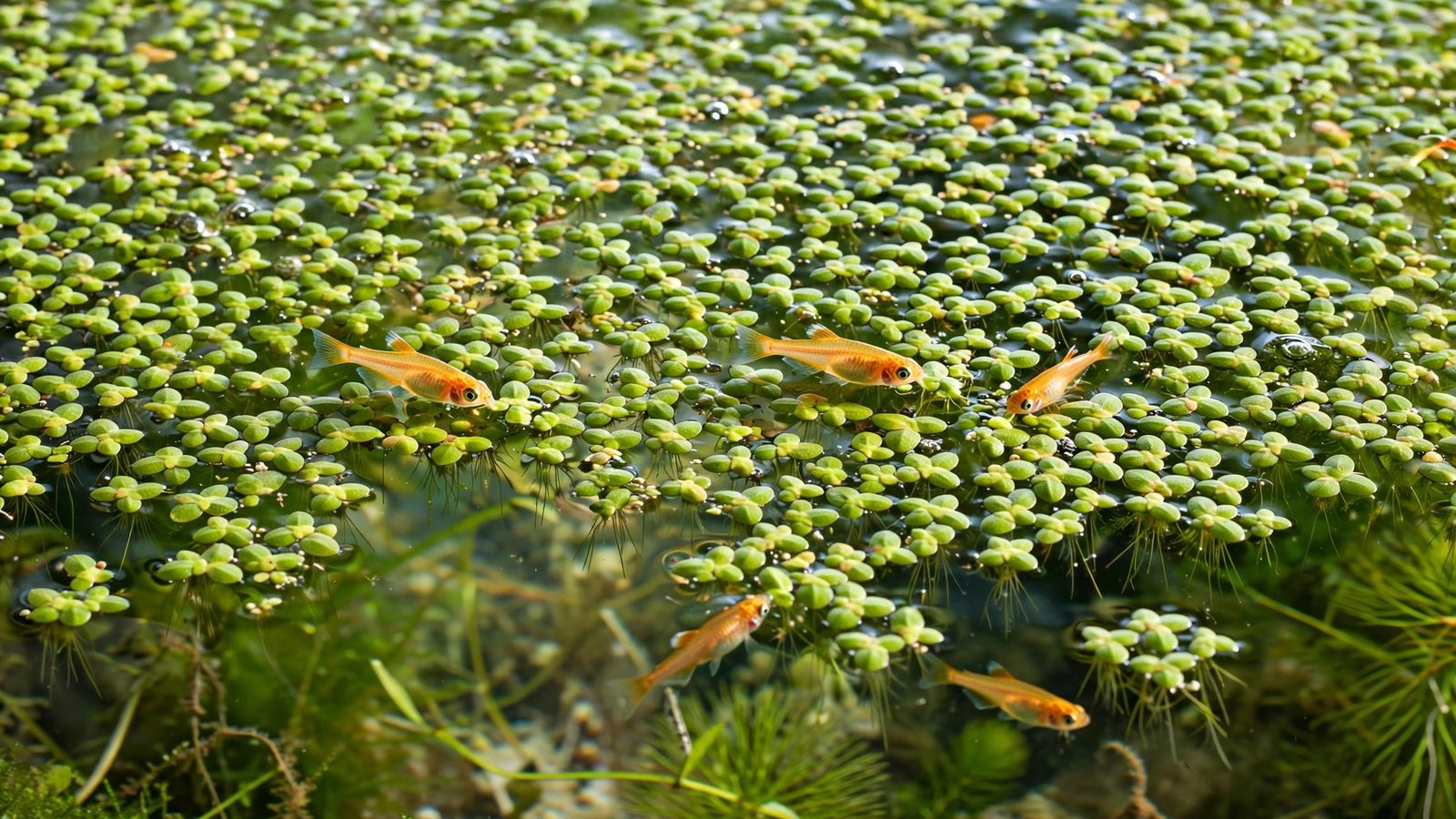
You have spent months scooping duckweed out of your tank and throwing it away. Here is the flip: that green carpet can serve as fish food — feeding duckweed as fish food is one of the oldest aquaculture tricks in the world. Goldfish, koi, and African cichlids will eat it faster than you can harvest it. All it takes is a culture bucket and a two-minute harvest routine. This guide covers which fish eat it, how much to feed, and how to dry it into a long-lasting powder.
Why Duckweed Makes a Legitimate Fish Food
Duckweed sits at the top of the floating plant family — tiny, fast, and genuinely nutritious. Nutritional research reports 20–45% protein by dry weight, plus meaningful calcium, phosphorus, beta-carotene, and vitamin C. Dried duckweed lands roughly on par with commercial vegetable-based flakes — before it costs you a single cent. Its amino acid profile leans closer to animal protein than most plant ingredients, and Asian aquaculture farms have used it this way for decades. Your home bucket is the same idea, miniature.
Which Fish Actually Eat Duckweed
Not every fish cares. The eager consumers are grazers built for plant material:
| Fish | Appetite | How they eat it |
|---|---|---|
| Goldfish (fancy and common) | Voracious | Suck fronds off the surface, whole mats if allowed |
| Koi | Voracious | Same as goldfish, at larger scale |
| Tilapia and grass carp | Voracious | The textbook duckweed fish |
| African cichlids (mbuna) | Strong | Graze it like algae — matches their herbivorous diet |
| Mollies, platies, swordtails | Moderate | Nibble through the day, not just at feeding time |
| Guppies and barbs | Light | Pick at fronds; fry especially |
Bettas, oscars, and arowana will inspect it and swim away. If your tanks are carnivore-only, grow the bucket anyway — it feeds the herbivores in your other tanks. And choose plants around your fish: fish-first framing is always smarter than the reverse.
Growing a Dedicated Duckweed Culture Bucket
Never run a food colony inside your display tank — hungry fish eat it faster than it regrows, and uneaten mats shade everything below. The dedicated bucket is the whole trick:
- Pick a 5–10 gallon bucket or shallow tub. Wide and shallow beats tall; surface area limits growth.
- Fill with dechlorinated water — treated tap water or tank water from a water change.
- Seed with a cup of healthy duckweed, spread across the surface so it gets light.
- Give it bright indirect light or mild sun, 4–6 hours daily; it stalls in dark corners.
- Fertilize lightly. A capful of liquid fertilizer weekly; too much triggers green water.
- Keep mosquito larvae out with a mesh lid, or harvest often enough that larvae never mature.
If you are new to the plant itself, our duckweed care guide covers species selection and troubleshooting.
Harvest-and-Rinse Routine (Two Minutes)
Skim 25–50% of the surface mat every 2–3 days with a fine brine-shrimp net — thinning keeps the culture in its fastest growth phase. Rinse every harvest in dechlorinated water for 30 seconds to remove debris and surface film; trash any brown or slimy clumps.
Feed it immediately. Fresh fronds float longest, giving grazers hours to work through them. A heaping teaspoon suits a school of mollies; goldfish can handle two or three tablespoons before it drifts uneaten into the filter intake.
How to Turn Duckweed as Fish Food Into a Storable Powder
Fresh duckweed is ideal, but winter and over-productive summers call for dried stock. Drying concentrates the protein and gives you a product that behaves like commercial spirulina powder.
| Method | How | Time | Notes |
|---|---|---|---|
| Sun drying | Spread rinsed duckweed thin on a baking sheet in full sun | 2–3 days | Cheapest; bring it in at night |
| Dehydrator | Single layer on trays at 95°F (35°C) | 8–12 hours | Most even; keeps the green color |
| Low oven | Baking sheet, lowest setting (~170°F / 75°C), door cracked | 4–6 hours | Check hourly; it burns fast once dry |
Properly dried duckweed crumbles between your fingers with zero moisture left — if it bends, it needs more time. Blitz it in a coffee grinder into a powder and store airtight away from light. Keeps 2–3 months; discard if it smells musty instead of grassy. Sprinkle a pinch over the tank 2–3 times a week, or mix the powder into homemade gel food.
How Much to Feed: Supplement, Not Staple
Here is the honest framing: duckweed is a supplement, not a complete diet. It lacks the balanced vitamins and minerals of a formulated pellet. Duckweed nutrition research consistently positions it as a dietary complement — protein and fiber alongside other feedstuffs.
A practical rhythm for an omnivore community tank:
- 2–3 duckweed feedings per week, alternating with normal flakes or pellets.
- One pinch to one heaping teaspoon, gone within a few hours.
- Watch the fish, not the schedule. Skittish grazers like mbuna take days to trust new food.
For dedicated herbivores like koi or tilapia, duckweed can reach 30–40% of the total diet — a significant share that cuts your feed bill.
Source Safely: Pesticides and Wild Duckweed
Home-grown duckweed is the safe standard. Wild fronds can carry snails, leeches, and parasites no rinse removes. If you must collect wild, dip it 30 seconds in a mild potassium permanganate bath (deep pink, 10 mg/L), rinse, then quarantine two weeks. A bucket from a friend's tank is free, fast, and risk-free.
One more caveat: duckweed is low in some essential fatty acids carnivorous fish need, and high-fiber diets can bloat fish not built for them. Introduce it gradually and never force-feed a species that ignores it. Its cousin azolla (mosquito fern) offers similar nutrition with a different texture — worth rotating if grazers get bored.
Frequently Asked Questions
Can duckweed replace fish food completely?
No. It is protein-rich but nutritionally incomplete on its own. Feed it 2–3 times a week alongside quality pellets or flakes — up to 30–40% of the diet for dedicated herbivores like koi and tilapia, a supplement for everyone else.
Will duckweed overrun my tank if I feed it fresh?
Only if you add more than the fish eat. Uneaten fronds settle, catch light, and double every 48–72 hours. Feed amounts that disappear within a few hours and net out stragglers. The separate culture bucket is what makes it controllable.
Is dried duckweed as good as fresh?
Mostly yes. Drying preserves protein and minerals while trading away some vitamin C and moisture appeal. Sun-drying or a 95°F (35°C) dehydrator protects nutrients best. Correctly dried duckweed crumbles dry, smells grassy, and keeps 2–3 months airtight.
Do bettas or other carnivores eat duckweed?
Practically no. Bettas, oscars, and other carnivores ignore it or spit it out — their digestion is not built for plant fiber. Do not force it. Save your culture for herbivores and omnivores.
Can I feed tank duckweed without rinsing?
Moving it between healthy tanks in the same system is low-stakes, but rinsing is still good practice against algae spores and hitchhikers. The habit matters most with an outdoor culture bucket, which collects debris you do not want in a display tank.
The Pest Is a Pantry Now
Duckweed stops being a nuisance once you give it a job. A five-gallon bucket on a windowsill turns the plant you used to throw away into a protein-rich supplement your goldfish, koi, and cichlids enjoy. For the bigger picture on a tank that feeds itself in small ways, browse the full freshwater aquarium plants guide.