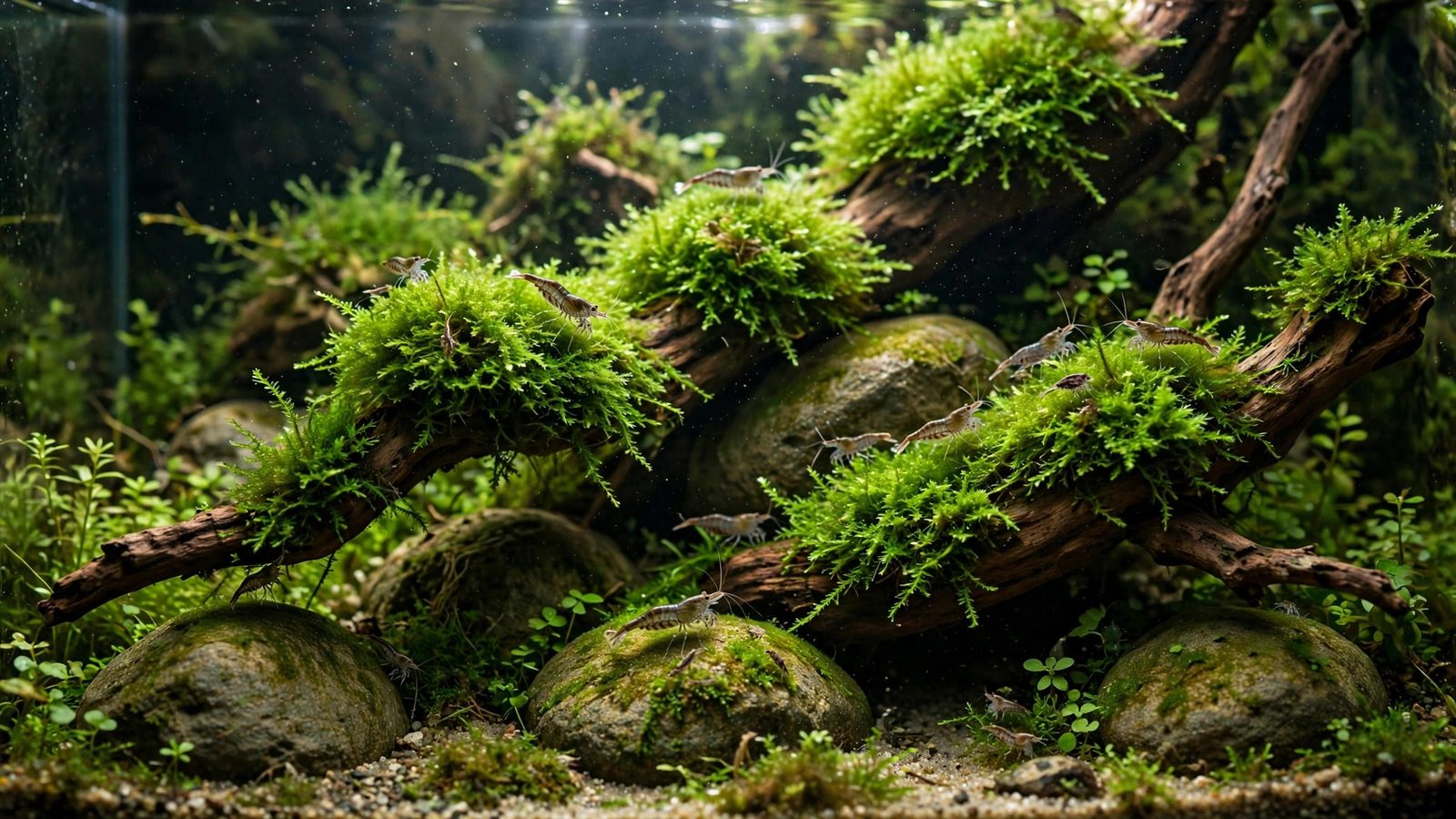
Most planted-tank heartbreaks follow the same script: someone searches "is moss good for aquariums," buys a lush aquascape, watches the moss brown out within a month, and concludes they just "can't grow moss." The truth is less dramatic — moss is one of the most forgiving plants you can own, and also one of the easiest to ruin if you treat it like a normal stem plant. By the end of this guide, you'll know when adding moss is a smart move, which types suit your setup, and how to keep them green for years instead of weeks.
guide to the best aquarium mosses compares the 12 most popular species side by side. Now the evidence.
The honest answer: is moss good for aquariums?
The pros: why moss earns its place
It survives the tanks other plants don't
Moss doesn't need injected CO2, high light, or a nutrient-rich substrate. A portion of java moss tied to driftwood in a low-tech 10-gallon grows indefinitely on fish waste alone. See does java moss need CO2 — the short version is that it grows fine without, just slower.
Shrimp and fry treat it like a five-star hotel
A dense moss clump is a micro-ecosystem: infusoria and biofilm grow on the fronds (first food for newborn fry and shrimplets), and the branching structure gives tiny animals hiding spots fish can't reach. A golfball-sized portion — roughly what bagged portions from brands like Tropica or ADA sell for — covers a 4–6 inch rock within two to three months.
It works as a natural water-quality buffer
Moss absorbs ammonia, nitrite, and nitrate from the water column, and its enormous surface area hosts nitrifying bacteria. A moss-covered hardscape in a 20-gallon smooths out the nitrate curve between weekly 30% water changes — not a substitute for filtration, but a genuine assist.
Unmatched texture for aquascaping
No other plant group gives you soft, creeping green coverage over rocks and wood with zero planting. Christmas moss's triangular fronds, weeping moss's drooping strands, flame moss's vertical twists — each reads completely differently. See java moss vs Christmas moss for the two classics compared.
The cons: where moss can go wrong
Algae loves moss as much as you do
Moss's fine, dense structure is an algae magnet — hair algae and black beard algae weave into fronds where snails and tweezers can't reach. Once established inside a clump, algae is nearly impossible to remove without tearing it apart. Prevention (balanced light, 6–8 hour photoperiod, weekly water changes) beats any cure.
It hates heat
Most aquarium mosses grow best between 20 and 26 °C. In tanks running 28 °C (82 °F) or hotter — common with discus — growth stalls and tips brown. Java moss tolerates heat best; the prettier species (Christmas, peacock, fissidens) suffer first.
Debris trap and maintenance tax
Moss collects detritus like a shag carpet — wave a turkey baster over it during water changes to blow out trapped waste. Untrimmed moss shades its own lower layers, which rot and detach; a light trim every 6–8 weeks keeps it dense instead of leggy.
It can be invasive in your own tank
Loose fragments of java moss colonize filter intakes, heater guards, and every hardscape crevice. Once wedged into lava rock pores, you're committed — trim over a net and siphon up fragments if you want to contain it.
| Situation | Verdict on moss |
|---|---|
| Low-tech community tank, standard LED | Excellent — one of the safest first plants |
| Shrimp or breeding tank | Excellent — best fry/shrimplet cover available |
| High-tech aquascape with CO2 | Good — faster and denser, but algae risk rises with light |
| Discus tank at 29–30 °C | Poor — heat stalls most species; try java moss only |
| Goldfish or cichlid tank | Poor — goldfish eat it; diggers uproot the anchors |
How to add moss the right way (in 15 minutes)
- Buy a healthy portion. Look for bright green, firm fronds — avoid brown, slimy, or algae-flecked bags. Tissue-culture cups (Tropica 1-2-Grow, Dennerle) arrive pest-free; bagged portions are cheaper but inspect them.
- Quarantine or dip. A 90-second dip in a 1:20 bleach solution plus a dechlorinated rinse kills hitchhiking algae and snails. Rinse three times — moss absorbs chemicals readily.
- Anchor, don't plant. Spread the moss thinly over driftwood or rock and secure with cotton thread, fishing line, or dots of super glue gel. Buried moss rots within days.
- Give it 3–4 weeks. Moss attaches via rhizoids in about a month. Don't disturb it during this window; brownish tips in week one are normal.
- Trim the tips. Once established, snip the top third with aquascaping scissors. Each cut tip branches into two or three new shoots, and the clump thickens over the next month.
Which moss should you start with?
| Moss | Look | Forgiveness | Notes |
|---|---|---|---|
| Java moss | Loose, stringy | ★★★★★ | Nearly indestructible; tolerates heat best |
| Christmas moss | Triangular, fern-like fronds | ★★★★ | Neater look; keep water below 26 °C |
| Flame moss | Upright twisted spirals | ★★★ | Striking on vertical wood; slow starter |
| Weeping moss | Drooping teardrop strands | ★★★ | Gorgeous on branches; dislikes strong flow |
| Phoenix/Fissidens moss | Tiny feather fronds | ★★ | Premium texture; slowest, needs stability |
For a first moss, java or Christmas is the right call — cheap, widely available, and forgiving of mistakes. Most species manage on as little as 20 PAR; see can you grow moss in a low light tank for the details. Good companions are in easiest aquarium plants for a beginner community tank and the freshwater aquarium plants complete guide, and the moss-vs-rooted-plant comparison in the aquarium plants for fish tank guide.
For verified species parameters, see Tropica's Taxiphyllum plant database and the UF/IFAS guide to aquatic plant culture basics.
Frequently Asked Questions
Does moss need substrate or fertilizer?
No substrate at all — moss anchors to rock, wood, or mesh and feeds from the water column. Root tabs are useless for it. A half dose of all-in-one liquid fertilizer helps in very soft water, but most tanks feed moss adequately from fish waste alone.
How fast does aquarium moss grow?
Slowly: 1–2 cm of new growth per month for java moss in a low-tech tank, less for Christmas, flame, and fissidens. CO2 roughly doubles the rate. If nothing grows after six weeks, check temperature (above 28 °C stalls growth) and light duration rather than adding fertilizer.
Can moss grow floating, or does it need to be attached?
It survives floating and forms loose balls, but unattached moss drifts into the filter, shades everything below, and looks messy. Attached moss grows in the shape you want and stays put. If you like the floating look, contain it in a feeding ring.
Why is my moss turning brown?
The three usual causes: heat above 28 °C, algae smothering the fronds, and ammonia spikes after overfeeding or a filter hiccup. New moss also browns for 1–2 weeks while adjusting. Trim dead sections — moss regrows from green tips, but dead patches won't recover.
Is moss safe for bettas and shrimp?
Yes — one of the safest plants for both. Bettas rest on soft moss near the surface; cherry shrimp graze biofilm off the fronds while babies hide inside. Rinse new portions well and avoid pesticide-treated "pond" moss sold for outdoor use.
The bottom line
Moss earns its reputation: cheap, nearly indestructible in the right conditions, a genuine asset to shrimp and fry, and the easiest way to make hardscape look established. Its real enemies aren't low light or missing CO2 — they're heat, algae, and neglect. Anchor it properly, keep the water clean and cool, trim it every couple of months.