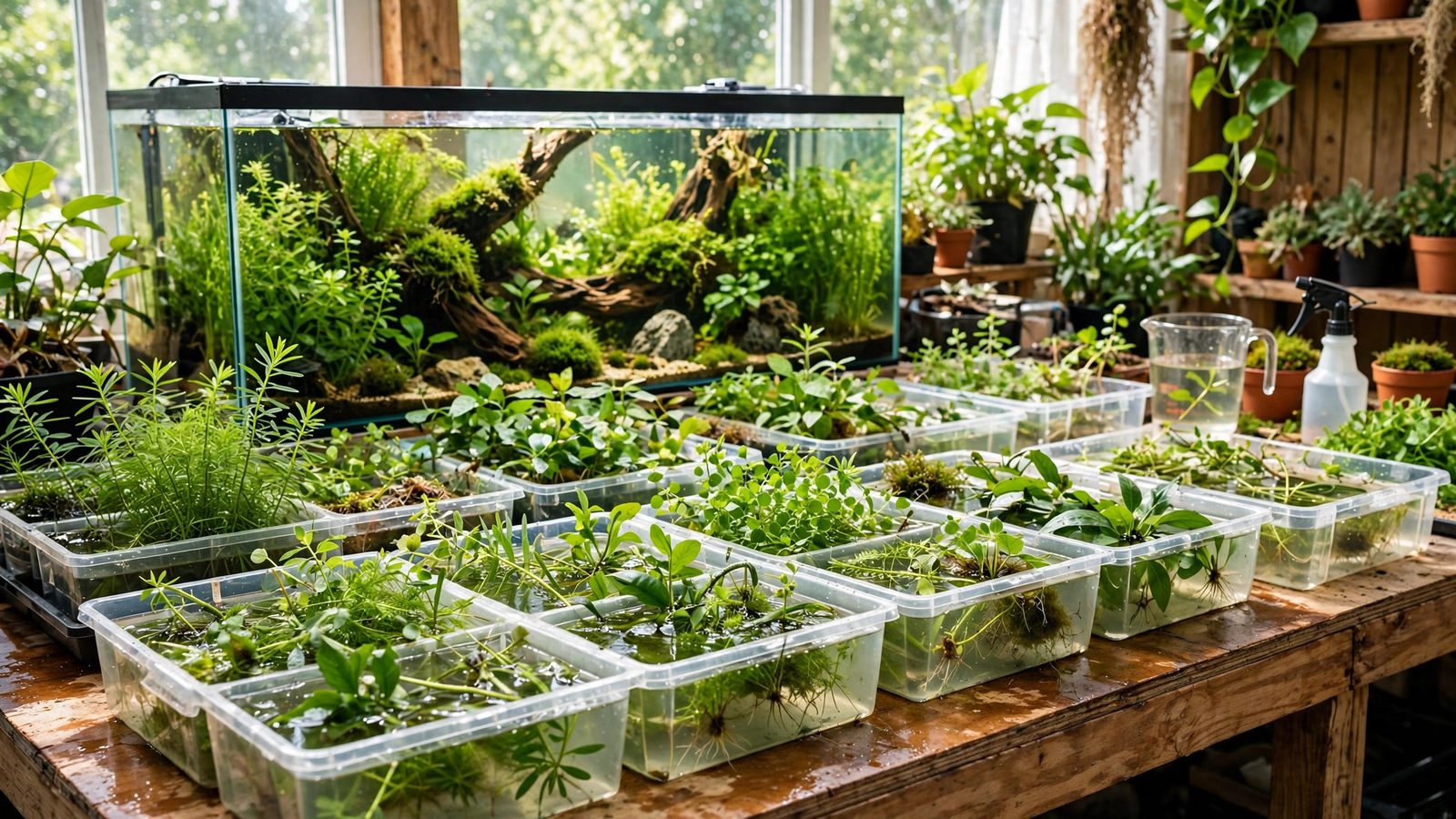
Every week, hobbyists bin trimmings that other people would pay for. If you want to sell aquarium plants for profit, the honest truth: you won't quit your job, but one healthy tank can fund the hobby itself. The sellers who do well aren't running farms — they're disciplined about what they grow, how they price it, and how they ship it.
Learning to sell aquarium plants for profit starts with the right stock
Profitable selling starts before you list anything — with choosing which plants to grow out and propagate based on growth speed and demand, not rarity. A fast stem harvested every three weeks out-earns a showpiece divided twice a year, every time. Beginners should anchor on the easiest aquarium plants for a beginner community tank: the undemanding growers anyone can keep alive are exactly what sells fastest.
Here's how the best categories compare:
| Plant type | Grow-out time | Typical price per portion | Best channel |
|---|---|---|---|
| Fast-growing stems (rotala, ludwigia, pearlweed) | 3–4 weeks | $6–$12 per 8–10 stem bunch | Local groups, eBay |
| Java moss and other mosses | 4–8 weeks | $6–$10 per golf-ball portion | eBay, local groups |
| Floaters (frogbit, salvinia, water lettuce) | 2–3 weeks | $5–$8 per sandwich bag | Local pickup, LFS |
| Anubias and buce divisions | 8–16 weeks | $8–$15 per rhizome portion | eBay, LFS |
Stems are the workhorse: every routine trim becomes inventory. Moss is the volume play — a golf ball of java moss or Christmas moss costs almost nothing to produce. Floaters multiply fast, which is exactly why they sell well locally. Anubias and buce grow slowly but command premium prices, making them a nice long-term side crop.
Where to Sell: Three Channels That Actually Work
1. Your local fish store (best for steady income)
Walk in with a clean, labeled bag of healthy plants and ask whether they buy or trade for store credit. Most sellers report roughly 25–33% of retail price in cash, or about 50% in store credit — which compounds nicely against your own supply costs. The real prize is the relationship: bring healthy, pest-free portions monthly, and you become a supplier, not a one-off.
2. Local Facebook groups and Marketplace (best margins)
No shipping, no packaging, no dead-on-arrival risk. Local planted-tank groups move surplus trimmings fastest: price slightly below retail, offer generous portions, and repeat buyers follow within weeks.
3. eBay and online sales (biggest audience, most work)
Online reaches every buyer, but adds shipping, fees, and the live-arrival guarantee. A $10 moss portion costs about $5–$6 to ship, eBay takes roughly 13% in fees, so you keep around $3.50–$4. For strategy details, there's a ranked breakdown of profitable plants for new keepers worth reading before you stock up.
Pricing Math: Charge Like a Business, Not a Hobbyist
Most sellers underprice because they think of trimmings as free. Your price has to cover supplies, fees, your time, and the occasional dead-on-arrival refund: set it so one full refund in every ten orders still leaves the batch profitable. A $10 portion costing $6 all-in leaves you $24 ahead on $60 of gross after one refund — barely. Price at $12 and the margin becomes comfortable.
Standardize your portions so buyers know what they get: "golf-ball" moss, "8–10 stems at 6+ inches," "sandwich-bag of frogbit." Grade honestly — a portion with a few melted leaves should say so and be priced down.
How to Ship Live Plants Like a Pro
Plants don't need water to survive shipping — they need moisture and stable temperatures. The standard method:
- Pack each portion in a deli cup or zip bag with a damp (not dripping) paper towel — enough moisture to prevent drying, not enough to rot.
- Cushion cups inside the box with crumpled newspaper or polyfill so they can't rattle.
- In winter (below ~40°F / 4°C along the route), add a 40-hour heat pack for $1.50–$2.50. In summer heat above 95°F / 35°C, consider cold packs — or pause shipping.
- Ship early in the week only — Monday through Wednesday — so packages never sit in a warehouse over the weekend.
- Buy postage online (commercial rates save $1–$2 per package) and message the tracking number the same day.
Most sellers guarantee live arrival on the first delivery attempt and absorb the rare loss — build that 10% loss rate into your prices from day one. Note that emersed-grown plants ship better than submerged ones, so read up on buying emersed vs submerged plants before choosing your stock.
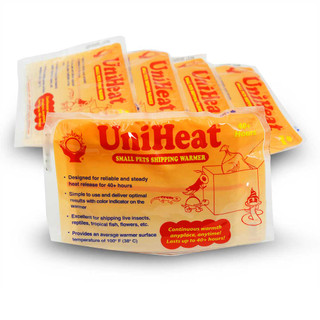
UniHeat 40+ Hour Shipping Warmers, 4-pack
Check Price on AmazonGrow-Out: How Long Before a Portion Is Sellable
New sellers' biggest mistake is listing too early. A sellable stem bunch needs 8–10 stems at 6+ inches — about 3–4 weeks of regrowth after a hard trim. Moss needs 4–8 weeks to form a dense golf ball; floaters take 2–3 weeks. Anubias and buce are the patience play: 8–16 weeks to a rhizome worth dividing.
A dedicated grow-out tank helps — even a bare 10-gallon with good light and fertilizer turns trimmings into inventory on schedule. The best plants for a planted aquarium are popular for a reason, and popularity moves inventory.
 ★4.7
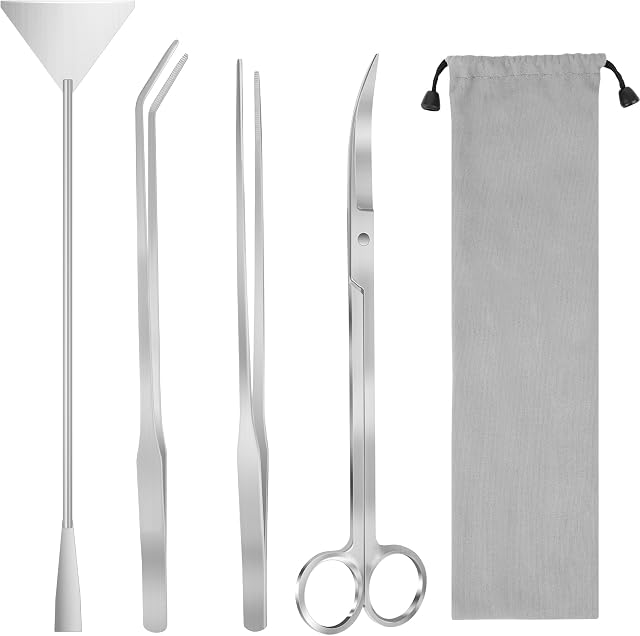
Liveek 4-in-1 Aquascaping Tool Kit
Check Price on Amazon ★4.7Keeping Expectations Honest
Most hobbyist sellers land between $50 and $300 a month once established — enough to make the hobby pay for itself. A few sellers with multiple grow-out tanks push past that. Nobody replaces a salary with trimmings from a 20-gallon. Treat it as a side hustle that funds your hobby: price like it matters, ship like a professional, and the money takes care of itself.
Frequently Asked Questions
Do I need a license to sell aquarium plants?
In most places, small-scale hobbyist selling needs no license — you're trading surplus, not running a nursery. But some US states and other countries regulate plant movement, especially across borders, so check your local agricultural or nursery rules before shipping interstate or internationally.
How much money can I realistically make selling aquarium plants?
Most hobbyist sellers report $50–$300 a month once established, depending on tank space, plant selection, and channel. Local fish store credit is the steadiest; eBay can spike higher but costs more time and fees. Think of it as the hobby paying for itself, not a second income.
How do I ship aquarium plants in winter?
Use a 40-hour heat pack (about $1.50–$2.50) inside an insulated box, ship Monday through Wednesday only, and pack plants in deli cups with damp paper towel rather than standing water. Many sellers pause shipping when route temperatures drop below about 20°F / -7°C, since even heat packs have limits on long transits.
How do I make sure I'm not selling plants with pest snails?
Quarantine new stock in a separate tank for 2–4 weeks and inspect before listing. Many sellers dip plants in alum or diluted bleach before they enter the grow-out tank, then rinse thoroughly. One snail complaint in a review can sink an otherwise solid seller profile.
Should I sell to my local fish store or online?
Do both. Your local fish store gives steady repeat business and store credit — typically around half of retail value — with zero shipping hassle. Online channels pay better margins but cost you time in packing and customer service. Start local, expand online once your grow-out schedule is reliable.
Start With the Trimmings You're Already Throwing Away
You don't need a new setup or a business plan to begin. Pick your fastest-growing tank, stop binning the trimmings, and bring a clean bag to your local shop this weekend. That's how every plant seller started — and the plants are already growing.