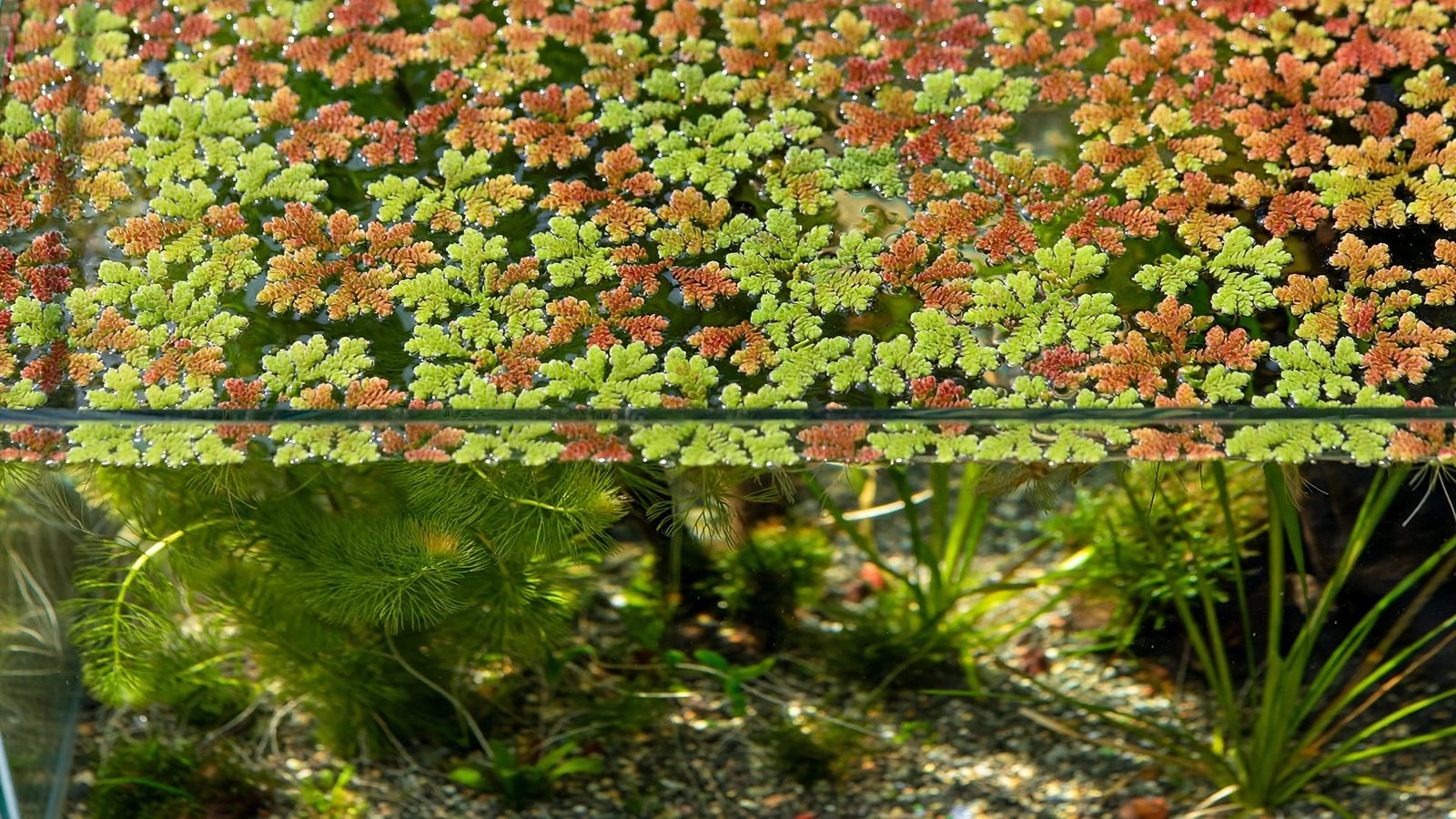
You scoop a pinch of green flakes from the shop bag, float them in your tank, and within a week they've doubled — then doubled again. Up close they aren't duckweed: tiny scale-like leaves overlap like shingles, fine roots dangle below, and under strong light the mat blushes bronze-red. Meet azolla, the mosquito fern — a true floating fern that manufactures its own nitrogen fertilizer from thin air. This guide shows you how to run a thriving azolla aquarium: why it turns red, how it compares to duckweed and salvinia, and how to stop it from eating your tank.
Why Azolla Isn't Duckweed: the Floating Fern With a Superpower
From across the room, azolla looks like duckweed. Up close, the resemblance collapses: it's a genuine fern (family Salviniaceae) with branching stems and scale-like leaves barely 1–2 mm long. The three trade species are Azolla filiculoides (larger, cold-tolerant), Azolla caroliniana (smaller, most common in aquariums), and Azolla pinnata (tropical, feathery).
Its superpower lives inside those leaves: every frond houses Anabaena azollae, a cyanobacterium that pulls nitrogen from the air and converts it into plant food — the symbiosis that has fertilized Asian rice paddies for centuries. Practically, azolla is the only floater that thrives in nitrogen-poor water where duckweed would starve and yellow.
Each plant trails 1–3 cm of fine roots — a grazing pasture for shrimp, fry, and infusoria — and a healthy mat doubles its biomass in 2–3 days at 20–25°C. Because that growth is so aggressive, read our floating-plant management guide first: a little azolla goes a very long way.
azolla aquarium care: light, surface, and nutrients
Azolla asks for three things: bright light, still water, and food that isn't nitrogen.
Light. Aim for medium–high light — 50–150 PAR at the surface, 8–10 hours a day. Too dim and azolla pales, stretches, and sheds fronds; too intense and it tans red (more below). If your other floaters thrive, your light is fine — check what floating plants actually need from fertilizer before upgrading.
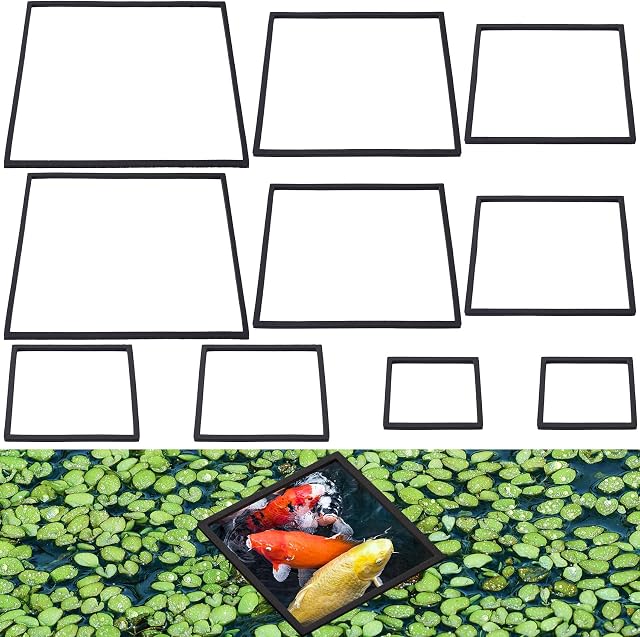
A calm surface. This is the make-or-break rule. Strong filter outflow, airstones, and surface skimmers shred azolla and sink it. Baffle your HOB filter with a sponge prefilter and ring the colony with an airline-tubing corral. Keep 30–50% of the surface open — a sealed mat blocks light below and can crash nighttime oxygen.
Water and food. Azolla is unfussy: pH 5.5–7.5, soft to moderately hard water, 15–28°C (59–82°F). Above 30°C (86°F) it melts fast, so skip it for discus-temperature tanks. Since it fixes its own nitrogen, feed what it can't make: phosphorus, potassium, and iron. A half dose of a complete all-in-one — about 2 mL per 40 liters, twice weekly — is plenty; full EI dosing just feeds algae. See dosing floating plants, and note injected CO₂ is pointless — floating plants breathe air, not dissolved CO₂.
Why Your Azolla Turns Red (and How to Green It Back)
When your green mat blushes rust-red within days, don't panic — that's anthocyanin, a red pigment the plant makes as sunscreen. Intense light is the usual trigger, but cold snaps below 15°C (59°F) and phosphorus deficiency cause the same blush. Per NC State Extension's mosquito fern profile, new leaves start bright green and fade to rusty red under bright conditions.
Red azolla is alive and growing — many aquascapers keep it red on purpose for contrast. To green it back: raise the light 8–10 cm or cut intensity ~25% and dose phosphate to 0.5–1 ppm weekly. If fronds turn brown-black and crumble, that's rot, not tanning — remove the dead mat and check for ammonia spikes.
Azolla vs Duckweed vs Salvinia: Which Floater Wins?
All three cover the surface fast and drink up excess nutrients, but they behave very differently:
| Azolla | Duckweed | Salvinia | |
|---|---|---|---|
| Plant type | Floating fern | Flowering plant | Floating fern |
| Frond size | 1–2.5 cm | 2–5 mm | 1–3 cm |
| Doubling time | 2–3 days | 1–2 days | 3–5 days |
| Roots | 1–3 cm, shrimp shelter | Hair-thin, ~1 cm | Feathery modified leaves |
| Nitrogen needs | Low (fixes its own) | High | Moderate |
| Removal difficulty | Easy (nets in clumps) | Nightmare (every grain regrows) | Easy–moderate |
| Signature trait | Turns red in bright light | Nearly indestructible | Hairy water-repellent leaves |
Choose azolla for fast nutrient export with easy removal and shrimp-friendly roots; pick duckweed only if you want a permanent resident (our duckweed care guide explains why it's nearly impossible to evict); choose salvinia for the tidiest look (like azolla it draws CO2 from air — see whether floating plants need CO2). Any of the three helps with fighting algae with floating plants — azolla just does it while feeding itself.
Taming the Takeover: Thinning, Tank Mates, and the Invasive Rule
Treat azolla like a lawn: mow it weekly or it mows your tank. Scoop 30–50% of the mat with a fine net weekly, compost the surplus, and never pour it down a drain or into a pond — Mississippi State Extension's guide to mosquito fern describes how quickly it seals over a waterbody and blocks all sunlight. It's a listed invasive in parts of Europe, the UK, and South Africa, so check local rules before any outdoor use.
Tank mates: cherry shrimp and fry adore the root tangle; goldfish, koi, and mollies graze it like free salad. Bettas and gouramis struggle — a thick mat wrecks bubble nests and blocks their access to air, so keep only a small corralled patch for them. Hatchetfish and other surface feeders need open water too.
 ★3.9
PAGOW Floating Plant Corral Rings
Check Price on Amazon ★3.9Frequently Asked Questions
Is azolla good for aquariums?
Yes, with management. It exports nitrate and phosphate fast, shades out algae, shelters shrimp and fry in its roots, and needs little nitrogen thanks to its symbiosis. The catch is speed: it doubles every 2–3 days, so weekly thinning is non-negotiable. Keep 30–50% of the surface open.
Azolla vs duckweed — which should I choose?
Azolla, for most tanks. Duckweed doubles faster (1–2 days), its 2 mm grains slip through nets, and a single speck regrows the colony — nearly impossible to remove. Azolla grows in scoopable clumps, has useful roots, fixes its own nitrogen, and blushes an attractive red. Choose duckweed only if you want a permanent surface cover.
Why is my azolla turning red?
It's tanning, not dying. Azolla produces red anthocyanin pigment as sunscreen under intense light; cold water below 15°C (59°F) and low phosphorus trigger it too. Red fronds are healthy and still growing. To green them back, raise the light 8–10 cm or dim it ~25%, and dose phosphate to 0.5–1 ppm weekly.
Does azolla need fertilizer or CO2?
CO2 injection is useless for azolla — it breathes air at the surface. Fertilizer is a half-yes: its Anabaena symbiont fixes nitrogen from the air, so skip nitrogen-heavy dosing and feed phosphorus, potassium, and iron. A half dose of a complete all-in-one liquid fertilizer (about 2 mL per 40 liters, twice weekly) keeps it lush without fueling algae.
Is azolla invasive? Can I put it in my pond?
In many regions, yes — it's a listed invasive in parts of Europe, the UK, and South Africa, where escaped mats smother native plants and crash oxygen levels. Check local regulations before any outdoor use, and never dump aquarium azolla into waterways. Compost surplus or bag it for the trash; indoors in a tank, it's perfectly safe and contained.
The Bottom Line on the Mosquito Fern
Azolla earns its place in the planted tank: a nitrogen-fixing floating fern that outcompetes algae, feeds shrimp, and asks for almost nothing except a calm surface and a weekly haircut. Start with a corralled handful, thin it weekly, and enjoy the one floater that tans red under your lights instead of merely surviving them.