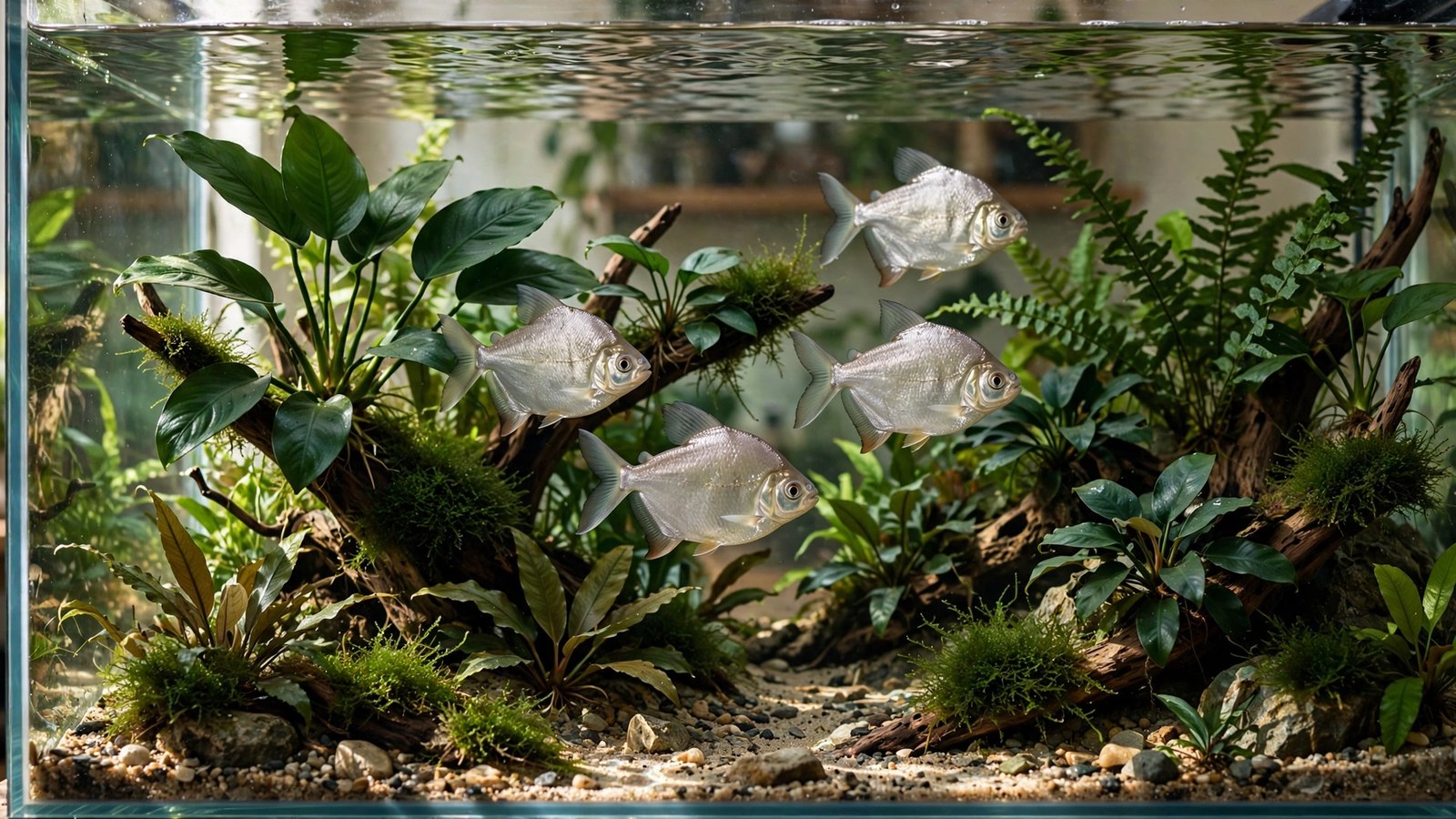
Call them the plant piranha. A hungry school of silver dollars can strip a soft-plant aquascape down to bare stems in a single weekend — yet these same fish glide right past java fern and anubias without a single nibble. The secret of a thriving silver dollar fish planted tank isn't fighting their appetite; it's working with it. Give them tough plants they don't want, fast growers that outpace them, and a steady supply of vegetables, and you get one of the most dynamic schooling displays in the hobby.
The silver dollar fish planted tank strategy: bitter, fast, and fed
Silver dollars (Metynnis argenteus) are schooling South American characins related to piranhas and pacus — peaceful, but genuinely herbivorous. In the wild they graze flooded-forest vegetation constantly, so a planted aquarium reads as a salad bar. Most hobbyists try to plant first and hope; the winning move is to design around grazing pressure from day one. If you're still matching plants to fish appetites in general, start with our overview of plants herbivores tend to ignore in community aquariums, then apply the silver-dollar-specific rules below. (For the taxonomy and wild habitat of Metynnis argenteus, the natural history confirms the vegetarian habit: these fish live among dense vegetation and eat it.)
Damage concentrates where food is softest: fine-leaved stem plants, crypts and water sprite disappear first, mid-ground plants second, and tough epiphytes last. A single dollar in a 40-gallon will work through every soft plant; six dollars in a 125-gallon spread the same grazing across far more territory. Group size and tank volume are the two cheapest plant insurance you can buy.
Plants the plant piranha won't eat
The unpalatable-plant list is short, proven, and enough to build a real scape:
| Plant | Why silver dollars ignore it | Where it goes |
|---|---|---|
| Java fern (Microsorum pterotoides) | Bitter compounds; leathery leaves too tough to shred | Tied to driftwood and rocks, mid-ground |
| Anubias (barteri, nana) | Thick, waxy, unpalatable leaves; rhizome never buried | Driftwood crevices, shaded spots |
| Bolbitis (African water fern) | Tough texture and slow, bitter growth they won't bother chewing | Background on wood, moderate flow |
| Hornwort | They nip it constantly — it just grows inches per week and outruns them | Free-floating or loosely weighted, background |
| Floating plants (salvinia, frogbit, water lettuce) | Out of reach at the surface; explosive growth replaces grazed roots | Corralled at the surface with airline tubing |
Build the hardscape first: two or three large driftwood pieces plus dark river rock, then cover every surface with java fern and anubias. Wood that's 60% epiphyte-covered reads as lush planting while offering almost nothing the school wants to eat.
Sacrificial growers and floating plants
Hornwort is the unsung hero of this setup. Drop a generous bunch in and the school will graze it all day — and it still gains an inch or two a week under moderate light. Harvest chewed ends weekly, replant the fresh tips; a single portion can supply months of grazing.
Floating plants work on the same principle from above. Salvinia and dwarf water lettuce multiply fast enough that nibbled roots simply don't matter, and their surface cover calms the school — silver dollars color up better and school tighter under a broken canopy of shade. For choosing species and managing spread, see our floating aquarium plant starter guide. Note: dwarf water lettuce is regulated or listed as noxious in several US states, so check your local regulations before buying, and never release aquarium plants into local waterways.
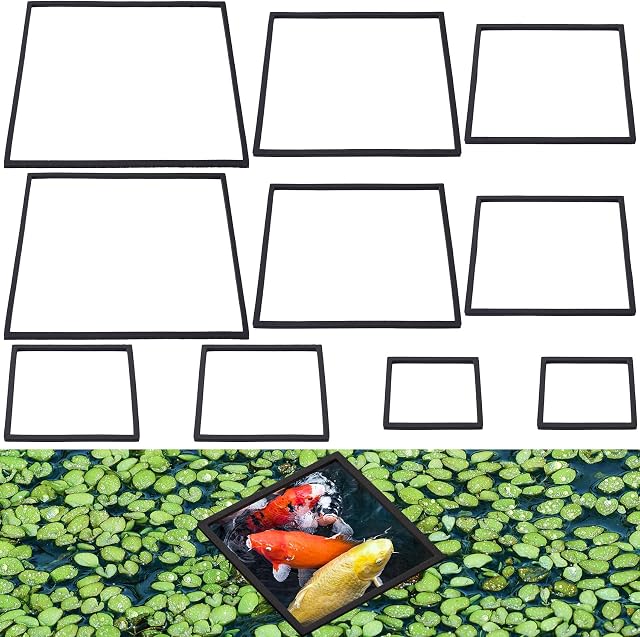 ★3.9
PAGOW Floating Plant Corral Rings
Check Price on Amazon ★3.9The veggie-feeding fix
Feeding schedule is the single biggest lever on grazing damage. A silver dollar stuffed with greens browses the scape casually instead of stripping it. Run this rotation:
- Daily: spirulina-based flakes or sinking veggie pellets — the dietary base, not an afterthought.
- 3–4 days a week: a blanched vegetable clip — zucchini, spinach, romaine or deshelled peas. Blanch 60 seconds, clip to the glass, remove uneaten scraps after 4 hours.
- Twice a week: an algae wafer for overnight grazing.
- Protein (sparingly): a little frozen brine shrimp or bloodworm once a week for condition — too much protein causes bloat in these herbivores.
Within two weeks of consistent vegetable feeding, most keepers report visibly less shredding. Hungry dollars eat plants; full dollars mostly show off.
Building the 75-gallon school display
75 gallons is the floor for six adult dollars (they reach 5–6 inches), and a 125 lets the school stretch into the sweeping formation that makes this display famous. The silver dollar care profile corroborates the 75-gallon minimum with open swimming room and dimmed lighting — this is a fish that needs length, not height.
Lay 2–3 inches of dark inert sand or aquasoil; the dark floor makes silver flanks flash like coins. Anchor two or three substantial driftwood pieces, jam river rock around their bases, and tie every epiphyte you own onto the wood. Keep the center open water — the school owns it. A canister filter rated for 1.5× tank volume handles the heavy bioload of constant vegetable feeding without turning the tank into a current; silver dollars come from slow water.
Useful contrast: silver dollars eat plants, while other cichlids dig them up. For the two classic plant-destroyer profiles — fish that eat plants vs fish that dig them up — see our convict cichlid planted tank guide: Convict Cichlid Planted Tank: dig-proof planting for chronic excavators. And if you're stocking other big, boisterous fish, the same armor-up logic applies — here's how we digger-proof big aquariums for blood parrots.
Frequently Asked Questions
Will silver dollars eat java fern?
Rarely. Java fern's bitter, leathery leaves are genuinely unpalatable to them, which is why it tops every silver-dollar plant list. New, tender fronds may get a test nibble, but established plants are left alone. Tie the rhizome to driftwood rather than burying it.
Can I keep soft plants like water sprite with silver dollars?
Not reliably. Even with heavy vegetable feeding, soft-leaved stems get shredded within days to weeks — the grazing is instinct, not just hunger. For that fine, feathery texture use hornwort instead: the school grazes it constantly, but it grows inches per week and outruns the damage.
How many silver dollars should I keep in a 75-gallon planted tank?
Six is the minimum; seven or eight is better. Silver dollars are true schooling fish — in small groups they turn shy, skittish, and destructively bored, shredding plants out of stress. A proper school spreads grazing, behaves confidently, and produces the shimmering synchronized display the species is famous for.
Do silver dollars eat floating plants?
They nip dangling roots — frogbit's long root strands get grazed back regularly — but the plants themselves sit safely at the surface and grow fast enough to replace what's eaten. Salvinia and dwarf water lettuce are the safest picks. Corral floaters with an airline-tubing ring so they shade one area instead of blanketing the whole surface and blocking light from the plants below.
The plant piranha is only a problem when hungry, lonely, or offered soft leaves. Bitter epiphytes on dark driftwood, a renewable hornwort salad, thriving floaters, and a vegetable clip on the glass — that's a silver dollar tank that stays planted for years, with the school patrolling open water exactly as nature intended.