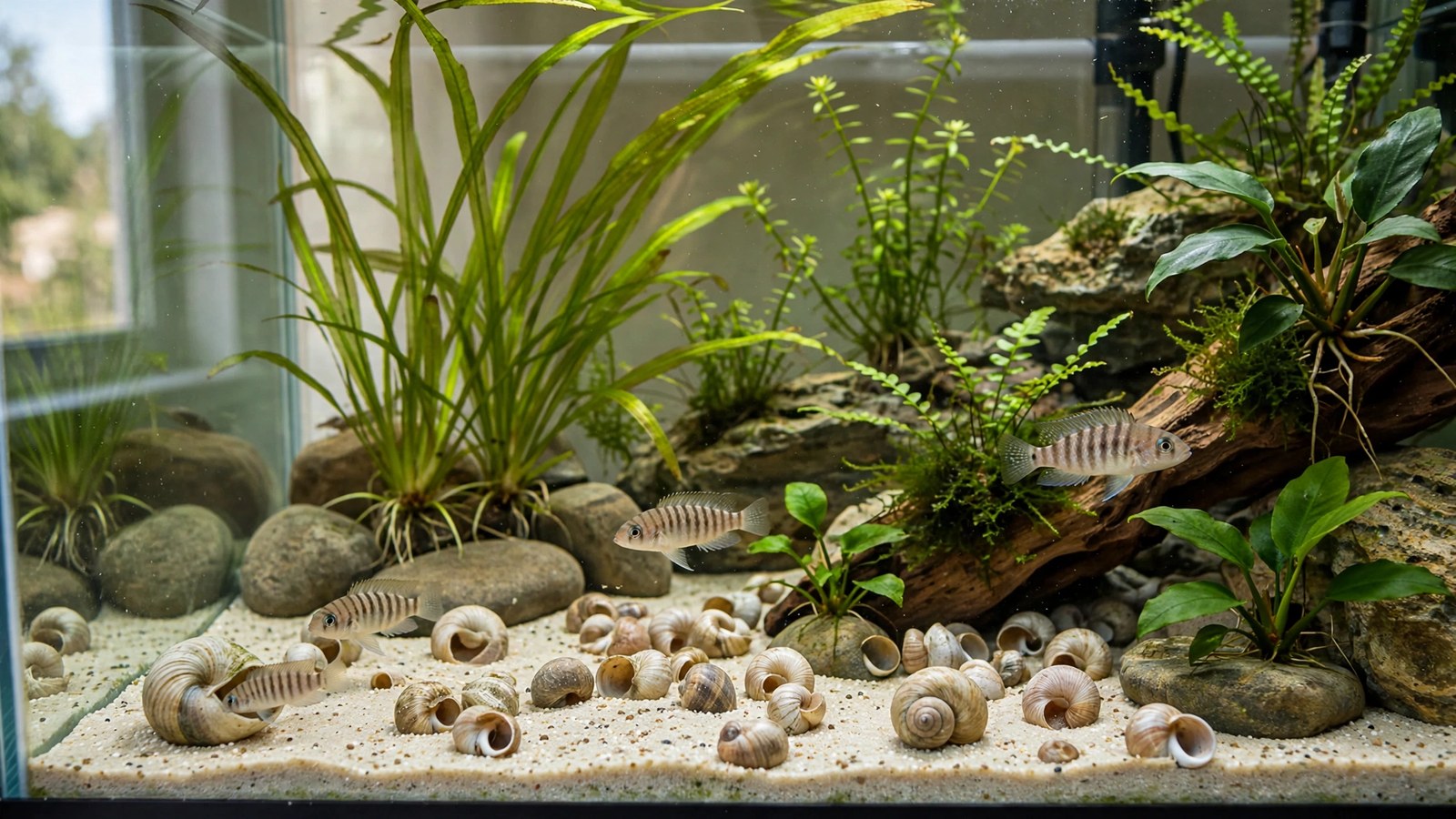
Most planted-tank keepers dread fish that dig. Now imagine a fish whose entire personality is excavation. Neolamprologus multifasciatus — the "multie" — is a shell-dwelling cichlid barely two inches long that remodels your aquascape daily and buries stems with cheerful persistence. A shell dweller planted tank sounds like a contradiction, and set up carelessly, it is. But with fine sand, the right shells, and planting strategies that assume everything gets excavated, you can run a green Tanganyikan setup alongside one of the hobby's most entertaining colonies.
Why Multies and Plants Are a Hard Mix
Two things work against greenery here. First, the digging: multies sift sand through their gills all day, excavating pits around their shells and dumping the spoil on your plants. Roots get buried, stems get toppled, and anything delicate spends its life half-interred.
Second, the water. Lake Tanganyika is hard and alkaline, and multies need it that way: pH 7.5–9.0, hardness 8–25 dGH. Most popular aquarium plants evolved for soft, slightly acidic water and sulk or melt in these conditions. The answer is hard-water plants, planted where digging pressure is lowest. Start by understanding what makes plants for cichlid tanks different from ordinary planted-tank picks.
Shell Dweller Planted Tank Setup: Sand, Shells & Zones
Start with the fish, then dress the set around them. A 10-gallon tank holds a starter group of six to eight multies; a 20-gallon long suits a self-sustaining colony where fry grow up alongside parents. Tall tanks waste space here — multies live on the bottom, so footprint beats height. If you're working small, borrow layouts from nano planted tank ideas and keep the shell bed open.
Sand is non-negotiable. Gravel traps debris, risks gill damage during sifting, and stops natural digging cold. Use fine pool-filter sand or aragonite sand — aragonite doubles as a buffer that holds pH up — laid 2–3 inches deep. For a full comparison of options that also suit rooted plants, see the best substrate for planted tanks.
For shells, escargot shells are the hobby standard: roughly golf-ball sized with a wide opening. Provide at least two per fish, half-buried at a tilt with openings angled up or sideways. Cluster shells in groups of three to five — females claim individual shells while males patrol the cluster. Zone the layout: open shell bed center, planted margins back and sides, rock pile at one end for epiphytes. A quick run through a first planted tank shopping list keeps sand, shells, and plants arriving in the right order.
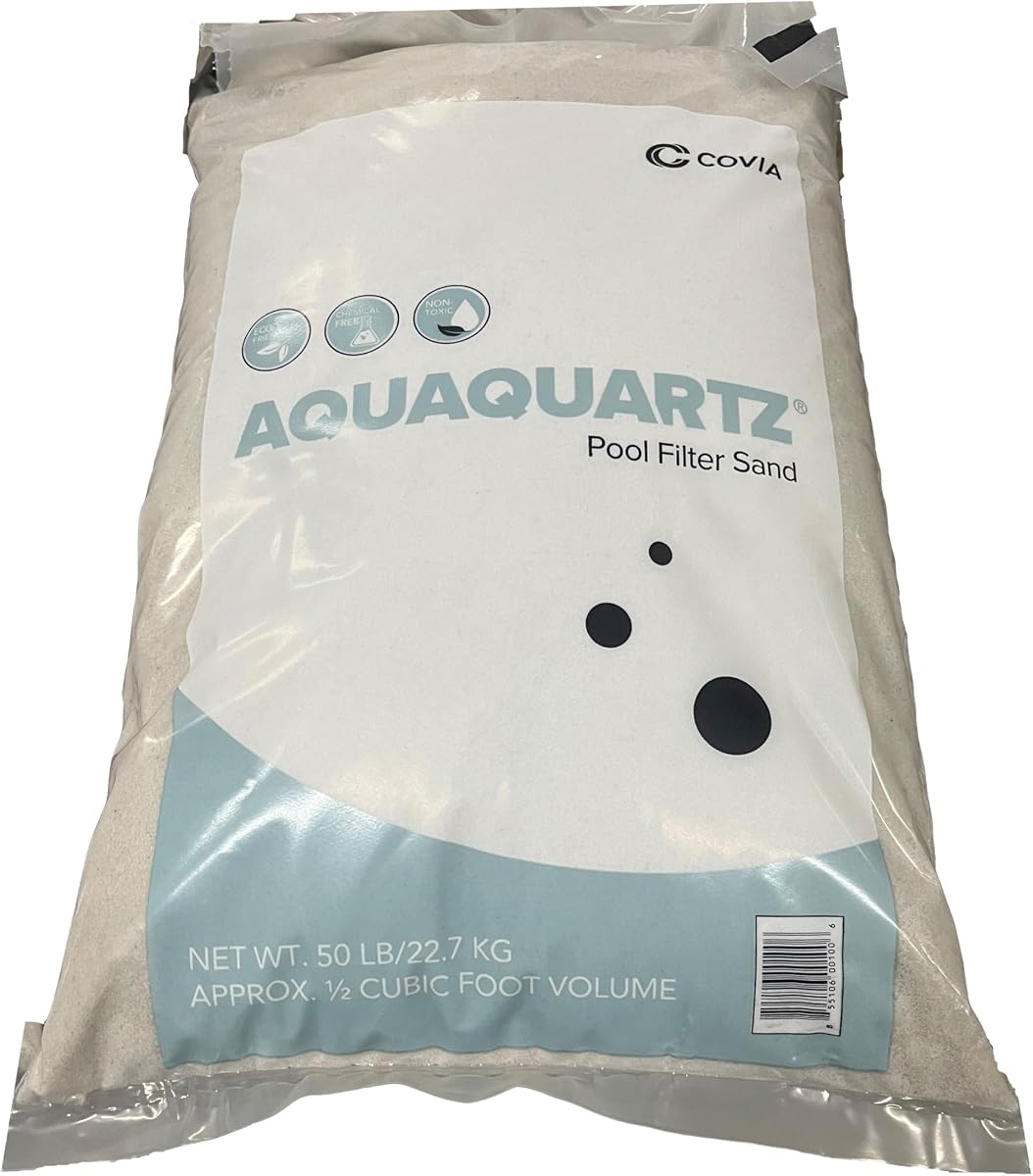
Covia AquaQuartz Pool Filter Sand
Check Price on AmazonDig-Proof Planting Strategies That Survive Excavation
Forget planting the whole tank — four tactics, each matched to a zone:
1. Epiphytes on rock. Anubias and Java fern never touch the substrate — tie them to a stable rock pile with cotton thread or gel superglue. Digging can't bury what isn't in the sand. Wedge the base rocks deep so the pile survives the colony's remodeling.
2. Potted plants. Plant heavy root-feeders like Cryptocoryne or swords in small terracotta pots, then sink the pots into the sand. The pot walls shield the root zone while the crown stays above the spoil line.
3. Margin planting. Multies dig hardest around their shell clusters. Plant the back and side margins with Vallisneria and similar runners, ringing each pocket with stones so new roots get a few weeks of peace.
4. Floaters. Hornwort or frogbit floats above the chaos, pulling nutrients from the water. Trim weekly so light still reaches the lower levels.
Plant before adding fish and give roots two to three weeks to establish. Let the back margins run dense and wild — a Vallisneria wall behind a shell bed echoes the jungle tank build look while staying biotope-honest.
Hard-Water Plants That Actually Thrive
Stick to species proven in alkaline water — this short list covers every zone of the tank:
| Plant | Why it works | Where to put it |
|---|---|---|
| Vallisneria spiralis | Loves hard, carbonate-rich water; spreads by runners | Back and side margins |
| Anubias barteri 'nana' | Epiphyte — immune to digging; tolerates high pH | Tied to the rock pile |
| Java fern | Epiphyte; undemanding in hard water | Tied to rock or driftwood |
| Crinum calamistratum | Massive bulb resists uprooting; hard-water tolerant | Potted in a margin |
| Hornwort | Floats above the digging; fast nutrient uptake | Floating |
| Java moss | Tolerates alkaline water; no roots to bury | Draped on rock edges |
Skip the soft-water stars — carpeting plants, Rotala, and delicate stems melt at pH 8+. Cross-check wider options in the guide to aquarium plants for fish tanks, but filter every pick for hard water.
Water Chemistry, Feeding & Tank Mates
Match Lake Tanganyika and everything else gets easier: pH 7.8–8.6, hardness 8–25 dGH, 75–81°F. If your tap water is soft, aragonite sand or a mesh bag of crushed coral in the filter holds the buffer steady — avoid liquid buffers, which swing. Seriously Fish's Neolamprologus multifasciatus profile lists the full accepted ranges and is worth bookmarking. Change 25% weekly; multie colonies are a heavy little bioload.
Feed for tiny mouths: crushed flake and micro pellets, plus frozen daphnia, cyclops, and baby brine shrimp a few times a week. Feed small amounts twice daily — oversized food fouls the sand.
Most hobbyists keep multies species-only, and the colony's constant social drama is entertainment enough. In a 40-gallon or larger, open-water Tanganyikans like Cyprichromis can work as dithers — see the best schooling fish for planted tanks with hard-water caveats in mind. Skip anything big enough to eat fry.
For deeper reading on why Vallisneria suits this setup, Tropica's Vallisneria spiralis article confirms its hard-water preference and Tanganyikan origins.
Frequently Asked Questions
Can you keep plants with shell dwellers at all?
Yes, with dig-proof strategies. Choose hard-water species, tie epiphytes like Anubias to rock, pot heavy root-feeders, and plant Vallisneria in the low-traffic margins. Plant before adding fish and let roots establish for two to three weeks. Delicate stems in open sand will simply be buried.
What shells are best for multies?
Escargot (land snail) shells are the hobby standard — about golf-ball sized with a wide opening. Provide at least two per fish, half-buried at a tilt with openings angled up or sideways. Boil new shells first and avoid painted or lacquered ones. Wild multies use Neothauma snail shells.
How deep should the sand be in a shell dweller tank?
Two to three inches of fine sand. Multies excavate pits around their shells and sift sand through their gills constantly, so the bed must be deep enough for real digging. Use fine pool-filter or aragonite sand — never gravel, which can damage gills and blocks digging behavior entirely.
Do multies need hard water, or will tap water work?
They need hard, alkaline water: pH 7.5–9.0 and 8–25 dGH. If your tap water is soft, buffer it with aragonite sand or crushed coral in the filter. Stable parameters beat perfect ones — avoid liquid pH adjusters that cause swings. Test weekly until the buffer stabilizes.
Will multies eat or uproot carpeting plants?
They won't eat plants, but they will bury them. Carpeting species in the open sand bed get covered in excavated spoil within days and die underneath. If you want a carpeted look, grow it in pots sunk flush with the sand in the margins — or accept open sand in the shell bed.
A Living Excavation Site
A shell dweller planted tank will never look like a manicured aquascape — and that's the point. The colony rearranges the sand daily, fry pour from shells, and your Vallisneria wall sways over it all. Build for the fish first, plant defensively, and you get the rarest thing in the hobby: a planted tank that doubles as a nature documentary.