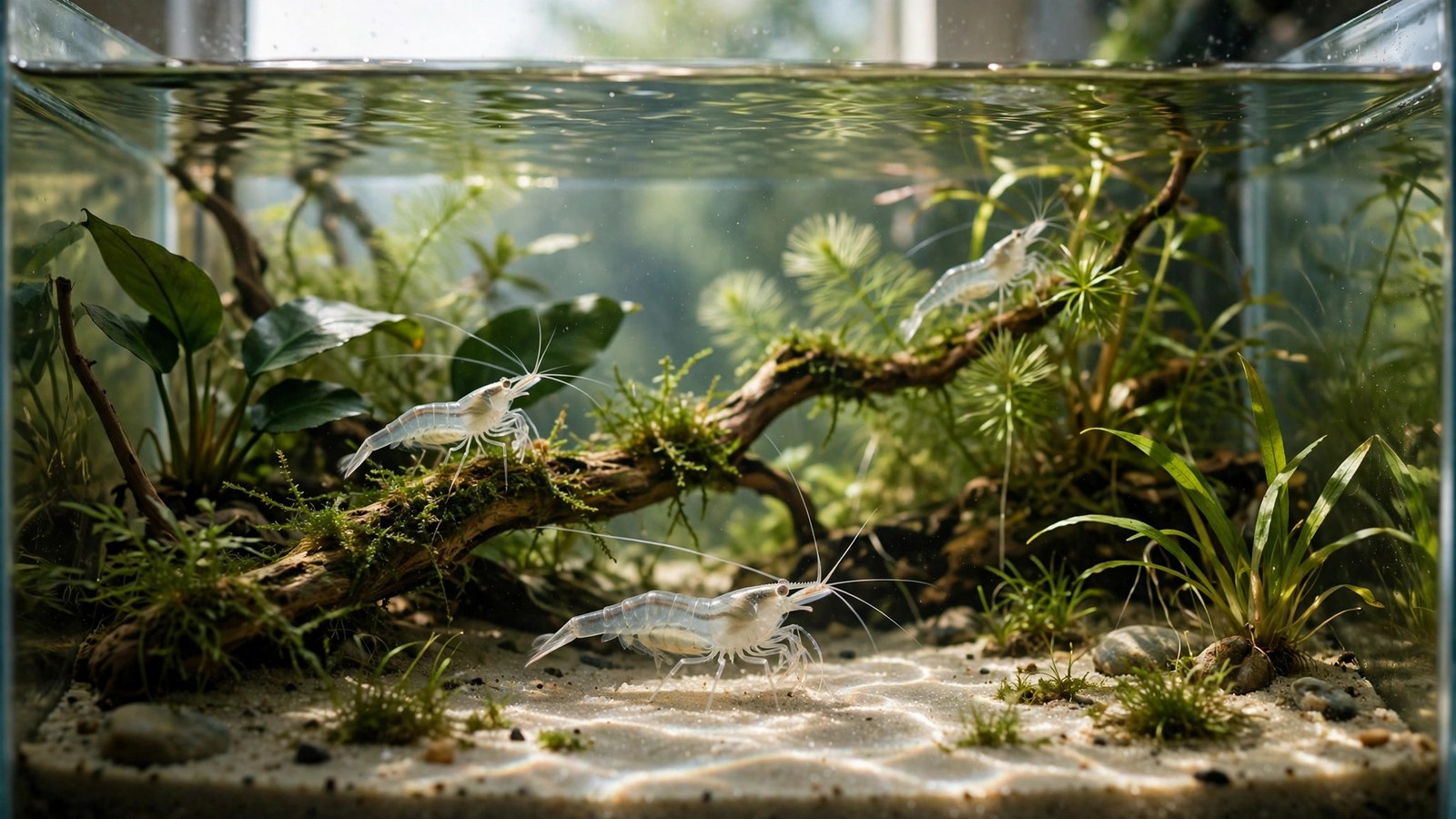
Most people walk right past the ghost shrimp cup at the fish store — the ten-cent feeder shrimp everyone buys for oscars. But put those same transparent cleaners into a ghost shrimp planted tank and they become something different: a nearly free cleanup crew that polishes glass, sifts substrate, and molts in plain sight.
If you're building a shrimp-centered aquascape from scratch, start with our broader guide to setting up a planted shrimp tank — then come back here for everything ghost-shrimp-specific.
Why a ghost shrimp planted tank works so well
Ghost shrimp (Palaemonetes paludosus) are North American freshwater shrimp, sold everywhere as live feeders. That reputation works in your favor: a colony of 20 costs less than one cherry shrimp, yet they put in the same hours — grazing biofilm off leaves, picking leftover food from the substrate, and breaking down detritus before it rots. In a planted tank they get what feeder cups never offer: cover, stable parameters, and grazing surfaces on every leaf. For the plant side, see the best aquarium plants for shrimp tanks, covering the cover types shrimp favor most.
The exact ghost shrimp planted tank setup
Ghost shrimp aren't delicate about décor, but they demand two things: a finished nitrogen cycle and plants dense enough to hide in.
Tank size and parameters
| Parameter | Target range | Notes |
|---|---|---|
| Tank size | 5 gal minimum, 10–20 gal ideal | Small volumes swing fast; shrimp die in swings |
| Temperature | 72–78°F (22–26°C) | Above 80°F shortens their ~1-year lifespan |
| pH | 7.0–8.0 | Stability beats perfection |
| Ammonia / nitrite | 0 ppm | More sensitive than most fish — cycle first |
| Nitrate | Under 20 ppm | 20–30% weekly water changes |
| GH | 3–10 dGH | Calcium for clean molts; soft water? Add a cuttlebone chip |
Never add ghost shrimp to a tank that's still cycling — ammonia spikes a hardy fish shrugs off will wipe a shrimp colony overnight. If your tank is new, follow our guide to cycle a planted tank faster and confirm zero ammonia and nitrite before stocking. A gentle sponge filter is the safest filtration: no intake to suck up shrimplets, and the sponge grows biofilm they graze all day.
The plants they actually use
Ghost shrimp spend half their lives vulnerable — molting. A shrimp mid-molt is soft and defenseless, so it only molts where it feels hidden. Java moss is the single highest-value plant you can add: it holds biofilm, shelters shrimplets, and forms the tangled cover molting shrimp retreat into. Fine-leafed plants like hornwort, guppy grass, and pearlweed do the same job higher in the water column. To keep that grazing habit fed, see our guide to growing biofilm for shrimp. If you're considering a nutrient-rich base for heavy growth, our dirted tank setup guide covers capped-soil builds that shrimp colonies thrive on.
Drip acclimation: the step everyone skips
Here's the costly mistake: ghost shrimp arrive from feeder tanks with wildly different water chemistry than your aquarium. Net-dropping them straight in causes osmotic shock, and they'll die over the next 24–72 hours while you blame everything else. Float the bag for 15 minutes, then drip-acclimate: siphon tank water into their container at 1–2 drips per second until the volume has tripled — about 60–90 minutes. Then net them out near cover; never pour store water into your tank.
Feeding scavengers that never stop
A planted tank feeds ghost shrimp most of the time on its own: biofilm, algae, leftover fish food, and detritus. But a clean tank needs supplemental feeding 3–4 times a week, or they'll pick at tender new shoots. Offer blanched vegetables (zucchini, spinach, cucumber — weighted down, removed after 24 hours), sinking shrimp pellets or algae wafers, and an occasional pinch of crushed flake for egg-carrying females.
Breeding: the freshwater advantage
This is where ghost shrimp quietly beat their fancier cousins. Amano shrimp larvae need saltwater to develop — but ghost shrimp can complete their entire lifecycle in freshwater. A berried female (green eggs under her tail) releases 20–30 larvae after a few weeks. The catch: newborns drift in the water column for days and get eaten by almost everything, including adult ghost shrimp in a bare tank.
Survival recipe: dense moss or guppy grass in a species-only setup, sponge filter only, and powdered food — crushed algae wafer dust or commercial fry powder. Expect 5–15 survivors per brood in a well-planted tank. If you want to push survival numbers higher, our breeding tank plant setup covers the dense-cover layouts that protect shrimplets.
Tank mates: who eats whom
The honest rule: if a fish's mouth is bigger than a ghost shrimp's body, assume predation. Adults (up to 1.5 inches) are usually safe with peaceful community fish, but shrimplets are live snacks for nearly everything.
| Tank mate | Verdict |
|---|---|
| Neon tetras, ember tetras, rasboras | Safe with adults; pick off larvae |
| Corydoras, otocinclus | Safe — great cleanup companions |
| Snails (nerite, mystery) | Safe, complementary grazers |
| Bettas | Risky — many bettas hunt shrimp |
| Angelfish, gouramis, larger tetras | Unsafe — eat adults too |
| Cichlids, oscars, goldfish | Unsafe — why they're sold as feeders |
If your goal is a thriving breeding colony, keep the tank species-only. Small schooling fish are fine for a peaceful community — just accept that few shrimplets will survive. Planning a mixed tank? Our aquarium plants for fish tanks guide covers plant choices that serve both fish and shrimp well.
Buying feeders: quality varies, plan for it
Here's the honest note nobody at the fish store gives you: ghost shrimp are wholesaled as live feed, not as livestock — crowded, shipped hard, sold from tanks that may also hold sick fish. Expect 20–40% losses in the first week even with perfect acclimation; that's normal for feeder-grade stock. Buy 12–15 when you want a colony of 10, pick active shrimp with clear bodies (avoid cloudy-white individuals), and at ten to fifty cents each, extras are the cheapest insurance in the hobby.
Frequently Asked Questions
Do ghost shrimp need a heater in a planted tank?
Usually, unless your room stays 72–78°F year-round. Below 70°F they slow down and breed poorly; above 80°F their lifespan shortens. A small adjustable heater with a guard keeps them in the productive middle.
Will ghost shrimp eat my aquarium plants?
No — healthy ghost shrimp graze biofilm and algae off leaves, not live tissue. If they're shredding new shoots, the tank is too clean and they're starving. Feed sinking pellets or blanched vegetables 3–4 times a week and it stops.
How can you tell male from female ghost shrimp?
Females are larger with a deeper, curved abdomen and a green saddle of developing eggs behind the head. A berried female carries round green eggs under her tail for 2–3 weeks before hatching.
Why did my ghost shrimp turn white or cloudy?
A milky body usually means bacterial infection or failed molt — often fatal within days — or simply old age. Isolate affected shrimp, check your GH (soft water causes bad molts), and remove dead shrimp promptly.
Can ghost shrimp live with a betta?
Sometimes, depending on the betta's temperament. Some ignore shrimp entirely; others hunt them to extinction in days. Dense moss improves the odds, but never put expensive shrimp with a betta — ghost shrimp are the cheap test case precisely because losses are affordable. Read our guide to keeping bettas with shrimp before trying it.
Start your colony this week
Ghost shrimp are the lowest-stakes way to add real life to a planted tank: cycle the tank, plant it densely, drip-acclimate your dozen, and let them work. For deeper background, Seriously Fish's ghost shrimp profile confirms the parameter ranges above, and Tropica's Java moss database entry details why it's the shrimp keeper's default cover plant. Feed them, keep copper out of the water, and you'll have shrimplets of your own within a couple of months — from a shrimp most people buy as fish food.