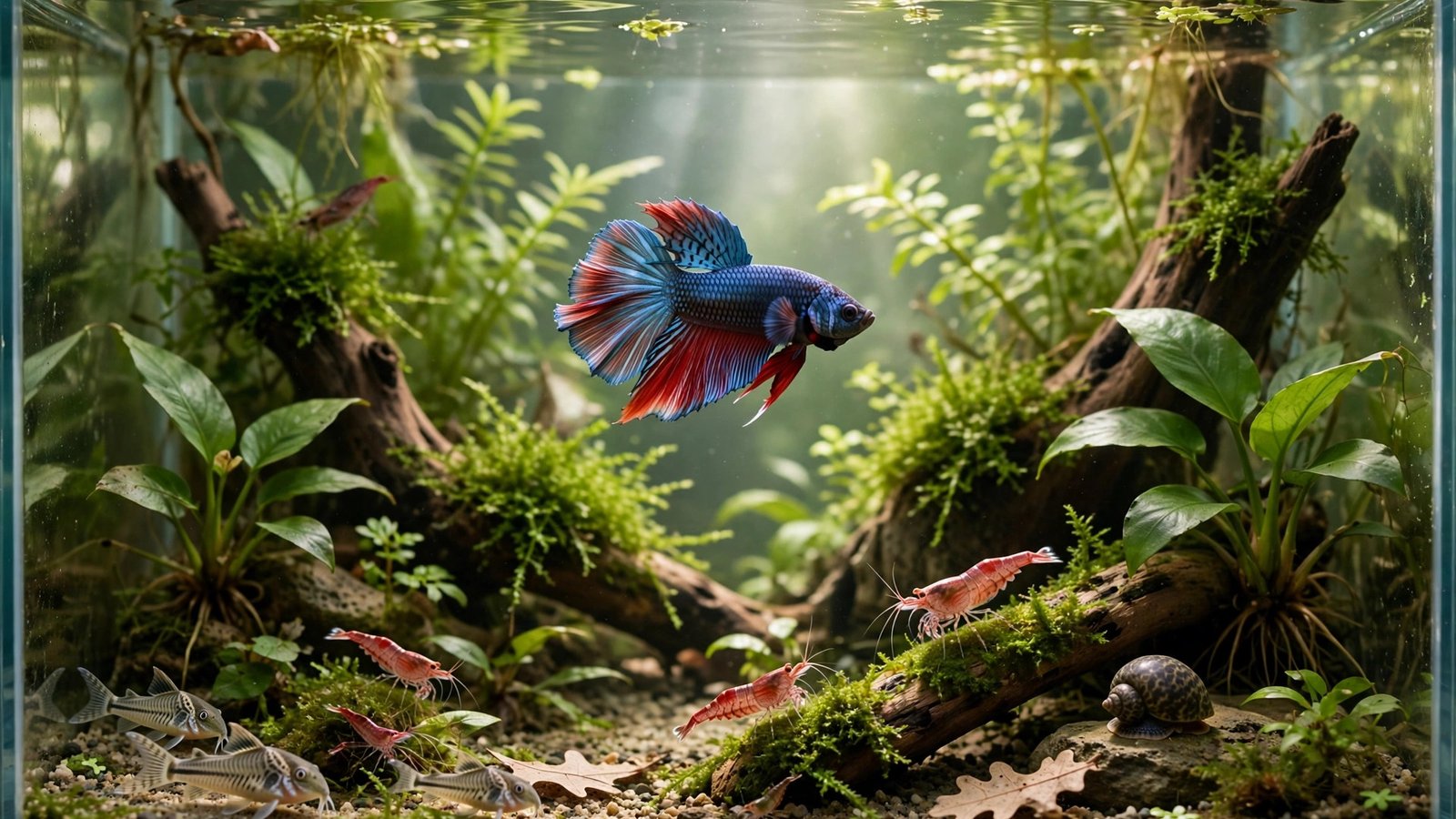
The most expensive mistake in betta keeping isn't the tank — it's the $2 cherry shrimp you drop in as a "cleaner," only to watch your betta hunt it down like a tiny red missile. If you're asking can betta live with shrimp, the answer is a qualified yes: it depends on which shrimp you pick, how much cover your tank offers, and how your individual betta behaves. Get those right and the colony breeds faster than the betta hunts. Here's how.
If you haven't built your betta tank yet, start with the foundation first: a properly planted betta tank setup with dense foliage and correct water parameters makes every compatibility question downstream much easier. Everything below assumes a cycled, planted tank — not a bare vase.
Can Betta Live With Shrimp? The Honest Answer
Yes, can betta live with shrimp — thousands of keepers run thriving mixed tanks — but it's never guaranteed. Bettas are predators with individual personalities. Some ignore cherry shrimp completely. Others treat anything that moves as dinner. Most experienced keepers find that adult shrimp coexist peacefully with a betta when the tank is set up right — though no individual betta can be guaranteed safe.
The key insight: you're not choosing between a "peaceful betta" and an "aggressive betta" as fixed categories. You're managing predation pressure. Shrimp survive in betta tanks through three defenses — being too big, being invisible, and outbreeding losses. Your setup job is to maximize all three.
Which Shrimp Species Actually Work
Size is the single biggest factor — a betta that ignores a chunky amano will still hunt a newborn shrimplet.
| Species | Adult size | Verdict | Notes |
|---|---|---|---|
| Cherry shrimp (Neocaridina) | 2.5–3 cm | Best all-round | Breed constantly; adults usually safe, shrimplets are food. Dark morphs survive better than bright red. |
| Amano shrimp | 4–5 cm | Excellent | Too big for most bettas to bully; superb algae eaters. Won't breed in freshwater. |
| Ghost shrimp | 3–4 cm | Good, with a caveat | Cheap and transparent, but fragile and sometimes mislabeled with aggressive whisker-shrimp. |
| Crystal / bee shrimp | 2–3 cm | Risky | Need soft acidic water; betta cohabitation stress plus exacting parameters means losses. |
The winning formula is a cherry shrimp colony of 10+ started before the betta arrives, backed by a few amanos. The colony absorbs losses because it breeds faster than the betta hunts. For shrimp-only principles, see our planted shrimp tank setup guide.
Affiliate disclosure: the Amazon links in this article are affiliate links — if you buy through them we may earn a commission at no extra cost to you.
Tank Size, Cover, and Territory
Five gallons is the practical minimum; 10 is where success rates genuinely climb. In a 2.5-gallon the betta patrols every inch; in a 10-gallon jungle, most shrimp live their whole lives unseen. Cover matters even more than volume: the betta should never see the whole tank at once. A nano planted tank built around betta-plus-shrimp stocking is exactly this balancing act.
- Moss is king. Java moss or Christmas moss grown into thick mats is the one refuge where shrimplets actually survive — not driftwood, not stems, moss.
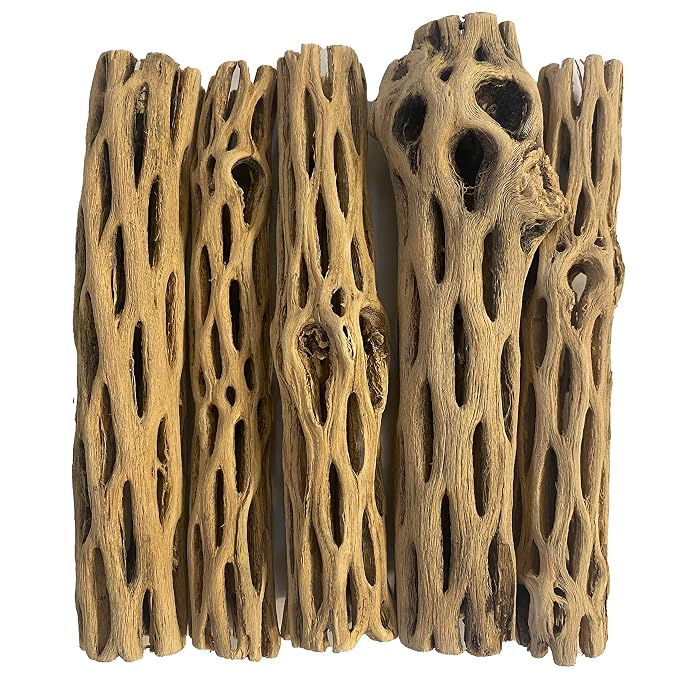
- Hardscape caves. Cholla wood and stacked lava rock create blind corners where shrimp molt safely. A molting shrimp is soft, slow, and helpless for hours.
- Floating plants. Water lettuce or salvinia diffuses light and gives the betta a surface home base, away from the substrate where shrimp feed. Our floating plants for betta tanks guide doubles as a shrimp survival aid.
- Leaf litter. A few Indian almond leaves grow biofilm — food and hiding spots in one — and betta keepers already use them for tannins.
 ★4.5
SoShrimp Natural Cholla Wood
Check Price on Amazon ★4.5Reading Your Betta's Temperament
Temperament matters more than anything else. Long-finned show bettas are usually slow and uninterested in hunting; plakats (short-finned) were bred for fighting and are noticeably more predatory. A betta raised from a juvenile in a shrimp tank often accepts shrimp as scenery, while an adult dropped into an established colony treats it as a surprise buffet. A betta sorority is off the table — multiple females patrol far more territory, and shrimp don't survive it.
Do a 48-hour read before committing: add a nerite snail first. A betta that flares at and nips it for hours will not spare a shrimp. A betta that investigates for ten minutes and returns to its leaf hammock is a strong candidate. For authoritative species temperament notes, Seriously Fish's betta profile is the standard reference.
The Introduction Method That Works
- Shrimp first. Add the colony to the mature tank and give them 1–2 weeks to find hiding spots and start breeding. This is the single most important step.
- Feed the betta generously on introduction day. A full betta is a lazy betta.
- Rearrange hardscape on arrival day so the betta claims territory fresh instead of defending "its" tank against intruders.
- Add the betta last with lights dimmed. Curiosity is fine; locked-on chasing is not.
- Observe for 7 days. Some shrimplet hunting is normal. But if the betta relentlessly chases adults by day 3–5, separate them — waiting rarely improves it.
If you're building from scratch for this stocking plan, our first-month guide walks through cycling so biofilm is ready when the shrimp land.
Feeding: Give Shrimp Their Own Food
Bettas get first pick and shrimp get the leftovers plus biofilm — that's fine. The real risk is that a well-fed betta still snack-hunts shrimplets out of instinct. Feed shrimp directly with a sinking shrimp pellet or blanched vegetables every 2–3 days. Keep GH in the 6–8 range and temperature at 76–80°F — the overlap zone both species share. Separate them if: the betta kills an adult within 48 hours, shrimp stay permanently hidden and stop grazing, or bodies accumulate from stress-induced failed molts.
Frequently Asked Questions
Will a betta eat cherry shrimp babies?
Almost certainly. Newborn shrimplets are 1–2 mm, and even a peaceful betta snaps at them opportunistically. Thick moss hides some survivors, but expect heavy losses. Start with a colony of 10+ rather than a pair — breeding only outpaces predation when the colony is large enough to produce more shrimplets than the betta finds.
How many shrimp can go in a 5-gallon betta tank?
Start with 10–15 cherry shrimp or 3–4 amanos, added before the betta. A cherry colony will grow to whatever the tank supports — often 50+ in a mature 5-gallon — and the betta keeps the population in check. Shrimp produce almost no waste, so a colony of 40 is lighter than one extra fish. Watch nitrates weekly.
Can betta live with shrimp if the betta is aggressive?
Not reliably. If your betta flares at its reflection for hours or has killed tank mates before, skip shrimp entirely — cover won't save them. Plakat males are the worst candidates. Amanos, being larger, fare slightly better than cherries, but an aggressive betta will harass even them. Rehome the idea, not the fish.
Do shrimp help clean a betta tank?
Yes — amanos are among the best algae grazers you can add, and cherries constantly pick at biofilm and leftover food. But they're a supplement to maintenance, not a replacement; they won't fix excess light or overfeeding. Our cherry vs amano cleanup comparison breaks down who eats what.
Should I add the betta or the shrimp first?
Shrimp first, always — 1 to 2 weeks before the betta. This lets the colony establish hiding routes and treat the tank as home turf. When the betta arrives last, it enters their space rather than defending its own territory against intruders, which sharply reduces hunting behavior in the critical first week.
The Bottom Line
A betta-shrimp tank is a managed ecosystem, not a lottery. The failures are almost always missing one of three pillars: adult-sized shrimp, dense cover, or shrimp-first introduction. Get all three and your odds are genuinely good — a self-sustaining cherry colony with a calm betta is one of the most rewarding small tanks in the hobby. Set the stage right, watch the first week honestly, and keep a backup container ready just in case.