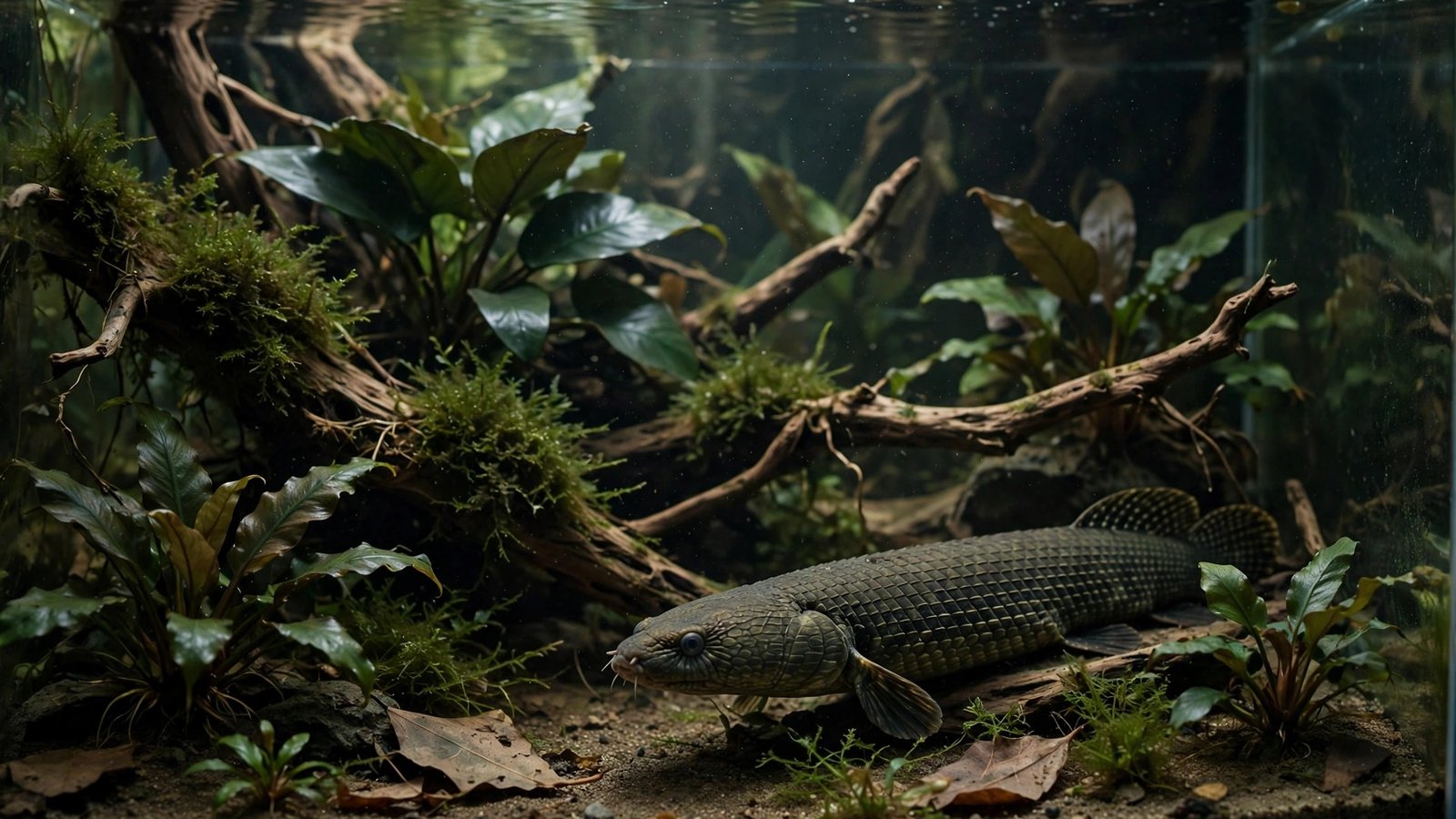
You are not building a garden that happens to hold a bichir. You are building a river-bottom hunting ground for a living fossil — a nocturnal, air-breathing predator that hasn't needed to evolve in 60 million years. A bichir planted tank flips the usual planted-tank logic: dim light the fish demands, sand it can rest on, and a lid it cannot escape past.
Bichirs (Polypterus) are the fish you design around, not for: they startle at bright light, hide by day, and patrol at night. This guide covers the exact tank, plants, and rules — starting with the albino Senegal, the smallest species.
The Bichir Planted Tank Is Designed Around the Fish, Not the Plants
Most planted tanks start with a light schedule and a CO₂ chart. A bichir planted tank starts with three facts: bichirs are nocturnal scent-hunters that hide under bright light and skip meals; they breathe air, surfacing even in pitch dark; and anything small enough to fit in their mouth is food — including neon tetras.
So you choose low-light plants for nocturnal fish that tolerate a dark tank. Compared with the dig-proof plant list for cichlid tanks, these plants aren't fighting bulldozers — they're furniture for a hunter that parks on broad leaves.
Pick your species first. The albino Senegal tops out around 10–12 inches and is the most manageable predator you can buy; ornate, Endlicheri, and delhezi species push 20–28 inches and need 180-gallon-plus tanks. Everything below assumes one or two Senegals in a 75-gallon.
Sand Only: The Non-Negotiable Substrate Rule
This rule cannot bend. Bichirs sift the bottom and swallow gravel pebbles while hunting; the stones lodge in the gut and impaction is frequently fatal. Well-rinsed pool-filter sand — cheap and the keeper standard — passes through harmlessly: 1.5–2 inches deep in planted zones, shallower where the bichir lounges.
| Substrate option | Verdict for bichirs |
|---|---|
| Fine pool-filter / aquarium sand | Best — safe to ingest, easy to vacuum |
| Very fine silica sand | Acceptable, but compacts; stir gently at water changes |
| Small gravel (3–5 mm) | Do not use — impaction risk |
| Aquasoil under sand | Fine if capped with 1.5 in sand |
| Bare-bottom | Safe but plant-hostile; skip for a planted build |
Your plants fall into two camps: epiphytes tied to hardscape (anubias, java fern) and sand-rooted feeders that want root tabs (swords, Vallisneria). Push root tabs 2 inches deep under heavy feeders every 8–10 weeks; dose liquid fertilizer lightly weekly, starting low.
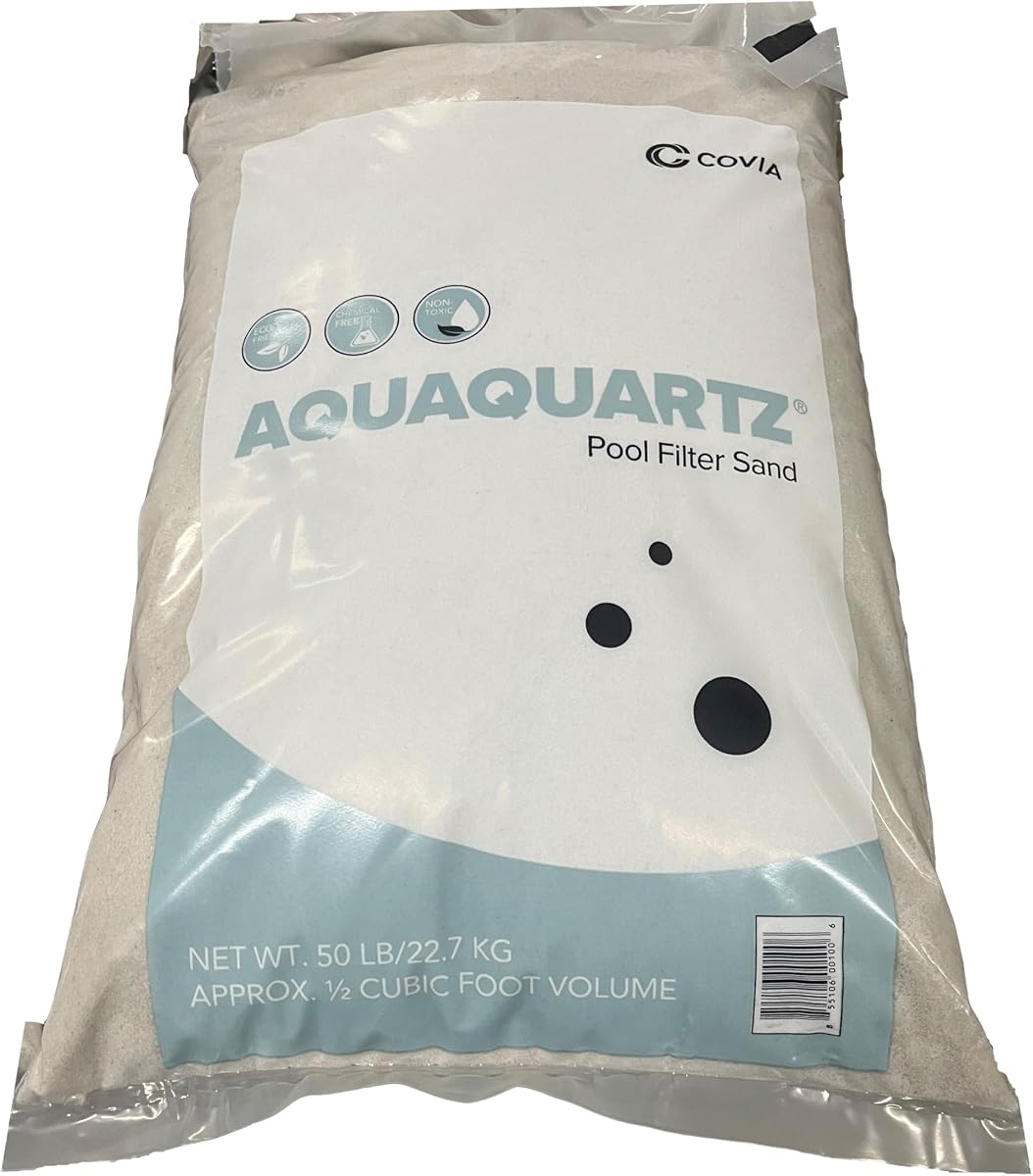
Covia AquaQuartz Pool Filter Sand
Check Price on AmazonDim Light, Floaters, and Daytime Shade
Keep the photoperiod to 6–8 hours of low light, then build a floater canopy: Amazon frogbit and floating water sprite cover the surface and give the fish a dim ceiling it trusts (see floating plants for shade for floater-mat maintenance).
Leave a few open lanes in the cover — your bichir surfaces to breathe air every few minutes. A ring of floating airline tubing corrals the floaters to one side, keeping an air gap open. Skip CO₂; your plant list thrives without it, and the lightly planted setup guide philosophy applies here: this tank succeeds on restraint, not equipment.
Plants Tough Enough to Be Sat On
Bichirs rest directly on leaves — a three-quarter-pound fish parking its belly on your anubias. That eliminates every delicate stem plant. Your shortlist: broad-leaf anubias tied to driftwood; java fern clusters on rocks; Amazon swords as rooted background anchors; Giant Vallisneria as a tall back wall. Floating water sprite doubles as shade and nitrate sponge.
Tropica's plant database lists Anubias barteri var. nana as a low-light rhizome plant that thrives in shade and is ignored by most herbivores — exactly the traits you want under a dim floater canopy (Anubias barteri var. nana plant details). Tie epiphytes with cotton thread or glue, rhizome exposed — buried rhizomes rot. Expect one new leaf a month; prune algae-dusted old leaves instead of adding light.
The Escape Artist: Your Lid Strategy
Bichirs leave aquariums: they find one centimeter of gap around a filter hose — then dry out on the floor overnight. A loose glass lid is a suggestion, not a barrier. The lid must be tight-fitting, heavy, and sealed at every penetration with cut foam or silicone.
This is where the usual planted-tank wisdom about going lidless does not apply. The open top vs lid guide covers evaporation and gas-exchange trade-offs — accept all of them. Check lid fit monthly; warped lids quietly reopen the gaps you sealed.
Feeding a Night Predator in a Planted Tank
Feed after lights-out, around 9–10 PM. Bichirs are scent hunters that come alive at dusk; matching their rhythm gets confident meals. Rotate frozen krill, earthworms, and chunks of tilapia — thaw and rinse before adding. Bloodworms suit juveniles but won't sustain an adult Senegal; feed 3–4 times per week.
No live feeder goldfish — they carry parasites and foul water fast. And test weekly with a liquid kit: a predator's protein-heavy diet loads the biofilter, and ammonia spikes undo everything your plants process. Keep nitrates under 40 ppm with weekly 30% water changes. Tankmates must be too large to be eaten and too calm to outcompete a slow feeder — adult silver dollars or large plecos, never anything small or nippy.
Frequently Asked Questions
Can bichirs live with plants at all?
Yes — easily, with the right plants. Bichirs don't eat plants or dig, so the danger isn't destruction, it's fragility. Broad, tough plants like anubias, java fern, Amazon swords, and Vallisneria shrug off a bichir resting on them — delicate stems get flattened, so skip them.
What is the best bichir for a planted tank beginner?
The albino Senegal bichir (Polypterus senegalus). It's the smallest common species at 10–12 inches, the hardiest, most widely available, and the easiest to feed since it takes frozen foods readily. One albino Senegal in a 75-gallon tank is the ideal first bichir planted tank, leaving you room to learn the species' habits before considering anything larger.
Why can't I use gravel with a bichir?
Bichirs mouth-sift the substrate while hunting and swallow pebbles, which lodge in the digestive tract and cause fatal impaction — there is no safe gravel size or texture for them. Fine sand passes through harmlessly. This is a species-specific, non-negotiable rule: the tank must be sand-only, period.
Do bichirs need a tight lid even in a planted tank?
Yes — more than most fish. Bichirs are notorious escape artists that push up with real force and wriggle through tiny gaps around hoses and cords, then dry out on the floor overnight. Use a heavy, tight-fitting lid, seal every penetration with foam or silicone, and recheck the seal monthly.
How much light does a bichir planted tank need?
Very little: 6–8 hours of low light per day, ideally with a floater mat of frogbit or water sprite shading the surface. Bright or sudden light startles bichirs and keeps them hiding all day, so use a ramp-up timer that fades light in over 20–30 minutes and skip high-intensity fixtures entirely.
What tankmates work in a bichir planted tank?
Only tankmates too large to be eaten: adult silver dollars or bristlenose plecos work well alongside a Senegal bichir. Anything under half the bichir's length is food, not company. Avoid fast, competitive feeders that will steal the bichir's night-time meals, and keep the overall bioload modest so water quality stays stable.
Build the Tank the Dinosaur Deserves
A bichir planted tank rewards restraint: a bag of pool-filter sand, dim light, a floater canopy, tough plants tied to wood, and a lid with no gaps. The albino Senegal glides out at dusk while your anubias hold their ground — prehistoric fish, living armor, a tank that runs on patience. Start with the sand and the lid; everything else is garnish.